
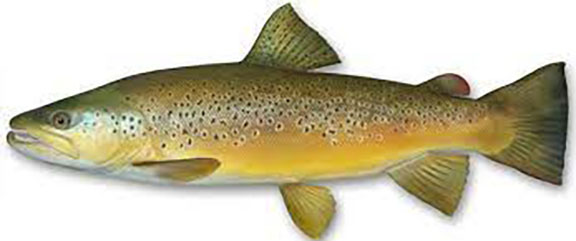
I have been searching for interesting fish for dinner and figured I would find some trout in the grocery store. But I did not see trout anywhere. I was completely puzzled by this because New Zealand is known for its trout fishing. Brown trout and rainbow trout are an introduced species, but they thrive here because there are plenty of streams and there are no predators. It is a huge recreational economy, with fishermen from all over the world coming in for some fly fishing. So I know there are trout here. Why could I not find it?
There was a guy here doing repair work and I asked him if they had trout. Maybe I was wrong. Yes, he confirmed there is a trout fishery here. And then it dawned on him: no, he had never seen it in a grocery store and he did not know why.
I did some investigating and the answer is surprising. The sale of wild trout is illegal in New Zealand. Trout farming is also prohibited. There is no prohibition on the sale of imported trout except for the fact that importation itself is prohibited. Thus, you can neither buy trout at the grocery store nor order trout in a restaurant.
The reason for these prohibitions has to do with the value of the recreational fishing industry. The New Zealand trout industry is “wild” trout. The fishery is not sustained and managed by stocking fish. So they are very concerned about the impact if people were allowed to take their catch and sell it. They fear poaching would occur to a degree that it would decimate the fishery. There are a lot of folks who are employed in the industry, and it generates millions in tourism dollars. They claim this is a delicate balance and that if they stocked they fishery, it would harm its value as a wild trout fishery. And they are adamantly opposed to farming trout for fear of disease that can be generated in farming pens. They also see a similar issue with any sale of farmed trout–it would be impossible to determine if wild trout were being poached and sold as farmed trout.
In a study I read, they acknowledge that people want to be able to buy trout. They also acknowledge that trout farming is economically beneficial. They know that many other countries have commercial trout fisheries. They have a farmed salmon industry here and the wild salmon fishing industry does not suffer from poaching issues. But all of this is discounted because their fear of damage to the wild fishery and to the tourism industry outweighs all of this.
Despite their claim that the fishery could be quickly decimated, it is hard to imagine because there are so many trout. This is not a threatened species by any means. There are places where the per day bag limit is eight fish and in some places there is no limit at all. Most other areas you can take two trout a day. The season runs from October to April.
This does not even get into the fact that trout are an introduced species and they are not great for the environment. They have been decimating native fish species.
But tourism dollars rule on this one and the Government seems to be quite comfortable depriving non-fishing Kiwis of a great fish so it can be made it available to tourists. Yes, anyone can go fishing and if they catch a trout, they get to eat it. But not everyone fishes. They encourage catch and release which also impacts whether a New Zealander gets to eat what he catches. It all seems quite unfair.
Well, I guess the only way I get to enjoy eating trout here is to learn how to fly fish. If I can’t land a trout, I will be deprived for years to come, which is very sad.
 A Yank Among the Kiwis