
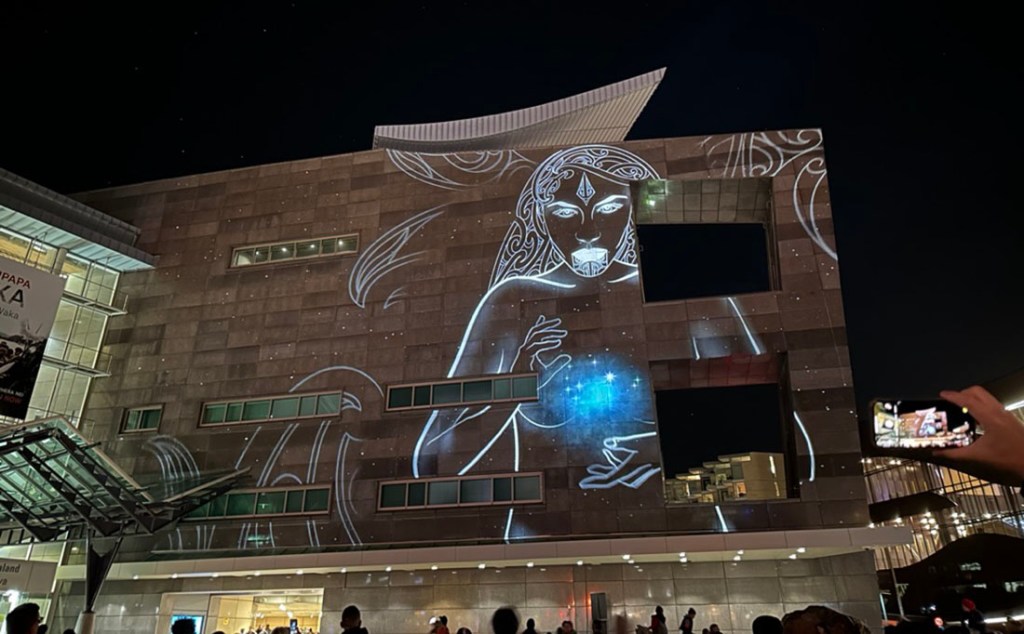
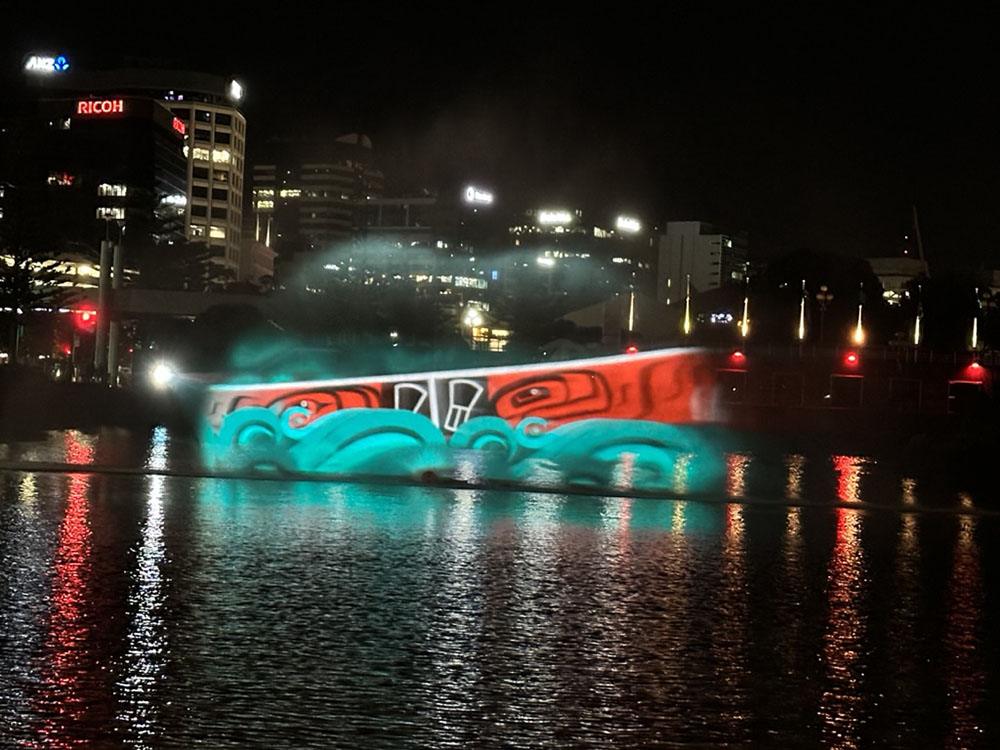
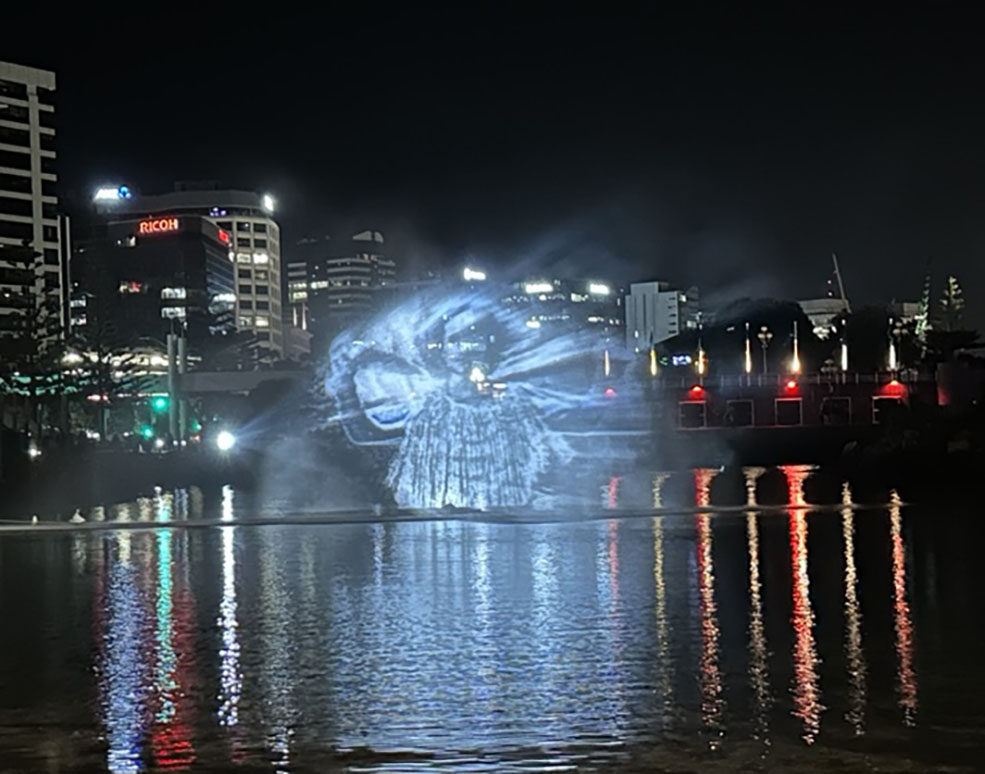
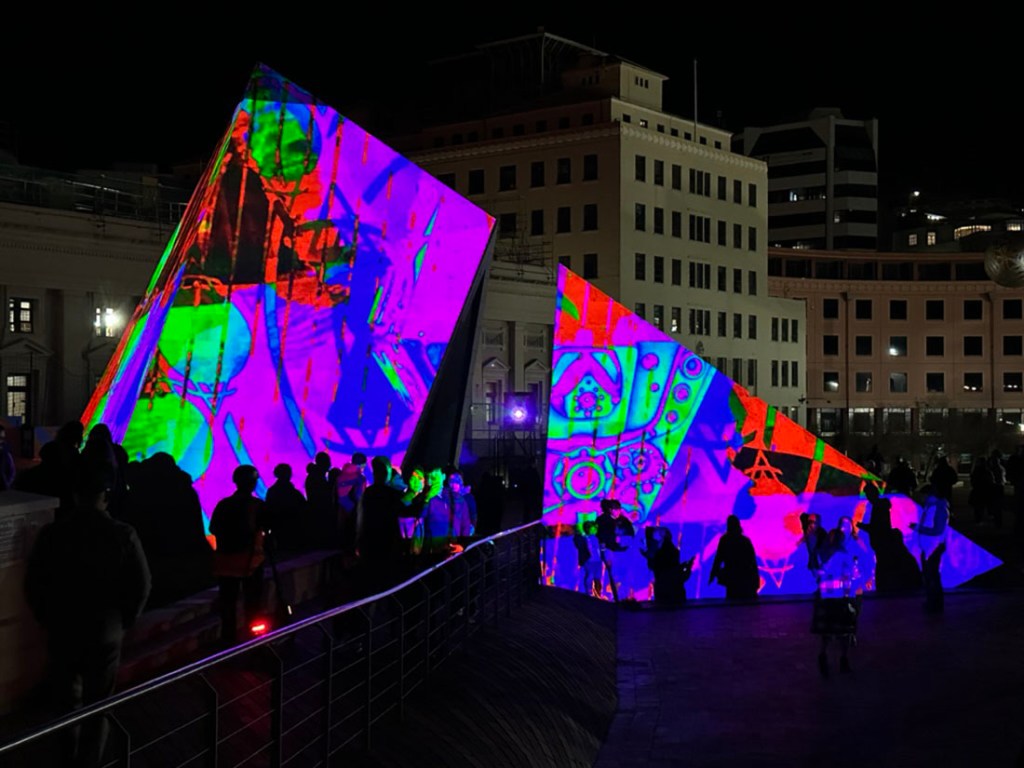
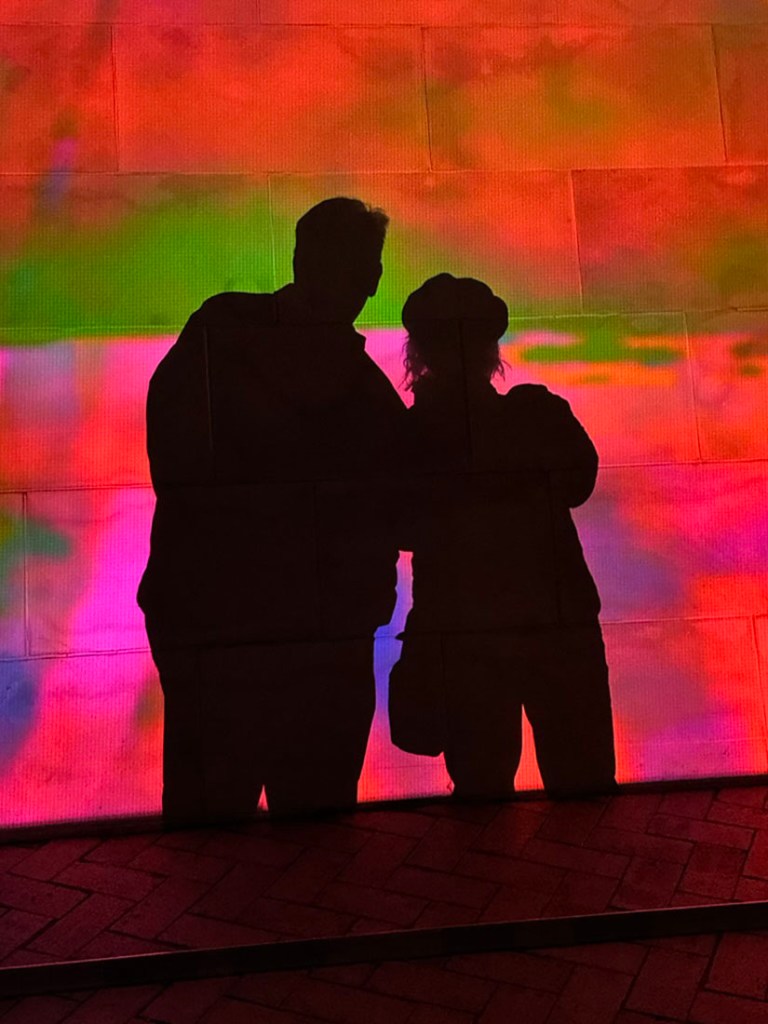
Matariki is the Maori New Year, which has been designated a public holiday in New Zealand. Matariki is the Maori word for the Pleides, the star cluster we know as the Seven Sisters. It rises in the morning of Matariki and is considered the start of the new year. Wellington had a week long celebration with evening light shows at the harbor. They had multiple art projects including the projection of videos on the buildings and on the water.
To me, the interesting part of this celebration is the willingness of the Europeans, as non-Maoris are called here, to embrace the culture of the Maori. It began in the 1960’s and 70’s when the Maori began to protest their living conditions and place in society. By the 1970’s, there was a movement to have New Zealand live up to the promises of the Treaty of Waitangi, a treaty in which (no surprise) the British tricked the Maori into giving up their sovereignty and ceding their territory to the Crown. Since then New Zealand has been negotiating with tribes or “iwi” over land settlements and other issues related to that treaty. This has led to a renaissance of Maori culture and the incorporation of that culture into the mainstream.
This embrace includes recognizing the language and significant cultural events. Early in the 20th century, New Zealand had enacted a Maori Suppression law, that included forbidding the speaking of Maori. This has completely changed. The country is bilingual with Maori recognized as the official language and English as the de facto language. The stated purpose of this language law is to save the Maori language from extinction. All government signage is written first in Maori and then in English. Maori language and culture is taught in school. Many Maori words are used interchangeably. For example, the country is known as Aotearoa New Zealand. Aotearoa, which means “land of the long cloud,” is the Maori word for the country. Everyone says “Kia Ora,” which means hello. But it means much more than hello. It is the recognition of a person’s life force and spirit. Other words commonly used include the Maori word for “family” or “whānau,” “kai,” which is “food,” and “Haere rā,” which is “goodbye.”
You can make of this what you will. I am just an outsider looking in and I do not have the history or the background to judge any of it. I can only go with what I sense now. Ideally, it is the “Pākehā,” or Europeans making amends for the troubled history here and agreeing that the land is the home of the Maori as much as the European settlers. As such, their culture and heritage need to be considered part of and important to New Zealand. From what I have read, the majority of New Zealanders agree with that sentiment. A cynic would say this is just the Europeans allowing the Maori culture and language to be recognized as an act of benevolence, although they, the Europeans, are still in charge. And no doubt there are traditional Maori who think the Europeans have too much power and Europeans who think the Maoris have been granted too much input into New Zealand heritage. This is the dynamic that many countries with indigenous populations have. But still, I do think that the intention of the New Zealand government and people is to be welcoming and inclusive in a way that honors Maori culture by making sure it thrives.
 A Yank Among the Kiwis