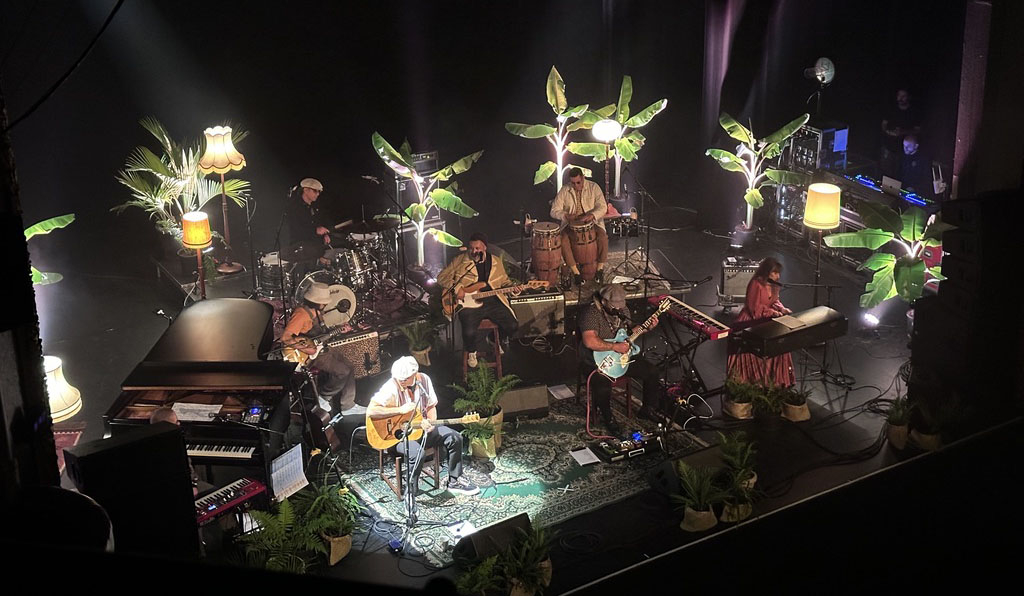
Bill Withers. You know his music. “Lean on Me” must occupy a brain cell if you are a certain age. Same with “Ain’t No Sunshine.” He died recently and a group of Kiwi musicians developed a tribute show which we saw in Wellington. One, Dallas Tamaira, the singer for Fat Freddy’s Drop, was there. He kind of sounds like Bill Withers. It was a fun trip down memory lane.
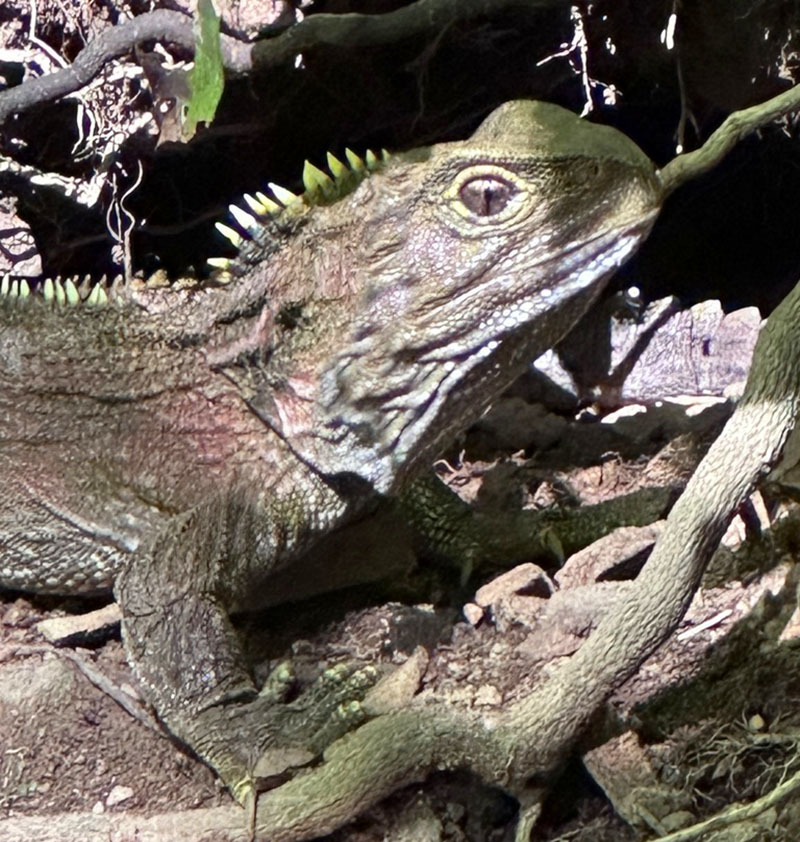
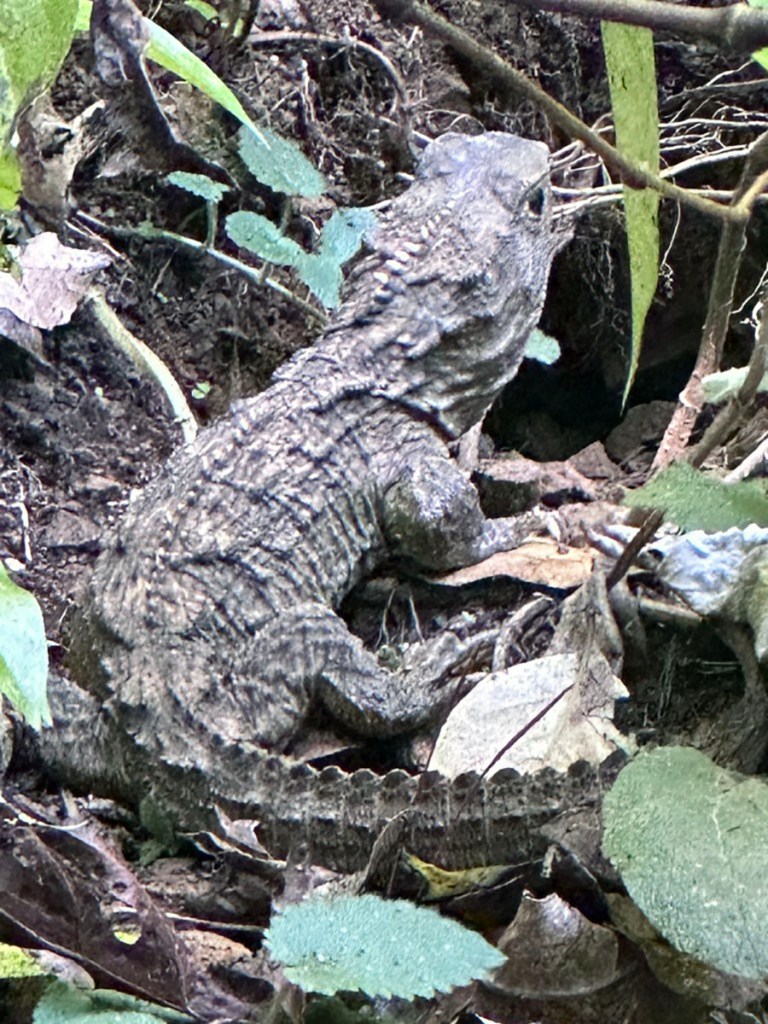
Zealandia is another fenced predator free nature reserve located in Wellington. It is fun to visit. This time we went to see the tuatara, an endangered lizard endemic to New Zealand. It is a little dinosaur that comes out when the sun is shining and, on this day, although it was winter, the air was warm and the sun bright. Here he is in all his glory:
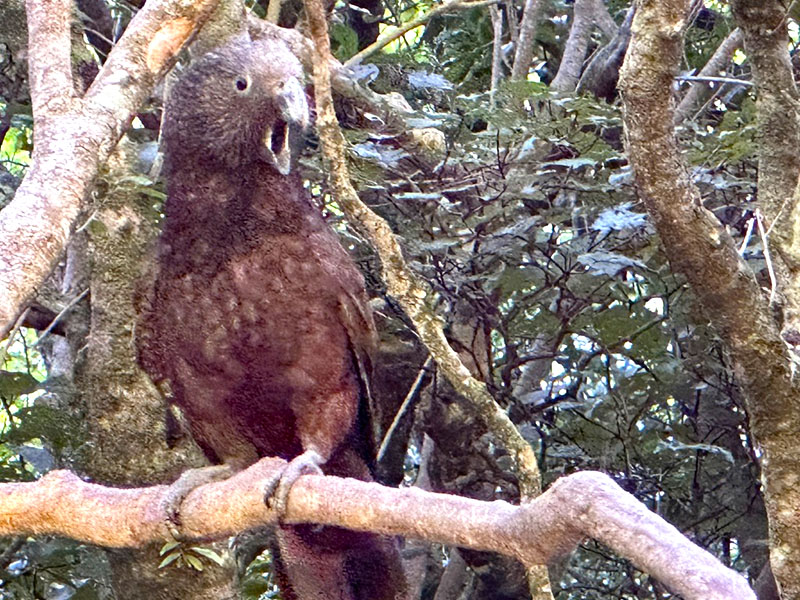
And just for fun, here is a kaka, a very large, parrot-like bird with the wit and brains of a crow. They squawk and are known for stealing food right off your table if they have the opportunity. The guide at Kapiti Island told us that they will size up visitors to figure out who they might sweet talk into giving them a treat. They had Matt in their sights. As we know, and as the kaka know, he is a softie.
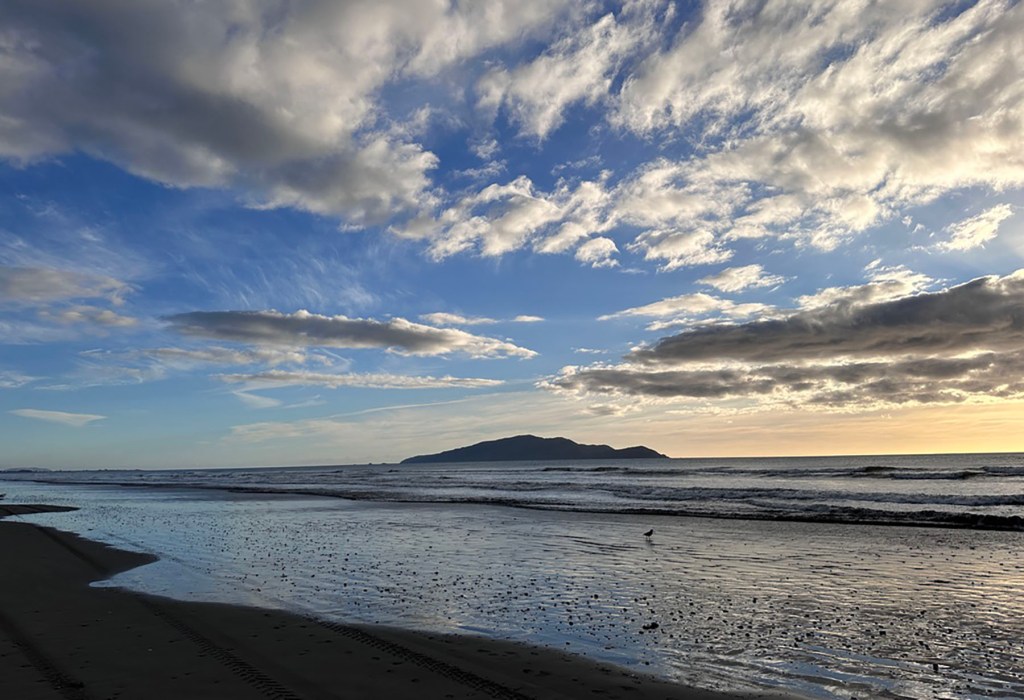
We live on the Kapiti Coast. Its namesake, Kapiti Island, is an island to the west that looms over the towns along coast. We see it every day, in the distance. This is what we see.
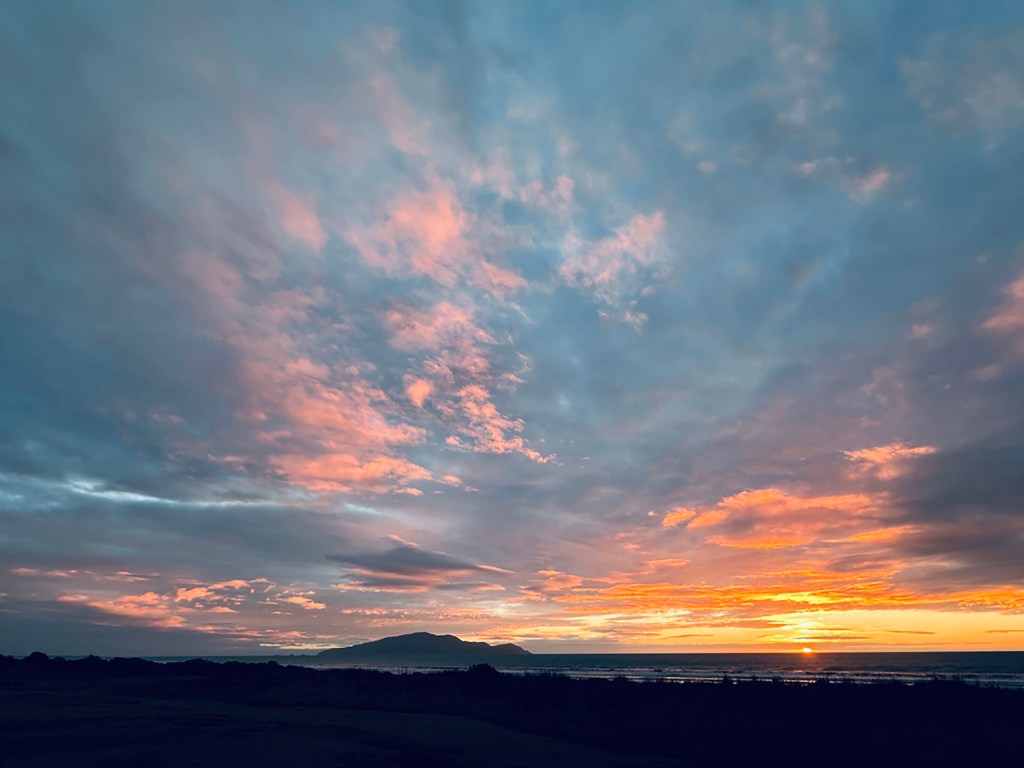
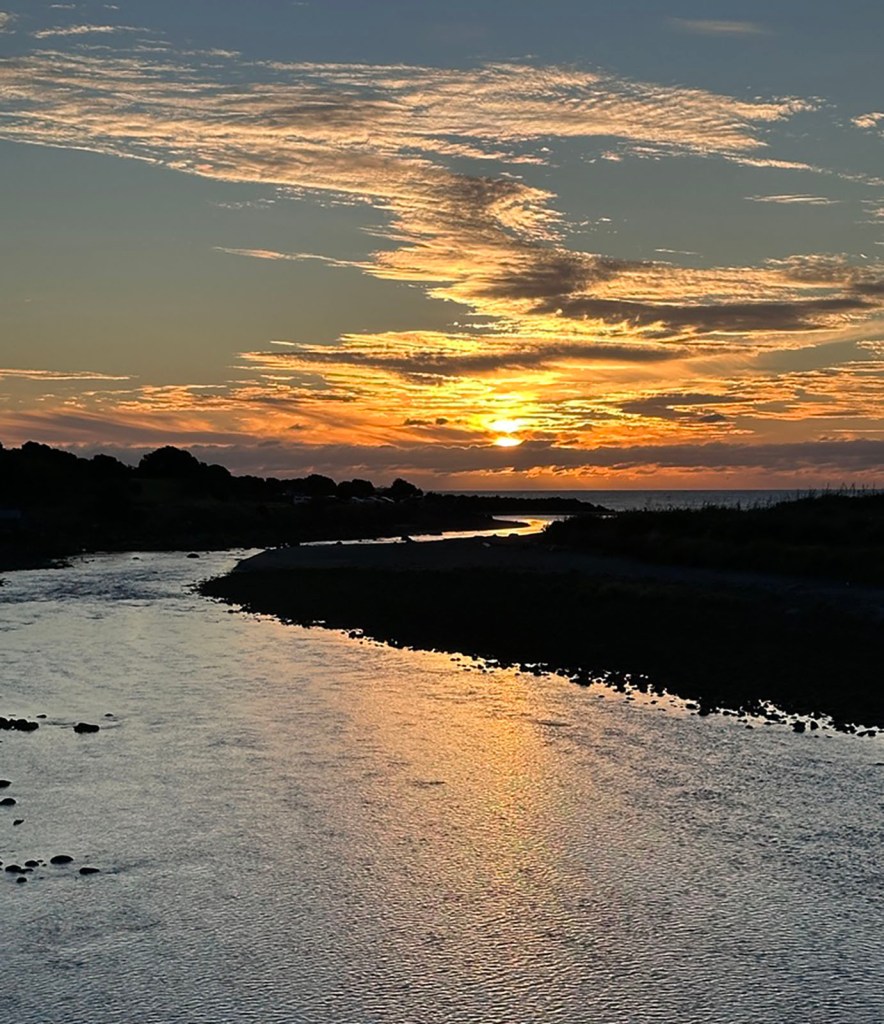
Te Horo Beach where we live is known for its spectacular sunsets and I have taken hundreds of pictures of the island as it plays a supporting role in the sunset pictures like this:
Looking at it all the time, I decided we had to go and visit. The bulk of the island is a nature preserve. The north end is privately owned by a Maori family. Several generations ago, the matriarch of the family refused to sell her land to the Crown and good for her. The family runs a rustic lodge/resort with cabins that are available for an overnight stay. We thought it would be fun to visit there, take a tour of the island, see some birds, maybe even kiwi. We rented a cottage, the only place to stay there that came with a private bathroom and a wood stove. It cost a lot, but we figured if we were making the effort to go, why not go in style?
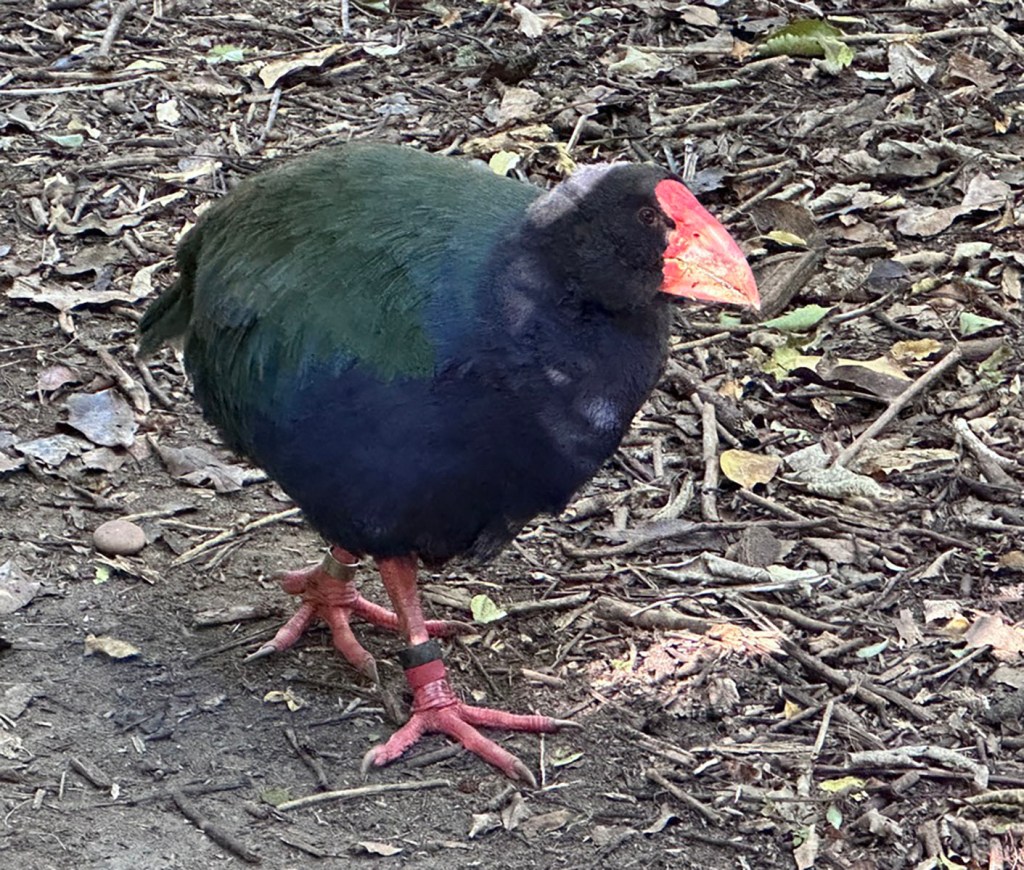
We had picked a date in late fall, so there was a chance that it would be cool. It was worse. New Zealand was in the middle of a cold spell. So we packed warm clothes and headed off. We started the day with a boat ride to the south end of the island to tour the nature preserve. The sun was shining and when that happens in New Zealand, it is warm no matter the season. We walked a short trail and we saw a lot of birds, some new to us. There were two takehe, flightless (no surprise) and endangered birds living in the wild. Adorable:
After a few hours, it was time to take a boat ride over to the lodge. It was late and the sun was setting behind the island. We sat on the beach waiting and waiting, freezing from the wind and lack of sunshine. The boat finally showed up and we were on our way. Once ashore, we walked to the lodge, really nothing more than a large house, for orientation.
We were asked to remove our shoes before entering. This is a thing in New Zealand. Everyone takes off their shoes before they enter a house. Except us because we have not learned this rule. It just never occurs to us. The problem with this rule is that if it is cold, as it was on this day, you end up with ice blocks for feet. They did not even have slippers to offer. Even worse, Matt does not and cannot walk barefoot. Ever. So he asked to leave his shoes on. Given the stink eye he received, you would think he was standing there in mud-caked boots and not fairly clean sandals. But they relented and let him in.
After orientation we were shown to our cabin. It was not heated but it did have a wood burning stove. Since it was going to be a cold night, most likely below freezing, we asked if we could use the stove. The answer was no. No? No. They would provide us with and extra blankets and hot water bottles. As I wrote previously, Kiwi houses, particularly older houses, have no insulation and only a stove for heat in a main living area. Hot water bottles appear to be the Kiwi answer for keeping warm. Stores stock mounds of hot water bottles in the winter.
The host also mentioned that we should avoid taking a shower if the sun was down because the water was heated by the sun. We would have hot water for the evening, but none in the morning.
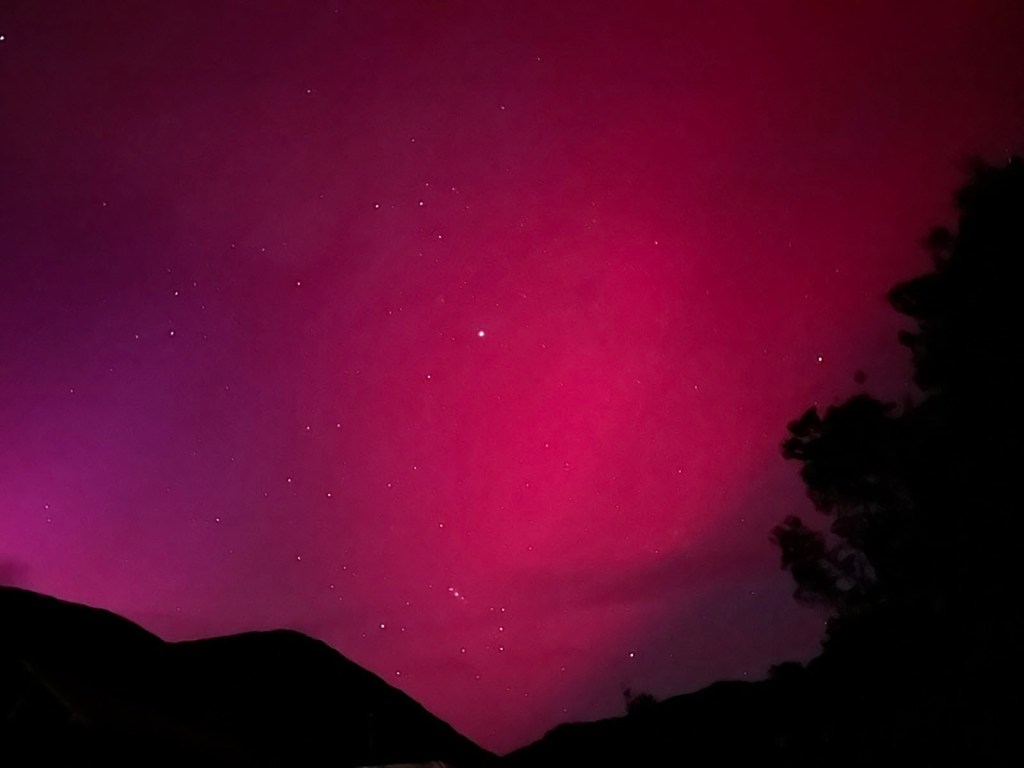
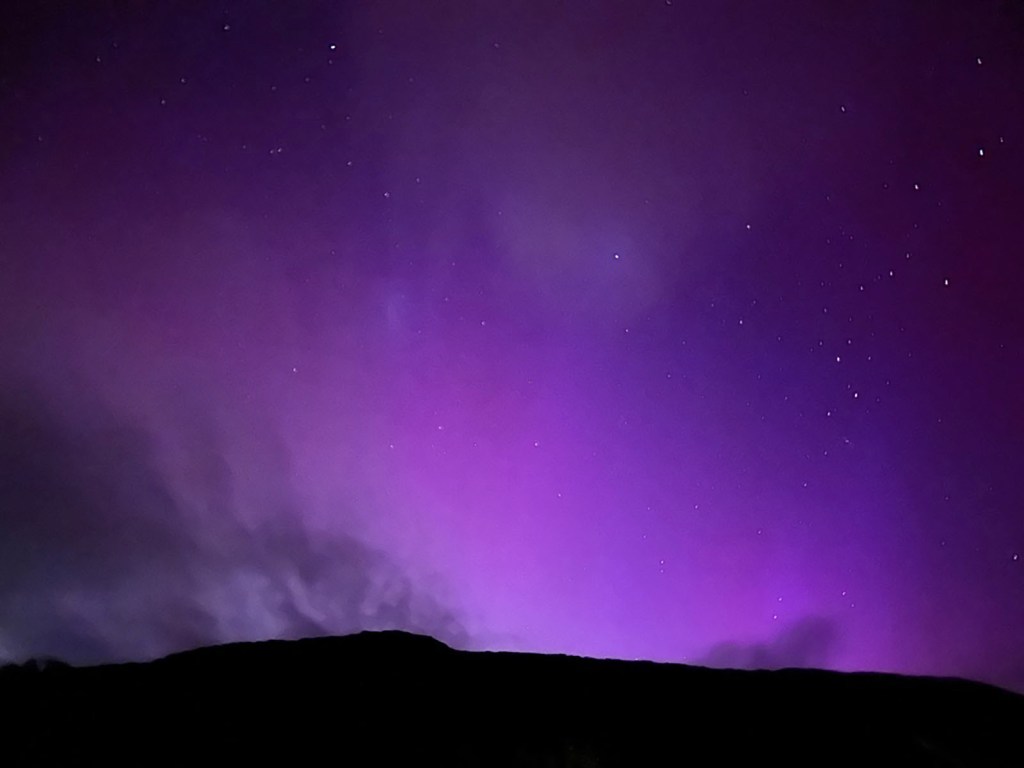
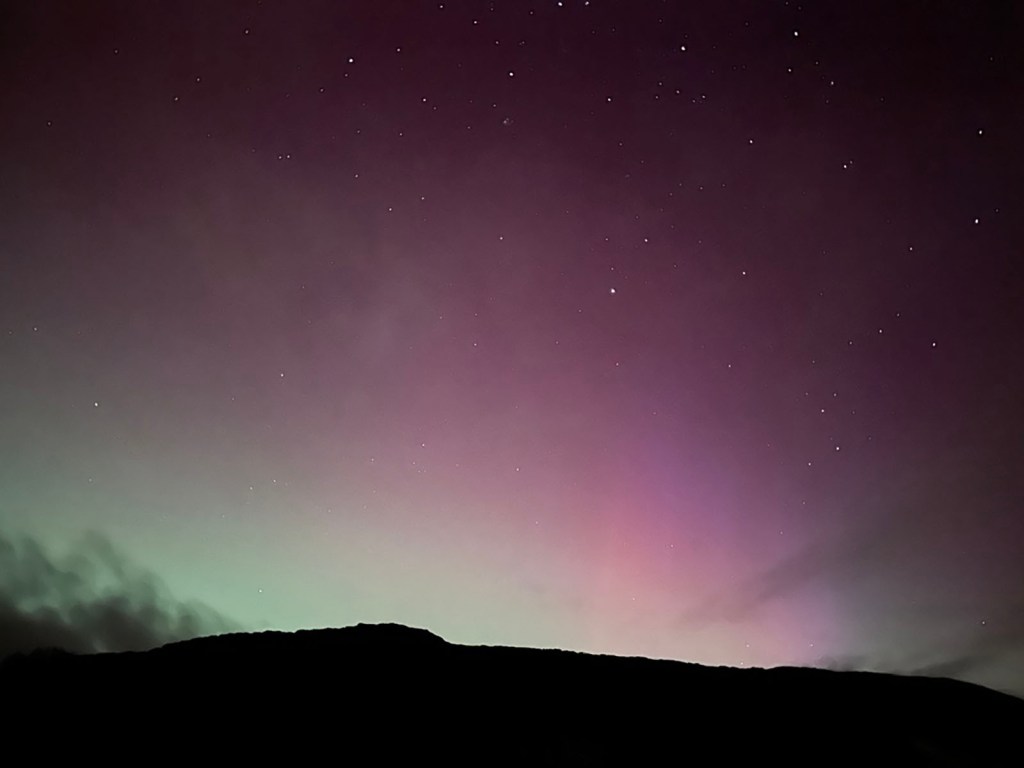
We wandered over for dinner at the lodge where a fire was roaring in the stove. Bastards. The plan was for us to have dinner and then afterward go out to look for kiwis. It was also the night when the sun sent auroras all over the world. Even New Zealand lucked out. We quickly ate dinner, small talk with the other guests included trying to explain the American election system, and then we all went outside for aurora viewing. Even though our view was obstructed by the mountain, and we could only see part of the sky, it was fantastic. The color kept changing.
After playing around with that for an hour, it was getting late and we had to look for kiwi. We marched off into the darkness, quietly stepping so the kiwi would not be alarmed. It did not matter. We did not see a feather. The last stop on our kiwi walk was our cold and miserable cabin.
We took her up on her suggestion and decided a hot shower would help. But when we tried to shower, nothing came out of the tap, not in the bath, not in the kitchen. There was no hot water any and everyone had gone to bed. So here we were in our little cabin, the special one we paid extra for, with no heat and no hot water to take the chill off. I was, how shall I say? Angry? But there was absolutely nothing we could do about it. Fully dressed, including a hat, buried under three blankets, and tightly hugging my hot water bottle, I tried to fall asleep. That was pointless. It was cold. Matt fared no better. We woke up at dawn, and still no hot water. Not even a drip. I marched over to the lodge to locate the manager. When I told her we had no hot water she responded, “Oh. I forgot to turn it on.” So, I asked, are you telling me that the public showers had hot water? “Yes. Were you cold?” I wanted to scream at her, “of course I was cold you moron.” But I didn’t. I simply said we would be taking the first boat out. We need to get back to our warm house where we have hot water and a gas burning stove. I think it is fair to say that we will never visit Kapiti Island again.
We vacationed in New Zealand for three weeks in 2005. We traveled both islands by car, train and boat. But we still missed a lot. We are using the weekends to visit new places.
New Zealand is located along the Ring of Fire, a circular area surrounding the Pacific Ocean where the Earth’s tectonic plates are subducting or sliding under another plate causing havoc. The Ring encompasses the West Coasts of North and South America, the east coast of Asian countries such as Japan and several islands in the Southern Ocean including Indonesia and New Zealand. (Hawaii is not along the ring, nor is Iceland. They have their own problems.). The lands located on the Ring are home to the vast majority of volcanoes on Earth, both dormant and active. Most earthquakes that occur in the world are located in this area too.
New Zealand is emblematic. As for earthquakes, it is a rare day that an earthquake is not recorded on at least one of the two islands. New Zealand has many volcanoes, extinct, dormant and active. There are three types of volcanoes in New Zealand: cone, caldera, and volcanic fields. A volcanic field is what it sounds like—small volcanoes spread out in an area with any one erupting haphazardly. There are currently eight active volcanoes all located on the North Island. https://www.gns.cri.nz/our-science/natural-hazards-and-risks/volcanoes/new-zealands-volcanoes/.
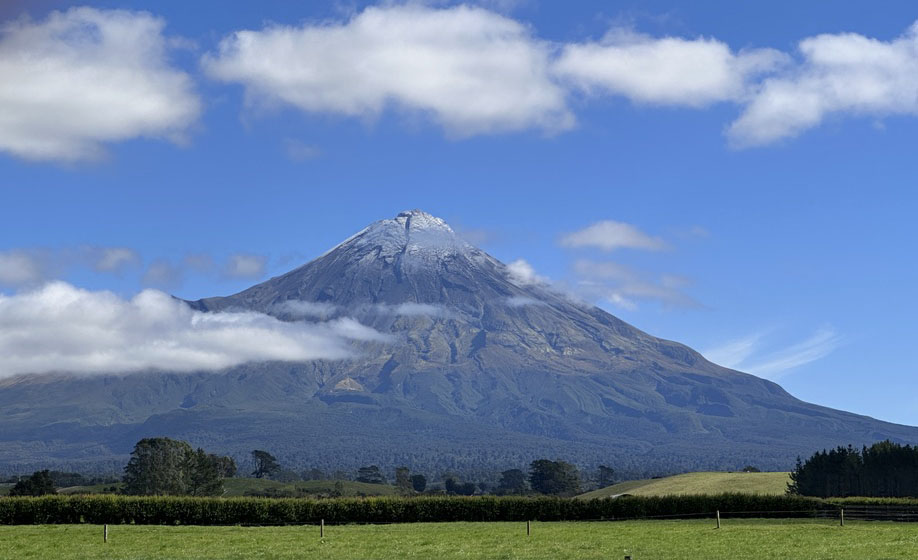
We decided to visit one of the volcanoes. Taranaki is currently dormant, having last erupted in 1755. It is centered in the Taranaki region, part of the western coast of the North Island a region that juts into the Tasman Sea and which is also known as the Surf Coast. (We will get to that.). Not quite Mount Doom, (that would be Ngauruhoe) but more resemblant of Japan’s Mount Fuji, Taranaki is a beautiful cone, often snow covered, circled by vast plains formed from previous eruptions.
We stayed in New Plymouth, the city nearest Taranaki, for some sightseeing. New Zealand is rural and multi-lane turnpikes or highways do not criss-cross the country. Getting from here to there outside of the city usually means traveling two lane highways. This two-hour drive took us through small towns and past more cows that I have ever seen in my life. Dairy cows mostly, milk production is a huge industry here. There were some sheep farms. But the Taranaki region seems to be cow central.
Our first stop was Egmont National Park, home to Taranaki. The plan was to simply drive as close to the top as we could get. It turns out, it was not close enough. So Matt gamely agreed to hike further up the mountain to get a good vantage point of the summit. He would go as far as he could.
New Zealand is a place where the weather can turn very quickly and the day went from a pleasant, warm, sunny day to a cold, partly cloudy day with a strong, brisk wind that easily penetrated our clothes. It was cold! We were clearly not prepared for a walk up a mountain. The gift shop was prepared for unprepared people like us. We bought heavier jackets and thank goodness because the higher we climbed, the more forceful the wind became.
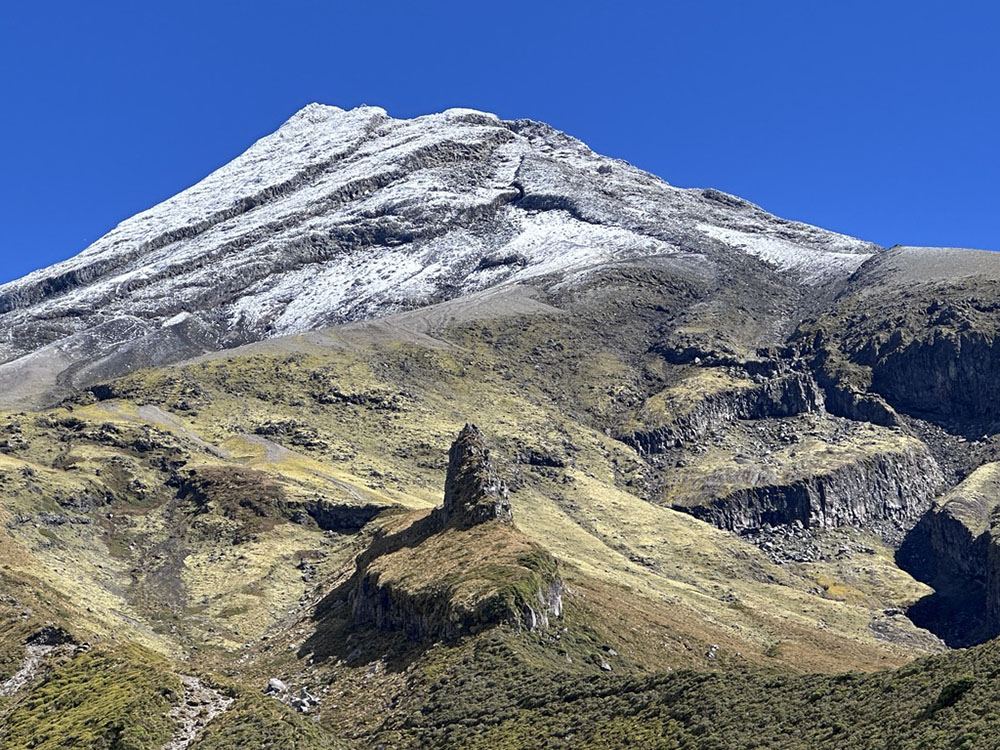
Matt made it to the overlook. He did a great job. It was a 4k hike or, in NZ jargon, a “walk” (as opposed to a “tramp” which is akin to a trek for us). I continued further up the path to a clearing where there was a good view of the summit. During most of the climb, being under cover of the bush, we were protected from the wind. As I rounded a large boulder and stepped into the clearing, I was hit with a gust that nearly knocked me off my feet. In front of me was the summit. While I hung on trying not to be bowled over by the wind, three younger adults were merrily taking photos of each other, seemingly oblivious to the cold and gale force winds. I snapped a few photos and went back to the shelter of the trail.
Tired of being cold, we drove back down the mountain and headed back to New Plymouth and our very warm hotel room.
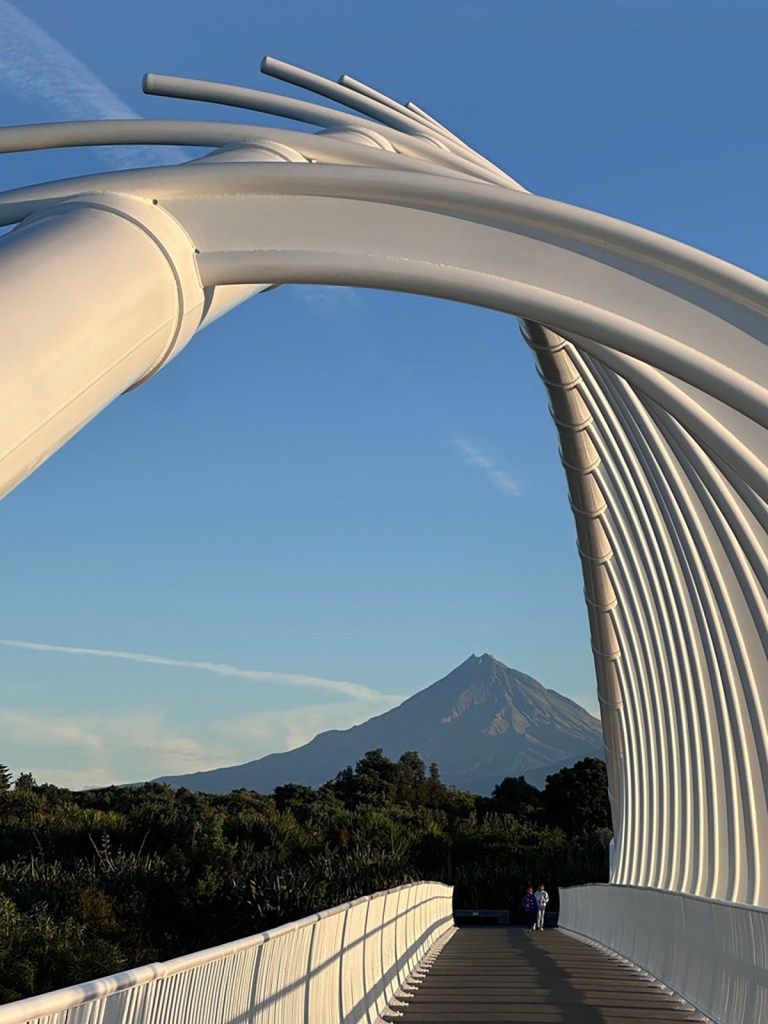
New Plymouth is a coastal town, with aspirations to be an art center. The most popular spot is the Coastal Walkway. At one end is the gorgeous Te Rewa Rewa Bridge. I took a lot of photos of this bridge. It was just fun to look at.
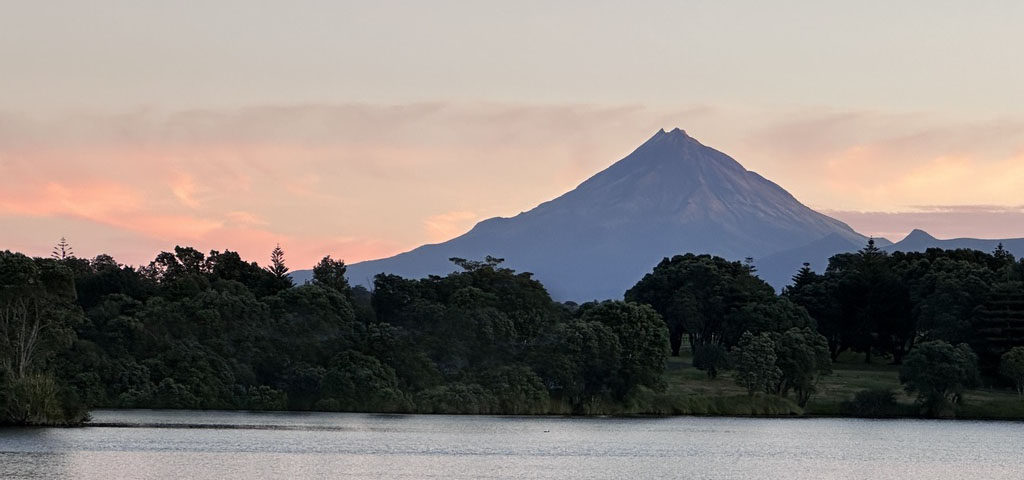
We watched the sunset over Taranaki and from the bridge.
The next day we visited the Rotokara Scenic Reserve to check out the birds. New Zealand has no endemic predators. There are no coyotes or foxes, bobcats or anything that can eat a deer. When you walk in the woods here, you’ll find only birds and a couple of reptiles. Invasive mammals such as stoats (ferret), possums, rats, and cats have made homes in the wild. These predators prey mostly on birds. The problem is that New Zealand birds have not evolved in an environment with predators so many of them do not fly. Why fly if no one is out to get you? As a consequence, they are vulnerable to these invasive species who feast on the birds and their eggs. This kind of pressure has driven many of their birds to near extinction.
To combat the invasive species, there are a few parks in New Zealand that are predator free. What does that mean? They build very tall fences that are impassable to small animals. The area inside the fence is then methodically cleared of predators and pests. Once cleared, the birds thrive.
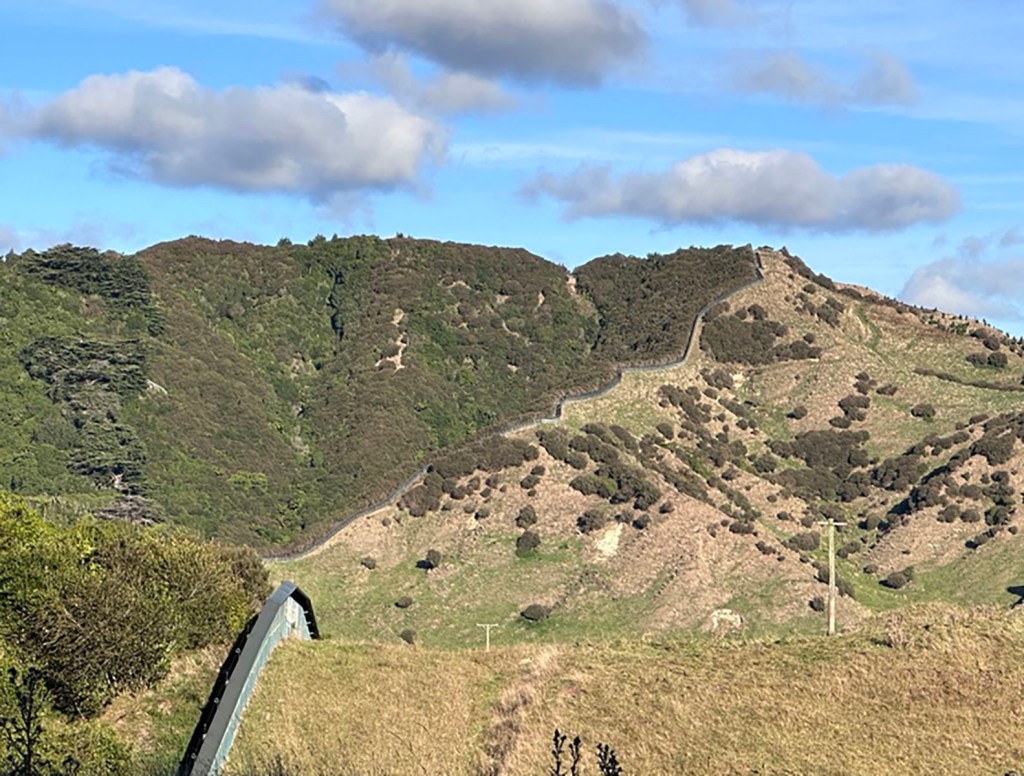
Here is the picture of the fence at Rotokara.
The fence is like the Great Wall, a monstrous structure traveling over hill and dale. What you can really see in the photo is a before and after view of the land, pre- and post- agricultural clearing by the settlers. A large part of this country was cleared of Native bush to make way for agriculture. Inside the fence you see the native bush, and outside the fence, farm and grazing land. It is hard to believe the work that clearing this land must have entailed.
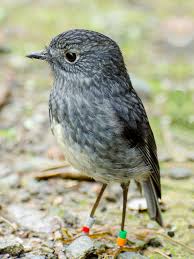
On the walk around the lake, we managed to see a hihi, or stitch bird. They can be elusive, so we were happy to check them off the list. We also saw whiteheads and lots of other species. The most fun is with the North Island robins.
They are small black and white birds birds that look nothing like our red breasted friends. They will come out of the bush to look at you curiously and say hello, and sometimes follow you down the path. As an aside, the birds in New Zealand are generally not colorful. They are mostly black and brown or dull colors like yellow or green. All meant to blend into the bush.
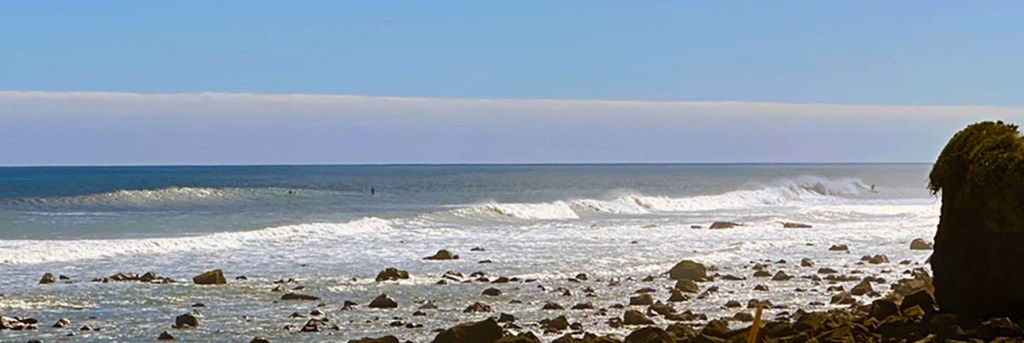
The next day we drove home along the surf coast. with its location, you would imagine there is a lot of surfing here. But the coasts are pretty rough–lots of rocks and hazards, and the seabed is not accommodating to big waves. But here in Taranaki, beautiful waves abound. We met a group of surfers, young boys heading to the beach. We followed them and chatted about America. They soon split off and headed for an area with an open beach. We watched from a distance.
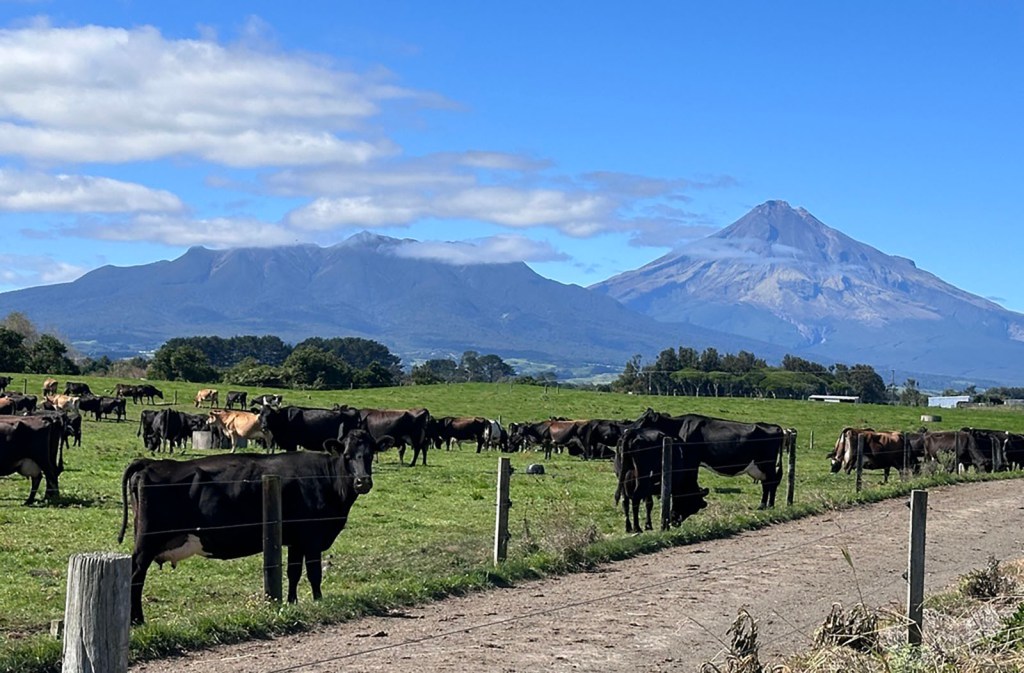
And did I mention cows??? Here they are along the surf coast.

 A Yank Among the Kiwis