Helping the Maori

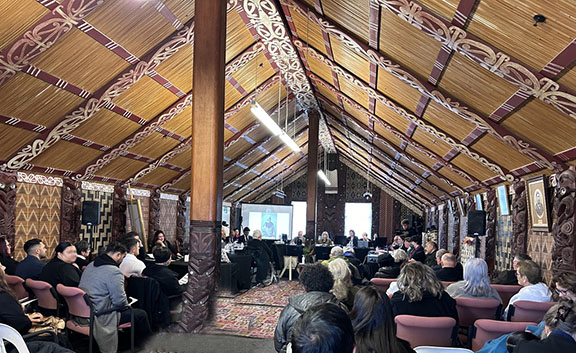
Meeting House called a “marae”

  For years I joked that I was going to move to New Zealand and help the Maori.  Well, I moved to New Zealand and I have been helping the Maori.  I am not qualified to be an attorney in New Zealand and I certainly don’t want to be.  I am fine not working thank you.  But somehow, I was sucked into helping with a case for a tribe located in a nearby town. 

            New Zealand’s founding document is the agreement known as the Treaty of Waitangi.  Signed in 1846, the British Crown and the Native inhabitants, the Maori agreed that the Crown was there for good but the Maori would be left alone.  To summarize, and this is a very unnuanced statement, this treaty gave the Crown the right to exercise sovereign rule over New Zealand with the proviso that the Maori would continue to have self-government over their own tribes.  The problem is that the Maori, without really understanding it, gave away their land title and they gave the Crown the right to govern the country.  I say “without understanding” because, as was true of all indigenous communities, the Maori concept of ownership and authority over land and the British understanding of those concepts were two very different things.  As happened in any country that purported to engage in sincere treaty agreements, the ensuing settlement of Europeans onto indigenous land resulted in non-native dominance and the native population decimation.

            New Zealand has sought to make some amends for the terrible history here and part if it is the Waitangi Tribunal—an entity where Maori tribes or iwi can make claims for lost land, breaches of the Treaty, and other harms caused by settlement and exploitation.  The Tribunal then makes a report as to whether the claim is valid.  The Tribunal can also be asked to look at remedies which can be recommended to the Crown.  In some circumstances, the Tribunal can issue orders but that seems to be a last resort.  Their goal is settlement of claims once they have been aired and examined.

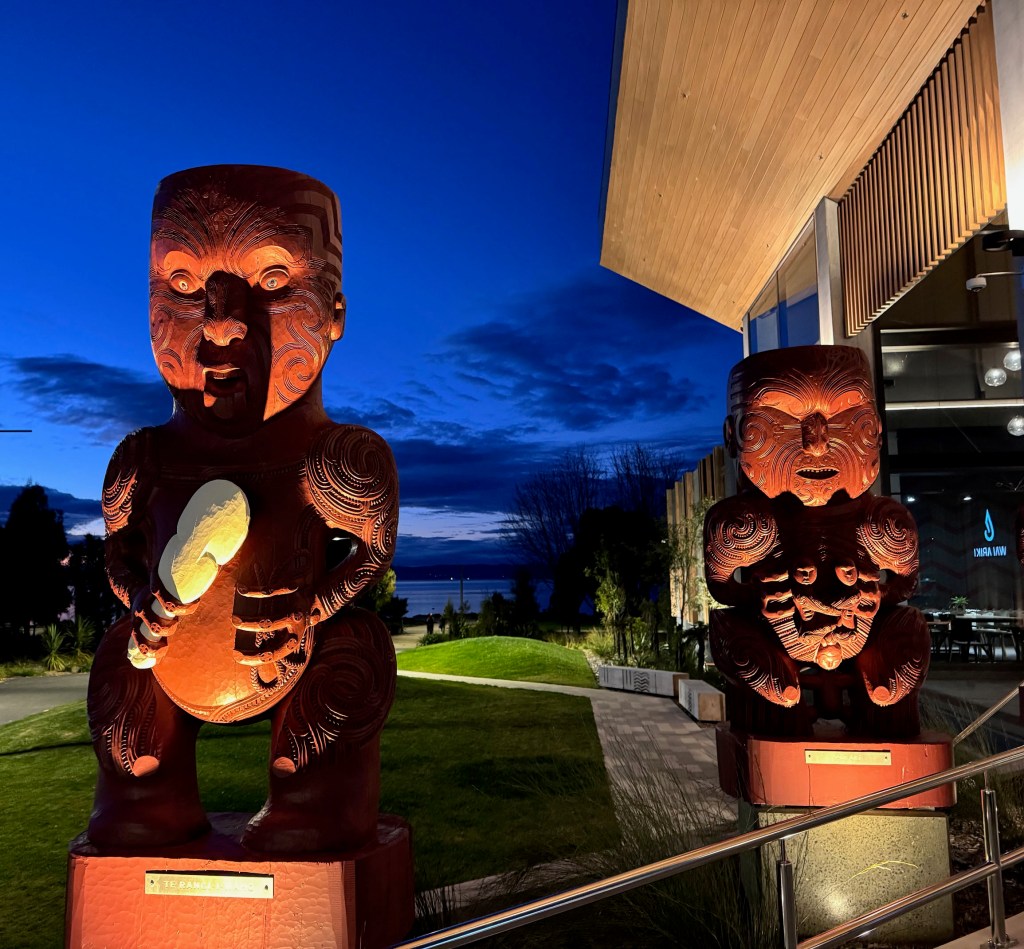
            So how did I get involved?  I was reading the local paper–they actually still have local newspapers here–and I saw a notice that a Tribunal hearing was going to take place nearby.  I decided it might be fun to go and see what goes on.  That is one of my traits.  I really like to see what goes on.  One early morning I set out for the marae, which is the tribe’s meeting house and communal center, to attend the hearing.  I stopped to ask if it would be okay for me, not a tribal member and not a Maori, to attend the hearing inside the marae.  Everyone said it was fine.  I took off my shoes and entered.  The marae was crowded with members of the iwi sitting on benches shoulder to shoulder.  People were greeting each other with kisses on the cheek between women and the nose greeting or hongi with men.  The space was decorated with carvings of Maori gods and painted in a scroll design known askōwhaiwhai.

            I squeezed onto a bench in the back and watched the show.  There were legal representatives of the New Zealand Government or Crown, three judges, and some experts.  The claimants read their written testimony into the record and then answered questions presented by the Crown and the panel.  It was not exciting, but hearings rarely are unless you are completely absorbed in the issue.  

But there was one aspect of the hearing that was delightful.  After testimony, and at breaks, the tribal members sang songs.  It is often said that a day is court at least allows a person to be heard.  By singing, they were making their voices heard.  Everyone stood and clapped and sang full throated as if they were a church choir.  I don’t know what the songs were about since they were singing in Maori.  It struck me that they were singing of being together with a hopeful plea to the Gods to render a decision in their favor.  Imagine this happening in a U.S. court of any kind–a family or group of claimants breaking out into song at the end of testimony. Order in the Court! would be the cry. Setting aside where this was happening, gosh, we as a culture have lost so much having moved away from informal sing alongs.

            The hearing was stopped for tea at around 11a.m. and then again for lunch at around 12:30.  At the break, I introduced myself to the attorney representing the claiming tribe explaining that I had worked in Indian law in the United States, particularly a land claim.  The attorney nodded politely until I mentioned the land claim.  Then she sprang to attention, her eyes focused on me.  She asked for my number and said she would contact me.  I did not think anything of it and assumed that maybe we would have lunch some time.  

            About a week later I received a call from the attorney.  She asked if I could come to her office for a meeting.  She wanted to discuss the claims with me.  I agreed to come by.  I learned that she was desperate for help because some attorneys she had working for her had gone off to other jobs leaving her short staffed.  She figured that with my experience I would not need much in the way of education.

            The assignment was to read three expert reports, amounting to hundreds of pages of text, absorb it and wring out of it a coherent factual narrative to support the claim for land and damages.  Oh, and I had a week to do it.  One week to learn everything I could about the history of a claim, and regurgitate it into a witness statement.  By the time I learned the deadline, it was too late to say, I pass.  In any case, I am pretty sure she was not going to take no for an answer.  I took the reports and drove home.  

            I have not really worked hard in about two years and I had to absolutely crash into the texts, reading as fast as I could and making judgments about what was or was not important.  I had a set of guidelines as to which facts were necessary, so I had some clue as to what I was looking for.  But what made it harder was the use of Maori words in the text.  I do not speak Maori, not even a little.  But here were expert reports filled with Maori concepts that are embedded in the Maori language.  So I did what any normal person would do.  I located a Maori dictionary on the internet and started translating the document.  In this project, I was not only learning the history of the area I live in—the Maori tribes who occupied the area, the uses of the land and river  the actions of the British to take it all away—I was also learning Maori.

Even more challenging, once I had read the reports, I had to write a factual statement to be delivered by a Maori witness that had to include the concepts and the language.  I made a cheat sheet of recurring words and forced my brain to incorporate the concepts into the narrative.  

I have not busted my butt like that for a while and honestly, I did not like it.  I had forgotten what it is like to have to sit at a desk and get something done on a deadline.  I am anti-deadline at this point in my life.  I am all about fluidity and serendipity.  Whatever comes along.  And if something comes along and I can’t take advantage of it because I have to sit at a desk and be responsible, oh, that just makes me irritated.  

            On the other hand, I was helping a Maori tribe get some vindication for the wrongful actions of the Brits oh so long ago.  No surprise that they took Maori land by settlement and the assumption that the land title ultimately belonged to the conqueror.  Maori fishing rights were significantly impacted by damages to the river and streams from which they gathered their food.  It is the same old story no matter the country.  

            So I pushed on and pumped out a draft statement in four days.  I explained that the area was conquered by a mighty chief who brought his people from the north to settle along the river.   I explained that eel was a very important part of the Maori diet but that river dredging had damaged the fishery.  I explained that flax, which grows everywhere here, was an important trading good.  The Europeans wanted it for linen.  Gathering flax was done communally and it was important to the tribe’s cohesion.  But it soon became an industry with the Europeans, and the Tribe lost that connection to the plant and to each other.  

I learned a lot and I found it very interesting.  I think it met the goal of establishing the Tribe’s connection to the land and river.  About a month later, I attended the hearing at which the witness read the statement into the record.  I was happy I could get it done for them and I hope they win something. 

            Am I finished with the Maori claim work?  I have no idea.  
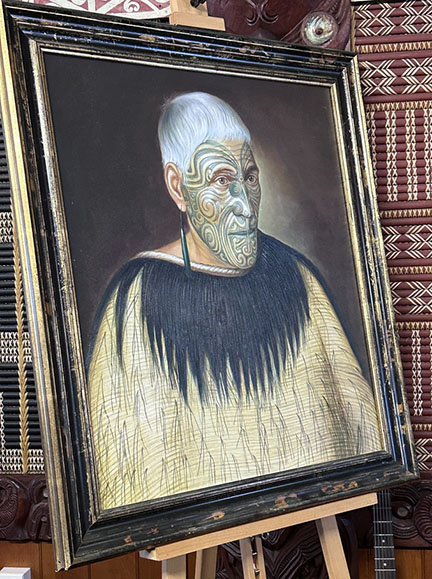
The Tribe’s long ago spiritual leader. Now that is a tattoo.

Rotorua Trip Part 4 –  The Giant Carrot of Ohakuna

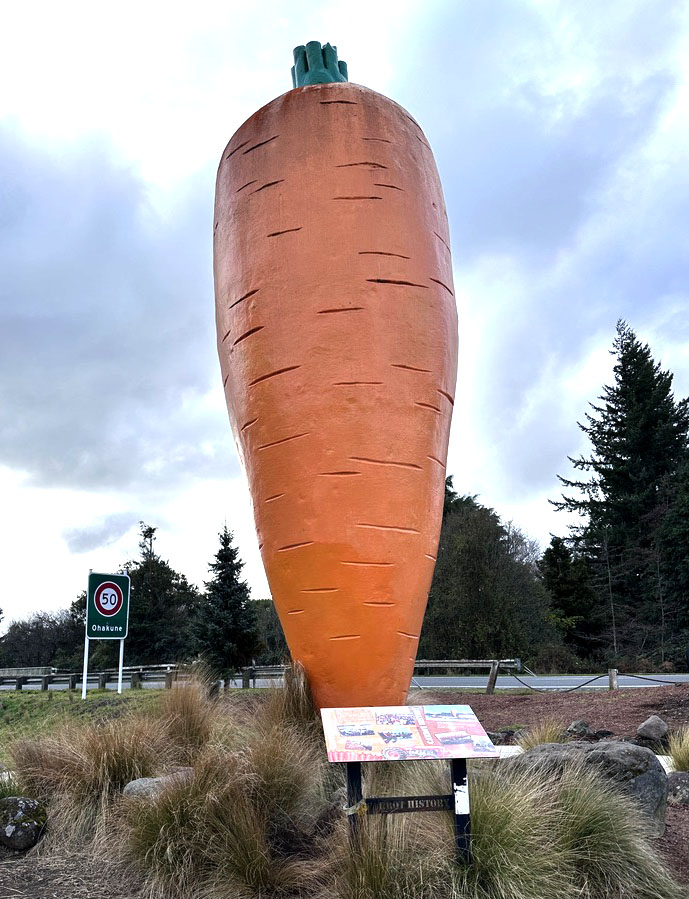
            Then came the Giant Carrot.  Drum roll please, here it is:


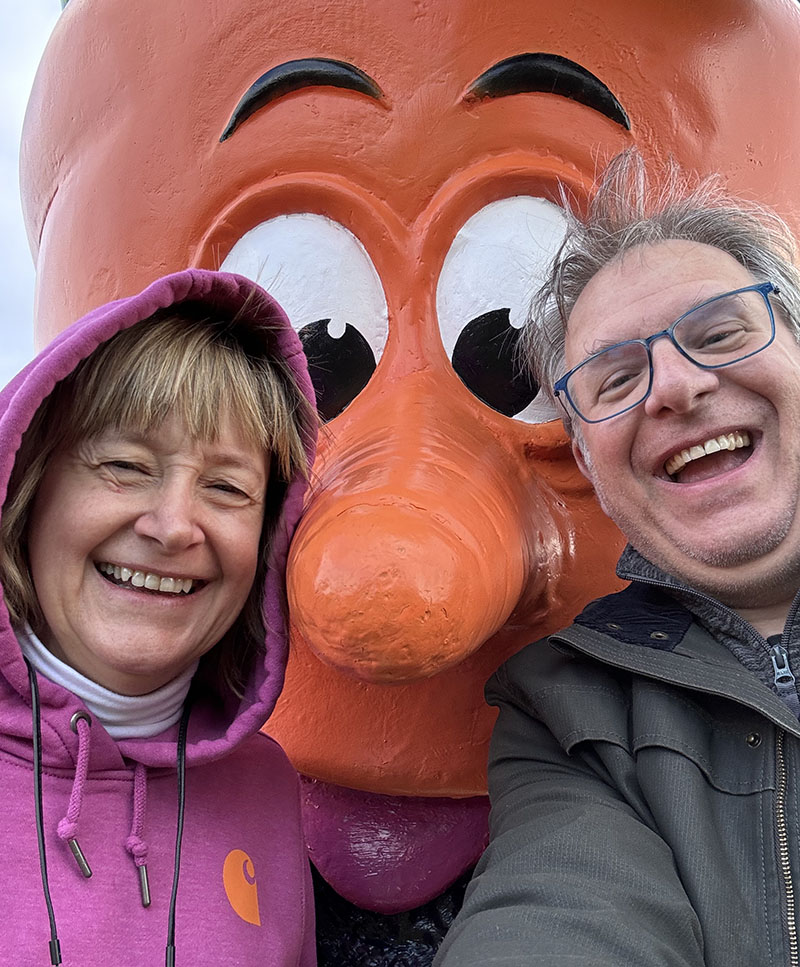
            Driving around the volcanoes, we headed into Ohakune, a small town that serves as an access point to the park and the Ruapehu ski fields. We stopped at a local café for coffee and noticed the café had a lot of carrot-related stuff–carrot trinkets, carrot cake, carrot smoothies.  I had noticed a sign coming into town about a carrot carnival, so I asked if this was carrot country.  The waiter said, yes it is. Go see the giant carrot.  It is just down the street.  We hurried back into the car.  If there was a giant carrot, I had gaze upon it.  

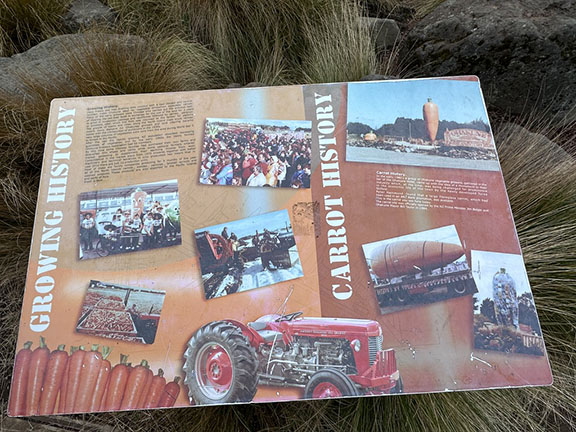
            The story goes: in 1984, a giant carrot was built for a bank commercial.   The locals decided their efforts as the beta carotene source for the country should be recognized, so they asked the bank if they could have the carrot. After it had served its purpose, the bank donated it to Ohakune. The town welcomed the largest vegetable in New Zealand with a parade and a park, making it a centerpiece of their town.  It is now one of the biggest tourists draws in the area.  There is even a Carrot Carnival in June to celebrate the town’s heritage.  We might have to attend that one.


After that excitement, it was time to focus on getting home.  What a trip!

Rotorua Trip Part 3 – Tongariro National Park

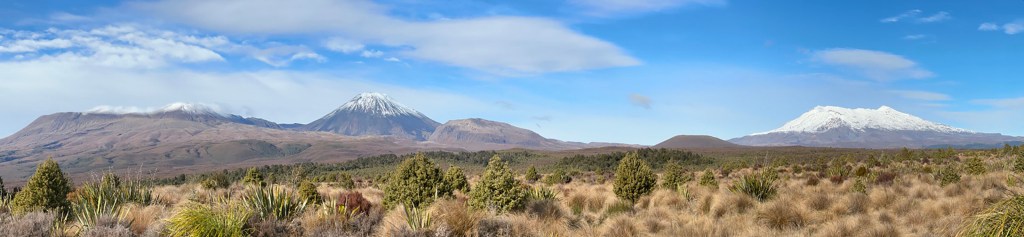
Three volcanoes – left to right Tongariro, Ngauruhoe, Ruapehu

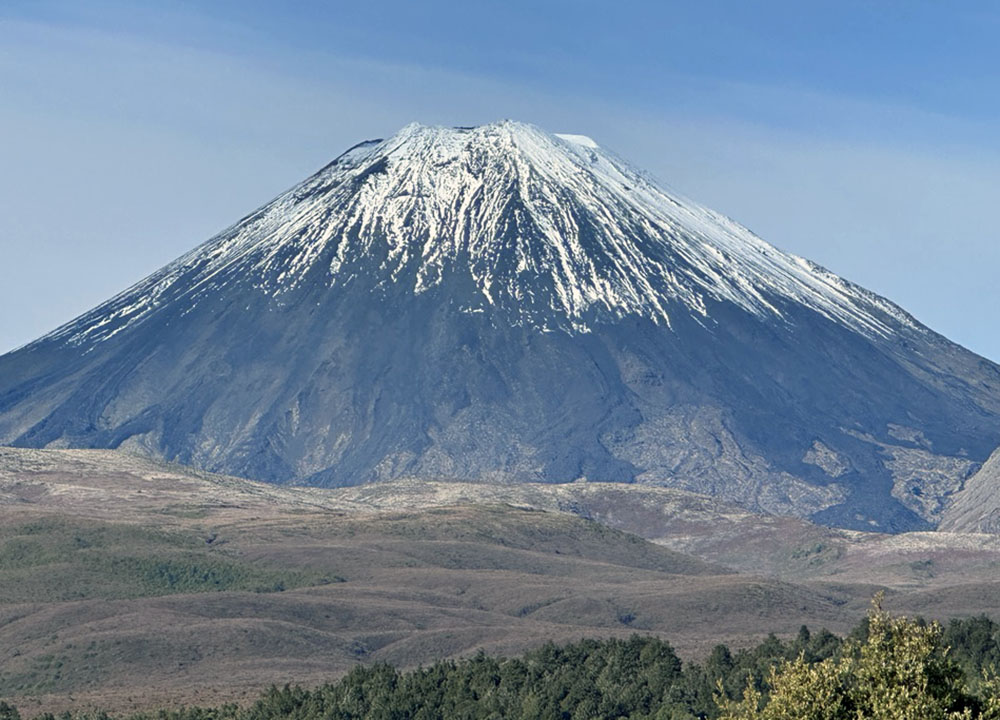
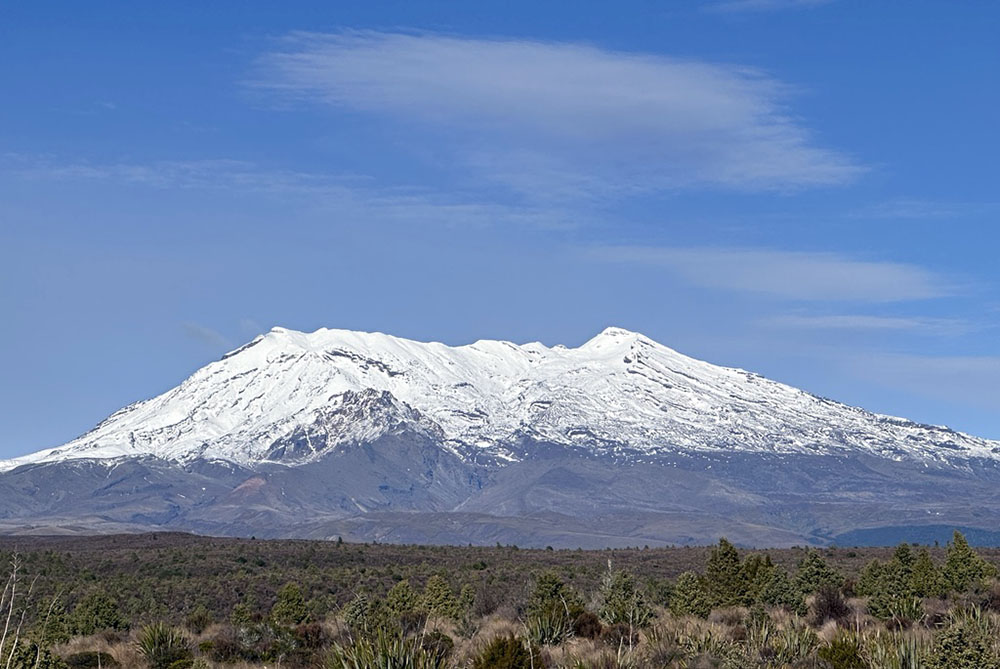
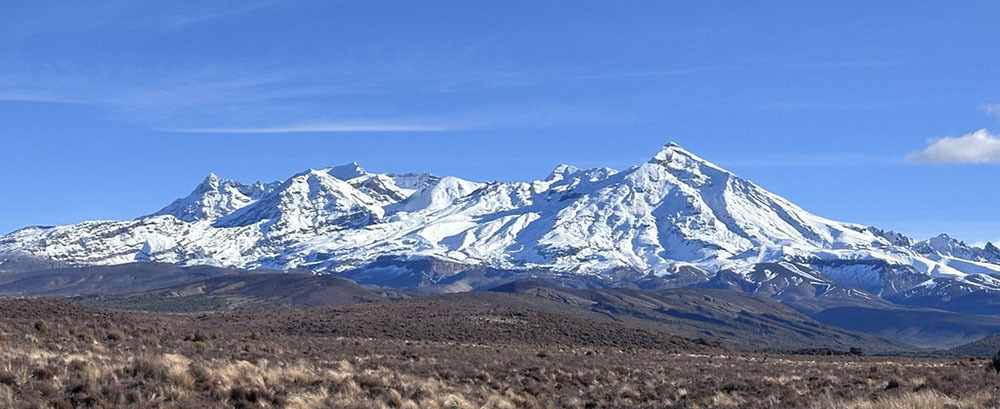
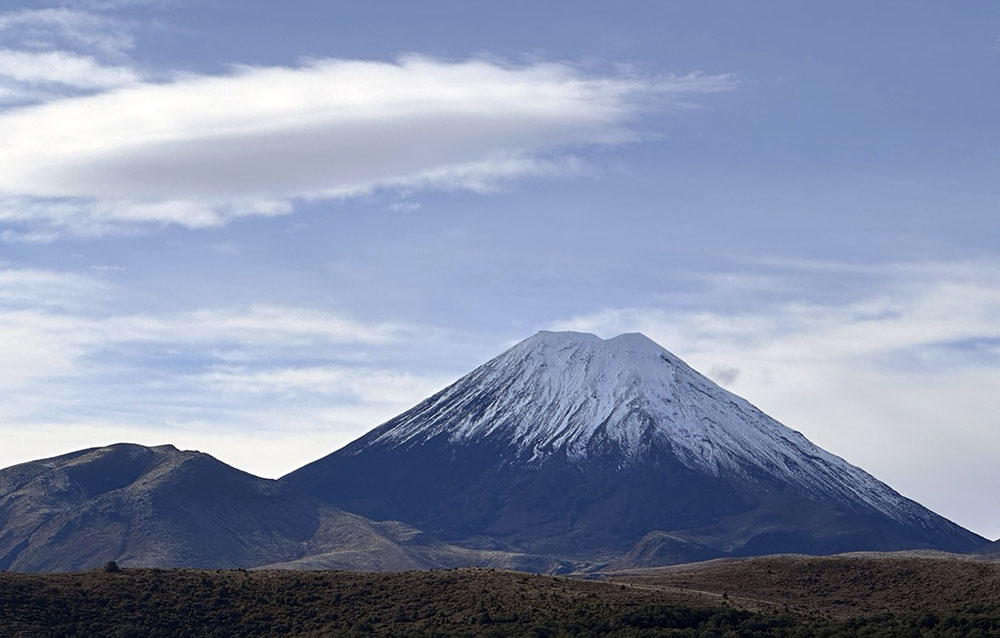
Now it was time to head back home. With Rotorua behind us, we veered off to drive through Tongariro National Park, the oldest National Park in New Zealand.  It is home to three volcanoes Tongariro, Ngauruhoe (pronounced Nah-ru-ho-ā) and Ruapehu (Roo-a-pay-hoo).  Ruapehu is an active volcano, last erupting in 2012.  It is also the location of a popular ski resort. 

 On the way to Rotorua, we passed on the southeast side.  On the way home we decided to do a circumnavigation and see them from all sides.  What a joy!  I could take pictures of volcanoes all day.  At this time of the year, they have the bright white snow-cap that sets off the always amazing New Zealand blue sky.  For me, they are the supermodels of landscape photography because they are not just mountains.  They are stories of the earth’s formation and the underlying forces that made them.  I yelled Stop! every two minutes to get yet another shot until we finally had them out of our view.  

If this looks familiar that’s because this is Mount Doom LOTR

Ruapehu

Ruapehu other side

Ngauruhoe with forming lenticular cloud. You can see why these may be mistaken for UFOs

Rotorua Part 2 – The Spa and the Redwoods

Spa entrance (Matt pic)


The Spa

Next on the agenda was spa day at Wai Ariki, a new spa built by the local iwi (tribe).  We booked the works.  First the “restorative journey”—a series of pools, showers, saunas, ice baths, herbal baths, and mud.  At the fire and ice room, we went back and forth from the hot saunas to cold dips, including an ice room where ice chips were offered as rub.  Even better, buckets filled with ice water were hanging from the ceiling.   With one yank of a rope, frigid water poured over your head.  There was a lot of screaming involved in that one.  But it really is invigorating to go from hot to cold. 

The water menu continued to the natural geothermal pools.   The pools were located in an open pavilion and, being winter, the air was crisp.  There were different pools with different temperatures and different mineral contents. One pool had jets and waterfalls and others had calm still waters.  An herbal pool was suffused with traditional Maori healing herbs. A separate room offered the joys of mud.  Matt skipped the mud bath.  I went for it and rubbed it all over.  It felt good but it was really messy and hard to wash off.  

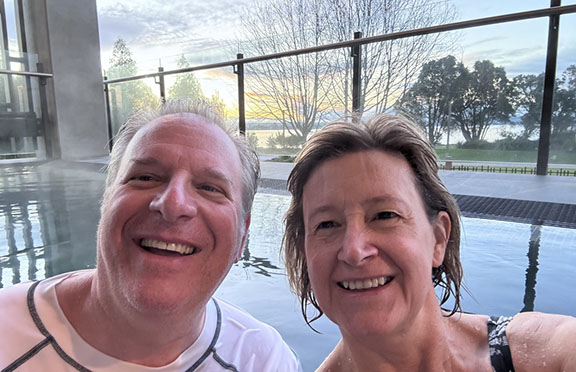
All of this took about 90 minutes.  Then another 90 minutes for massages and voila, relaxation, soft muscles, and calm mind.  We ended the day in another set of pools while we watched the sunset. 

Beet red from the to water.

 What a great day.  And it was only getting started.  We had a forest to visit.

            Redwoods Tree Walk


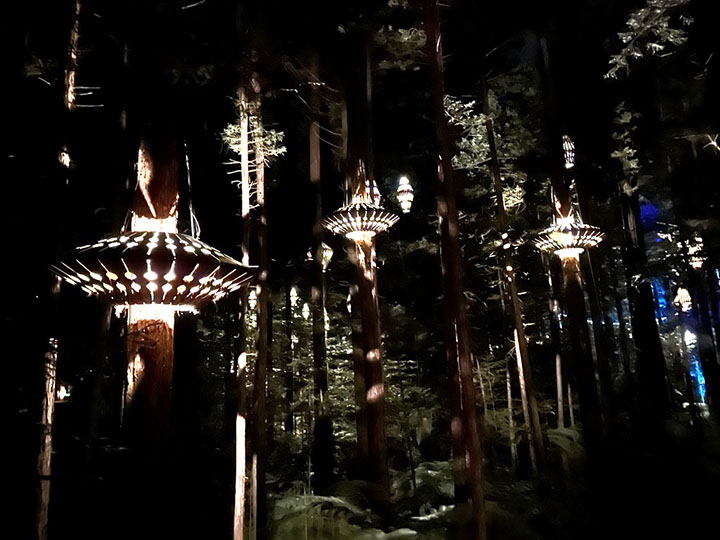
After dinner at Atticus Finch (yes, the name of a restaurant serving an eclectic mix of pretty good food) we drove to the Redwood Forest for the night light show and canopy walk.  The forest was lit up with lanterns and lights strung through the branches giving the trees a subtle colorful glow.  


Why are there redwoods in New Zealand?  Well, there are all sorts of flora and fauna that are here because, in the days before understanding invasive species and protecting a native environment, someone thought it would be a good idea to plant various exotic trees to see which would survive and flourish.  This redwood stand was part of that effort.  Originally planted around 1900 as a source for timber, the trees are now protected and are not harvested.  Instead, they have been recruited into giving tourists as amazing tree walk, a series of suspension bridges passing through the forest canopy.  

 I have to admit, walking on the bridges was difficult for me.  I don’t like being on exposed heights.  Even worse, the bridges were very narrow, and I was bounced up and down by the steps of people walking in front and behind.  I hung on to the “railing,” and went as fast as I could from platform to platform.  I made it but I was glad to be out of the swinging bridges and on solid ground.

            Whew, that was the grand tour of Rotorua.  We will certainly go back for more spa time and maybe a revisit to the thermal area. 


  Rotorua – Part 1 – Matariki

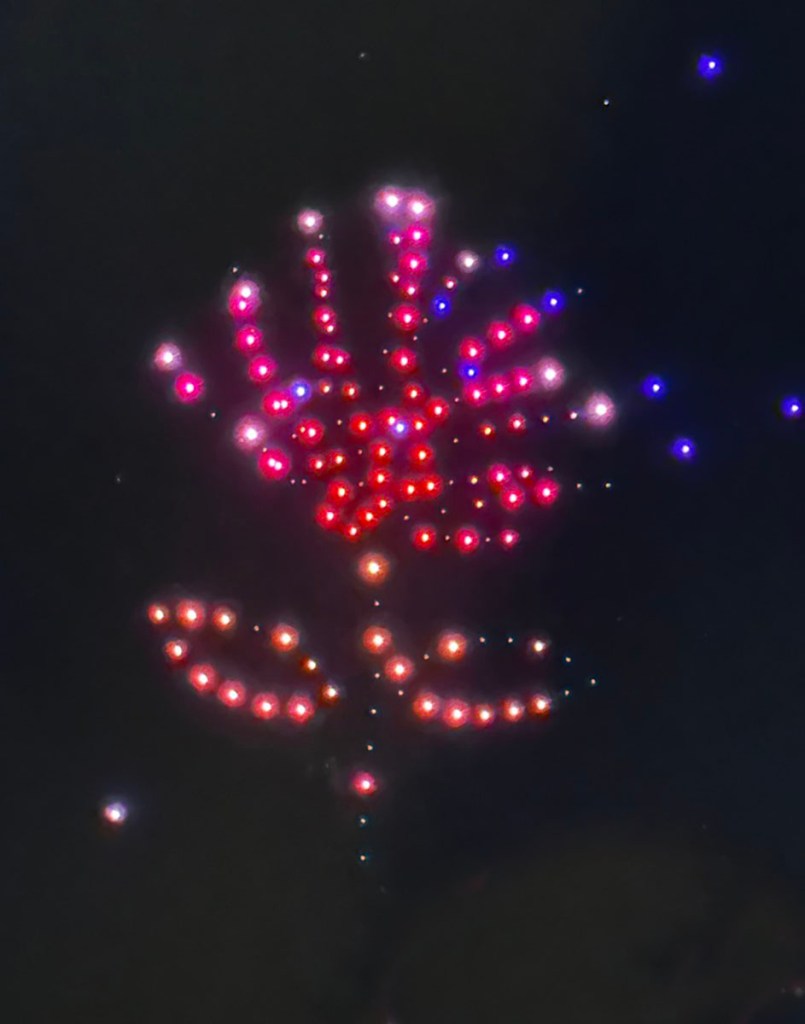
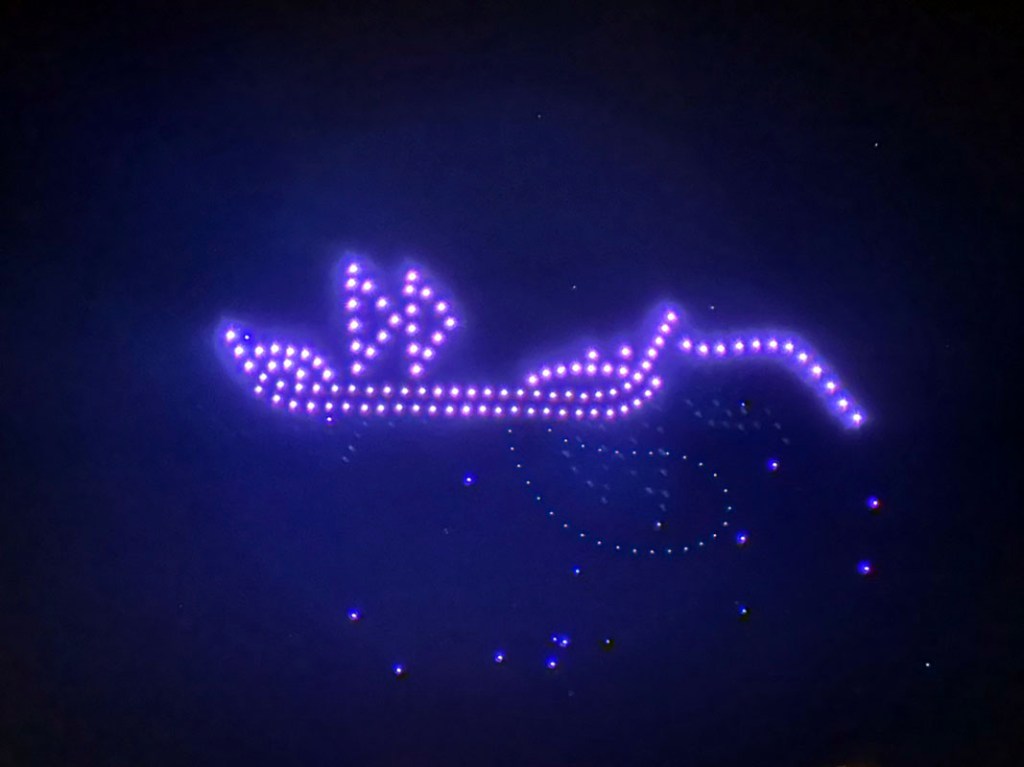
Drones form a pohutukawa flower


  It is winter here and it seemed like a good time for a visit to the spa.  I remembered our visit to Rotorua many years ago and thought, well, why not?  A seven-hour drive from home, it took us through the center of the North Island which is one of the most active volcanic areas in New Zealand.  There would be a lot to see along the way. 

            Rotorua is the Yellowstone of New Zealand.  Here they have geothermal pools, geysers and bubbling mud.  The air smells of sulfur.  There are many parks and reserves along the way where you can see the colored pools of hot sometimes boiling water.   Driving through the hills outside of town, you can see steam rising in the valleys giving the landscape an ethereal quality.  Even along the side of the road, steam rises from the drainage ditches. 

            In town there is a large geothermal park operated by the local tribe with hot bubbling mud, hot springs, and geysers.   But having seen it before, we chose to skip that attraction. Rather than looking at the geothermal waters we were going to get in them because there is nothing like relaxing in a natural thermal pools.  Our destination was Wai Ariki, a new spa built by the local tribe.  As it turned out by coincidence, I booked massages for the same weekend as Matariki.  The plan was to fit in Matariki and the spa in two days.  

            Matariki is the Māori New Year which coincides with reappearance of The Pleides or the Seven Sisters star cluster in the early morning sky. This happens on a cold day in June or July.  Matariki is a day for mourning those who passed away in the past year.  At dawn, the Māori gather and say the names of those who are deceased.  After that ceremony, the rest of the day is spent with family enjoying kai (food).   According to the Te Papa Museum,

Māori belief determines that when an individual dies, their spirit leaves their body and undertakes a journey along Te Ara Wairua, the pathway of the spirits. This journey ends at the northernmost point of the North Island at a place called Te Rerenga Wairua (the departing place of the spirits).  The dead travel along the rocky ledge towards the ocean where an ancient pōhutukawa tree stands.  They then descend the aka (root) of this tree and disappear into the underworld.  Below Te Aka, the long dry root of the pōhutakawa which does not quite reach the sea, is Maurianuku, the entrance to the underworld. Pōhutakawa is the whetū (star) that connects Matariki to the deceased and it is the reason why people would cry out the names of the dead and weep when Matariki was seen rising in the early morning.

https://www.tepapa.govt.nz/discover-collections/read-watch-play/matariki-maori-new-year/what-and-who-matariki/stars-matariki#

There are more details to the legends surrounding Matariki.  

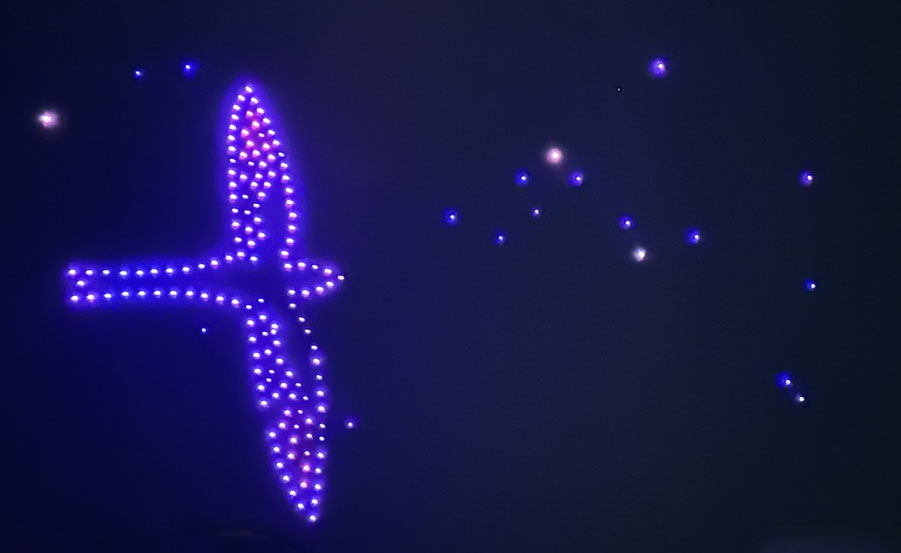
The constellation known as “Te Waka o Rangi” is connected to the setting of Matariki.  Known by a variety of names based on regional kōrero (narrative), Te Waka o Rangi is a canoe with Matariki at the front and Tautoru, or Orion’s Belt, at the back. The waka (canoe) is captained by a star named Taramainuku, who casts his net each evening upon the Earth and hauls up the souls of those who have died that day.  He carries them along behind his waka for 11 months and then takes them to the underworld when the constellation sets next to the sun in May.  The constellation rises again in a month and Taramainuku releases the souls of the dead into the sky to become stars. 

https://matariki.twoa.ac.nz/the-setting-of-matariki/.     I like the idea of mourning loved ones and then watching them become stars.  

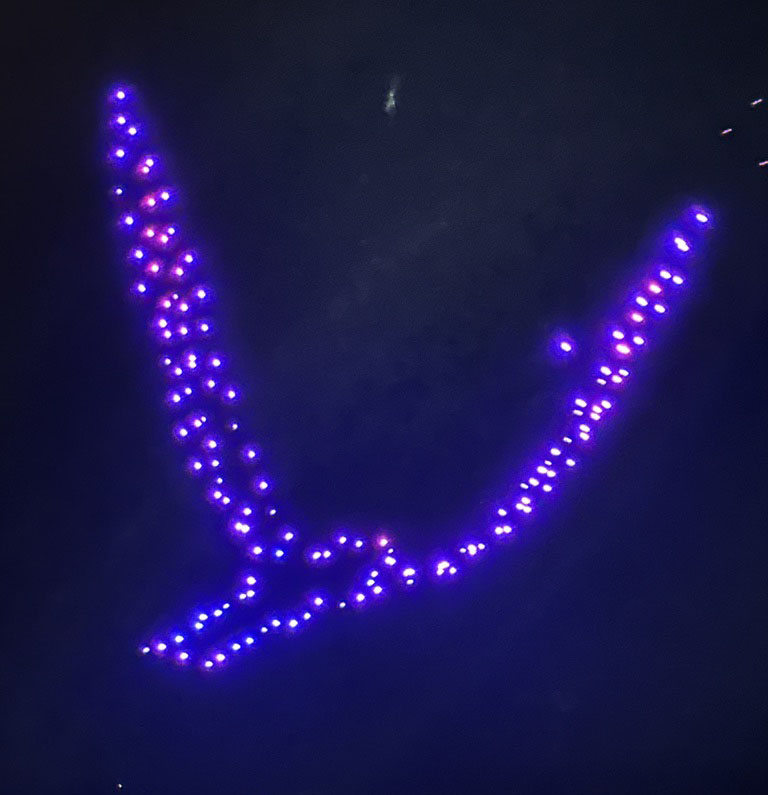
      In 2022, New Zealand declared Matariki a national holiday.  They are still trying to figure out how to have a celebration for the masses.  As I was looking at Matariki events in Rotorua, I saw that there was going to be a drone light show over Lake Rotorua.  A drone light show was new to us and it was fantastic!

  One hundred and sixty drones quietly lifted off from the pier and buzzed into position to tell the story of Matariki by forming different figures and objects.  My favorite was the formation of Taramainuku’s boat and the release of the souls from the net. Here it is as depicted by the drones:


Here is a video someone posted on tik tok.  There were a lot of different characters like a large bird and flowers. Check out the video below:

Drones form a flower. The voice is speaking Maori. He is explaining the legends.

 After we oohed and aahed over the drones, we sought out dinner.  When we traveled to New Zealand 20 years ago, Rotorua was a sleepy, quaint tourist spot but since then it has developed beyond recognition.  We were pointed in the direction of a restaurant row where we found Italian food, Mexican food, Irish bars, Thai food, and steak houses.  It all seemed aimed at American tourists.  That is reasonable given that Americans are likely the predominant visitors.  On the one hand, it is nice to find familiar food.  On the other hand, it is hard to pull it off.  We tried Italian and it was not bad.  Not great, but pretty good.  (Finding great Italian in NZ is a challenge.)   All in all, a pretty good Matariki.