Although it is generally temperate, winter here can be pretty cold and gloomy. There is no snow in our region but we are blessed with lots of clouds, rain and icy, brisk (often gale force) winds from the south, and by south I mean Antarctica. The gloomy, cold weather pushes most people to head for warmer climes come July and August.
We are not far from some tropical islands in the South Pacific, although, truth be told, New Zealand is not really close to anywhere. Our preference is French Polynesia with their over the water bungalows and good snorkeling. What is not to like? But those islands are quite a ways away, so we looked around and decided we would give Fiji a try. It is close by and we have never been.
I did a little research and concluded we should try one of the secondary islands just for a different experience. I found a resort that had partnered with Jean Michael Cousteau, (Jacque Cousteau’s son), to create a sustainable eco-resort. Located on the island of Savusavu, the second largest island in the Fijian chain, it is operated in cooperation with the local tribe, many of whom work at the resort. There were numerous activities offered for free and most importantly, it was located near some of the best coral reefs in the South Pacific including the Namena Marine Reserve. We were all in for this. A half day away, and a place we had never been, we packed up the flippers and snorkel masks and boarded a plane.
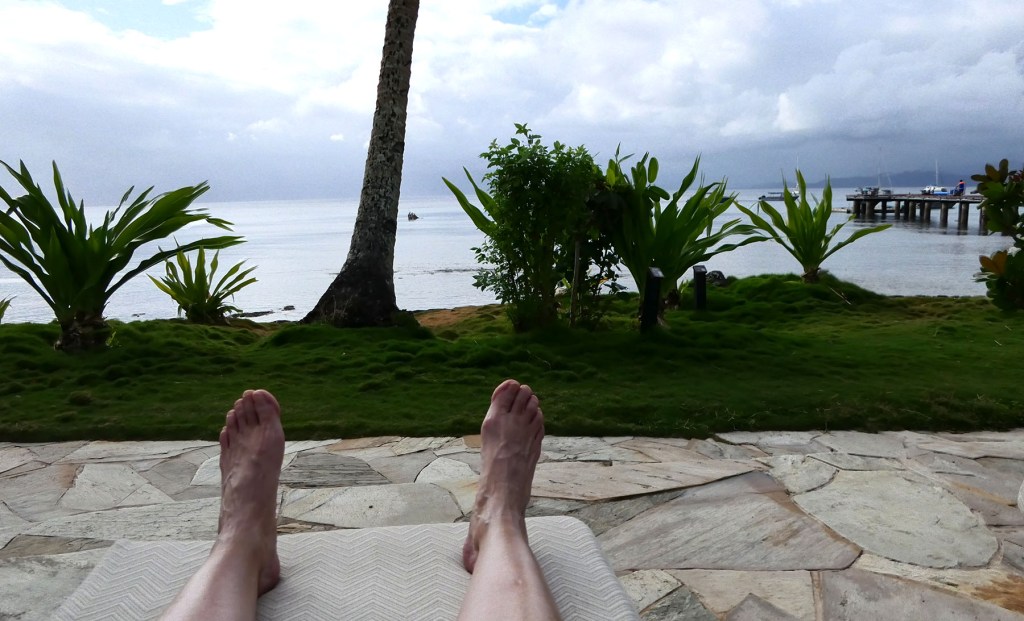
Unfortunately, the weather for the week was much like we had left behind–windy, rainy, cloudy. The only difference was that Fiji was warm. But with the strong winds, there was little opportunity to head out beyond the reef surrounding the island. Visiting the marine reserve or any of the other coral reef spots is entirely weather dependent and it was simply too rough to be out on a boat let alone snorkeling. The one day we did try to snorkel from a boat the water was so rough, I nearly lost my fins. We decided it was better all the way around to stay near the shore and snorkel the resort’s growing coral garden. It had some remarkably varied fish and we did not have to worry about being pulled away by strong currents.
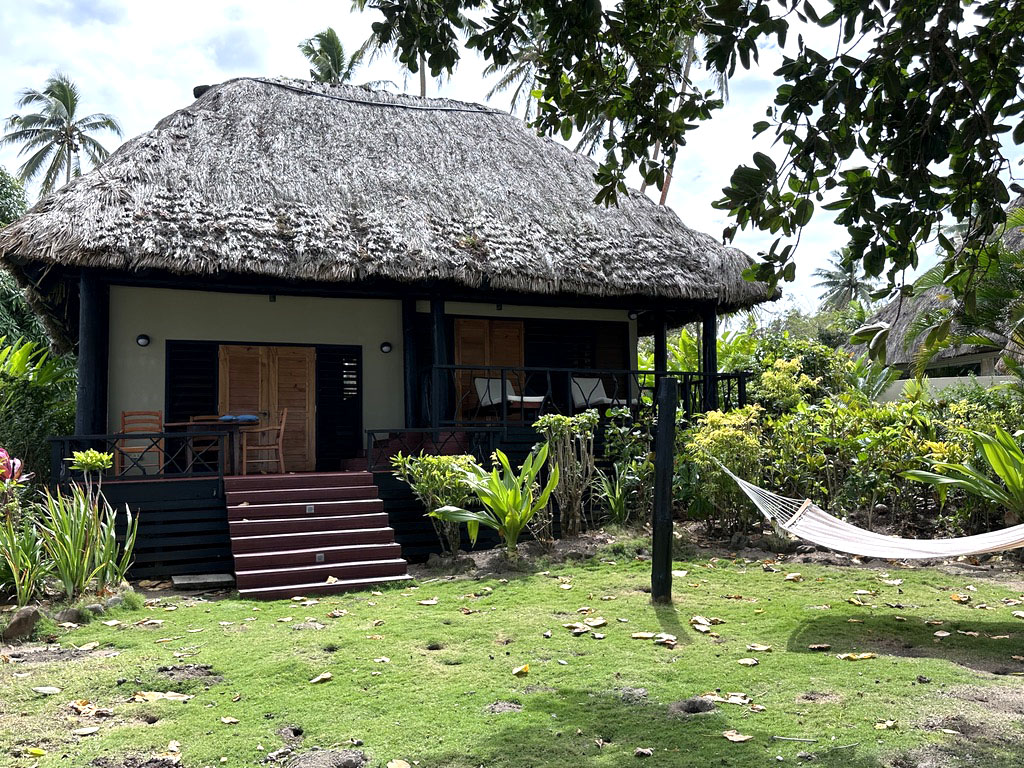
The resort guest rooms were bures or bungalows. When we arrived, we learned they had upgraded us to a bure on Breezy Point. This name had real meaning. While we had a good view, the strong winds kept us off the front porch.
We did luck out with a fishing trip. The morning was forecast to be clear until noon when the rain showers would move in. We sped out, dropped our lines, and hoped for a catch. I got lucky and caught a yellow fin tuna, about eight pounds. Matt caught a trevally and we lost a mahi mahi as we were bringing it onto the boat. So we had a good day.
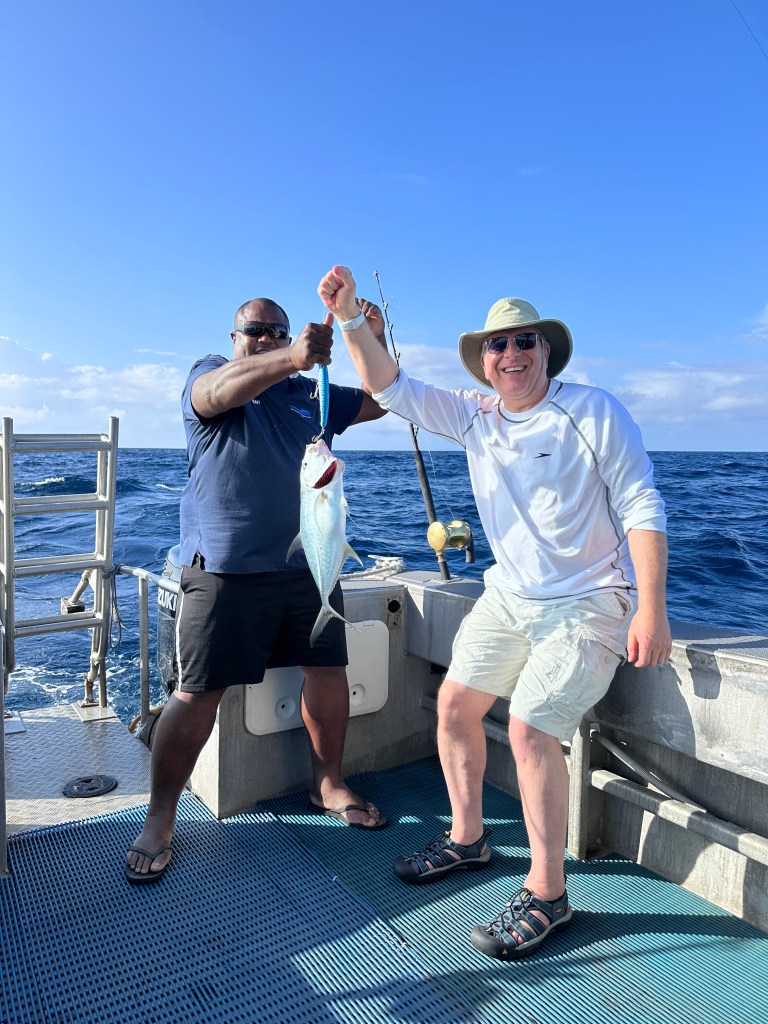

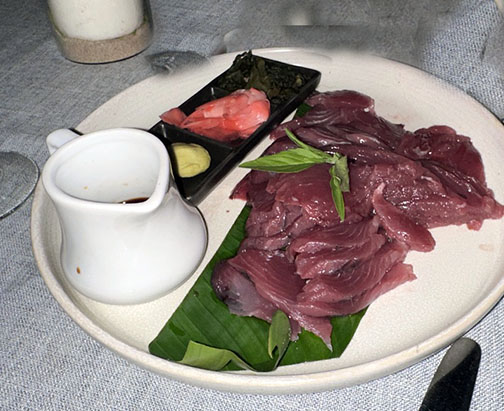
We left the trevally with the boat captain and took the tuna to the chef who agreed to prepare it for us. That is as fresh as fish can get. We got two dinners out of it, appetizers and dinner—sashimi and grilled tuna one night and ceviche and curry the next night. It was delicious. (There was no option to freeze the fish and ship it home. They had never heard of such a thing.)
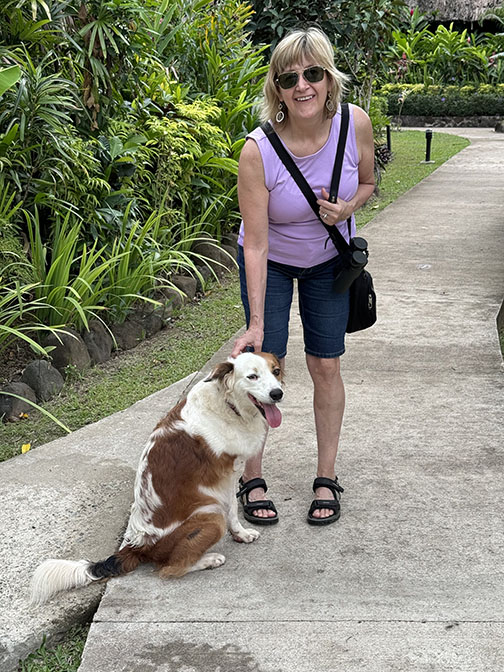
With the rain, we were left to find things to do. To bide our time, we did a lot of reading and bird watching. I made friends with a three legged dog. I named him Lucky. He was missing his right front leg but he hopped along pretty well. He followed me around the resort and stayed on our porch while we were there.
The resort did what it could to keep us engaged because there was not much to do on the island separate from the resort. The local town seemed pretty down and out, certainly not a tourist town. There were few shops or restaurants or businesses offering vacation activities. The only option seemed to be to take what the resort offered.
One excursion took us for a visit to the local tribal village. Here is how ignorant I am about Fiji. I had no idea they still had tribes. Well, they do. This village was governed by a hereditary chief. We were told that the national and local governments have to get his permission if they want to do any kind of development or construction in the Tribe’s territory. I know a few tribes in the U.S> who wish for the same thing.
Here is the chief leading a welcome song, a cappella singing by the villagers was hard not to love.

On our visit to the village, we learned about traditional Fijian crafts, dance and songs.
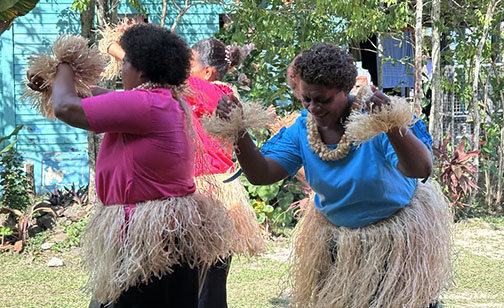
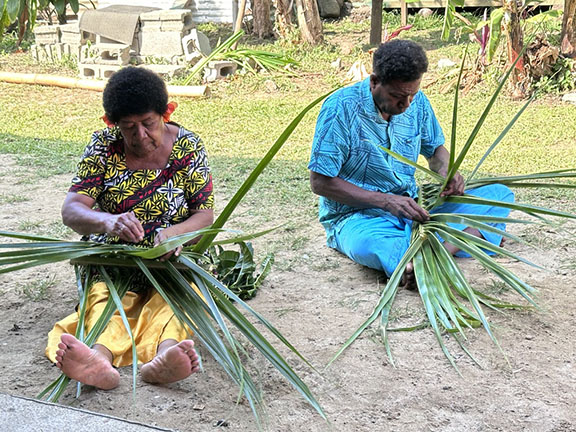
I was not clear why they had to be different.
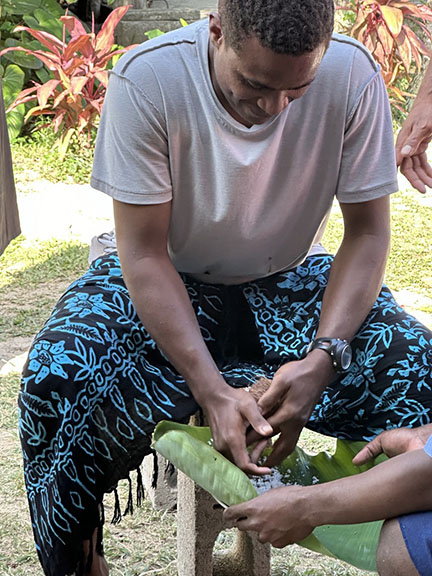
Here they are showing us how to get the coconut meat out of the coconut using a sharpened bamboo pole. The coconut bowl is scrapped in a circular motion. I tried this at the resort and it was harder than it looked.
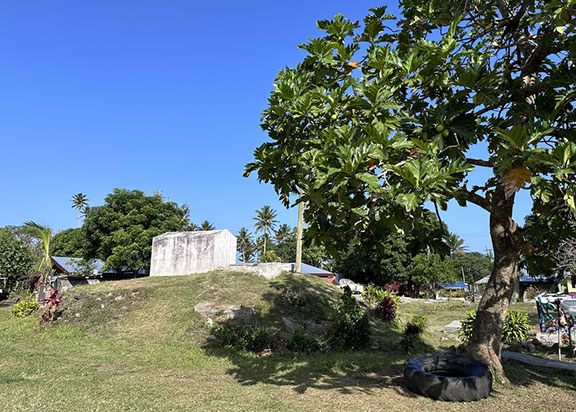
They took us for a walk around the village. Here is the cemetery and the hereditary chiefs’ burial crypt.
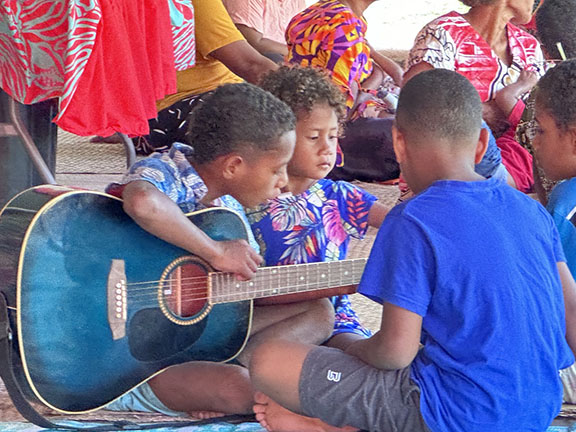
Back at the resort, the tourist entertainment factor was very high. I usually frown on this kind of stuff as exploitative, but when you have no other choice, you kind of go along with it. They seemed to be having fun showing us their culture.
Every night at dinner, they had a ceremony with one person playing a giant wooden drum (a hollowed-out tree trunk) while another person dressed as a traditional Fijian and lighted the tiki torches in a dramatic flame twirling dance.

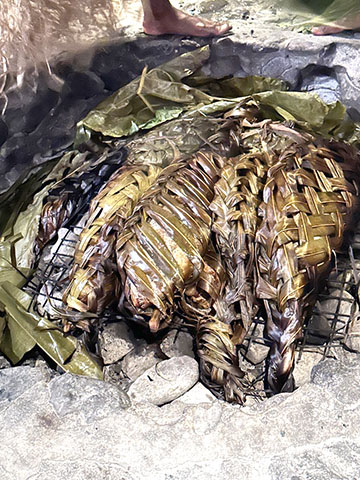
On another night the resort prepared a Fijian Barbecue in an underground oven called “lovo.”
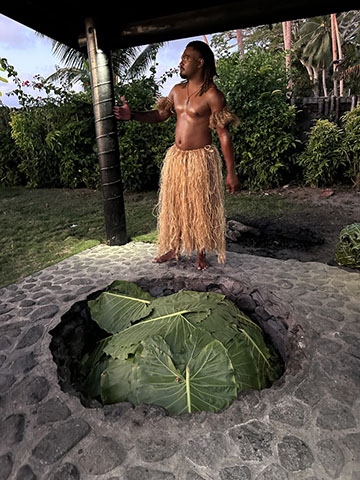
Similar to the Hawaiian imu used to make a feast for a barbecue, the food was cooked in a pit covered with hot coals and palm fronds and left to cook for hours. The result was tasty meat and root vegetables.
Then there was the kava ceremony. Usually, a tribal chief prepares kava for visitors to his village. Kava is an herbal plant used to make a drink that is claimed to be a calming and relaxing. It is very popular in the South Pacific and with herbalists worldwide. In the U.S., the advice is to drink it with caution because consuming too much can cause liver damage. In some states, it is a controlled substance.
The drink is prepared in an elaborate ritual that includes the offering of kava root to the chief and the chief using a round bowl known as a tanoa to prepare the drink. The local chief had given permission to the resort to depict the ritual. The kava root is soaked in water and then, after steeping, it is squeezed dry into the tanoa and cups are filled.
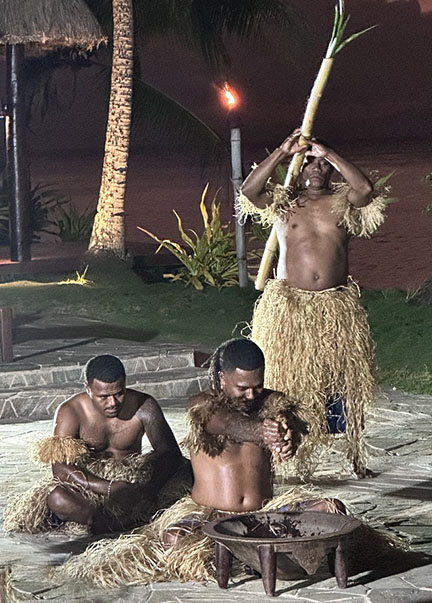
The ceremony requires the visitor to clap once to announce an interest in sharing the drink. After drinking the kava, the visitor claps three times to say thank you (at least that is how I understood it). While we did not get to participate in the formal ceremony, we still had options to try it. Every night, the local musicians, who entertained while we dined, also prepared kava that you could try. The drink tasted like ground soil and root. It numbed my tongue. I felt a small sense of calm but nothing terribly dramatic. But the musicians, who had been drinking it all night, looked pretty stoned. I brought some home to try.
On our last night, they had a hermit crab race to raise money fora local charity. We were all in, betting good money on the crabs we had selected to win the race. We were the only adults participating. It made me wonder if parents avoid activities that they think are for their kids. It was weird. Well, we had fun even though my crab lost.
That was about it. The weather prevented us from venturing to some of the best coral reefs in the area so we made do.
 A Yank Among the Kiwis