65

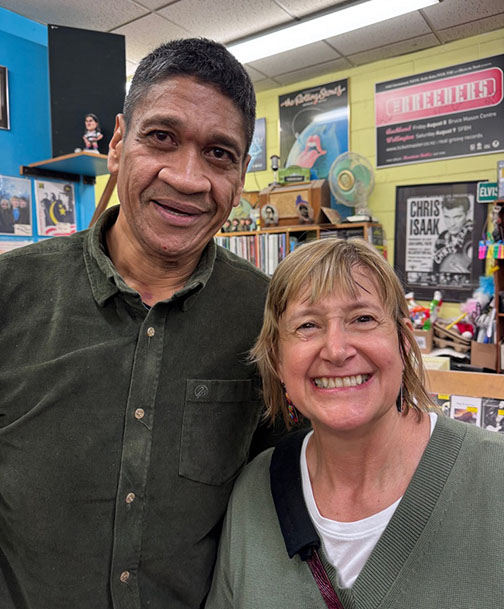
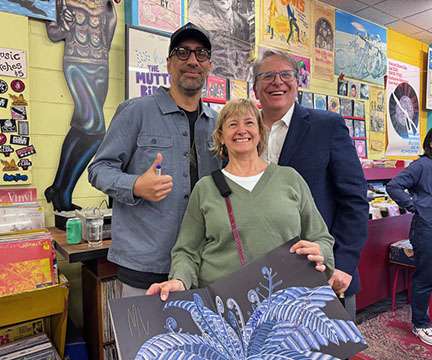
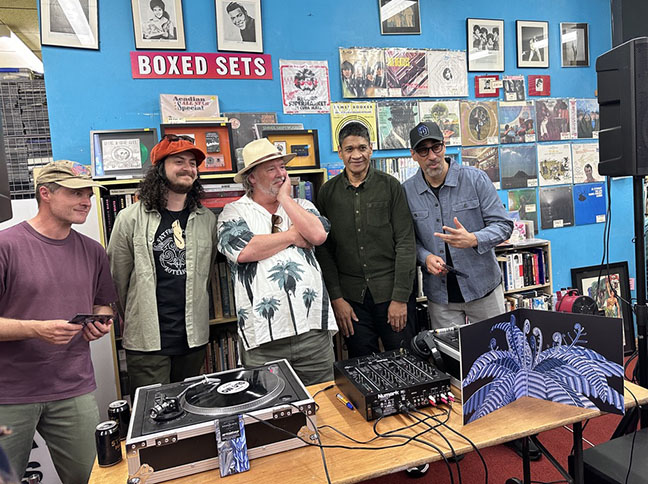
My favorite band had an in-store drop the needle event for the release of their new record—Slo Mo. Well, we were in heaven. Matt got there first and was talking to the band members who were there. So jealous. He was b.s.ing with the trombone player. By the time I got there, practically running to the store, I had worked up quite a sweat and the store was packed with people and stifling. So I was dripping. Never mind. I got to tell MC Mu that I absolutely adore him. Mu is the beats wizard, computer and sound boards churning out the rhythm. I felt like a teenager talking to her idol. Look at that grin. I don’t think I could have smiled any harder. We also gave some hero worship to the singer, Dallas Tamaira, aka Joe Dukie. He sounds like Bill Withers. Mellow and soothing. Now we have some concerts coming up. We are Fred Heads! Love them!!!
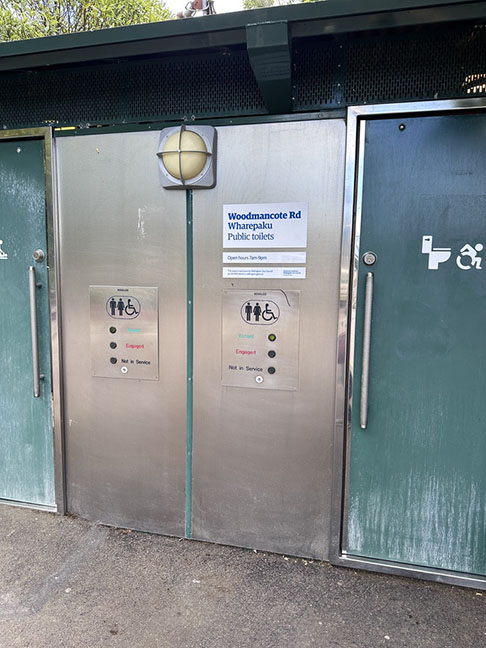
Yes, I said “toilet.” Americans are very delicate when it comes to referring to the facilities. We have ladies’ and men’s rooms, we have restrooms, we have bathrooms. In some places we have the “powder room.” We do not have “toilets.” But in New Zealand, they most assuredly have “toilets.” That is what the directional sign says and that is what they call it.
At first, I found it jarring to my delicate ears. Here is how it goes:
Me: “Can you tell me where the restroom is?”
Them: “Yes, the toilet is over there.”
Maybe this is my prudish side coming out but that sentence just bothers me. “Toilet” seems like such a strident word when spoken in a sentence. I was raised to say the much more indirect and genteel term, “restroom.” “Restroom” only vaguely suggests what might be going on in there. I’m resting. Leave me alone. But “toilet “expresses it loudly and clearly. And honestly, I just do not want to know what goes on in there other than resting, and I don’t want others to know what I might be doing in there besides resting.
Once you get over the word, there is a silver lining. New Zealand has the best and most available public toilets we have ever encountered. In the U.S., finding a public toilet is pretty much impossible. Usually, you have to find a fast food restaurant or some other business or building that has restrooms open to the public. And the maintenance can often be lacking.
Here in New Zealand, every town or neighborhood seems to have a clean and bright public toilet. They are usually small buildings. Some are much like the facilities that you might find at any public park. But others are much newer with fancy chrome facades and doors which are opened with the push of a button. The door opens to a spacious room, with a toilet, sink, baby changing table, and a hand dryer. With the click of another button the door locks electronically and, in many of them, music begins to play and the fan kicks in. You then have ten minutes. The door will unlock after that time. No matter the style, the restrooms are always clean and stocked. The room has a tile floor and walls to prevent graffiti. You can tell someone cares.
So yes, they may use the cruder word, but the experience is anything but that. Hooray for New Zealand toilets!
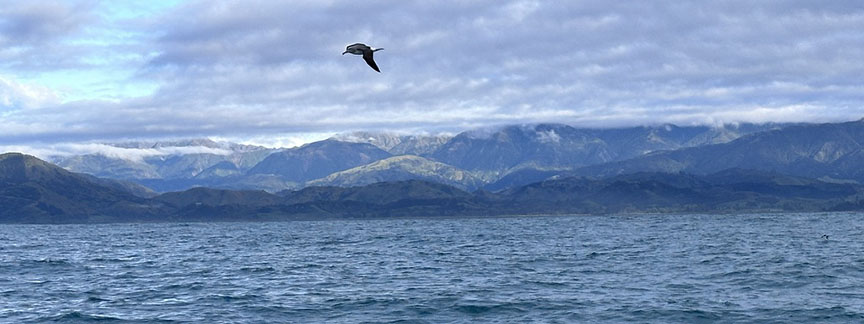
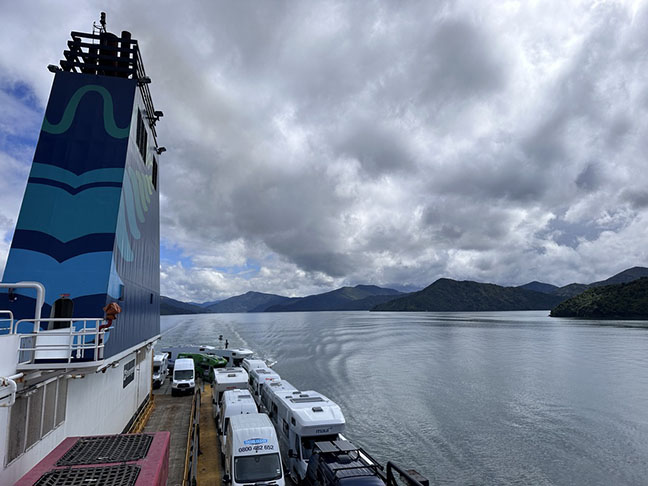
Kaikoura, located on the east coast of the South Island, is home to whale watching and bird encounters, both favorite past times. So off we went for a long weekend. To get to the South Island we have two options: take a plane or take the ferry. The ferry across Cook Strait is the best and most interesting option if you are headed to the northern part of the South Island. Drive your car on, have a seat, and watch the ocean go by for a few hours. Nearing the port of Picton, the ferry makes its way through tree covered islands, where a few houses sit and birds fly.
From Picton, the drive south to Kaikoura is another two hours along a picturesque, rugged coastline with crashing waves and bird colonies along the shore.
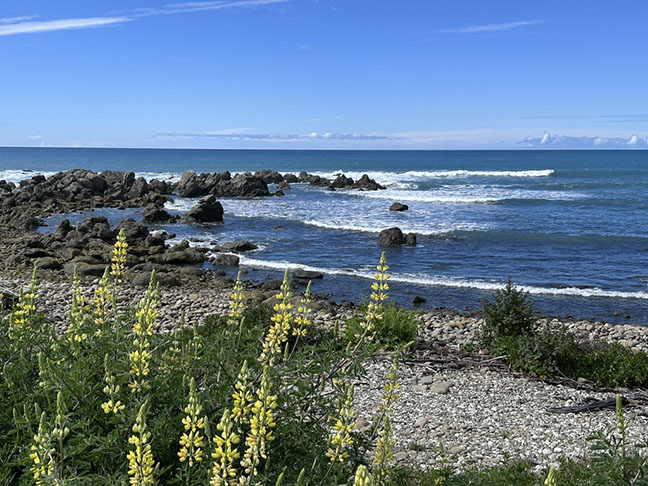
Kaikoura has an abundance of marine life supported by the cold nutrient rich water that rises up from the nearby deepwater Kaikoura Canyon. This water supports a large variety of fish, marine mammals, and seabirds. It makes Kaikoura a whale watchers paradise with a year-round pod of sperm whales and visits from humpback and blue whales in the right season. We have never seen sperm whales so that seemed like something to check off our unwritten list of things to do. They also had dolphin and albatross encounter tours. I am all about albatross, large, beautiful, and fascinating birds. We signed up for all of the tours and could not wait to get started.
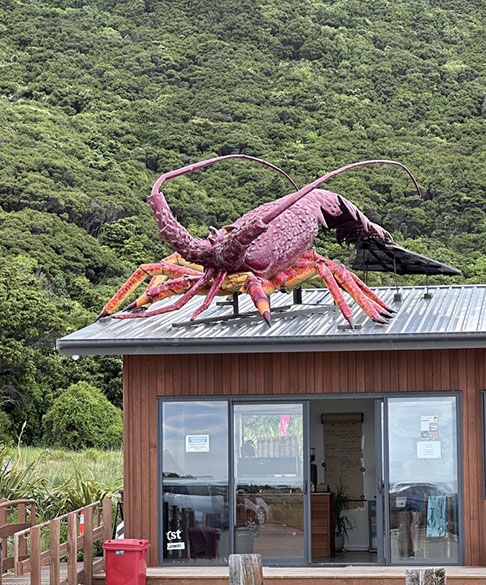
But first we had to stop along the highway to eat crayfish. This is not your tiny Louisiana freshwater crawfish, but a type of lobster without the large claws. I could not find the reasoning behind it, but here in New Zealand, the lobsters are called crayfish. To avoid confusion, they are called rock lobster in the international seafood market. These crayfish are not only misnamed, they are wildly expensive. So we split a large one. No surprise that it tasted like a lobster. Having our fill of the large crustacean, we drove on.
In 2016, Kaikoura was the site of a major earthquake, 7.8 on the Richter scale. It involved movement along multiple fault lines and was felt all the way to the North Island. It was so dramatic that the town rose three feet and the adjacent seabed rose six feet, the uplift heaving fish and marine life above the water line. The town, sliding along the fault line, was moved three feet north. A major tsunami later flooded the coast, killing more marine and freshwater life along the coast. If you want to read more about the Kaikoura earthquake, go here.
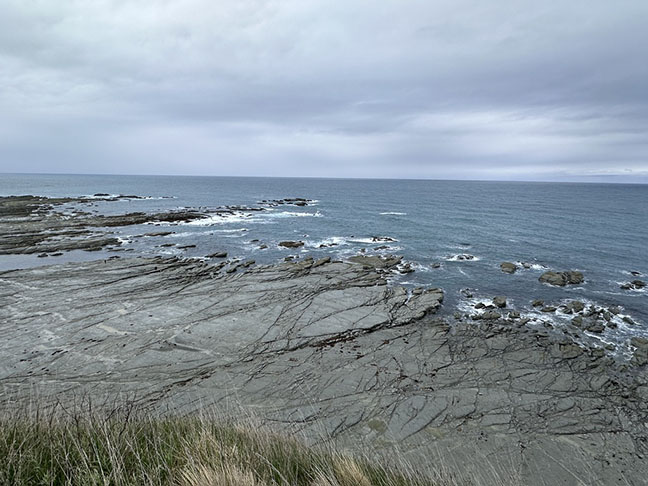
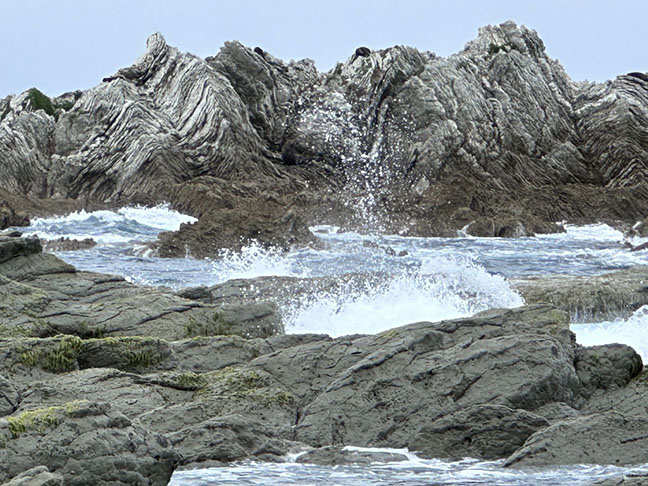
Only eight years later, the town seemed perfectly normal. The only apparent and visible aftermath was along the coast where seabed was clearly above the water surface and large boulders were thrust out of the earth.
While the earthquake would not disturb our trip, the weather had something else in mind. Once again, just like Fiji, we were thwarted by strong winds and rain. The winds were strong enough to force the cancellation of the tours we had signed up for—a dolphin encounter and albatross frolicking. The day was shot. We did not have any days to spare, and we had whale watching scheduled for the next day. But we worked the phones and figured out how to do at least one of the tours. We were in for the albatross if we were willing to go out at 6 a.m. Yikes! But hey, it involved a rare opportunity to see an endangered albatross and I love those beauties. We would have to swim with the dolphins another time.
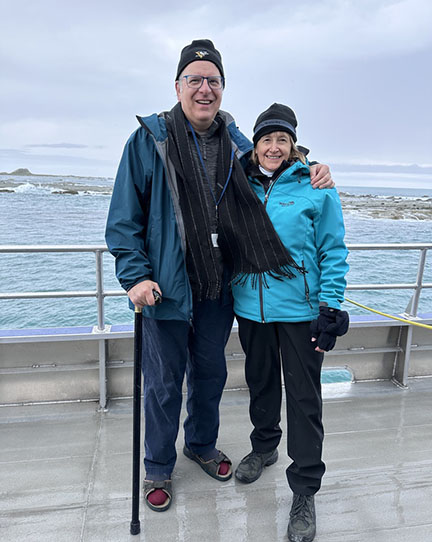
It was mighty cold at 6 a.m. so we dressed for winter. It was us and the boat captain. He was very knowledgeable and took us straight to the birds, which was easy since they follow fishing boats.
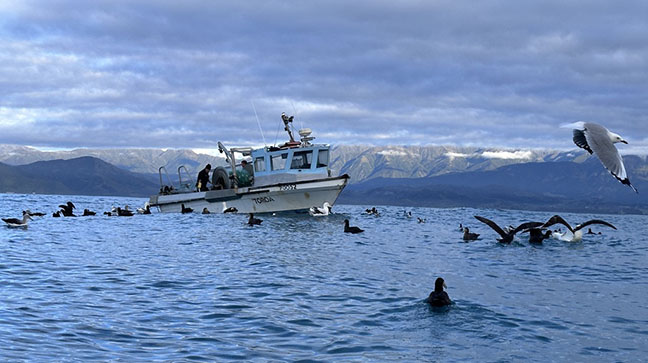
He tied a bag of fish to the back of our boat to lure them over. Yes, yes, that does not seem right. We should be watching birds in their natural state and not luring them with food. But the reality is that they were already following the fishing boat for the chance to grab some fish trash. Our boat was not teaching them anything different. It is called survival and adaptation.
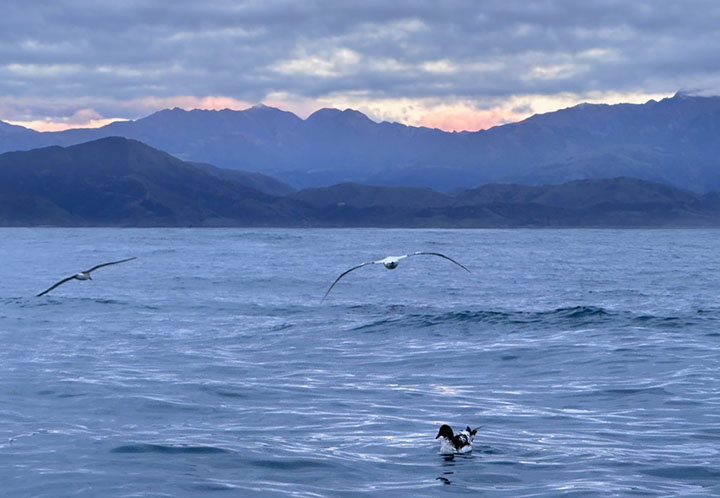
And here they come. Wandering albatross are large, gorgeous birds that dominate the sky when they fly. Their wingspan average about 12 feet. When they come in for a landing, they make an entrance. The other birds scatter.
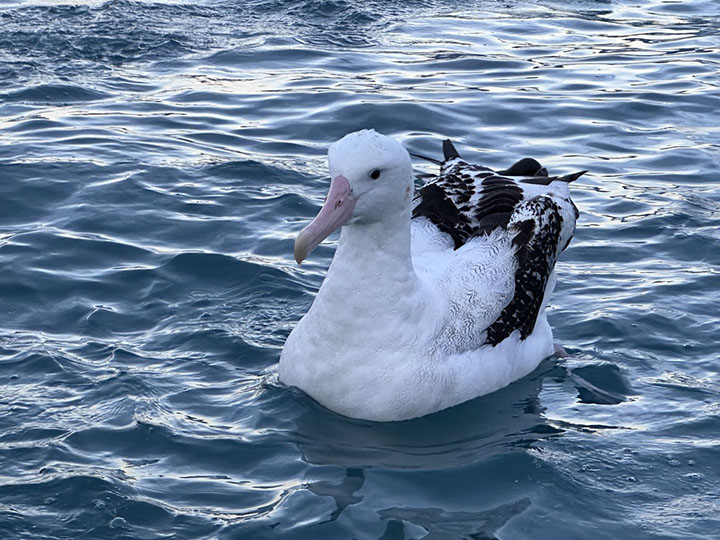
Among our visitors were royal albatross and the rare Salvin’s albatross or mollymawk. These birds are endemic to New Zealand and critically endangered. Smaller than the great albatross, they have a distinct grey head. Really quite beautiful.
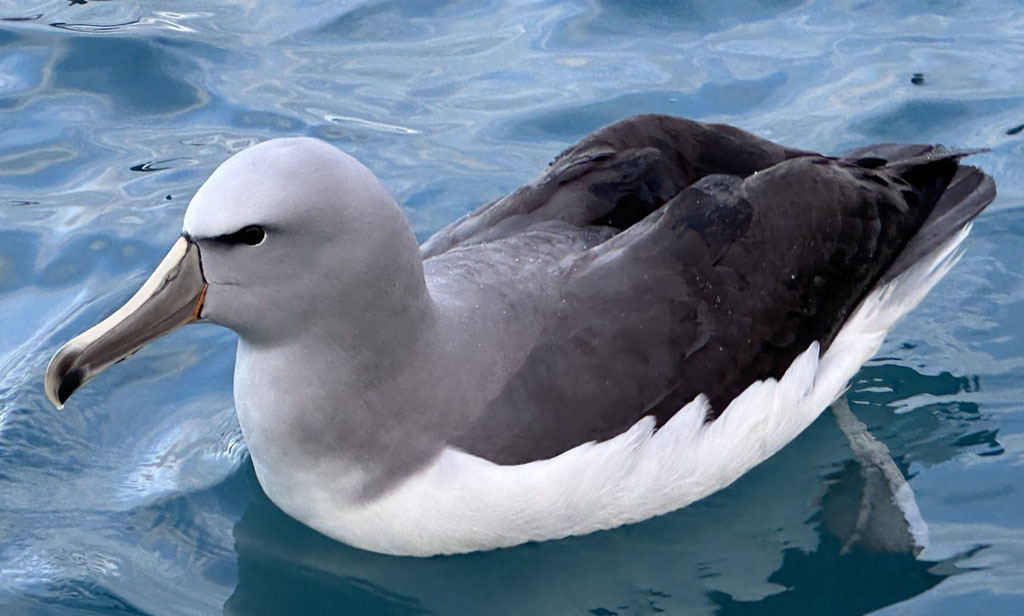
We also saw the endangered Hutton’s Shearwater, the only seabird to breed and nest in mountains happened to keep house in the mountains surrounding Kaikoura.
Then to our delight, the dusky dolphins showed up and gave us a short show:
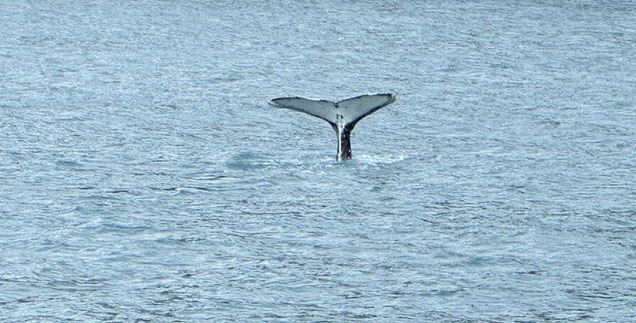
This was a well spent morning. Now we had to move on because we had whales to watch. We have been whale watching many times. Usually that involves humpback whales. We were hoping for sperm whales. No such luck. The weather was keeping us from going out to further toward the canyon. We had to settle for one lone humpback who did one roll and that was it. It was very disappointing.
Well, our time was up and we had to depart for the ferry back to the North Island. We will have to return to see the sperm whales and swim with the dolphins.
 A Yank Among the Kiwis