I think it is pretty clear that we live out here in horse and sheep country, albeit, next to the beach. The beach is really a sleepy place with people walking dogs and people fishing. A crowded beach is seeing more than ten people looking in both directions at any given time.
I walk the beach from here to the next beach over, a little place called Peka Peka. It is about 2.5 miles up and back. On those walks I usually see maybe one or two people, usually walking their dogs.
But one day as I wandered along I thought I saw a naked butt. A man walked out of the ocean in front of me, he was about 25 yards away, and he was naked. I was perplexed. Here? On Te Horo Beach? A naked man? As I approached I did in fact confirm that, yes indeed standing in the dunes was a fully naked man.
Then I saw a woman pop up over the dune and she was totally naked too. Hmmm. Okay, I am guessing this is a nude bathing beach. But I had to find out if this was a one off or if this was truly a place where people went to swim naked.
And I have to say, the ocean here is fully facing the wide open ocean and it is not Bermuda. There is a lot of debris in the water, detritus from the nearby rivers which brings in logging debris, a lot of drift wood and smaller mulch size pieces. Then there is debris brought in by storms. Dead fish mostly. When I go into the water I wear, not only a bathing suit, but sandals because of the rocks and debris that tumble through the waves. There is stuff out there that you would definitely not want in your private parts.
So I asked a few people who live here about the naked people. Sure enough there is an “informal” nude beach that is accessed from a road that dead ends at the beach between Te Horo Beach and Peka Peka. I was warned not to venture into the dunes in that area because I might be surprised at what I saw.
In fact, I now see that this beach is quite the regular nude beach hang out. The other day I saw a guy who seemed to be a little unsure of whether he wanted to be naked. He stood in the dunes for a bit and then walked with purpose to the ocean. As I was coming back, I saw him in the dune again holding his clothes in front of him. Then he seemed to hurry back toward the road still holding his clothes in front of him. When I looked again, he had gotten dressed. Sorry no pictures although I was tempted.
I don’t really care that this exists. Hey, if you want to frolic in the water and dunes in your birthday suit and maybe get a little on the side, go for it. What is baffling to me is, why here? Given the rural area and the family and sport oriented nature of the beach, this does not seem like a place for dune hook ups and splashing around in the ocean buck naked. But there you are. Someone decided this was a great place for it.
New Zealand pretty much closes down for two weeks between Christmas and New Years. It is summertime, the kids are out of school, people are taking vacations, and it is the Christmas holiday season. I think the government and businesses just gave up trying to get anyone to work. So, except for essentials, for two weeks the country slows down to a near halt. We decided to join the party and take a vacation during the Christmas break. Destination = Subantarctic Islands in the Southern Ocean.
Matt has a dream. It is to see every species of penguin in the wild. My response is, sure, why not? Well, one problem is that they live in some pretty difficult (and expensive) places to reach. It just so happens that New Zealand and Australia have several species we can knock off the list but we have to travel to certain “subantarctic” islands in the Southern Ocean to see them. Well, poor, poor us had to get on a ship and sail south. Let’s get out the map and you can see these islands are on their way to Antarctica. We were heading for the Snares island chain (NZ), Auckland Islands (NZ), Campbell Island (NZ), and Macquarie Island (AU).
(You might ask why are they called Sub-Antarctic? I believe that means any island within the 40th and 60th latitudes. How can New Zealand and Australia lay claim to these islands that are far from their coasts? The answer is, I have no idea but the Falklands are in the same latitudes and Britain and Argentina have been fighting over ownership for years. So surely it has to do with planting flags and conquest. The Europeans were quite fond of claiming land on the basis of “discovery.”)
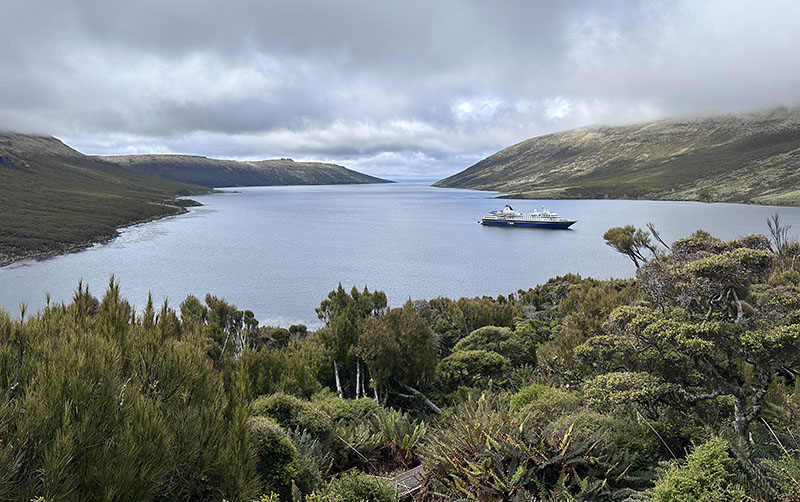
We were on an expedition ship with 120 other souls, spending Christmas looking for adventure and lots of pictures of penguins and albatross. Island landings would be handled by zodiac boats. We were under strict rules for engaging with the animals. No picking up and cuddling a penguin. Keep your distance and enjoy their adorable walk and their kooky and merry ways. Watch out for elephant seals who tend to have a bad attitude and when you see an albatross, just experience the joy of watching them glide along the air currents. And yes, there were days when it was cold and rainy and some very rough seas.
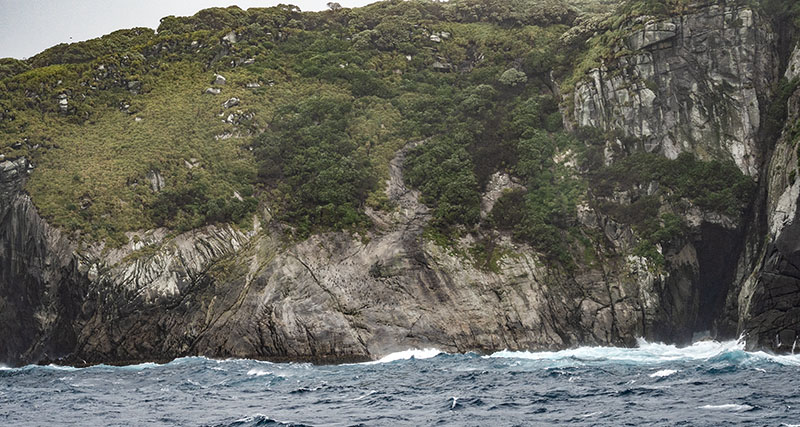
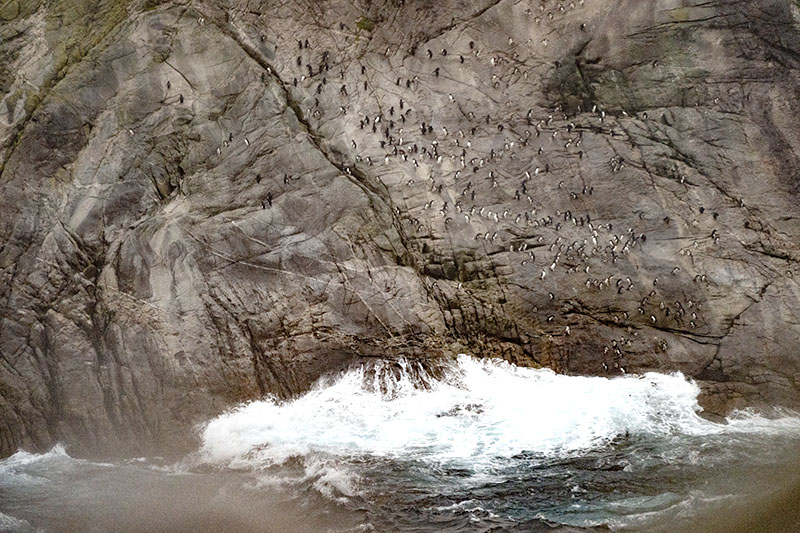
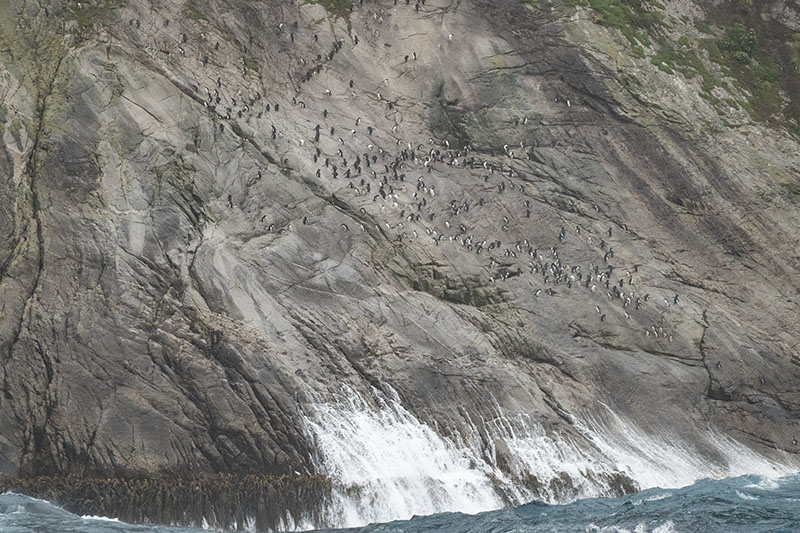
Every island was different. First stop, The Snares, a chain of islands and home to the elusive Snares Crested Penguin. Their favorite hangout is the penguin slide, a hill of bare faced rock rising from the sea which they had to climb to get home. The weather was so poor we could not land and had to watch the penguins coming and goings from the ship. We were pretty far off lest we crash, but we did see them. Check that penguin off the list.
Penguin slide is a sheer rock face. They jump onto it from the wave and then climb into the hill to nest.
Close up of rock face.
They ride the wave up onto the rock and then latch on with their claws. Up they go. Amazing little creatures.
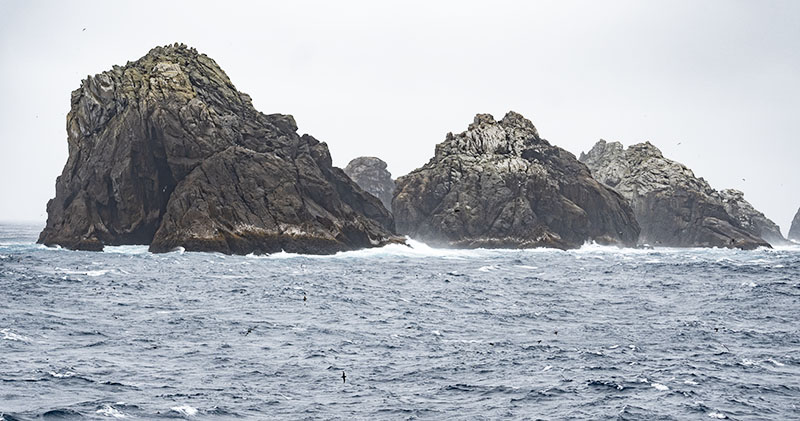
After the slide we cruised around the islands to see what we might see.
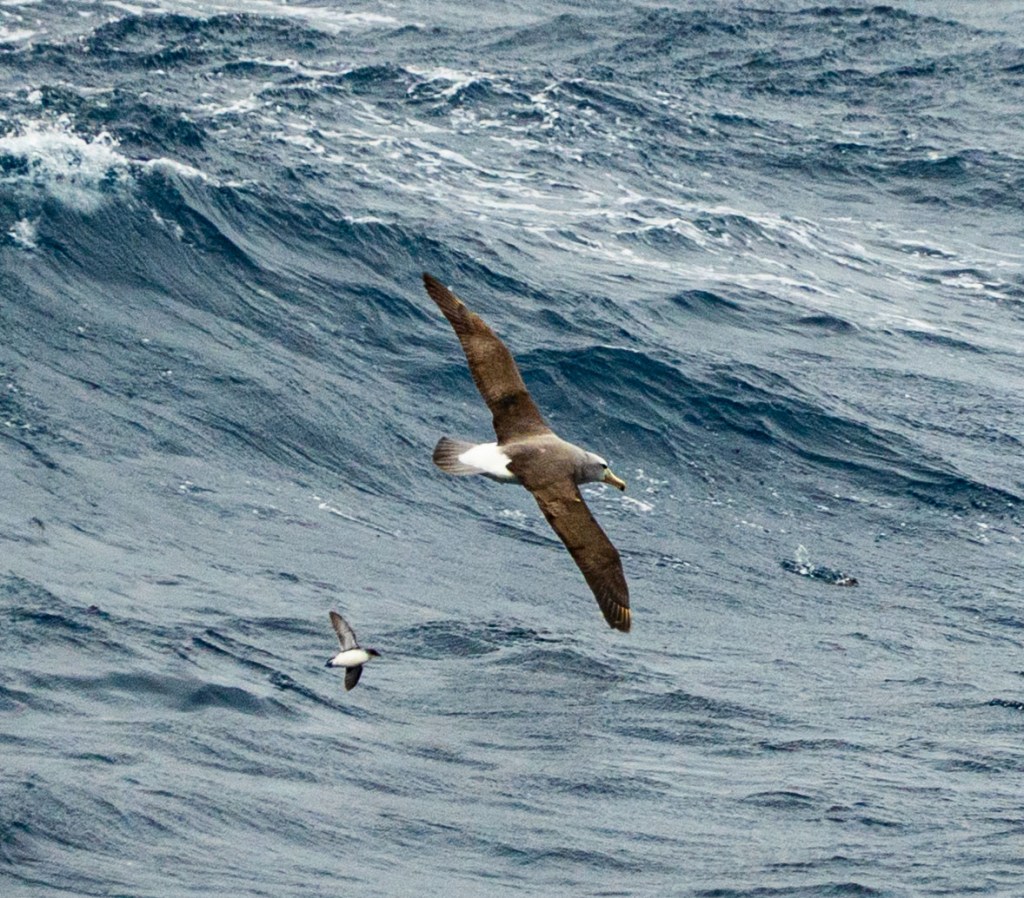
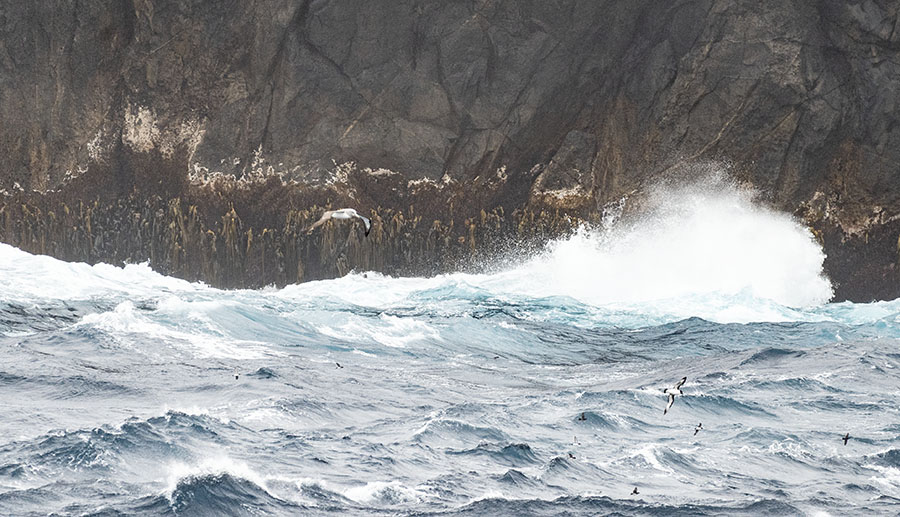
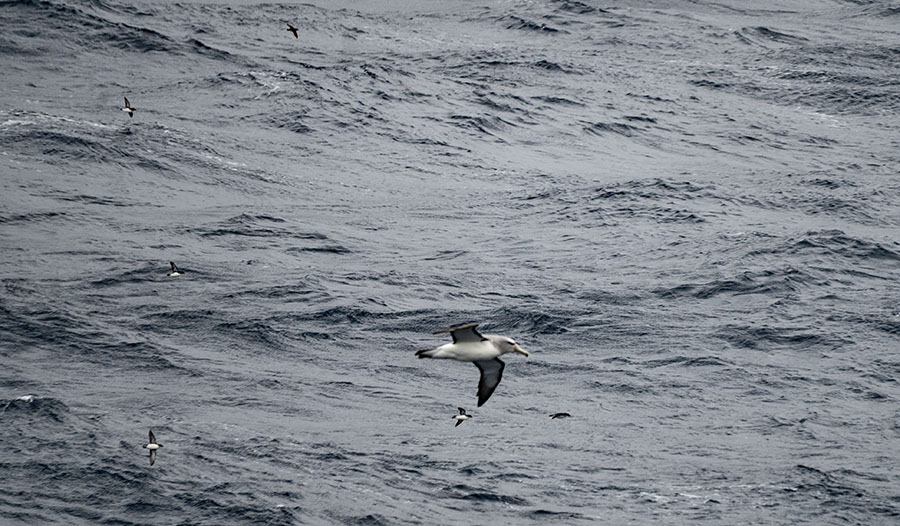
Bullers AlbatrossIf you look closely you can see Cape Petrels enjoying the foggy day around the rocks. One more albatross picture because I love them. Looks like a Salvin’s albatross being followed by Fairy Prions.
As you can see this was probably one of our worst weather days. The ship was rocking and people were not tolerating it too well. Lots of very green faces and lots of people not showing up for meals. (Matt took medicine and he was fine. I have sea legs and enjoy the rocking.)
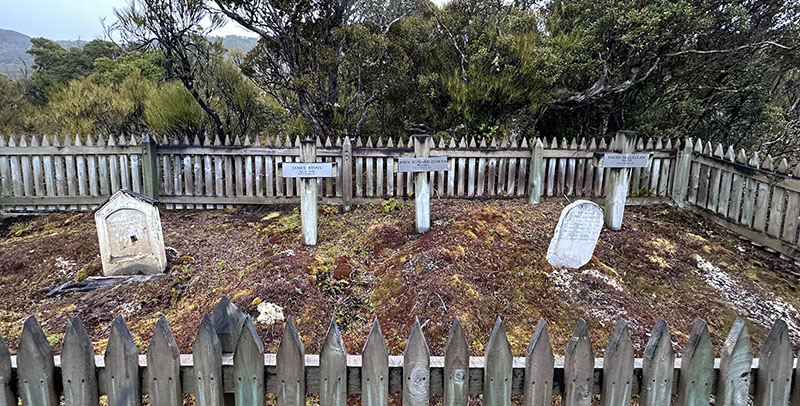
Next up was the Auckland Island. The Brits/Scots tried to settle this island. That effort failed because Auckland Island, like all the others, has a harsh environment, not prone to farming or ranching.
Settler Graveyard
The beauty of these islands is that, because they were never fully settled, they are largely untouched except for one gigantic problem: cats and rats, the predators left by whaling ships or other visitors. The inevitable result is a lot of dead birds. Add to that feral pigs who enjoy munching on vegetation and bird eggs and viola, a ruined island. But the New Zealand and Australian governments are methodically working to get rid of the invasive mammals—making the islands predator free–so the birds and flora can once again flourish. They have accomplished predator free status on Campbell Island.
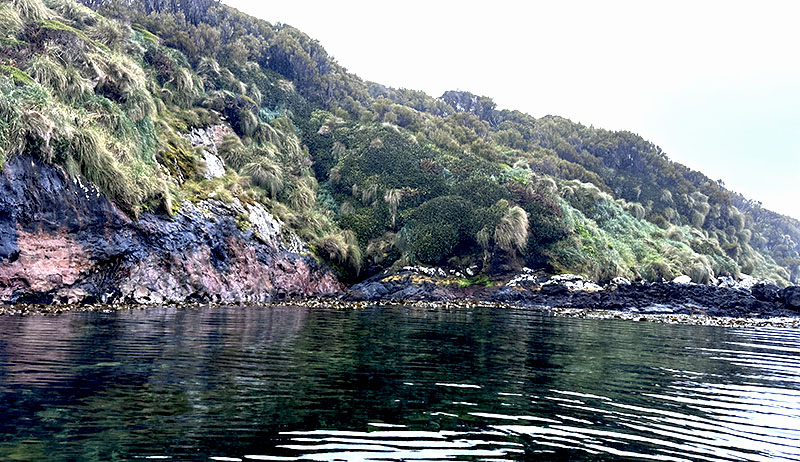
In the afternoon, we went out in the zodiacs to cruise along the coastline looking for birds mostly and to see what they refer to as mega herbs–basically, plants that are growing larger than normal.
We started out in a drizzle that soon turned into a driving rain. See how happy we are!
Finally, our zodiac guide decided we should head back to the ship. The air was so filled with rain and mist that we could not see very far. In fact, we could not see the ship. It is pretty unnerving to not be able to see the ship, especially troubling to hear the guide calmly radio the ship asking where it might be. It was far enough away that she could not make contact. She decided to head in the general direction up the coast. After a few miles we saw its outline and breathed a sigh of relief.
For dinner that evening we were treated to a barbecue on the ship deck. The weather turned out to be a bit cold but dry. The chef turned out an amazing feast of meats, veggies, and deserts. It was impressive.
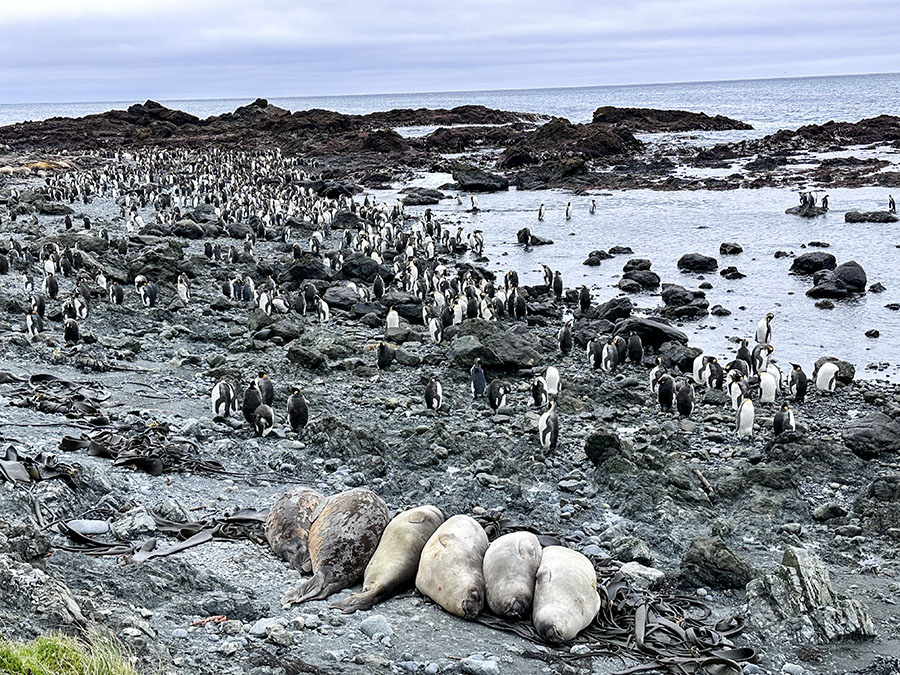
The next morning, we woke up at Macquarie Island where we would spend Christmas Eve. This is as far south as we would travel, much closer to Antarctica and the air temperature proved it. It was cold. But the penguins? Now we are talking! This island, part of Australia, is home to large colonies of Royal and King penguins, hundreds of thousands strong. The first landing was on the research station side and there were not that many penguins.
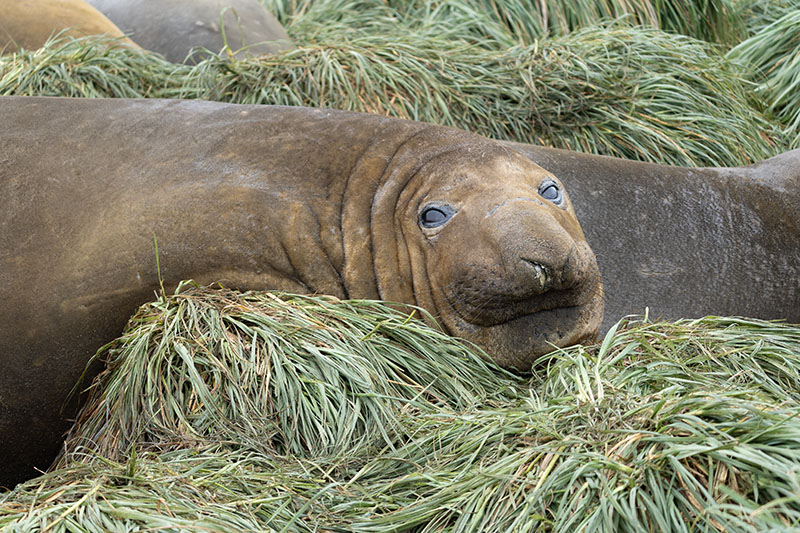
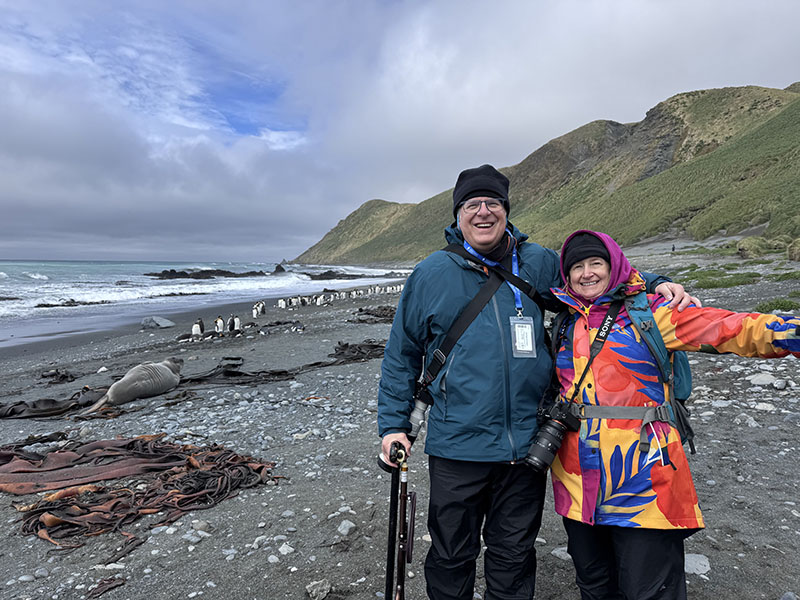
Huge and smelly elephant seals laid about the beaches and in the dunes, many were molting making them feel very itchy and cranky. Best to keep six feet away.
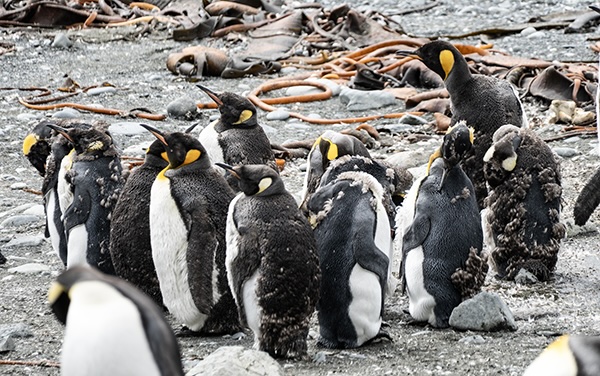
The King penguins were also molting, and it did not look fun. In fact, they looked miserable as they waited for their feathers to fall off, so that new ones could grow in.
Looks itchy
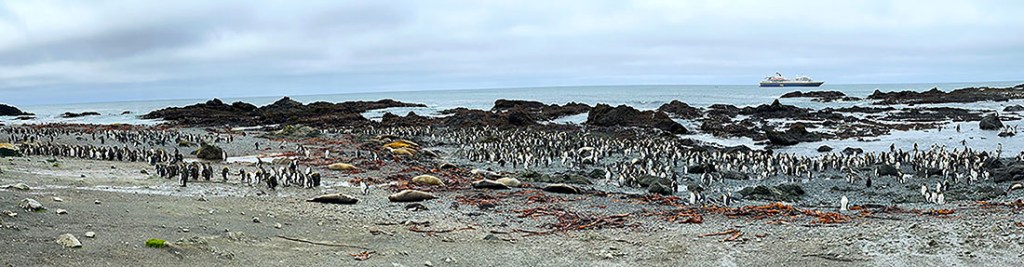
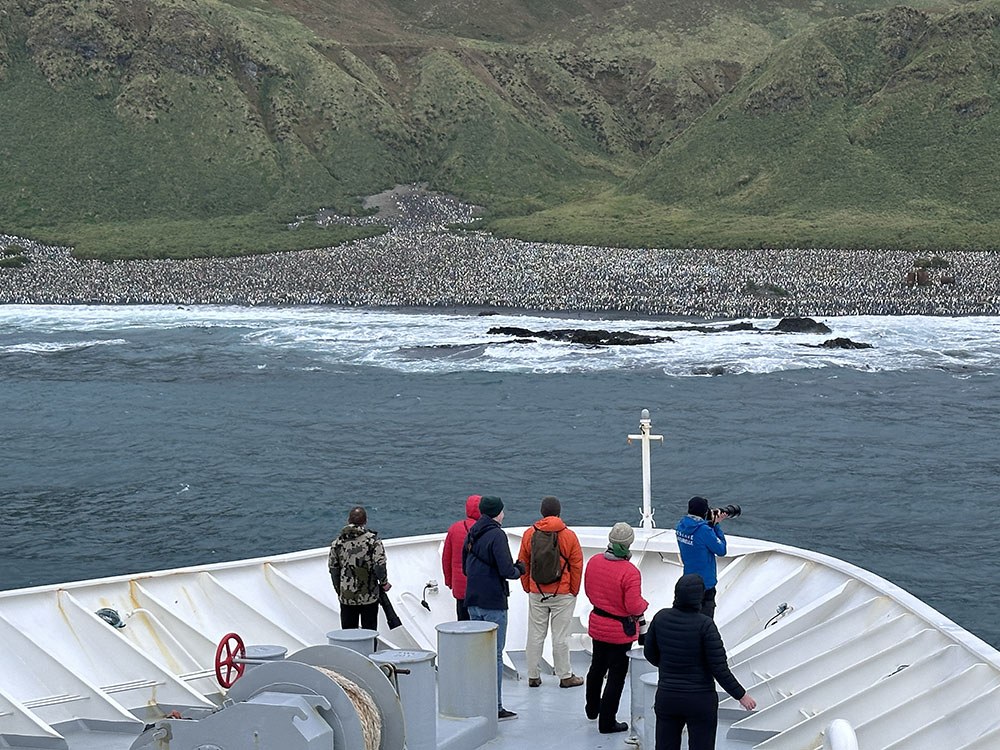
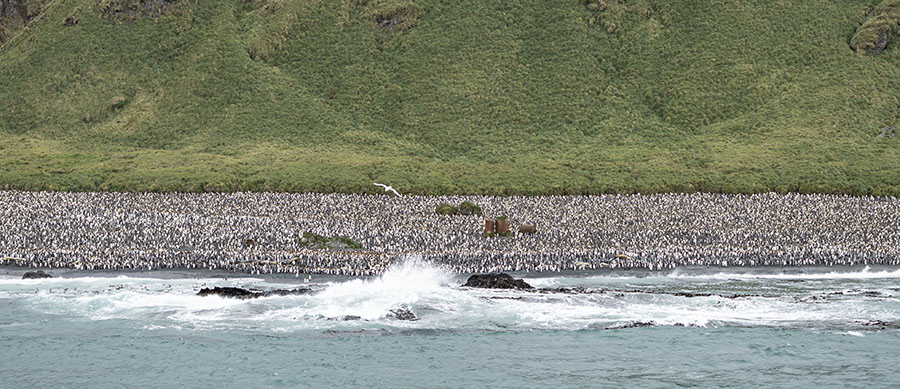
We next sailed to the other landing sight and boy, what a different view!
Those are all penguins
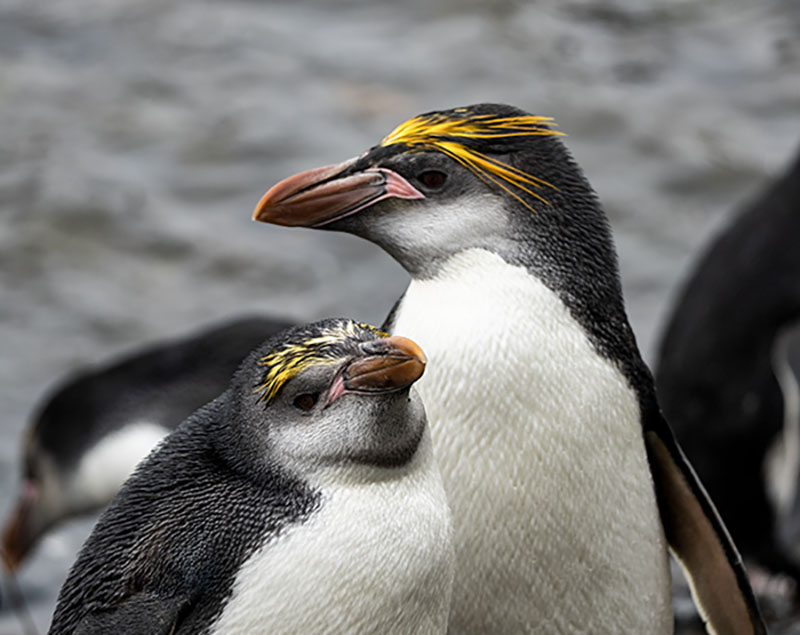
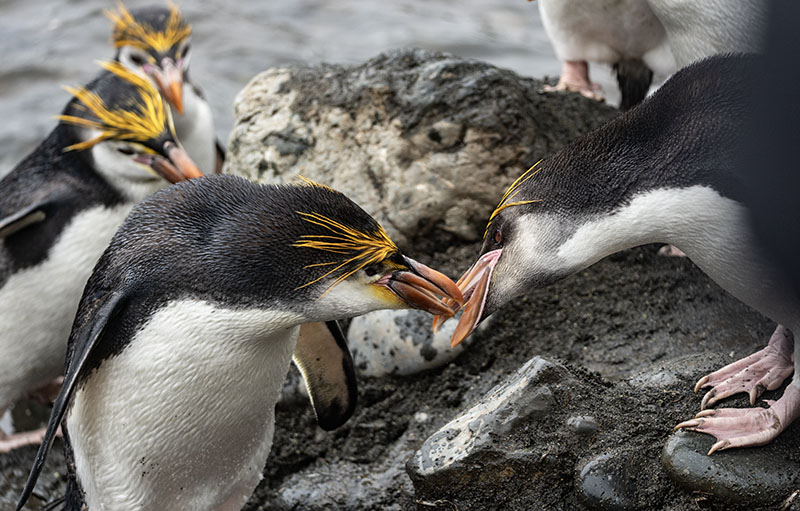
We did not land at this particular rookery. We went to a more sheltered cove for a zodiac landing. As we landed, a welcoming party of Royals waddled as fast as they could to see what was coming ashore. They were somewhat leery at first. But there is always one penguin, braver than the rest, ready to walk towards those very tall creatures coming out of the water (that would be us) to find out what the fuss was about. They posed for this close up.
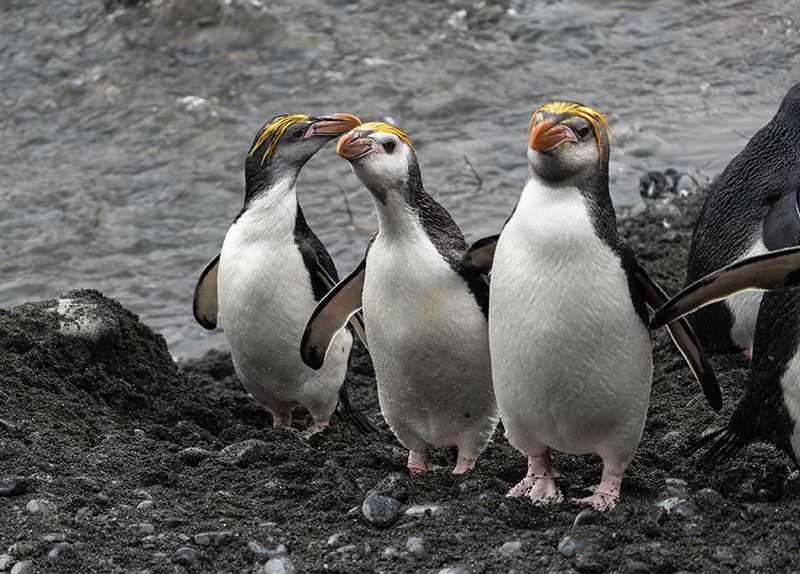
These are Royal penguins. My personal favorite. The Royal penguins sport yellow and orange crests, plumage that makes them look like they should be dressed in Hawaiian shirts because they are just out for fun. They are on the smaller side and very curious.
Gosh, I could have sat on that beach and watched those Royals all day. So much activity. They swim, nip at each other, scurry this way and that, talk and preen and generally fuss. Adorable.
No fighting!
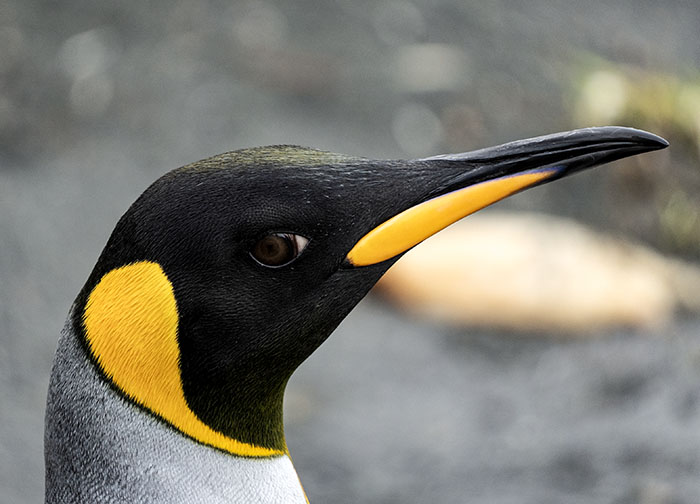
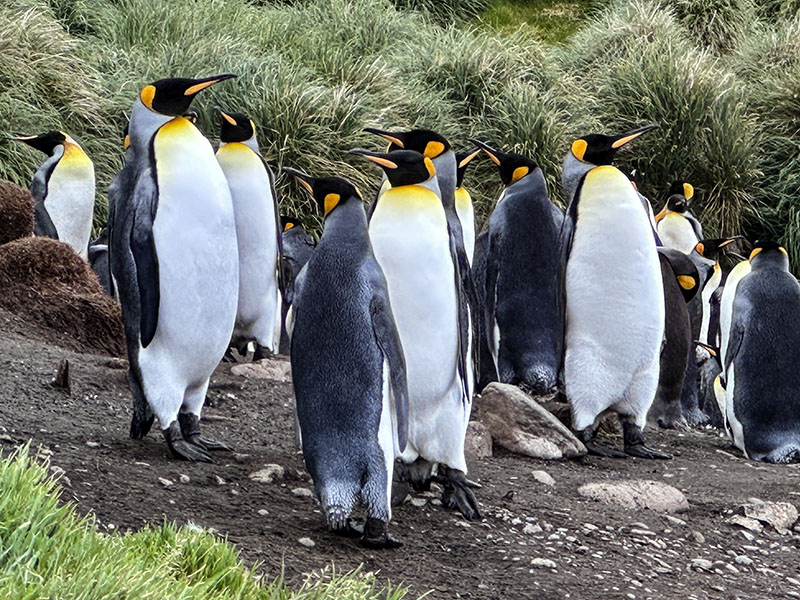
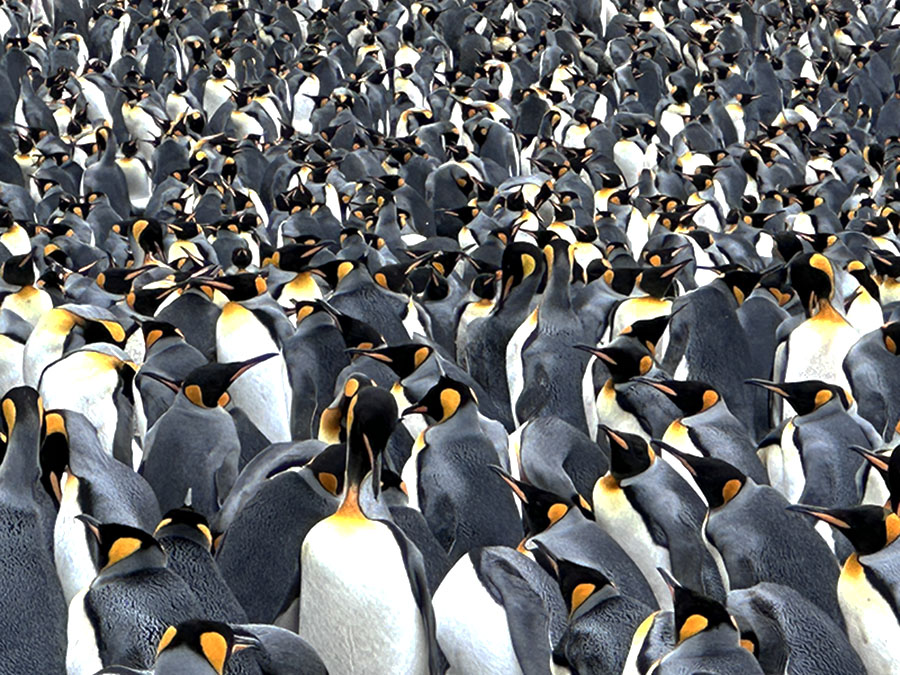
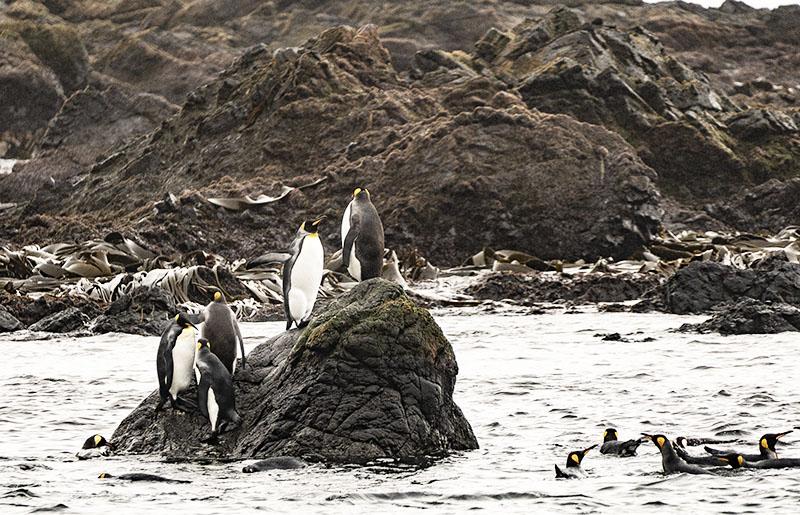
On the other side of the beach were the King penguins. Smaller than the Emperor penguin (the penguin you usually see in the documentaries), but very similar in coloring, the King penguins are much more reserved and stately. Interesting but not near as fun as the party boys on the other end of the beach.
That is a lot of penguins! As far as the eye could see.
Not sure what that elephant seal is up toGreat time on Macquarie Island!
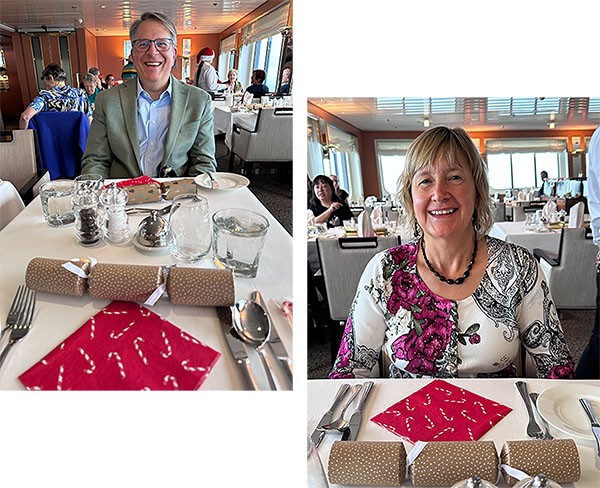
Christmas Day was spent at sea, eating and drinking way too much. A word about the chef. The food on the ship was equivalent to a four-star restaurant and I am not exaggerating. Every dinner was a three-course extravaganza. The chef, Jorg Lehmann, is Swedish and by the end of the trip I had to give him a hug. He gave us a Swedish twist for Christmas. On Christmas Eve, he served us Swedish pancakes with lingonberry sauce. He brought lingonberries to the end of the earth! Holy smokes that was unexpected. Christmas Brunch included herring and Swedish breads. Oh yes, please. Chef, you were terrific, and your staff was lovely. Cheers!
On to Campbell Island, where albatross were on the agenda.
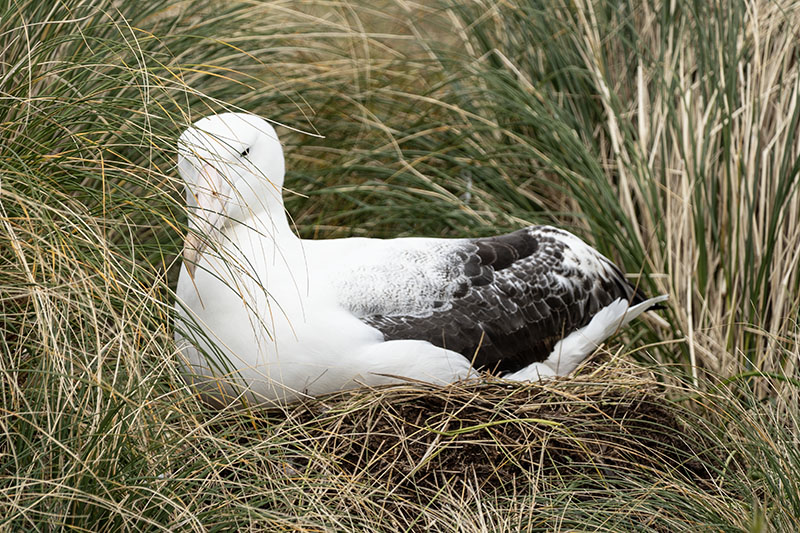
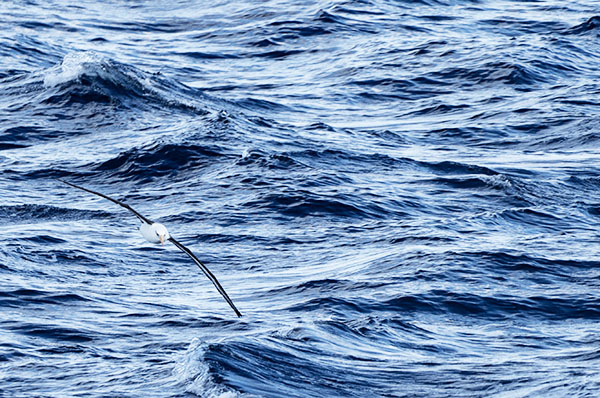
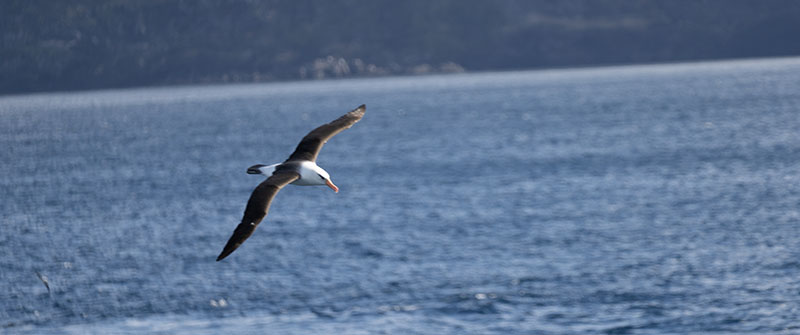
Albatross are fascinating to me. They are one of the largest birds on the planet. The wandering albatross can have a wingspan of up to eleven feet. They don’t flap. Their wings lock so they save energy when they fly. And they need it since they can fly for thousands of miles gliding on the air currents swirling around the earth. They sleep while flying and they sleep on the water. The only time they are on land is when they are nesting. They can live past 50 years.
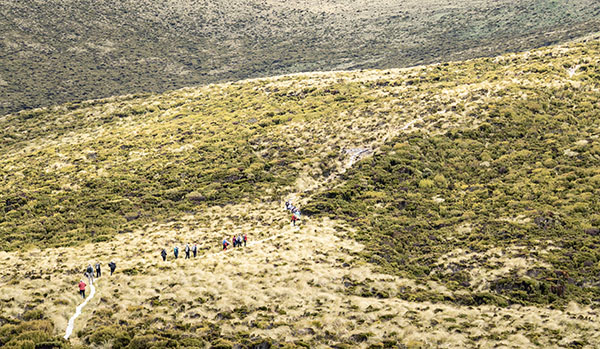
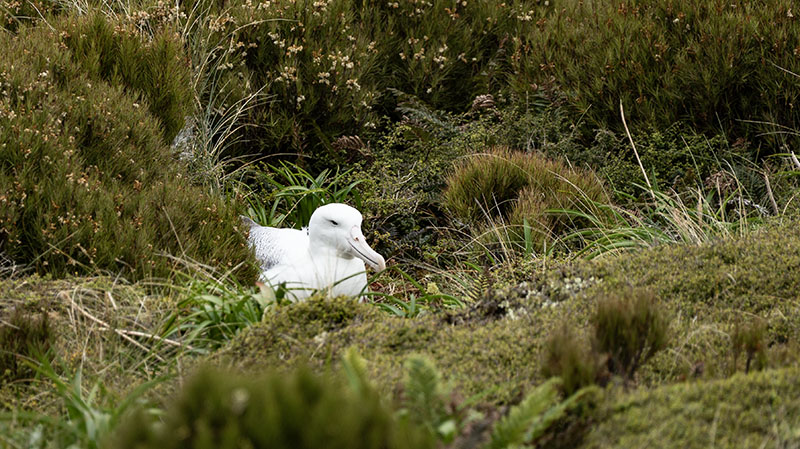
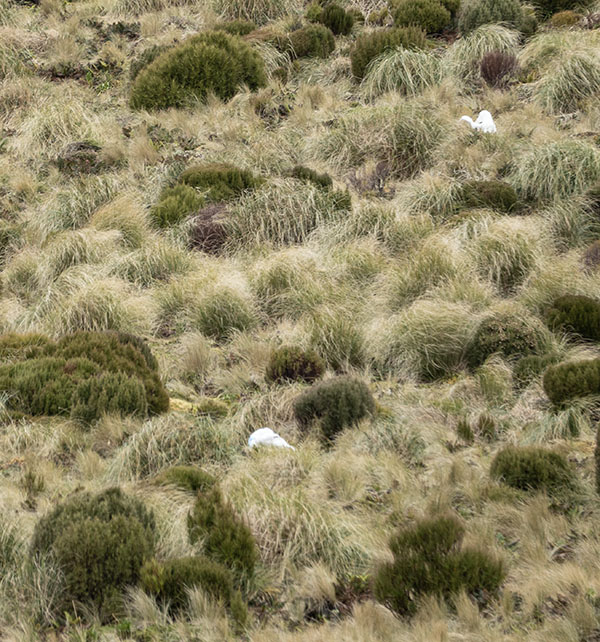
We climbed a rather large hill, it felt more like a mountain, to see the Southern Royal albatross nesting.
Trudging up the hill. This is a very long way from the top. We hiked about 3k total (2 miles)
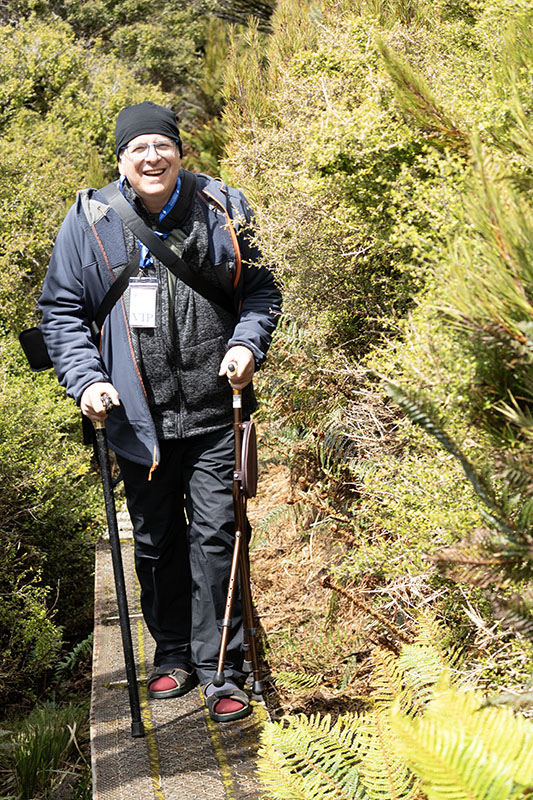
You may wonder how Matt is able to hike. Here is how:
He is carrying with him a folding cane chair. Along the way, he stops to take a break and get off his feet. He has traveled all over the world with that chair. He does have his distance limits and we don’t usually do more than about two miles. Note too that he is wearing sandals because that is the only shoe he can wear. He has fully water proof socks and in combination they are as good as hiking boots.
We finally made it to (kind of) the top and found this:
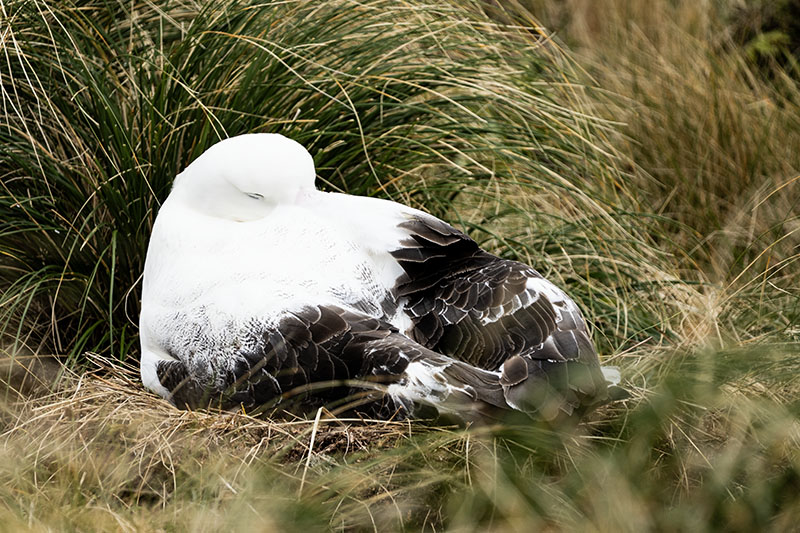
Hiding in the brushSleeping in the tussockCalm but wondering what all those animals were standing in front of her with long black objectsAlbatross nesting in the tussockSoaring
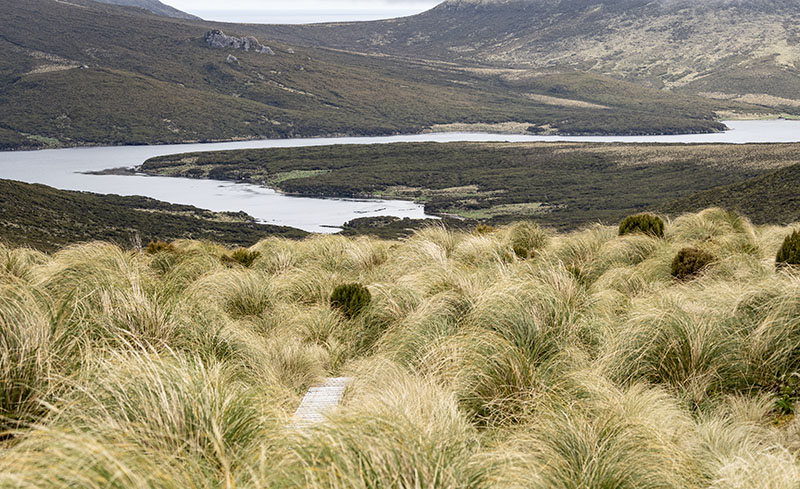
The hike up was worth it. Such beautiful birds. Albatross are only on land to nest so this was pretty special to see. Then of course we had to make our way down. It was a lot easier than going up.
Boardwalk through the tussock
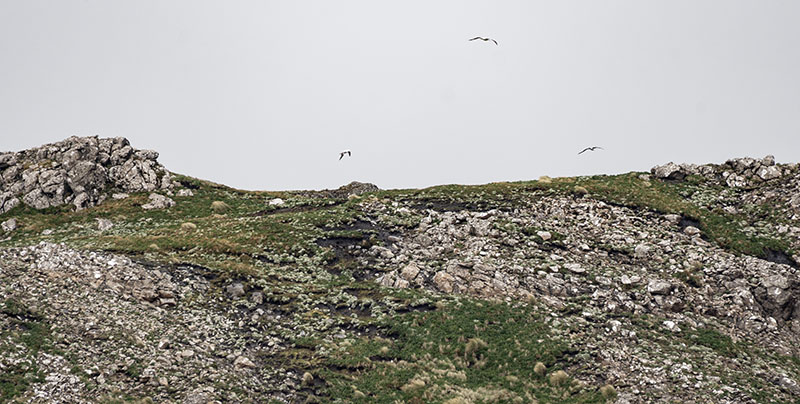
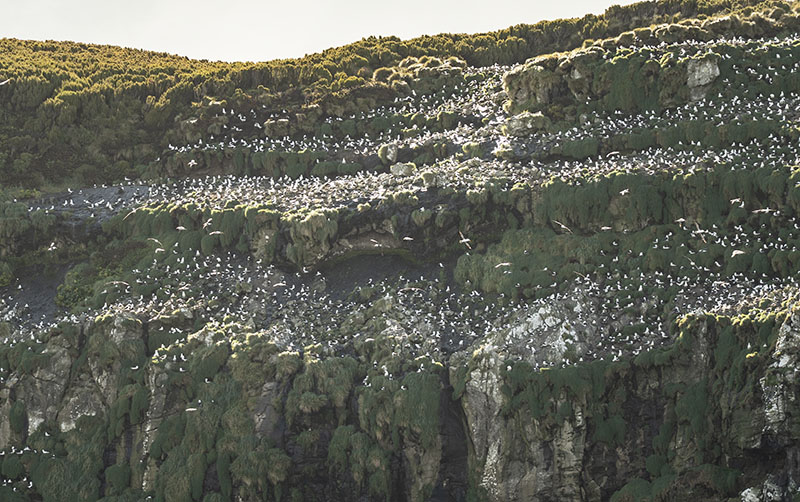
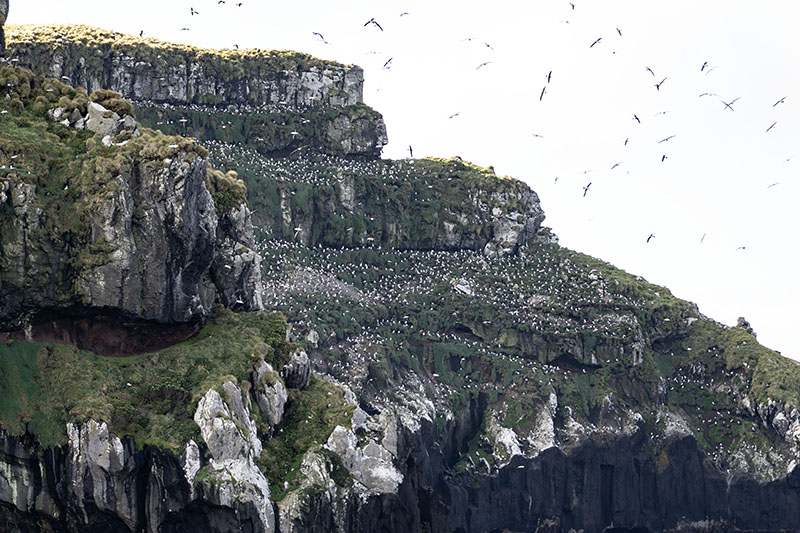
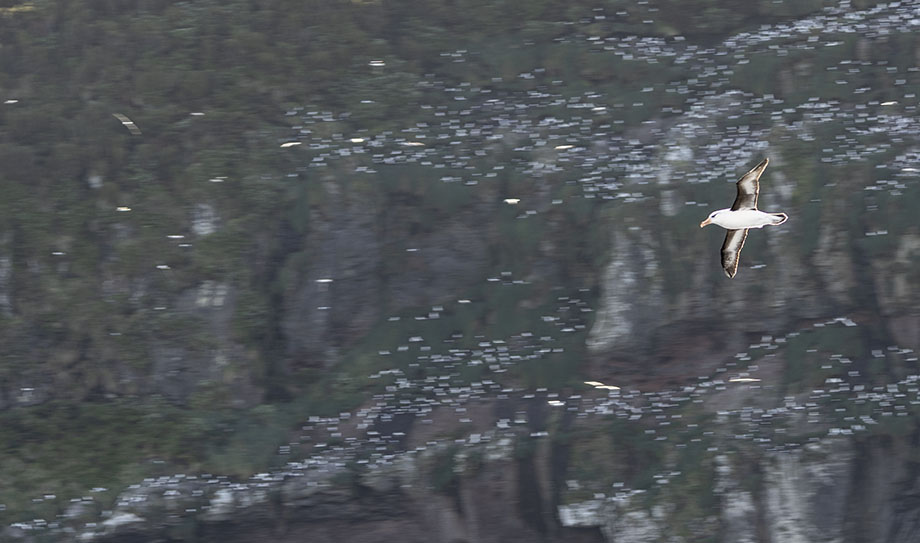
But the real drama was yet to come. During this trip, we often had albatross following the ship. But at Campbell Island, the sheer number of albatross was astounding. Rock cliffs on the Bull Rock held hundreds of thousands of nesting Campbell Island albatross, as well as Grey headed and Black Browed albatross. The sight was jaw dropping. The skies were filled with albatross and other smaller sea birds. The Captain slowed the ship to a crawl so we could get our fill of the sight and get some awesome pictures of the spectacle. It really was living a nature show.
So many birds!
I am not quite sure how I managed this one but the trip photographer was impressed.
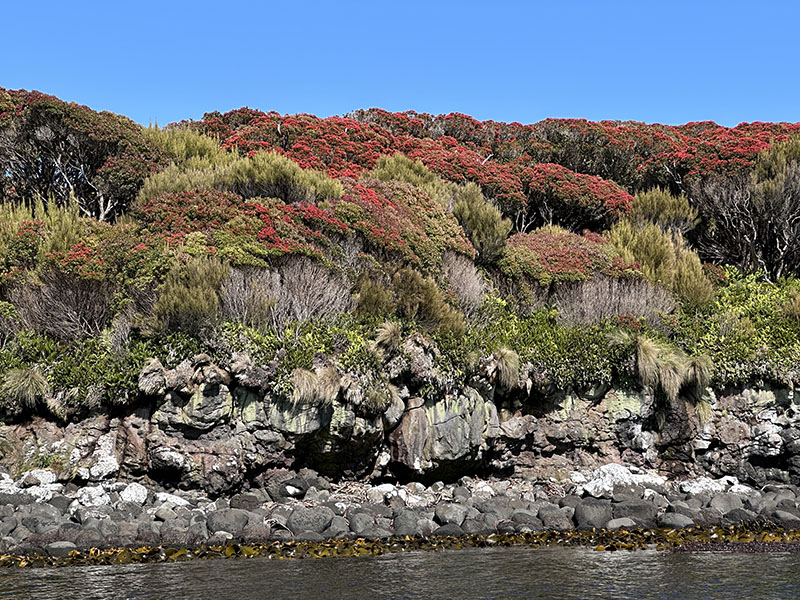
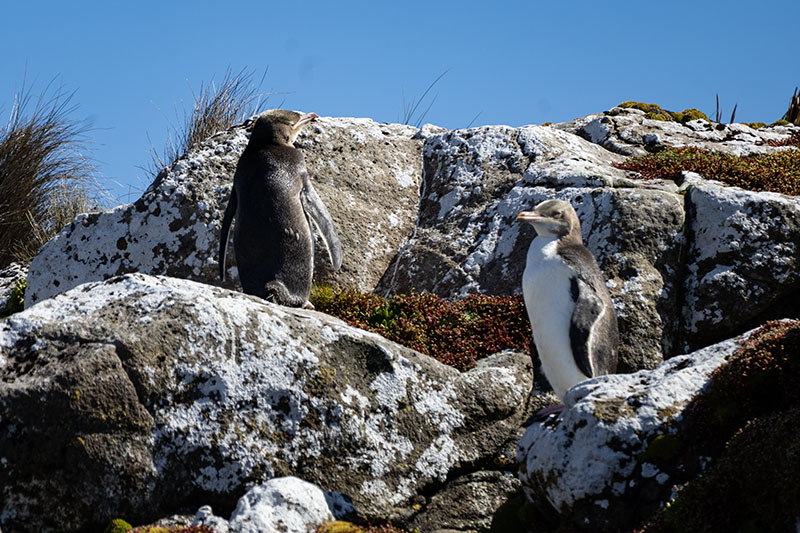
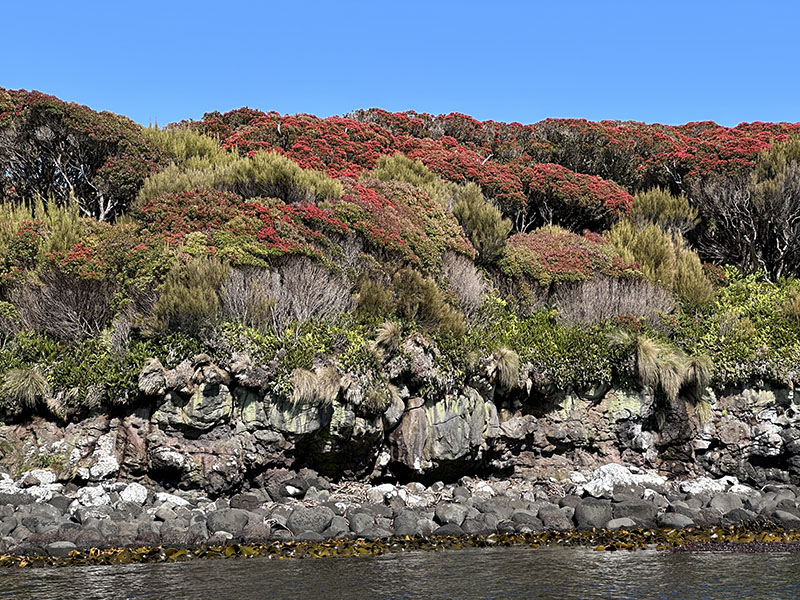
After that extravaganza, we started back toward the South Island. We stopped for another zodiac tour at Enderby island, part of the Auckland Island chain. Here we saw yellow eyed penguins up close and personal, and a nesting grey headed albatross. The Southern rata trees were in bloom as well.
Yellow eyed penguins. These are quite rare.Southern Rata trees, native to New Zealand.
Overall, if you love penguins and birds and nature of any kind, it was a fun trip. We actually met a couple on the boat who had no interest in penguins at all. But by the end, they were kind of warming up to them. How could you not? Look at these guys!






 A Yank Among the Kiwis