
How we spent our summer – Part 4 Fishing

To spend time outdoors, some people like to hike.  We go fishing.  We like to catch fish, of course.  We like eating them even more.  But for me, the more important part of fishing is being in the outdoors on a river, lake, or the ocean just enjoying the sunshine and the breeze.  We also use fishing as an excuse to travel.  

First stop Christchurch.  I had wanted to go salmon fishing.  They farm salmon here and there are places you can drop a hook into a lake or river and the salmon are there ready to bite.  I wanted to actually try to catch a wild salmon.   We learned that some of the best wild salmon fishing is near Christchurch the largest city on the South Island. As of now, Christchurch is the second largest city in New Zealand, taking the mantle from Wellington.  Known as the garden city (beautiful rose gardens), they have perfect weather for all things flowering.  In 2011, Christchurch was hit with a massive earthquake and it decimated the city.  Buildings collapsed or were rendered unusable, earth shifted, and lives were lost.  We had visited the city in 2005 but we remembered little about it.

Unfortunately, we did not do much sightseeing because we had fish to catch.  We had a five a.m. pick up time for a drive an hour south to the Rakaia River, which purportedly has the best salmon runs in New Zealand.  The river is a braided river, which means the river moves according to flooding. The river is very shallow and rocky, so we had to be taken upriver in a jet boat.  

We were de-boarded onto a spit in the middle of the river before dawn.  
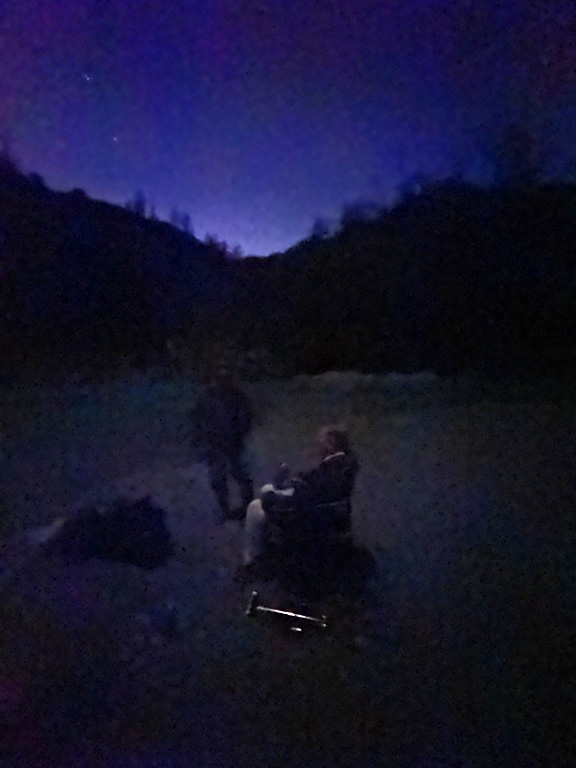
The boat driver said see you in six hours and sped away.  The guide was very upbeat even though it was still dark.  We started casting into the dark water and we continued to cast for six hours with absolutely nothing to show for it but sore wrists.  I was not happy to say the least.  This was an expensive trip.  
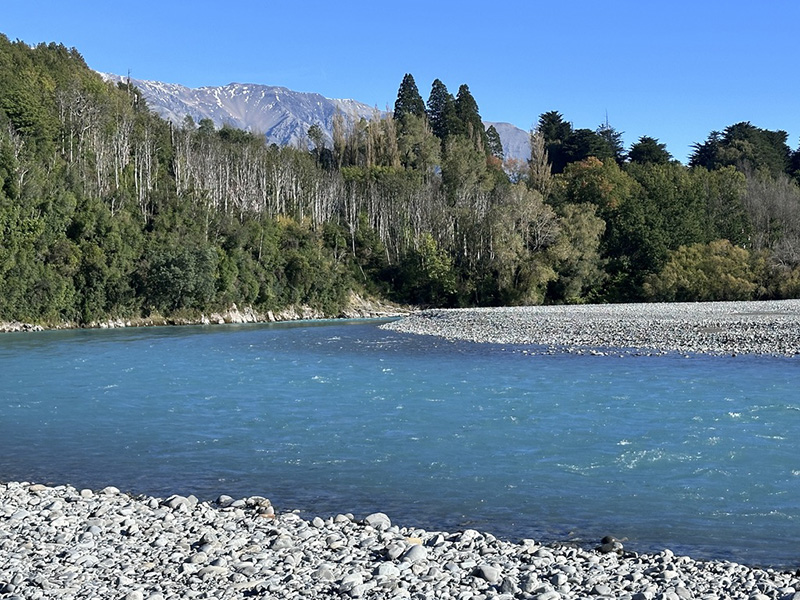
Great setting, bad fishing

What really ticked me off was that after we returned I did more extensive research and I learned that the salmon fishery on that river has all but collapsed.  There are few fish to be had and the guide had to have known that.  I felt like it was false advertising.  Oh well, I learned something.  Do more research before we make the effort.  

We still had a nice dinner in Christchurch and we visited the International Antarctic Center.  This is an interactive museum/penguin research facility where you can learn all about living in the Antarctic.  We took a very bumpy ride in a Haggland, the all-terrain vehicle that can travel in snow, ice, general bad weather and difficult terrain including the ability to cross a crevasse.  (A crevasse is a crack in the ice surface, usually a glacier.  If you fall in, you are gone.).  
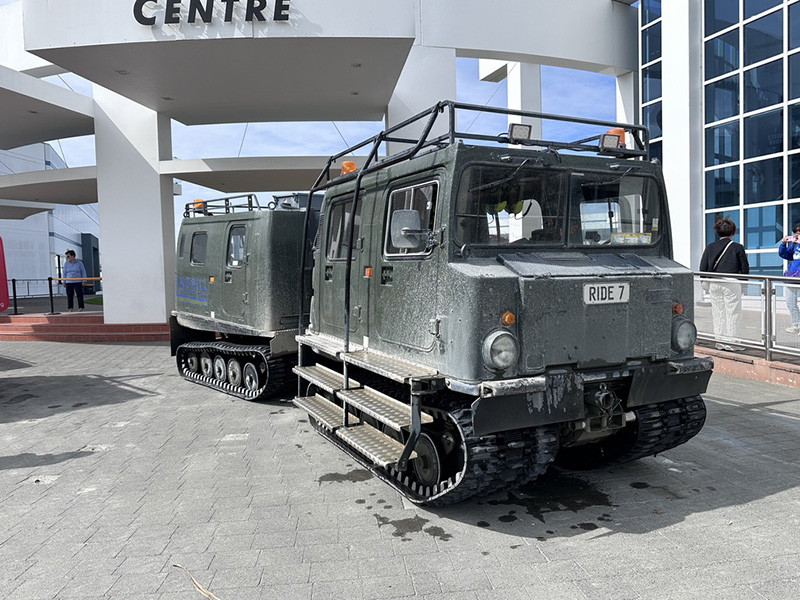
Not exactly a limo. It was a very bumpy ride/

We stood in a room to experience the equivalent of a winter storm with the cold and wind.  (It honestly did not seem all that bad.). But alas, we were not able to get into the penguin encounter.  Still, it was fun, and it was Antarctica.  You can’t go wrong there.  

Next stop Lake Taupo.  At the end of the summer we drove to Taupo, about four hours north, and home to excellent trout fishing.  In fact, this is the trout fishing capital of New Zealand.  You have two options—go fly fishing on a river or go trolling on the lake.  Seeing as fly fishing requires work and trolling requires sitting on a boat enjoying the day waiting for a to fish bite we chose sitting on our butts.  

Lake Taupo is a huge inland lake, 238 square miles and over 600 feet deep, formed in the caldera of a still active and ancient supervolcano.  It is part of a large volcanic geothermal hot spot that crosses the North Island.  Nearby are two active volcanoes and to the north geothermal springs bubble.  So the weekend was set for fishing and a visit to the geothermal hot springs spa.

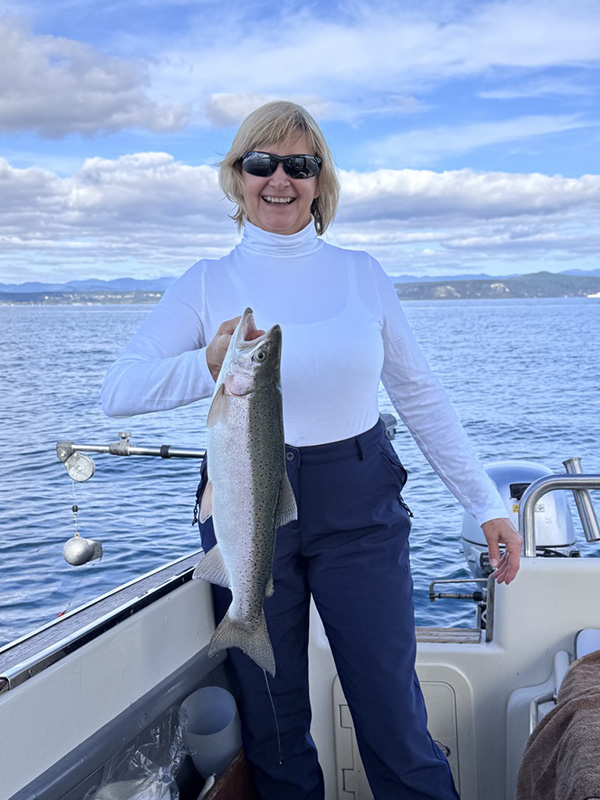
Our fishing trip was a huge success.  Contrary to all fishing advice, we went out in the afternoon and pulled in four nice size trout.  We threw one back for insufficient size.  Another one got away. 

 We could have pulled in more, but I was getting concerned that we would have nowhere to store them at home.  We took two of the trout to a local butcher for smoking and we brought two whole fish home with us.  Oh, the joy of being able to eat trout.  (See my entry about the absurd trout rules here.)

The next day we headed to the Wairakei Terraces thermal pools for a soak and a massage.  

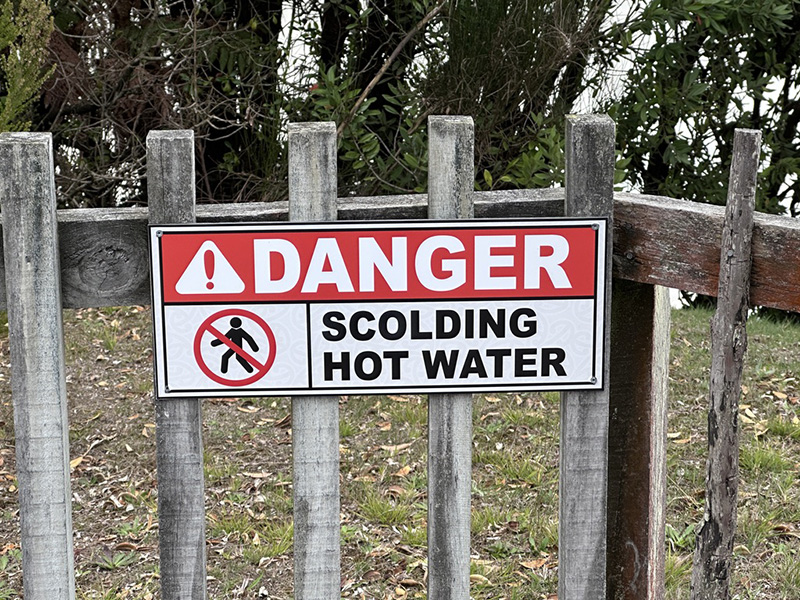
The North Island has several geothermal areas where bathing in water from hot springs is an option.  The difference here was that these pools are filled directly from the steaming springs bubbling out of the ground just above our heads.  There were four pools of varying temperatures, with the hottest pool measuring in at a scalding 105ºF.  I step in it and said, “no way.”  The people in it were so red, it looked like they had been scalded.  We opted to spend our time in the second most hot pool.  It was very relaxing and not too crowded.  

This was the hot hot pool. The water comes straight from the bubbling hot spring to a water fall at the bottom of the photo. The guards were begging people not to sit in front of it but they really were not listening. Cooler pools in the background.
someone needs to go to spelling school.

All in all, a very successful trip. We will most definitely return to Taupo when we run out of trout.
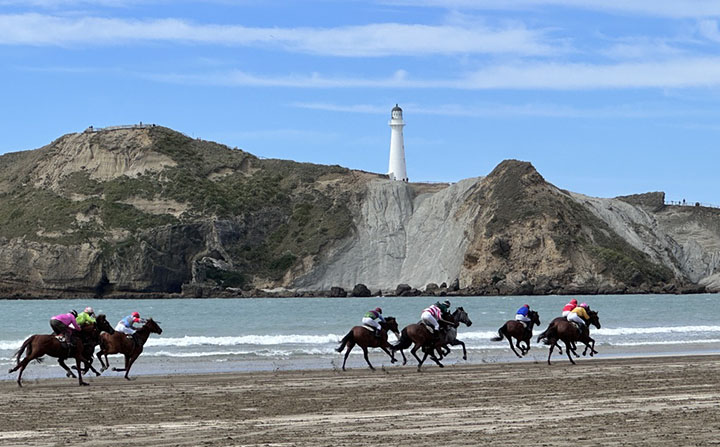
How we spent our summer – Part 3 Castlepoint Races.  

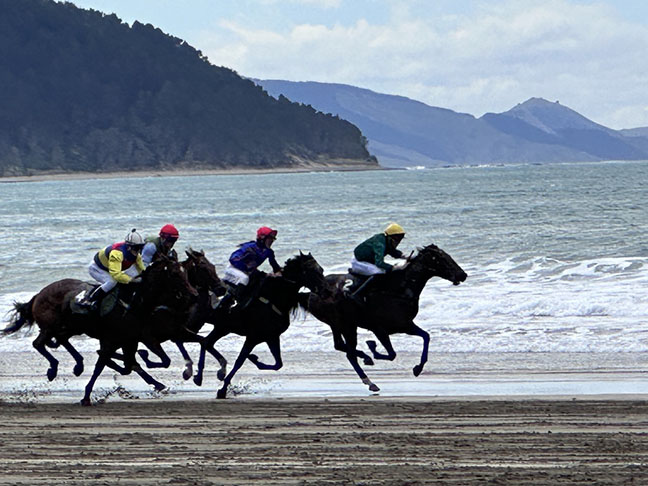
Okay, we like horse racing.  Plus, how can you not love the idea of horses racing on the beach?  Every year there is a day of horse racing on the beach next to the Castlepoint lighthouse located on the eastern shore of the lower North Island.  This is an event that just celebrated its 151st year.  It is a big deal and people come from all over to watch and just to enjoy a lovely day at the beach.  Thousands of people line the beach with chairs and blankets and picnic baskets, and parking lots overflow with campers and trailers.  It is a family event with kid races and entertainment between races.  

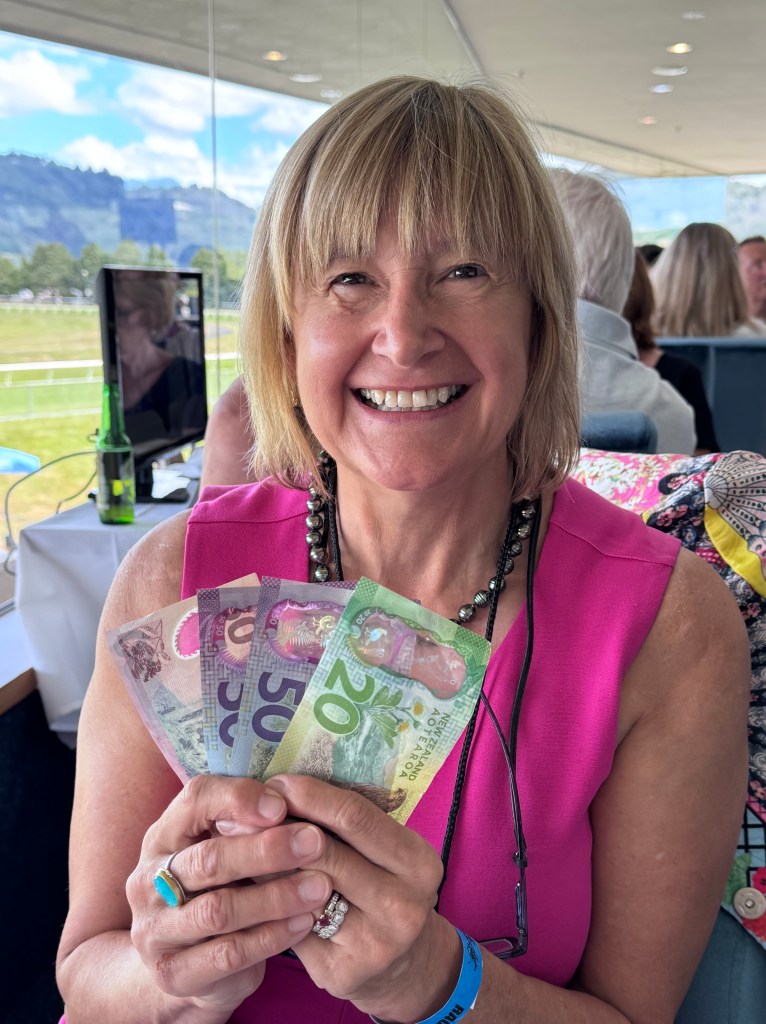
A gentleman explained to me how the betting worked.  There is no real information on horses.  In order to bet on a horse, I had to pick a letter to bet on.  That letter was later matched to a specific horse. So the horse I was betting on was totally random.  Damn, if I still won.  I had one horse place, and I won $22 on a $2 bet.  Good times.  Matt won one race too.  

How We Spent our Summer – Part 2. Wellington Cup.


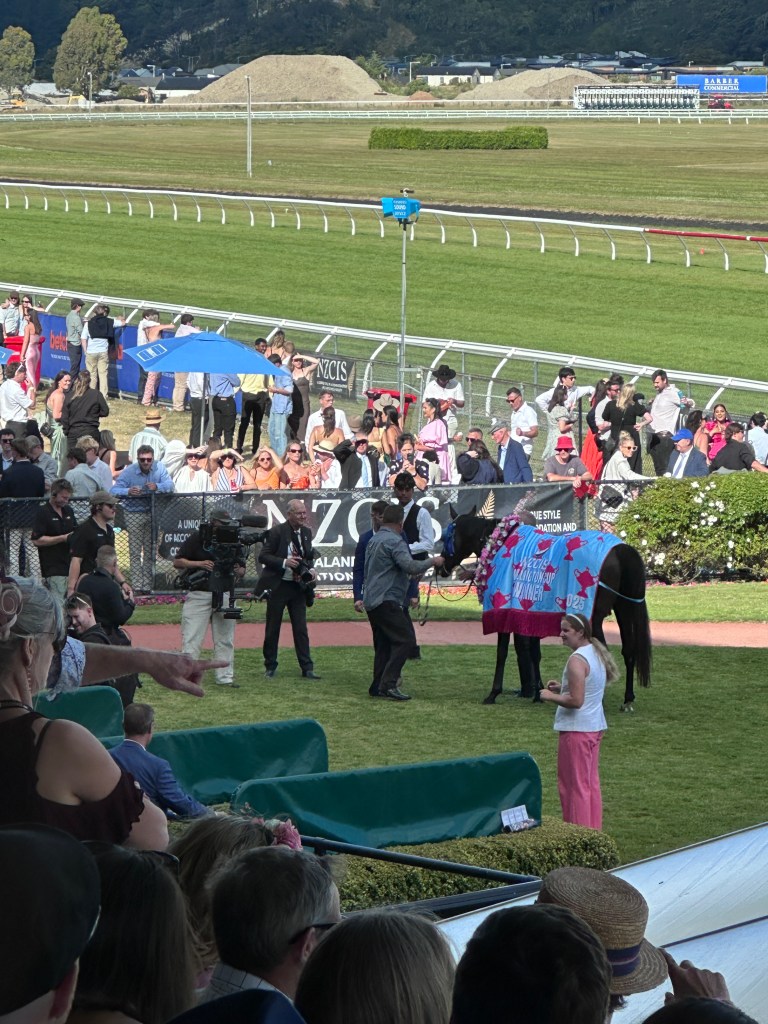
my winning horse

 The U.S has the Kentucky Derby, the Preakness and the Belmont.  New Zealand has the Wellington Cup.  Nowhere near the size or prestige of the U.S. races, it was still fun to go out and place a few bets, drink some champers, and watch the horses.  I picked a few winners over the course of the day, but not the winner of the Cup itself. 

How We Spent our Summer – Part 1. Snow Leopards.  

While in the U.S. summer is on the way, we are heading toward winter now.  Good time Charlie’s that we are, we did a lot of different things over the summer.  I already reported on the Trip to the sub-Antarctic Islands.  Here are a few other highlights presented in several parts.

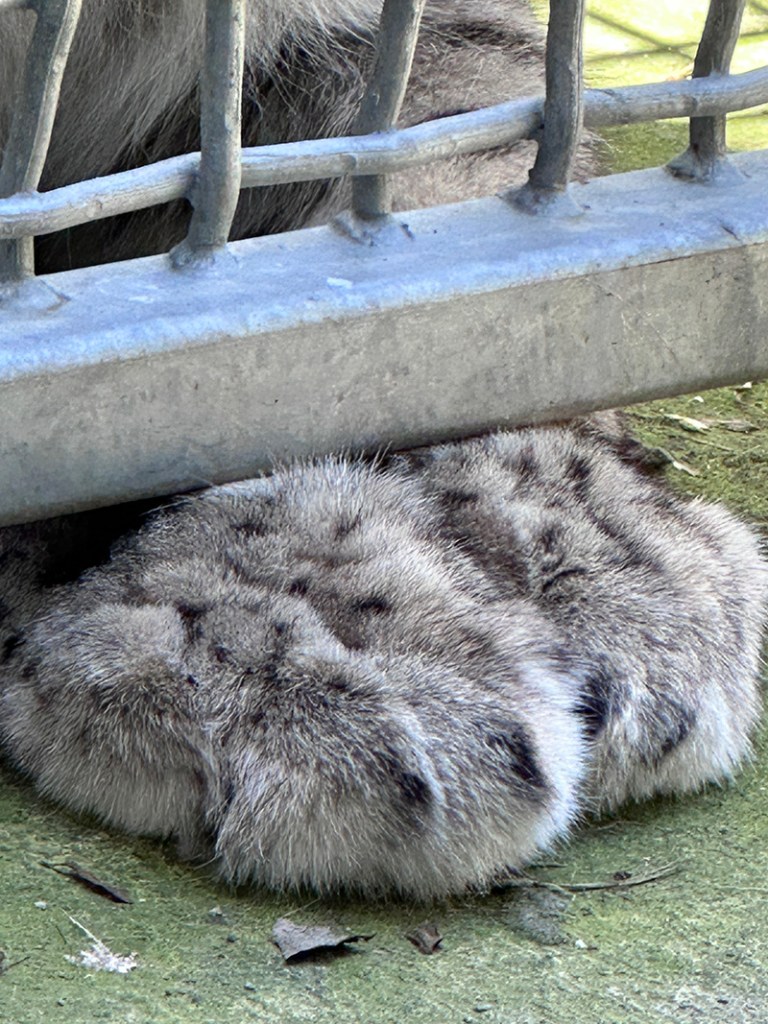
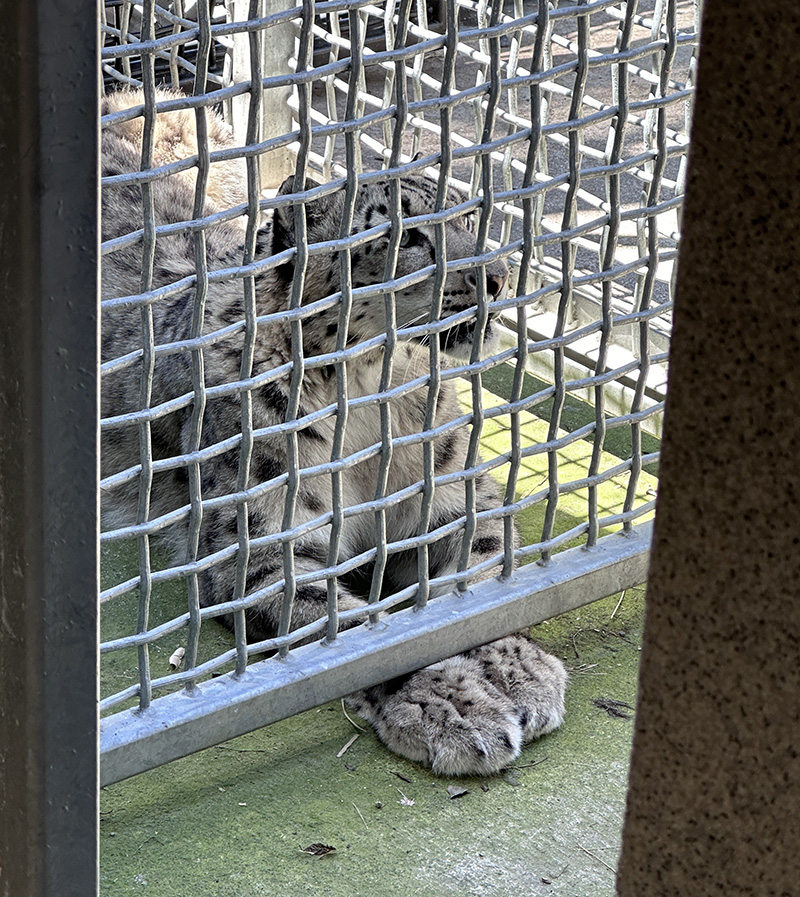
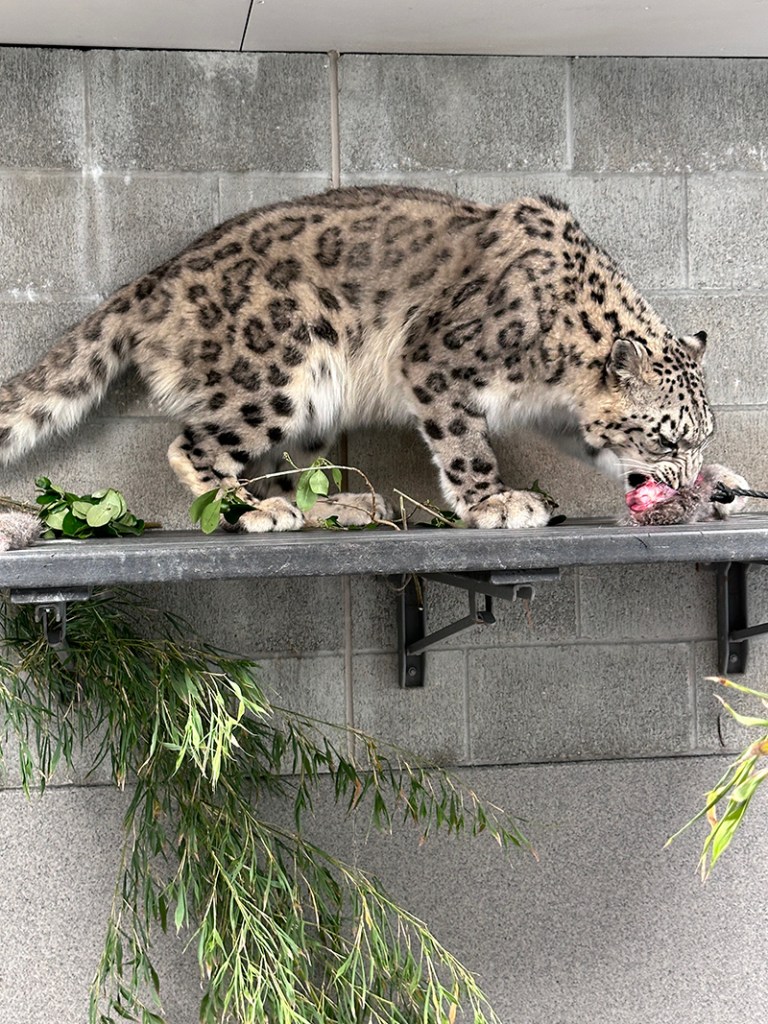
We visited the snow leopards at the Wellington Zoo.  I don’t normally go in for zoos, but the Wellington Zoo built a sanctuary for two snow leopards.  They were offering an encounter—which entailed getting up close and personal as one can get with a wild cat—with a metal fence between us—and letting us set out their food.  It was hard to resist not visiting.  

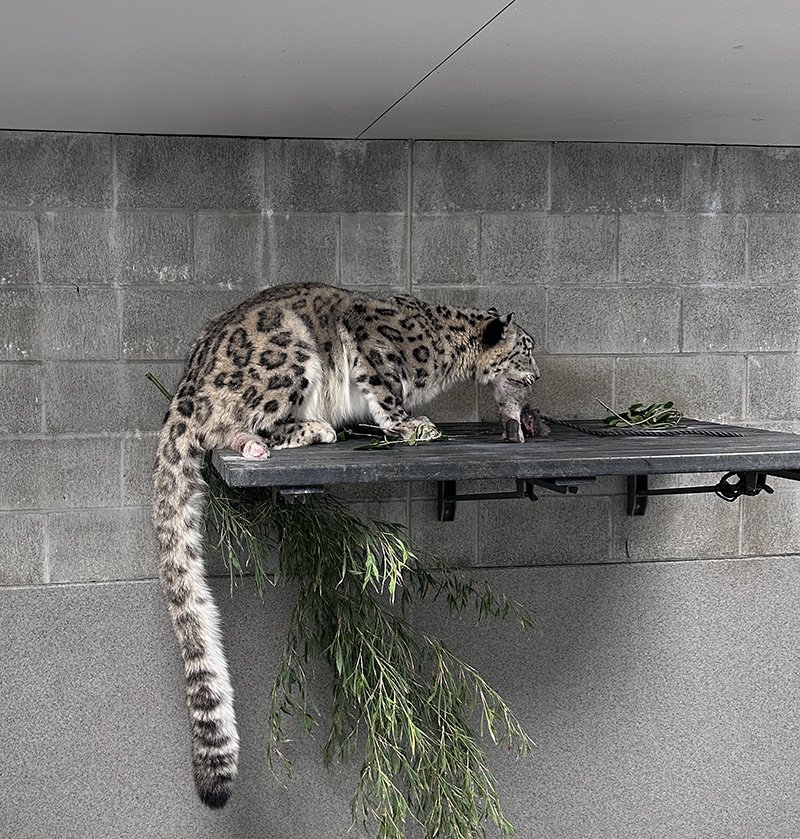
So gorgeous.  Big paws and long luxurious tail.  The visit was arranged for feeding time.  We went into the working area of the enclosure, a fenced in/caged area where the cats come in through a series of gates to get dinner and whatever else they need.  We were asked to take their meal, some lovely legs of lamb or goat or some other creature and put them out in the feeding area.  Once done, we left the caged area and the keeper let the cat in.   

waiting for dinner to be served by us

We watched her chow down on her leg.  It was yummy.  Only one cat was around.  We later saw the other one having a nap in a small cave. 

Knowing how difficult it is to see these creatures in the wild, we felt very lucky to be near them.  

Bicycle Ride to Light House

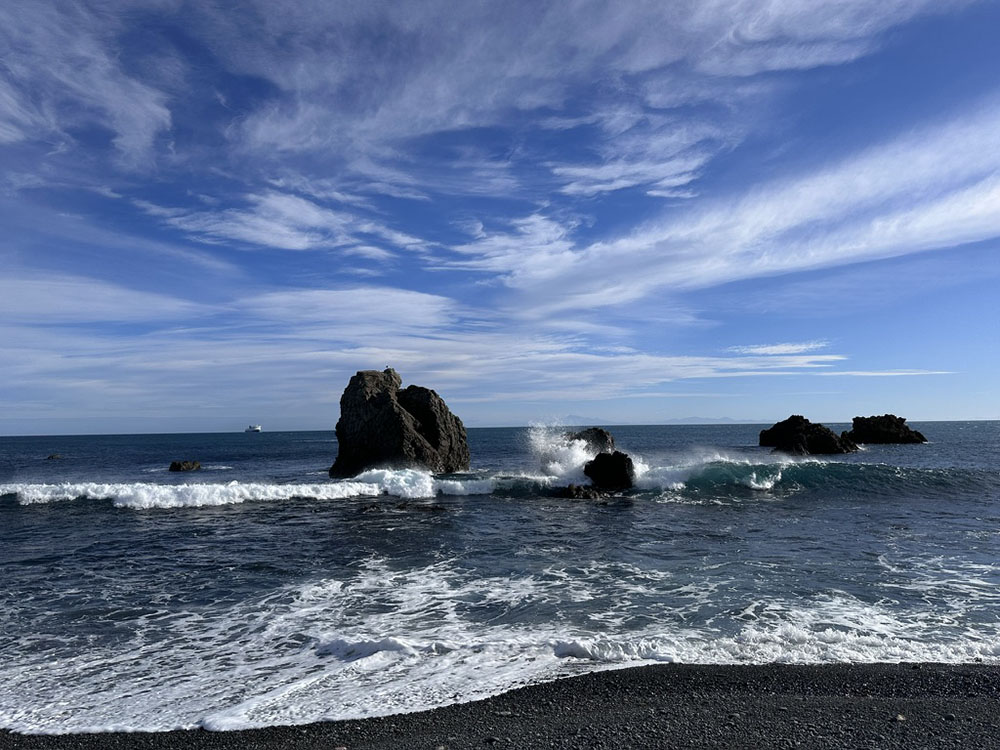
Matt had wanted to ride from the town of Eastbourne on the far side of Wellington Harbor to a lighthouse on southern coast called Pencarrow Head or the Māori name Te Raeakiaki, which means “the headland where the sea pounds.”  And boy, does the sea pound there.  And the wind blows.  Hard.  

On the way out along a gravel road, the wind was at our back and we flew along.  Going back to Eastbourne was like trying to bike with a fully deployed parachute hanging off my back.  It was a slog.  I was on a flat feeling like I was climbing a mountain.  Matt has an electric bike and he can just pedal along.  Why don’t I get an electric bike?  They are very popular here, but I feel the need to bull through when it is tough going.  I feel like I accomplished something—mostly that my thighs are going to never forgive me.

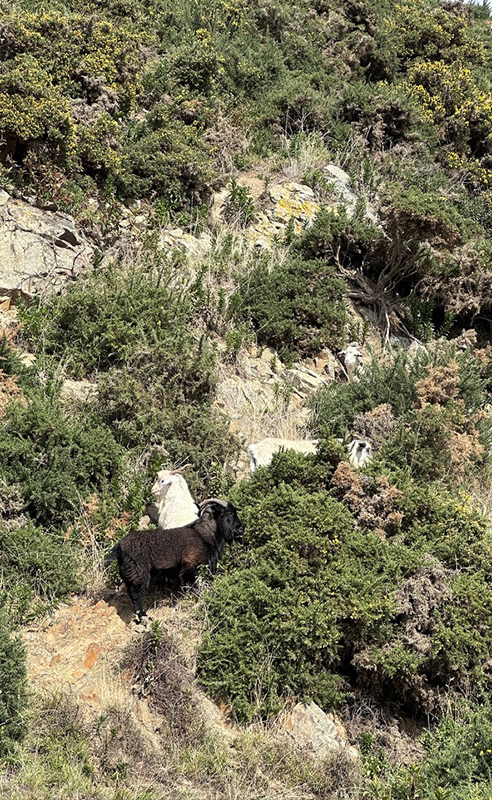
But it was a beautiful ride with a delightful view and even some wild goats.

The end of our ride.
Skittish goats wanted nothing to do with us.

A Maori Update

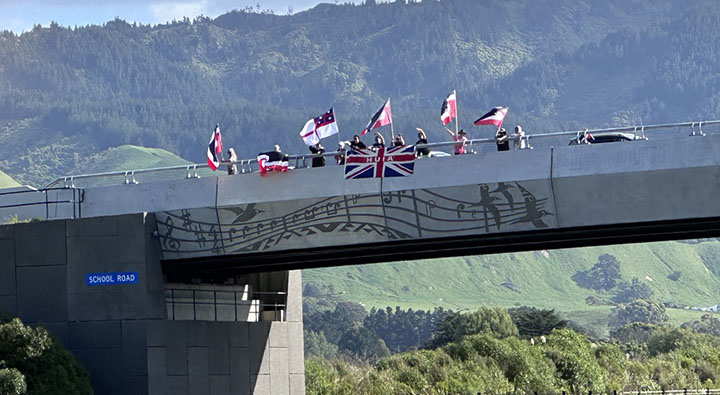
People supporting protesters heading for Wellington in November.

A few months ago there was a major protest by the Maori people over a proposed bill called the Treaty Principles Bill.  You may have seen the video of the woman shouting a protest in the New Zealand parliament.  The people in that video are performing a “haka.”  You have probably seen the New Zealand All Blacks, the national rugby team, perform a haka before a game.  Haka can be a celebration, or a dance meant to intimidate.  I will explain why that was necessary to do in Parliament.  

Here is the deal.  The “All Lives Matter,” anti-woke movement has arrived here in New Zealand.  (You, dear reader, may agree with those sentiments, but I think you all know that I do not.)  These ideas do have an appeal to certain New Zealanders and it has provoked a battle over the interpretation of the 1840 Treaty of Waitangi.  

This is going to be a very abbreviated explanation of the Waitangi Treaty and the contentious history around it. The Treaty is considered the country’s founding document.  It sets forth the structure for governance, land ownership, and the protection of Maori interests in return for an agreement between the British government and the indigenous Maori.  But fun fact, there were two versions of the treaty—one written in English for the British and one written in Maori.  Alas, when you re-translate the Maori version, it does not read the same as the English version.  

The British version said the Maori recognize the full sovereignty of the British over the land.  It is unlikely the Maori understood what it meant to give up sovereignty.  In fact, the Maori version simply says the Brits get the right to govern and even governance was a foreign concept. The Maori understood from their version that they were to have full control or chieftainship over their land and treasures.  The British version says Maori have continued ownership of their land, but the Brits have what is known as preemption rights.  A preemption right means the British control over ownership giving the Crown an overarching right before all others to purchase land.  It also includes the authority to approve the sale or transfer of Maori land.  (The United States via earlier British law also retained the right of preemption in its dealings with Native Americans.)

            The ambiguity in the treaty led to internal wars between the Brits and the Maori, with ownership disputes, settler encroachment, and the loss of Maori land.  Soon the Treaty was ignored by the British altogether until the 1960s and the Maori “Honour the Treaty” protest movement began.  New Zealand came to terms with the problems the Treaty had created for the Maori, particularly land and culture loss, and sought to address the issue by enacting laws and creating the Waitangi Tribunal, which was empowered to look at breaches of the treaty.  

            Fast forward and the Tribunal and its development of principles of treaty interpretation are being called into question by a political party.  This party seeks the enactment of a new law that would govern treaty interpretation and take it out of the hands of the Tribunal.  The problem from the Maori perspective is that the proposal would wipe out any progress the Maori have made to protect and advance their culture and interests.  The supporters of the Treaty Principles bill argue that the Maori are getting special treatment and the bill is intended to make sure all New Zealanders are treated equally, hence “All Lives Matter.”  But that position ignores the Treaty’s clear statement that the Maori are entitled to govern their own land and “treasures.”  Treasures means their culture, language, and the environment. 

The fact is that the Maori have been second class citizens since the British arrived and whatever they have gained has been through long fought battles for a recognition of their right to live according to their culture and beliefs, as the Treaty guaranteed.  That does not mean they have more rights or that they are getting special treatment.  They are getting what was bargained for when they signed off on a Treaty to grant the British sovereignty over the islands.  

When the Treaty Principles bill was introduced, the Maori party in Parliament was not amused and held a “haka” protest, as is seen in the video, in front of the man who introduced and has been pursuing this legislation.  There was a major protest outside of Parliament too, where thousands gathered to support the “Honour the Treaty” movement.  

Even so, the bill was introduced, voted on, and then died.  Recently, it was announced that the same political party is pursuing another bill that would have similar impacts, by denying the treaty rights of the Maori.  Once again, a battle will be fought over this legislation. In the meantime, it is not clear that we can expect another haka in Parliament. It been proposed to punish the Maori MPs who performed the haka with suspension from Parliament that has not yet been resolved. Rest assured, there will be more confrontation and protests in an effort to save Maori rights because the “All Lives Matter” movement, even though a minority, is here.  

Earthquakes

Yes, we have earthquakes here in New Zealand.  According to Learnz.org.nz

Earthquakes happen every day in New Zealand. Approximately 14-15,000 occur in and around the country each year. Most earthquakes are too small to be noticed, but between 150 and 200 are large enough to be felt.  …

The most powerful New Zealand earthquake in recent history occurred in the Wairarapa in 1855. During this magnitude 8.2 earthquake, land moved along at least 140km of the Wairarapa Fault. Where the movement was greatest, the land shifted across more than 18 metres along the fault. Part of the nearby Rimutaka Range rose more than 6 metres. This is the biggest known movement by a single earthquake to have been recorded anywhere in the world.  [A meter is a little over three feet.  So the land shifted about 60 feet and the mountain rose about 20.]

So take that California.  You got nothin’ on New Zealand.  There is an app called GEONET which tracks New Zealand quakes, locations, magnitude and impact, letting app users rate what the quake felt like.  A quick perusal of the earthquake list shows that there is not a week that goes by that there is not some kind of earthquake somewhere in the country and there are some places in New Zealand that have earthquakes regularly, perhaps once a week. I make mental notes of the location because I would not want to live in those places. I would not say they happen often where we live, but they happen enough.

The quakes you can really feel start at about three magnitude.  Whether you feel them depends on the depth.  The shallower the quake, the more likely you are to feel it, the more likely it is to cause damage.

So what is it like?  Here is how it goes: first you sense a bit of a shake and hear a rumble.  It snaps you out of whatever you are doing and makes you a little more alert.  I often suddenly feel anxious.  Your brain starts trying to figure out what just happened.  Was that a quake?  Sometimes that is it and we all go, huh.  That was a quake.  But more often in the next second or two later, the floor feels like a rolling sea and the house vibrates from the motion of the earth beneath it, causing everything in the house to rattle and shake, the whole house seeming ready to crack from the movement.  This lasts only a few seconds.  If it lasts longer than a few seconds and is more severe, we have to get out because that might mean a tsunami and we are in a tsunami evacuation zone. We are instructed that if you are near the coast and feel a strong earthquake where it is hard to stand up or you seel a weak rolling earthquake that lasts a minute or more move to high ground or as far inland as you can, out of tsunami evacuation zones.  The rule is “Long or Strong, Get Gone.”    Are we ready?  Yep. We have go bags prepared. 

We just had a 4.1 here not long ago.  It occurred fairly close to us but because of its depth, there was only light shaking.  Think of a large truck rumbling by.  The house shook but the dishes did not really rattle.  Matt was in Wellington and did not even notice.  As I said to him afterward, it scared the hell out of me.  They always do.  Unlike a weather event, earthquakes come with no warning as to when, how strong, or for how long.  You are living in the moment and what will happen is a complete unknown.  I don’t think I will ever get used to them.  

If the quake is strong enough, heading to magnitude five and above, the dishes clatter on the shelves and the pictures on the walls are jostled.  We have never experienced one that was more than that level of impact.  At the next level, things crash and fall.  We have not been there, thank God.  During an earthquake the ground can move horizontally and vertically.  In a severe earthquake there is something called liquifaction where strong shaking causes soil that is wet, sandy, and silty to act more like a liquid than a solid.  Think about how sand moves when you step on it.  It is water saturated and it does not take much to move it.  Now imagine a building on top of sand that is shaking.  That building has a good chance of being damaged or knocked down.  

Probably the most famous recent quake was a magnitude 6.1 that hit the city of Christchurch in 2011 which resulted in 185 deaths and caused extensive damage to structures which are still being dealt with.  Numerous office buildings, churches and hotels were on the verge of or totally collapsed.  Homes were destroyed and even the sports stadium had to be torn down and rebuilt.  But that is only one in a long list of earthquakes that have impacted communities throughout New Zealand.  This country is located on numerous fault lines so it is not surprising but still it is unnerving.