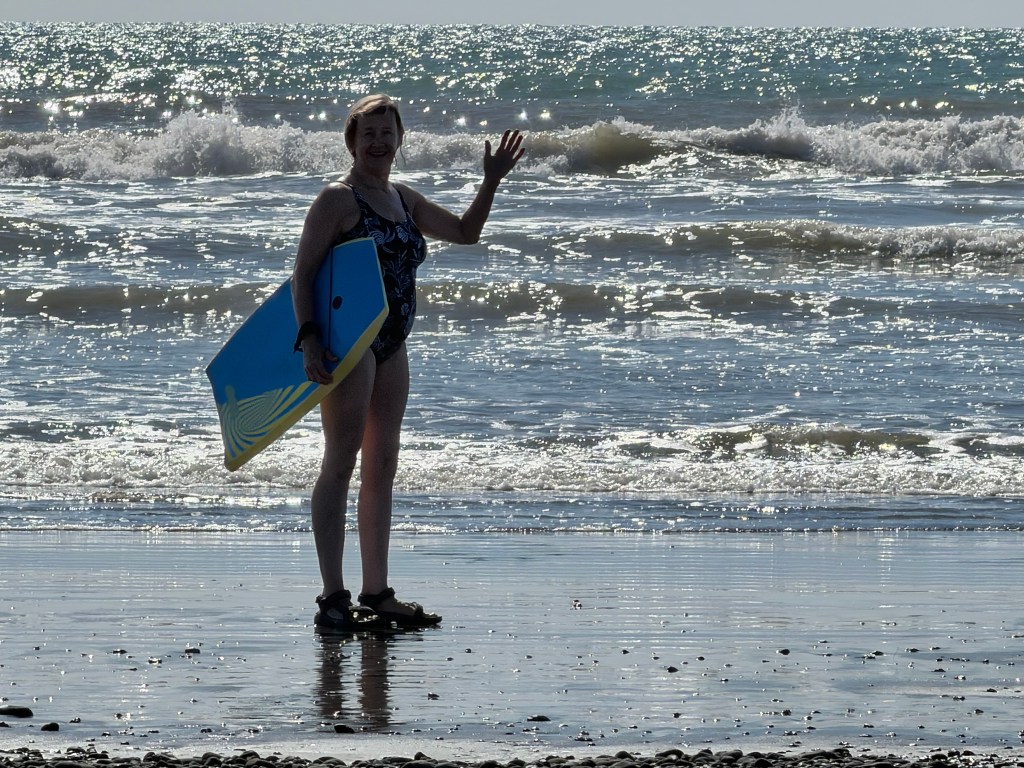
It has been a cold, wet Spring here in Aotearoa but the Gods of Summer finally let the warmth come. First day of boogie boarding. This is as close as I will ever get to surfing. Water Temp (57F, 14C). Cold? You get used to it. (Jesus, I look just like my mother. No, not the boogie board part.)
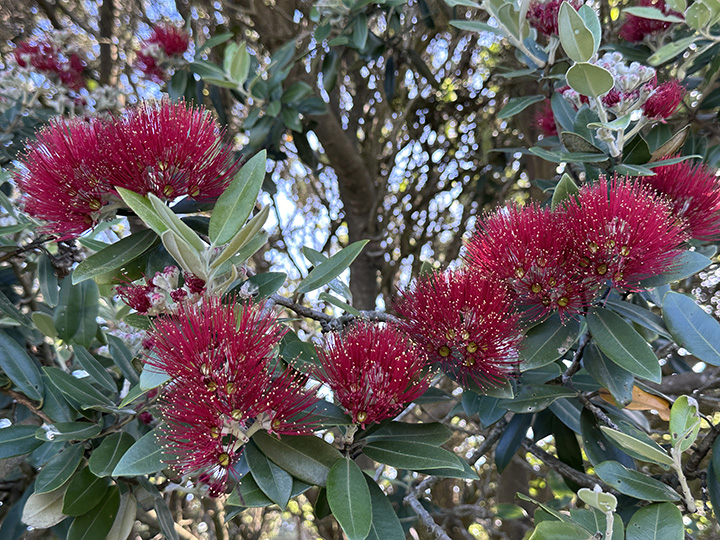
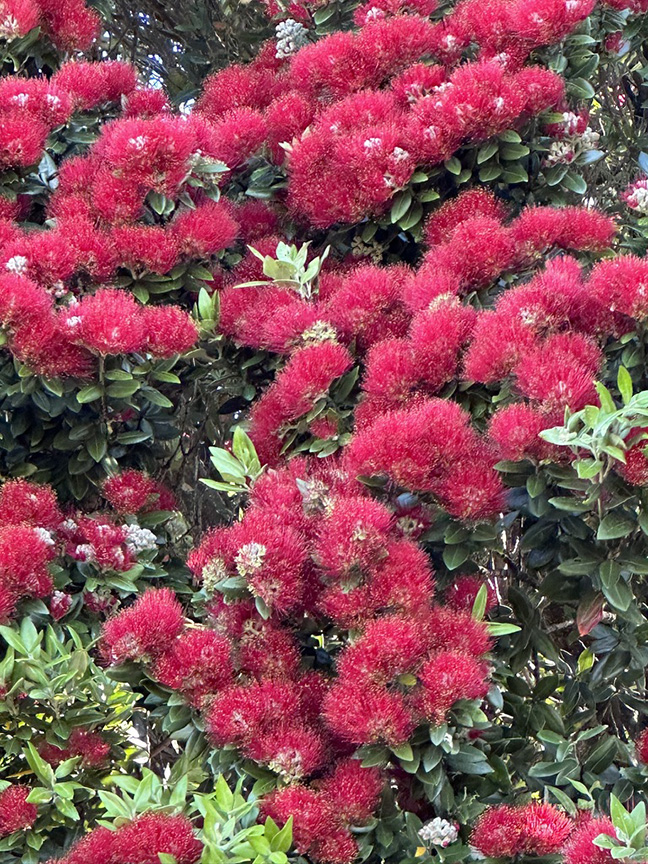
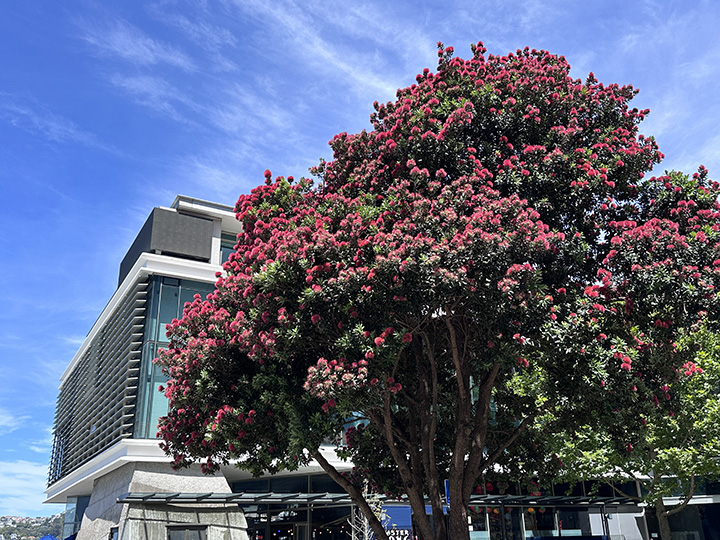
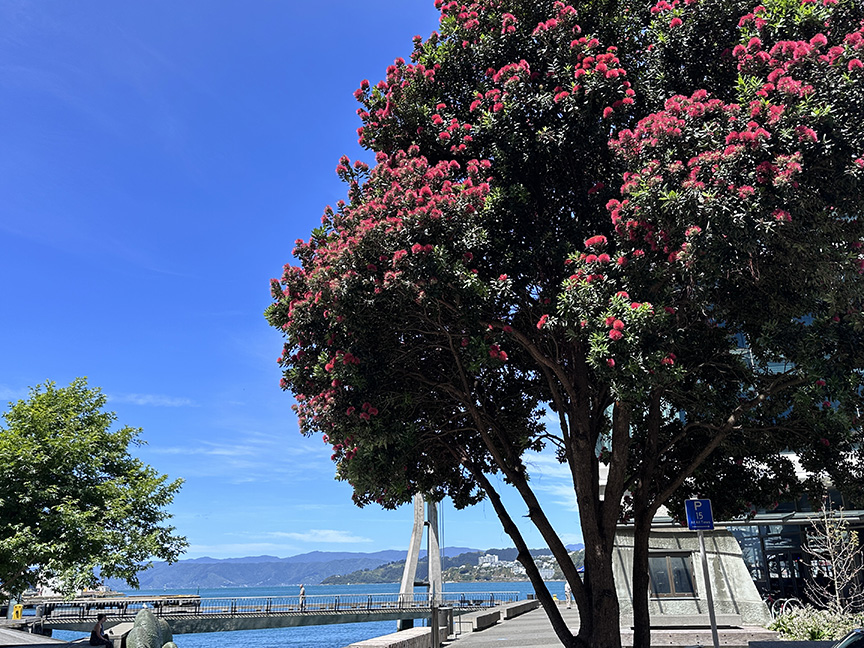
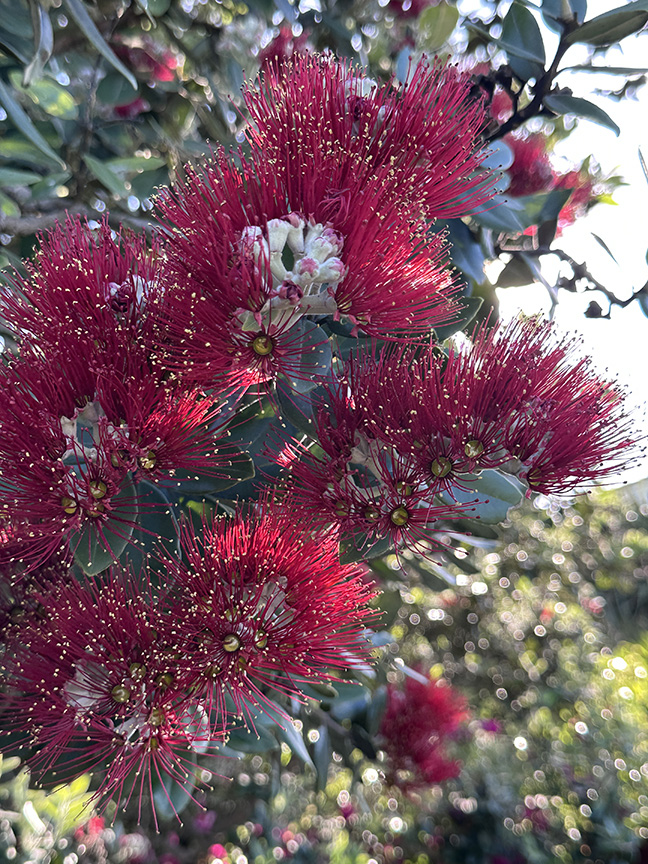
This gorgeous tree, endemic to New Zealand, shouts red and gold as Christmas nears. Hence it is called the New Zealand Christmas tree. Honestly, instead of fir trees, an artificial pohutukawa should be in every NZ home, decorated for the holidays. (I say artificial because unlike fir trees, I highly doubt you could keep this tree alive and blooming if you cut it down and stood it in a bucket of water. But I digress.) This year they are absolutely erupting in red. I just had to share photos:
Bay of Islands is also home to the Waitangi Treaty Grounds, the place where the Treaty of Waitangi was originally accepted and signed by local tribes in 1840. The treaty is the foundational document of New Zealand because it sets out the rights of the Maori and the British in occupying and governing the islands. The agreement was necessary because the Maori were being harassed by the French and by sailors who brought trouble to the island. In addition, British settlers were coming. Trouble was all around and the Maori felt the need for protection. Some were convinced the British would keep the French out and they would use the white man’s laws to keep the Europeans coming to the islands under control. They were also convinced to sign a document that did not exactly state those terms.
The meaning of the Treaty, particularly the division and preservation of rights and powers, is still debated. The issue is that the treaty was written in English and translated into Maori. The meanings of several words differ so they don’t say the same thing. The Maori believed they would be left to govern themselves and that their interest in their lands would be preserved. The British version says the Maori essentially ceded sovereignty over the islands to the British. Disputes have raged ever since.
Interestingly, before that treaty, a missionary helped the tribes draft a Declaration of Independence, which is considered the Maori declaration of sovereignty over the islands. As explained on the website:
“By 1835 a growing desire for international recognition of New Zealand (and its governance) led to a meeting of chiefs at Waitangi. Concerned about the intentions of the growing number of Europeans, the chiefs put their signatures to a document which declared New Zealand a ‘whenua rangatira’, an independent country. He Whakaputanga o te Rangatiratanga o Niu Tireni (Declaration of Independence of New Zealand) was acknowledged and supported by the British Government and continued to make its way around New Zealand gathering signatures until 1839.“
The Maori tribes who created this declaration consider it to be the foundational document that undergirds their sovereignty and land rights under the Treaty. In other words, the agreements and deal making regarding land and governance as set out in the Treaty would be meaningless unless the Maori already possessed the rights in land and governance as asserted in the declaration. while true you can’t deal what your do not have, I think it is fair to say that to some extent the Treaty has overpowered this document.
In visiting the Treaty grounds museum, it appeared that the Maori had a strong voice in the presentation of the history and the facts, and it was clearly intended to assert the Maori point of view in terms of the impact of colonialism on the people and their culture. But it still seemed well balanced. No one was demonized outright. You were left to come to your own conclusions. (I did the demonizing in my head.)
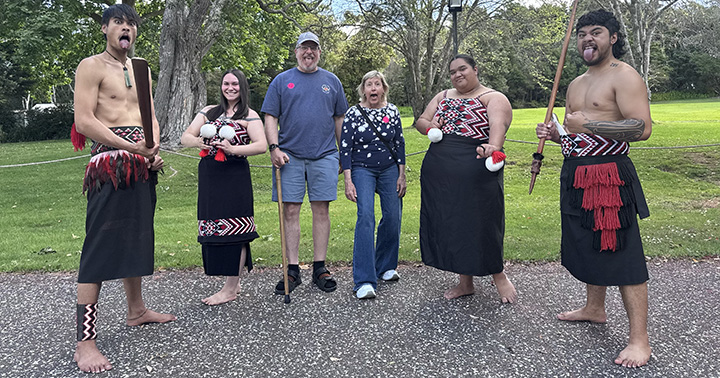
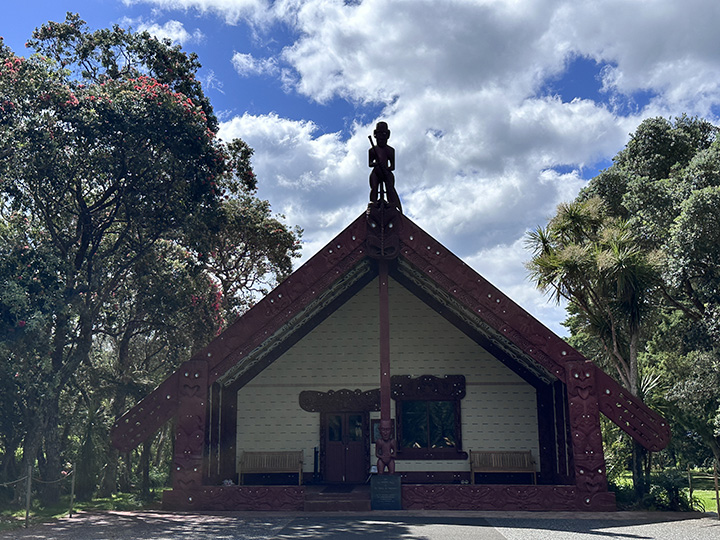
We took a historic tour and ended with a cultural performance by some young Maori. Here we are after the show practicing what we learned. I asked if women were permitted to stick their tongue out. The answers were inconclusive. Some tribes are okay with it, some not. I went with it.
Here are some more pics:
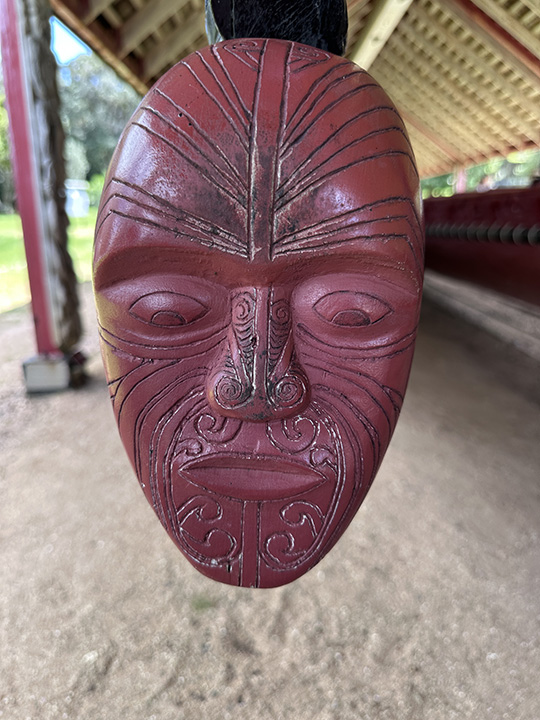
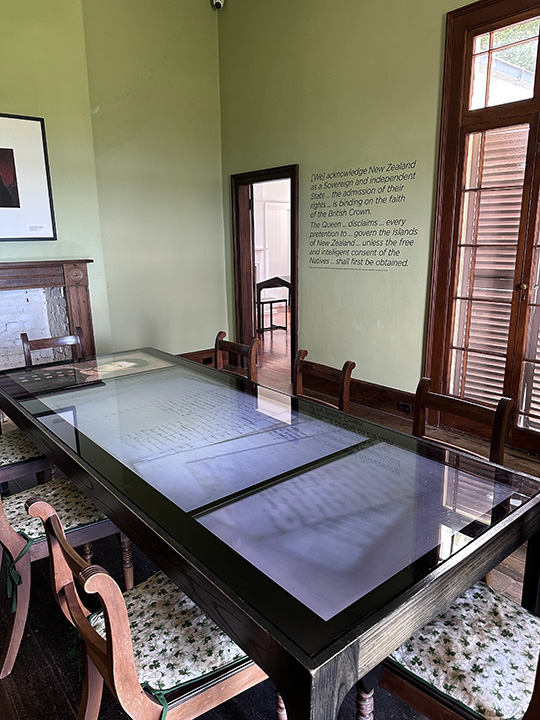
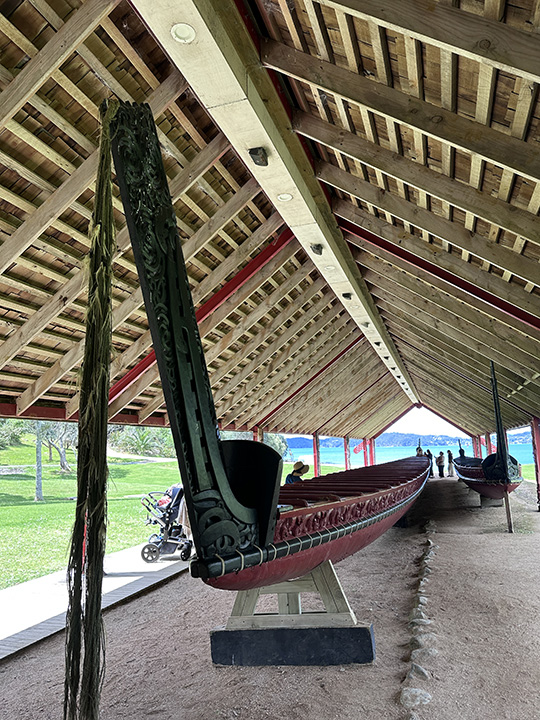
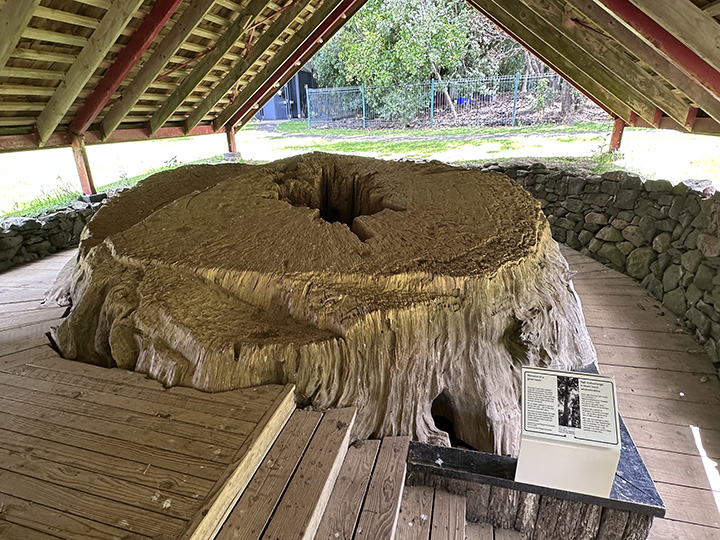
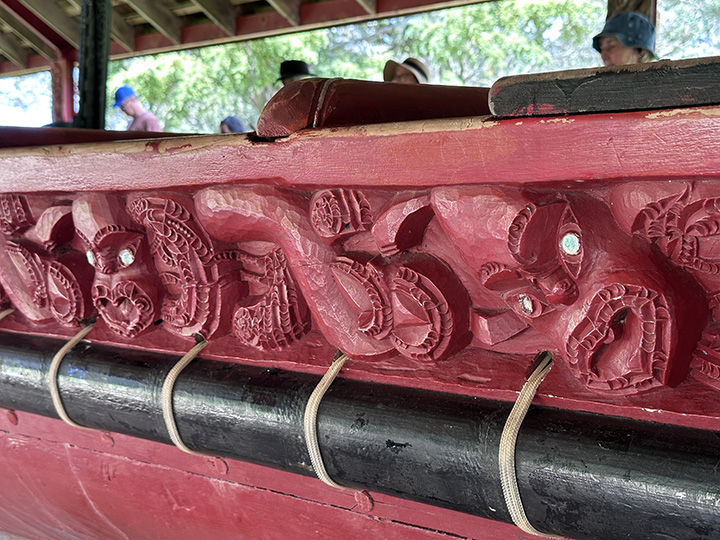
Treaty RoomCeremonial Waka (canoe) – used for the Waitangi Day celebration. It is carved from the Kauri Tree, one of the largest trees in the world. (Tough to get a photo of a ship this large and do it justice.)Kauri stump from which the Waka was carvedWaka detailTribal meeting house were we saw the performance
All in all, it was a good trip. We agreed that for us, it is not the most beautiful place in New Zealand. It was nice, but pretty touristy, and it just did not speak to us the way Kaikoura did.
On our continuing quest to see as much of New Zealand as possible, Matt and I flew to the Northland and the Bay of Islands, considered by many to be the most beautiful spot in New Zealand.
The further north you go in New Zealand the more tropical it becomes. It is warmer, sunnier, and has more of an island feel to it. Bay of Islands is just what its name suggests. Reminiscent of Caribbean island chains, Bay of Islands is dotted with small islets and bays, surrounded by calm blue waters that are home to many sail boats and the occasional dolphin pod. There are a few towns in the area, very tourist oriented, where sightseeing tours and fishing charters abound.
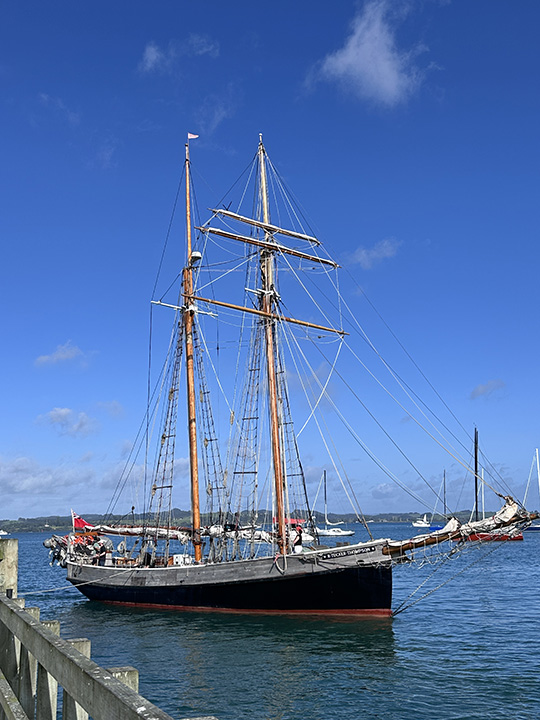
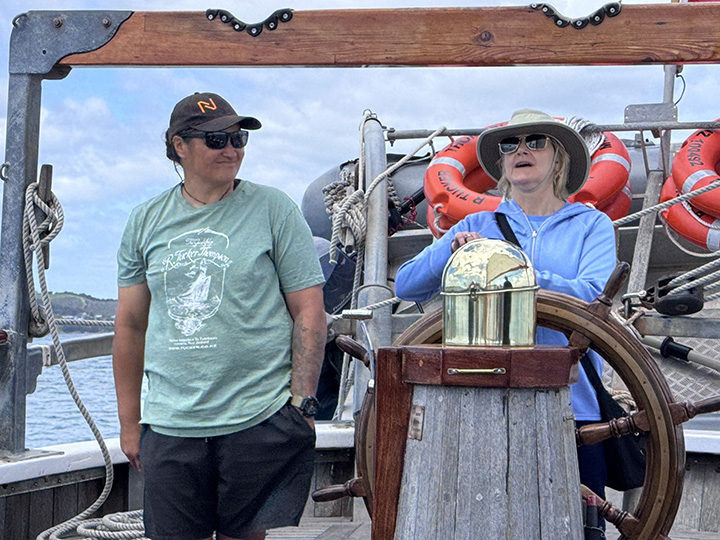
We signed up to go sailing around the Bay in a tall ship, the R. Tucker Thompson. I have never been on a tall ship and this looked like fun. They let us help to hoist the sails as we left and we were also offered the chance to take the helm. Good Lord, I had that boat zigzagging all over the place. They kept telling me the tiller took a while to respond so don’t over steer but I just kept turning that wheel like I was driving a car. I think the captain was relieved when I gave back the helm. I am no Mr. Sulu.
Two folks had the nerve to climb the rigging. To do this, you had to climb a a rat line. The rat line was made up of rope serving as “rungs” and the vertical structure. Ropes are called “lines” on a ship. I am not a sailor and they are ropes to me. It is attached to the tall mast on one end and at the railing on the other leaving it swinging in the wind on water side of the vessel. The ladder slowly tapers; so the higher you go, the less room for the rungs. You can see it in the photo.
Rat lines (rope ladders)
One young man climbed slowly but surely nearly to the crow’s nest. To do so that he had to climb over one sail and maneuver onto the next higher. The higher he went the smaller the rope ladder became and the further apart were the rope “rungs.” Those rungs were pretty unstable. It was making me nervous just watching his feet teeter. The second person, an older woman, went up a bit but her feet were shaking a lot. She said that was nerves and the instability of the rope ladder. Hooray for her though. My reaction was: Hell, no. I’m too old for that shit. There was also the option to climb out onto the bowsprit, which is the long pole extending off the prow that serves as an anchor for some of the sails. That too involved rope serving as a walking path of sorts. If you look at the photo of the ship, you can see the bowsprit and the ropes hanging off it.
The day was fine and we sailed to a small bay where we did a wet landing (when you have to wade to shore from the zodiac) which we were not expecting. After we dried off and got our shoes back on, we made a short hike up to the lookout. What a view.


 A Yank Among the Kiwis