On to Fatu Hiva, our favorite island.
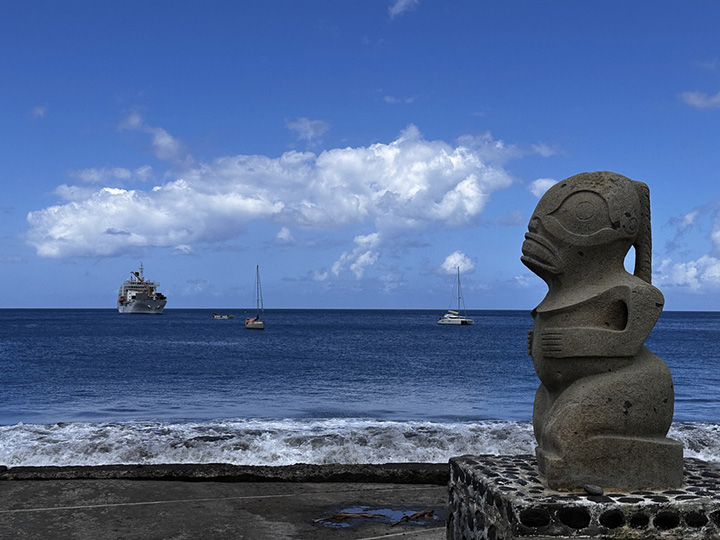
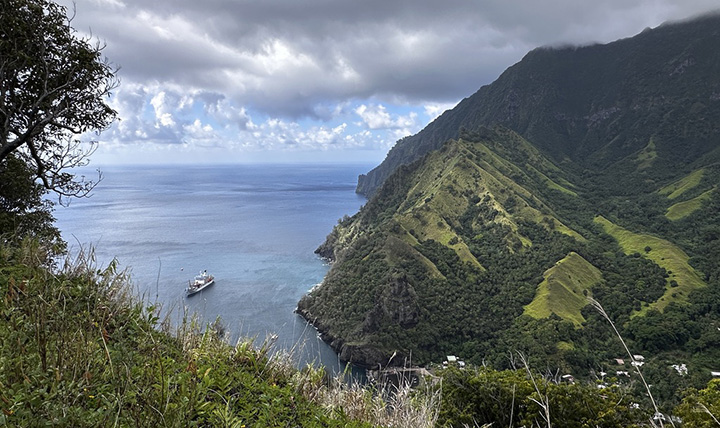
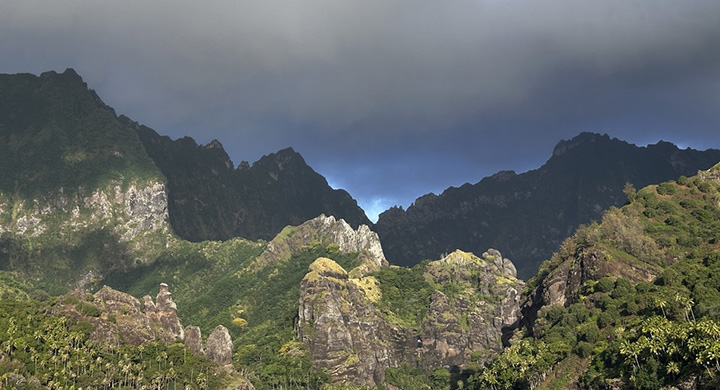
Fatu Hiva is the southern-most and most remote island in the Marquesas with a population of about 600 people. Matt noted that this was the first island that really looked like the ideal Polynesian island–the one you have in your mind–with few people, lush green, jungle covered valleys and cliffs, volcanic mountains, and a scenic coast.
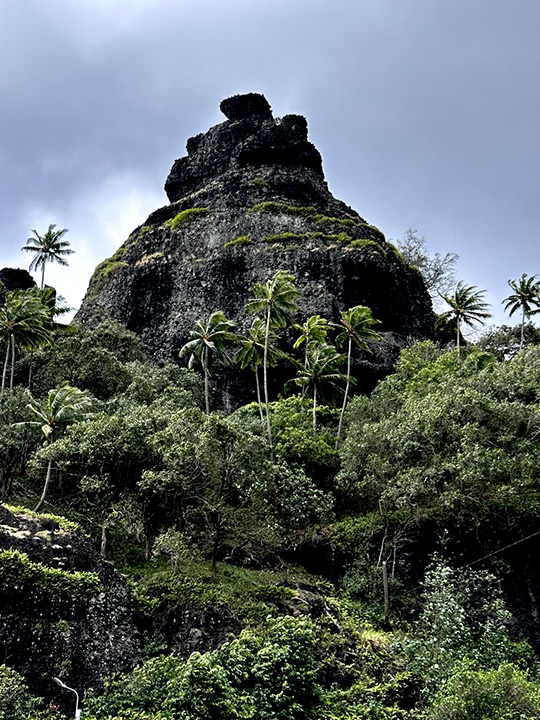
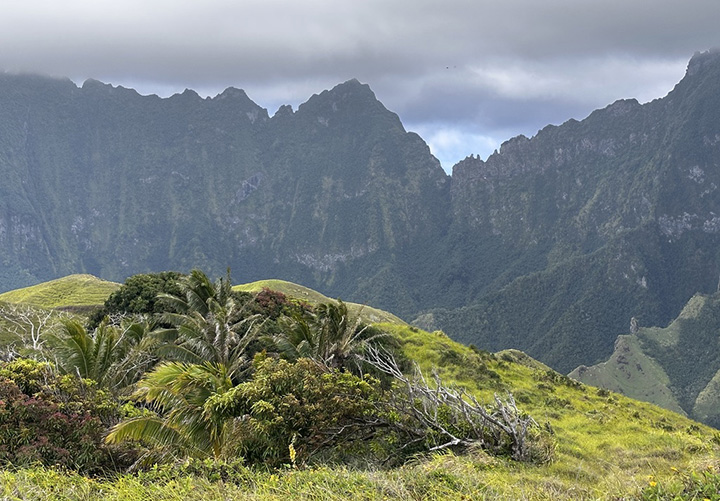
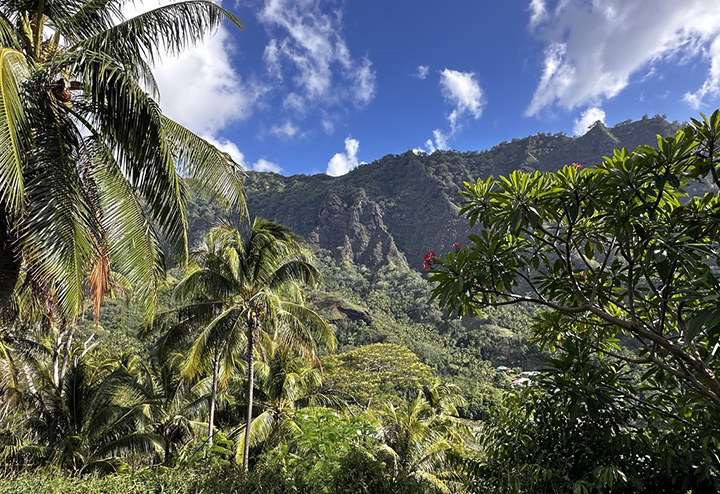
There are two villages, one with a church and post office. There are no banks, no ATMs and no credit cards. There is no airstrip so the only way to visit is by boat. If you needed a doctor, that too would require a boat ride to another island. There was, however, cell phone coverage. (The French and Google managed to get a fiber cables to the islands.). So that is something. While there is an elementary school, secondary education can only be had by sending the children to another island and eventually to Papeete Tahiti. Having gone away for an education, most do not return to live.
This island is best known for its tapa cloth and its carvers. Tapa is a fiber cloth made from tree bark, usually mulberry which makes a white cloth, sometimes banyan which makes a brown cloth and sometimes other trees. It is a very dense and strong fiber that was once used to make clothing. Some dancers at the Arts Festival were wearing tapa cloth costumes.
Now it is used mostly as a print and paint canvas. Tapa paintings are available most everywhere in the South Pacific and greater Polynesia. But the artisans on Fatu Hiva are renowned for their skills.
In the morning, we went to a craft market where we were welcomed by ukulele songs (love it!).
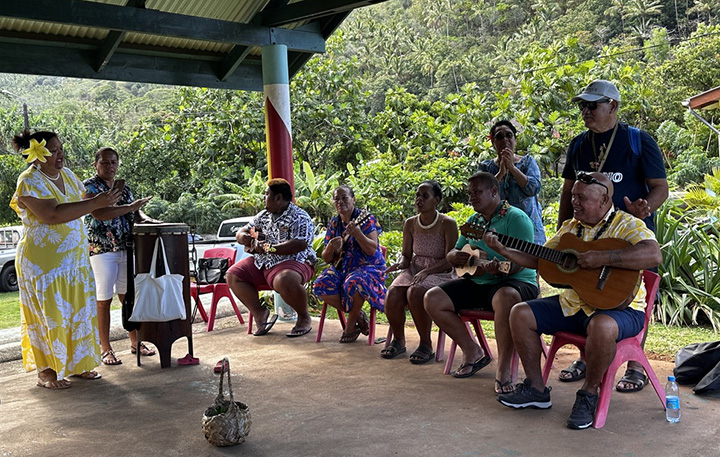
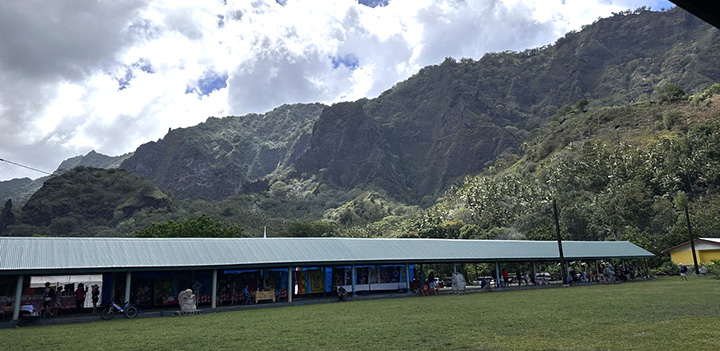
And it was in fact true about the art: the quality of the work was outstanding. I bought tapa earrings and a painting. Matt bought a map painted on tapa. There was a demonstration of how to make tapa, which involved beating together the wood fibers to create several ply layers.
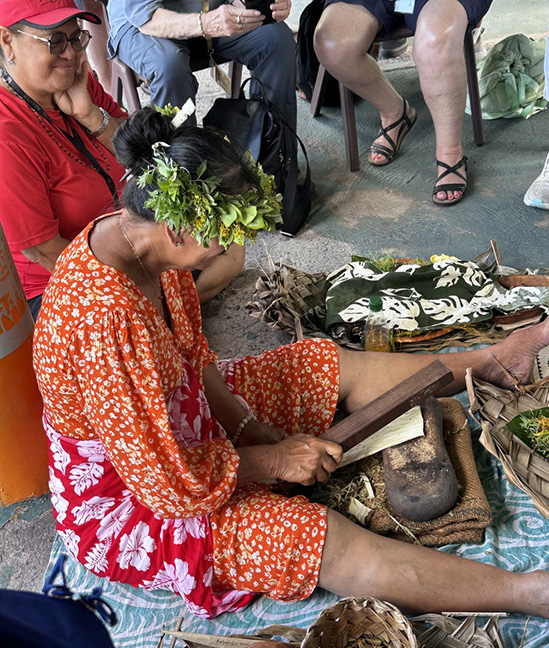
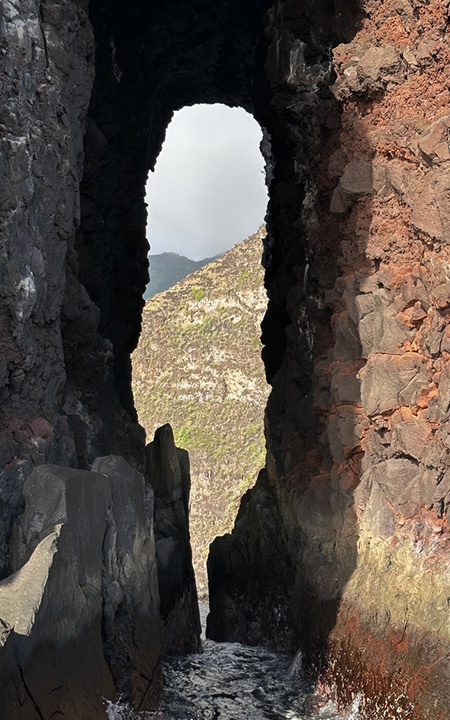
They explained that you can hear the sound of the pounding every morning as women get to work making tapa. It looked like a good way to de-stress. After the market we had a tour of the island from 4×4 SUVs. After ooing and aahing about the landscape, we were dropped off at the pier to catch a boat back to the ship. That gave us a wonderful scenic tour of the island from the sea. Rock formations, cliffs and palm trees led the way. Really just a beautiful spot, seemingly untouched by the heavy hand of civilization.
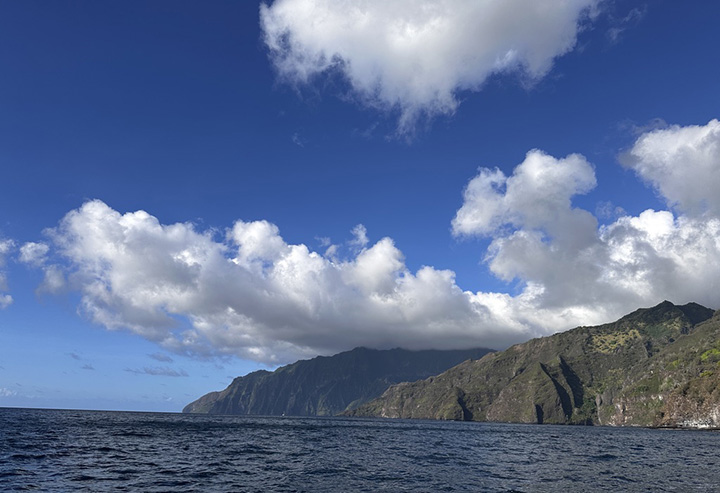
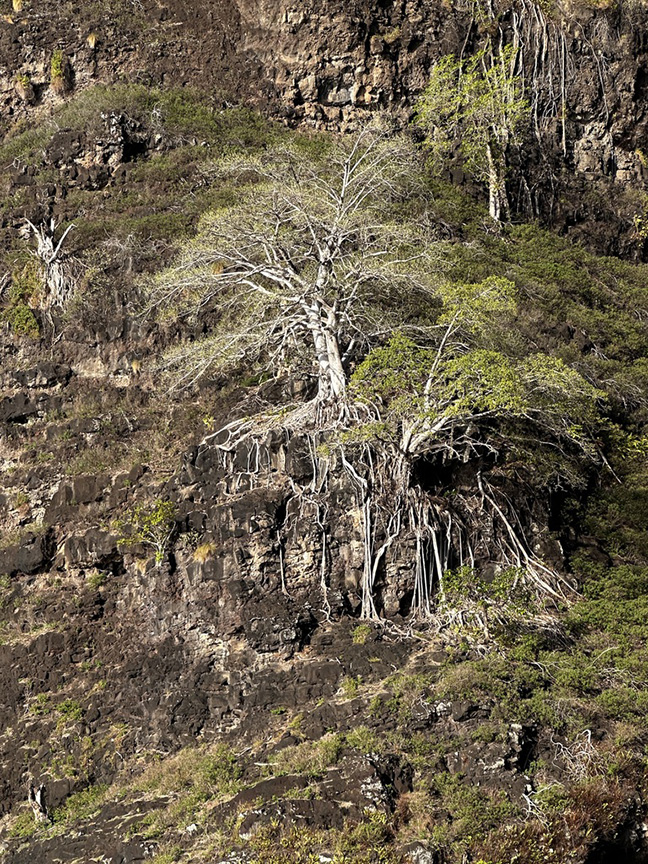
As I walked around, I wondered how many people on the island may have never left it. Maybe they ventured to a nearby island for medical care. But if you wanted to get lost in this world, this would be a good place to do it. The ship we were on comes once every two weeks to bring supplies. Other than that, you would have to make money selling copra and live off of seafood, coconuts and the fruits growing all over the island—mangos and bananas mostly. Maybe you would find a random wild pig or goat. We did wander into what appeared to be the only grocery store and they had the necessities, but it was very small. This really did seem like the edge of the world.
We always ended the day at Happy Hour and these folks will show you what “Happy Hour” means to them. Anyone with a uke or a voice to sing along can join in. Love it!
On to Hiva Oa, the island Paul Gaugin made famous.
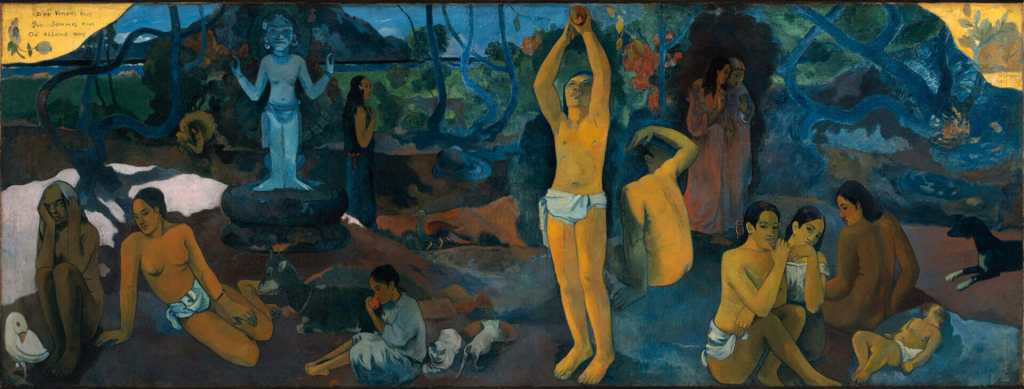
Going to Hiva Oa was one of the main reasons for me to go on this trip. I was always fascinated by Gaugin’s story. If you don’t know it, here it is.
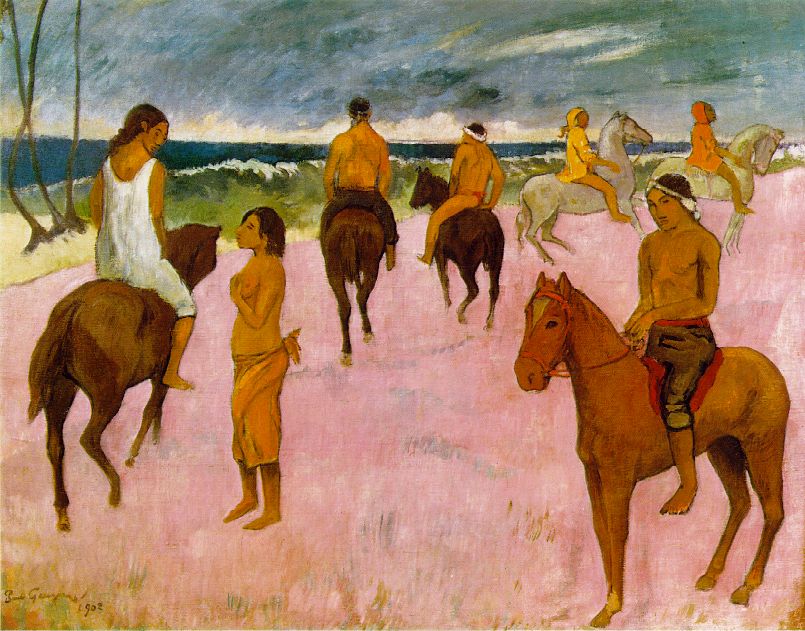
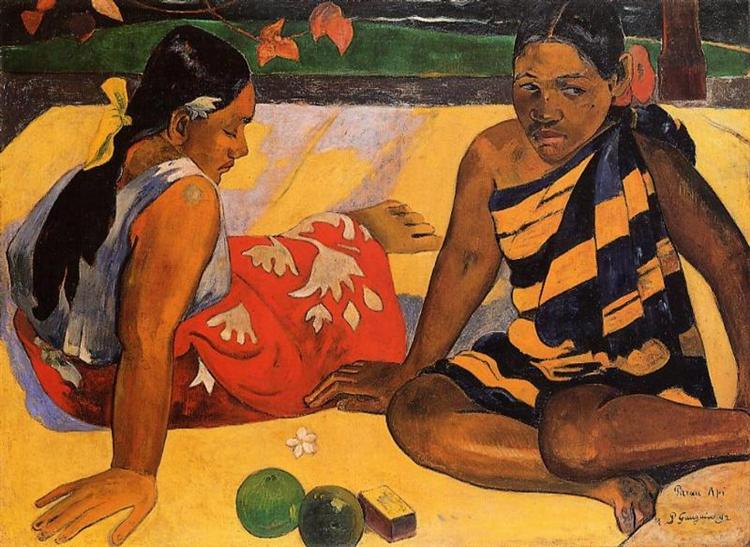
Gaugin had been a stockbroker in Paris. After a financial crisis in France, at the age of 34, he decided to paint full time. At that time the Impressionism movement of Renoir, Monet and Degas was at its peak and younger artists were starting to move away from Impressionism to bolder colors and stronger lines, He became a Post-Impressionist painter, much like Van Gogh who was a friend. He was a restless man, looking for places that would serve as inspiration and that would address his beliefs. After trips to South America, Latin America and the Caribbean, he decided to travel to Tahiti. Abandoning his wife and children he immersed himself in native culture living in a hut and taking a native wife. It answered his need for freedom spiritually and sexually. Several years later he returned to France, found it stifling, and returned to Tahiti where he continued to produce art which was sold in Paris. He expanded to sculpture, wood cut prints, and carvings. He finally decided that even Tahiti had too many rules and restrictions, so he moved to Hiva Oa where he took another native wife and continued to live in a native hut. He died in 1903.
Here is some of his art:
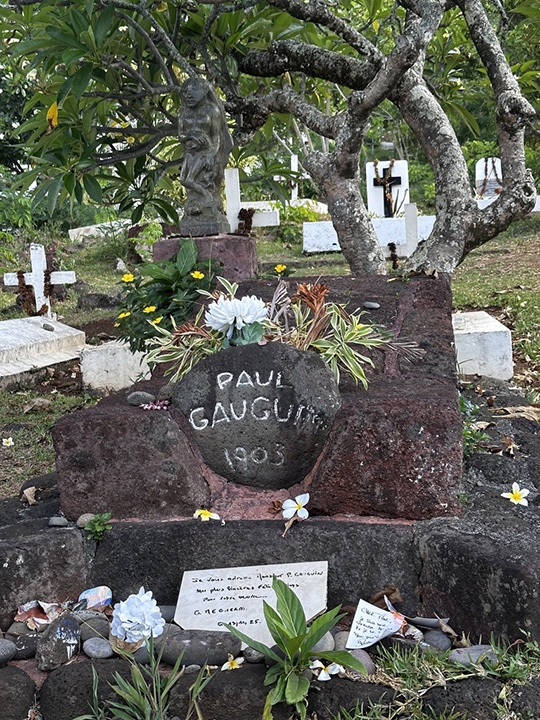
After all that, I expected to really get some sense of Hiva Oa. But we only spent the morning there. No SUV tours, no singing or dancing, barely a glimpse of the island. I assume the timing related to the ship’s delivery schedule, but still it was very disappointing. We did visit his grave and the Gaugin Museum where they have reproductions of his art but not one original. They also had a replica of his house. It was not a great experience.
 A Yank Among the Kiwis