Surf’s Up!

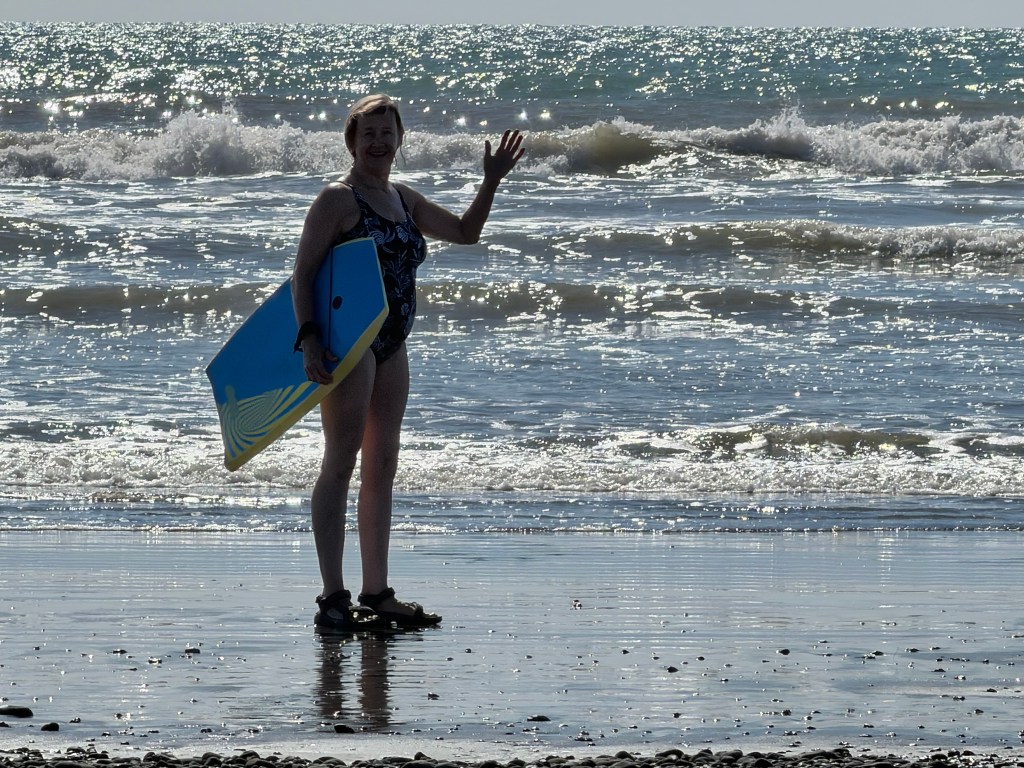
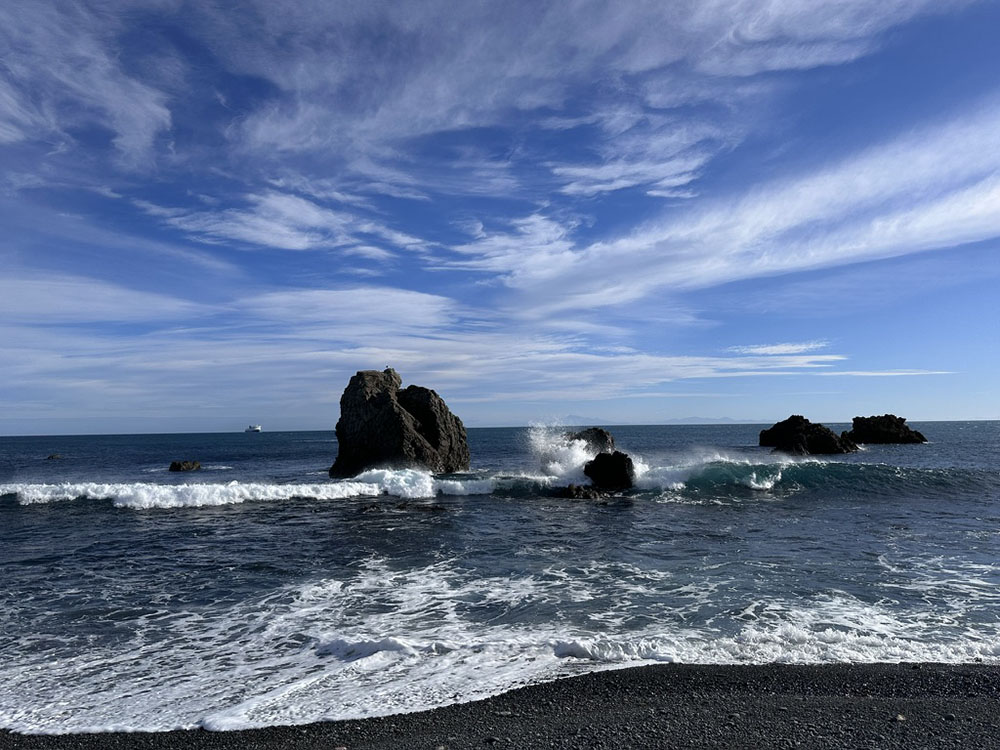
It has been a cold, wet Spring here in Aotearoa but the Gods of Summer finally let the warmth come. First day of boogie boarding. This is as close as I will ever get to surfing. Water Temp (57F, 14C). Cold? You get used to it. (Jesus, I look just like my mother. No, not the boogie board part.)

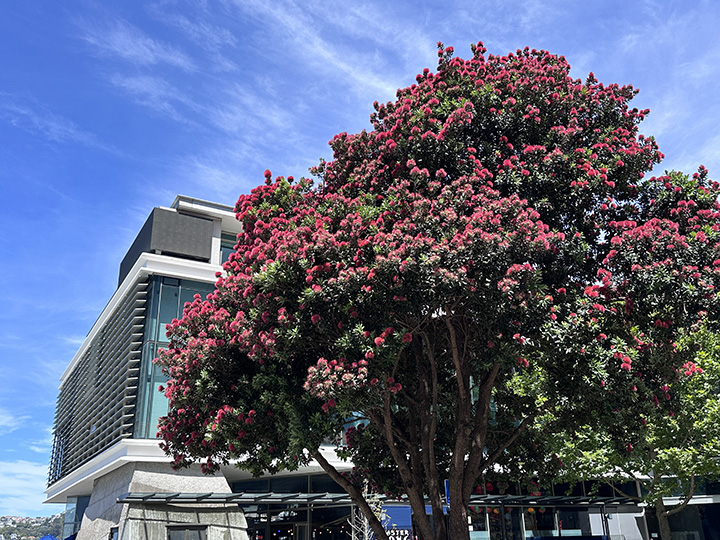
The Pohutukawa Tree

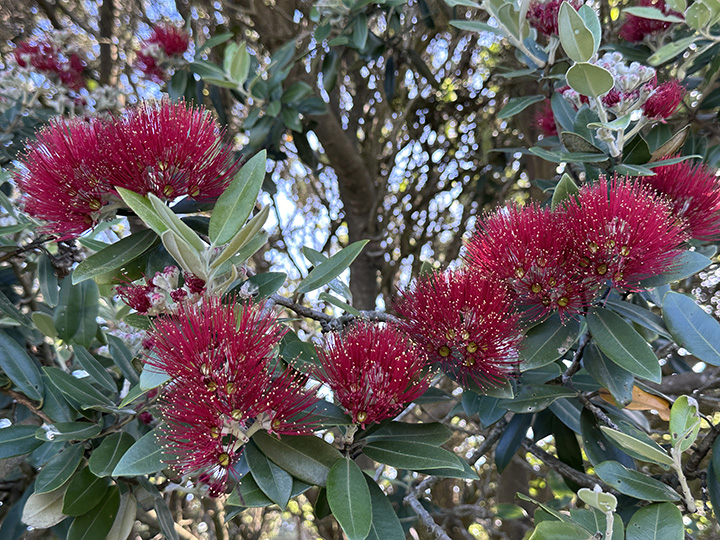
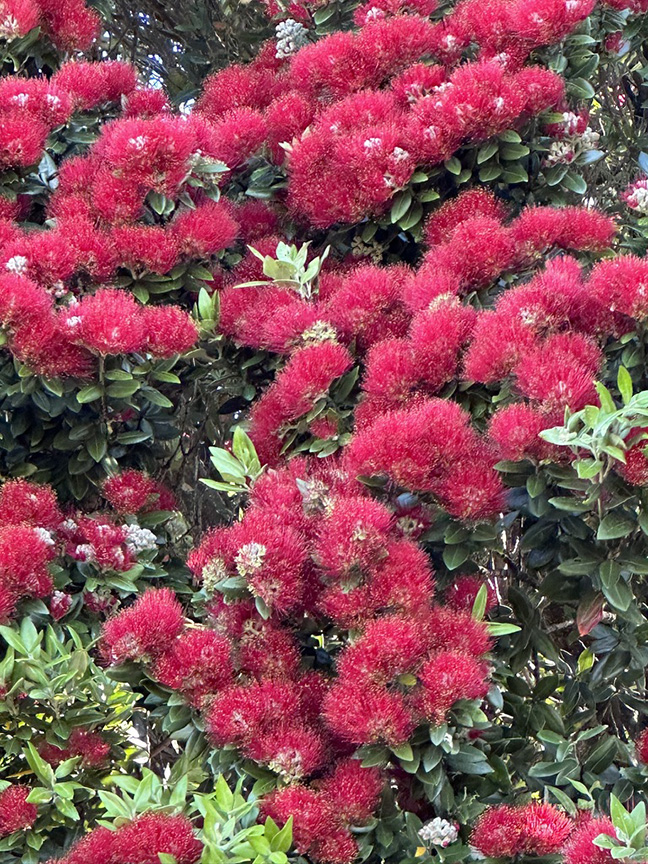
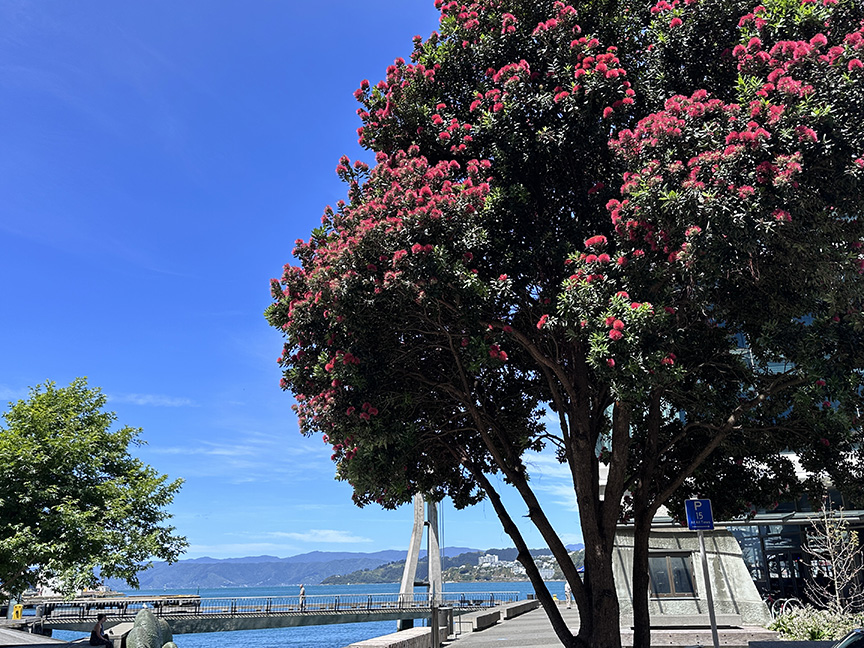
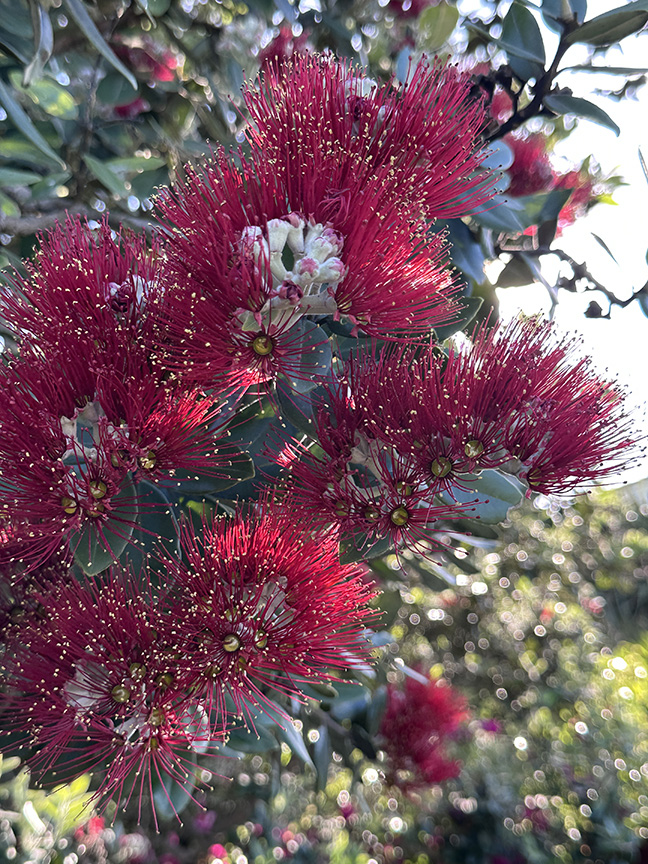
This gorgeous tree, endemic to New Zealand, shouts red and gold as Christmas nears.  Hence it is called the New Zealand Christmas tree.  Honestly, instead of fir trees, an artificial pohutukawa should be in every NZ home, decorated for the holidays.  (I say artificial because unlike fir trees, I highly doubt you could keep this tree alive and blooming if you cut it down and stood it in a bucket of water.  But I digress.)  This year they are absolutely erupting in red.  I just had to share photos:  

Near the harbor

The gold sparkle is pollen.

Bay of Islands Part 2 – Waitangi Treaty Grounds

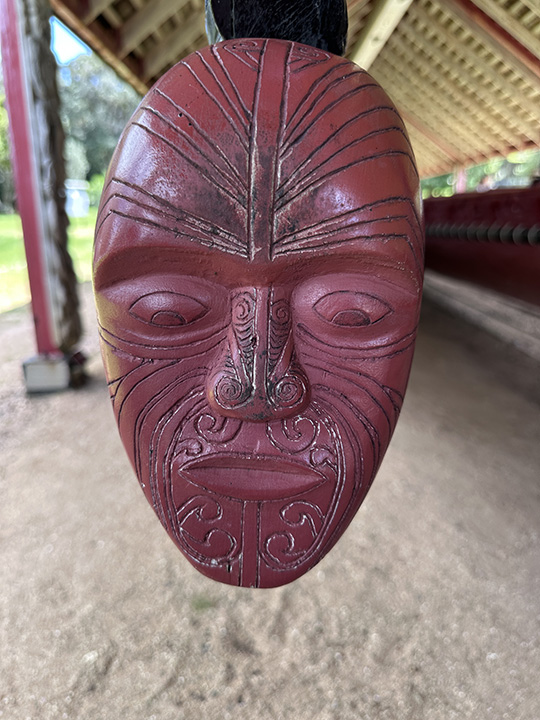
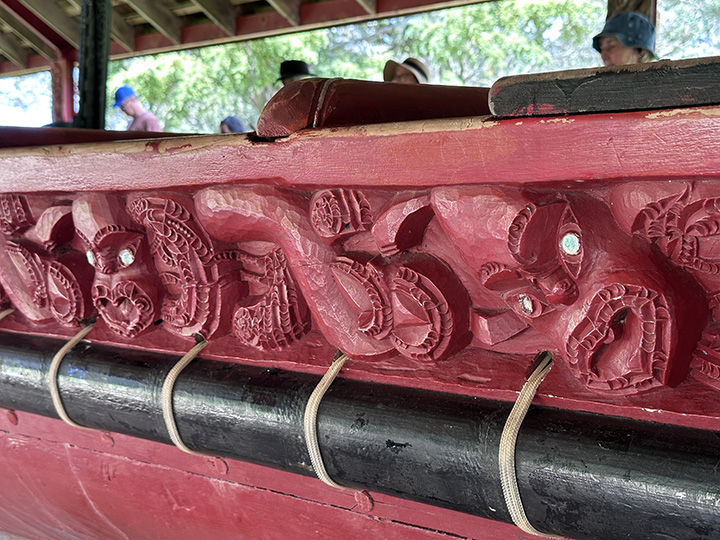
Carving on the stern of the Waka

Bay of Islands is also home to the Waitangi Treaty Grounds, the place where the Treaty of Waitangi was originally accepted and signed by local tribes in 1840.  The treaty is the foundational document of New Zealand because it sets out the rights of the Maori and the British in occupying and governing the islands.  The agreement was necessary because the Maori were being harassed by the French and by sailors who brought trouble to the island.  In addition, British settlers were coming.  Trouble was all around and the Maori felt the need for protection.  Some were convinced the British would keep the French out and they would use the white man’s laws to keep the Europeans coming to the islands under control.  They were also convinced to sign a document that did not exactly state those terms.  

The meaning of the Treaty, particularly the division and preservation of rights and powers, is still debated.  The issue is that the treaty was written in English and translated into Maori.  The meanings of several words differ so they don’t say the same thing. The Maori believed they would be left to govern themselves and that their interest in their lands would be preserved.  The British version says the Maori essentially ceded sovereignty over the islands to the British.  Disputes have raged ever since.  

Interestingly, before that treaty, a missionary helped the tribes draft a Declaration of Independence, which is considered the Maori declaration of sovereignty over the islands.  As explained on the website:

By 1835 a growing desire for international recognition of New Zealand (and its governance) led to a meeting of chiefs at Waitangi. Concerned about the intentions of the growing number of Europeans, the chiefs put their signatures to a document which declared New Zealand a ‘whenua rangatira’, an independent country. He Whakaputanga o te Rangatiratanga o Niu Tireni (Declaration of Independence of New Zealand) was acknowledged and supported by the British Government and continued to make its way around New Zealand gathering signatures until 1839.

The Maori tribes who created this declaration consider it to be the foundational document that undergirds their sovereignty and land rights under the Treaty.  In other words, the agreements and deal making regarding land and governance as set out in the Treaty would be meaningless unless the Maori already possessed the rights in land and governance as asserted in the declaration.  while true you can’t deal what your do not have, I think it is fair to say that to some extent the Treaty has overpowered this document.  

In visiting the Treaty grounds museum, it appeared that the Maori had a strong voice in the presentation of the history and the facts, and it was clearly intended to assert the Maori point of view in terms of the impact of colonialism on the people and their culture.  But it still seemed well balanced.  No one was demonized outright.  You were left to come to your own conclusions.  (I did the demonizing in my head.)

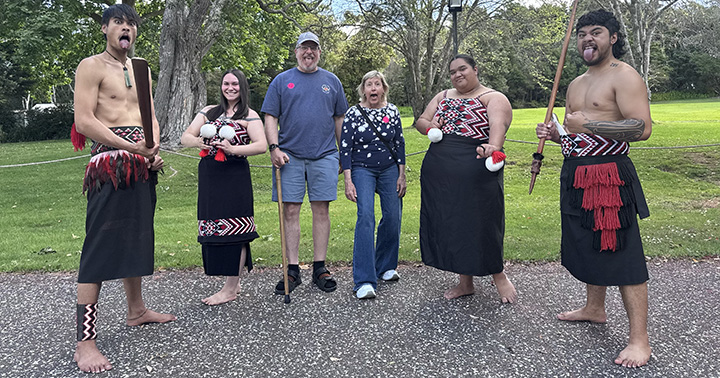
We took a historic tour and ended with a cultural performance by some young Maori.  Here we are after the show practicing what we learned.  I asked if women were permitted to stick their tongue out.  The answers were inconclusive.  Some tribes are okay with it, some not.  I went with it.  

Here are some more pics:

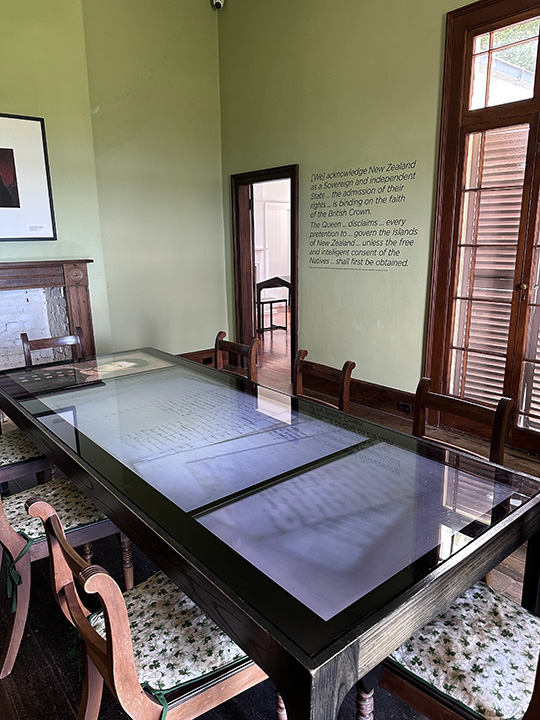
Treaty Room

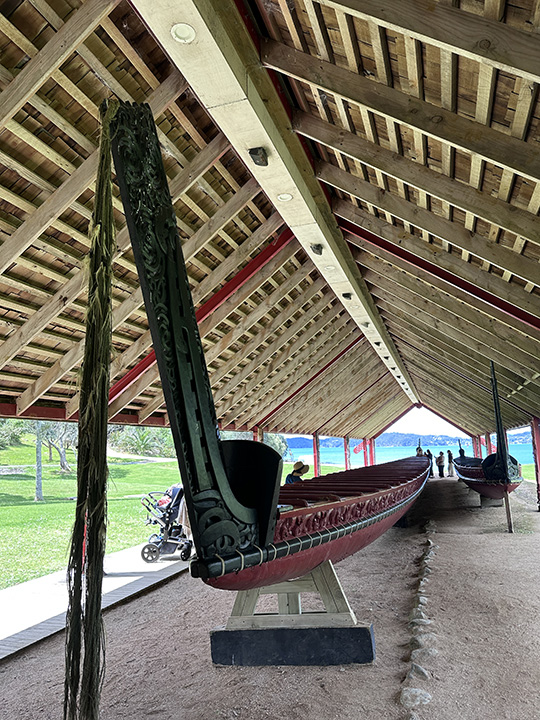
Ceremonial Waka (canoe) – used for the Waitangi Day celebration. It is carved from the Kauri Tree, one of the largest trees in the world. (Tough to get a photo of a ship this large and do it justice.)

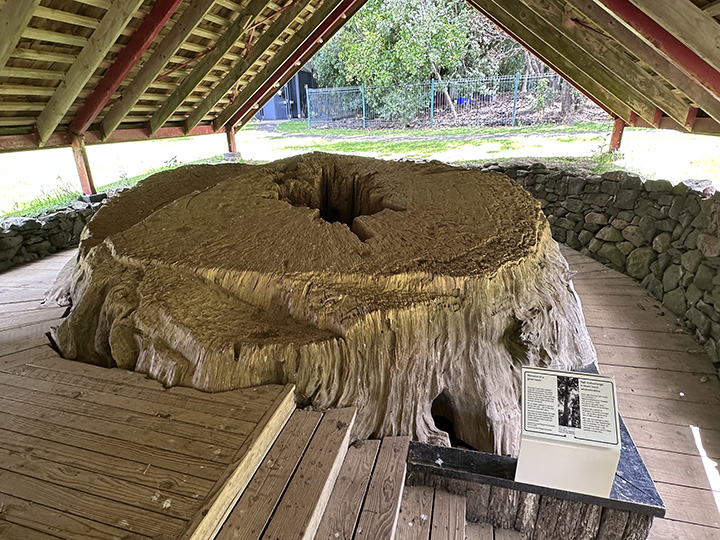
Kauri stump from which the Waka was carved

Waka detail

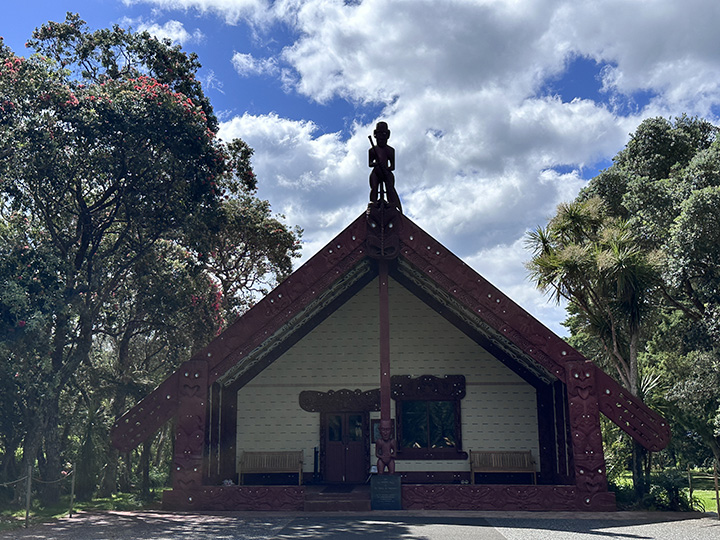
Tribal meeting house were we saw the performance

All in all, it was a good trip.  We agreed that for us, it is not the most beautiful place in New Zealand.  It was nice, but pretty touristy, and it just did not speak to us the way Kaikoura did.  

Bay of Islands Part 1 – The tall ship

On our continuing quest to see as much of New Zealand as possible, Matt and I flew to the Northland and the Bay of Islands, considered by many to be the most beautiful spot in New Zealand.  

The further north you go in New Zealand the more tropical it becomes.  It is warmer, sunnier, and has more of an island feel to it.  Bay of Islands is just what its name suggests. Reminiscent of Caribbean island chains, Bay of Islands is dotted with small islets and bays, surrounded by calm blue waters that are home to many sail boats and the occasional dolphin pod.  There are a few towns in the area, very tourist oriented, where sightseeing tours and fishing charters abound. 

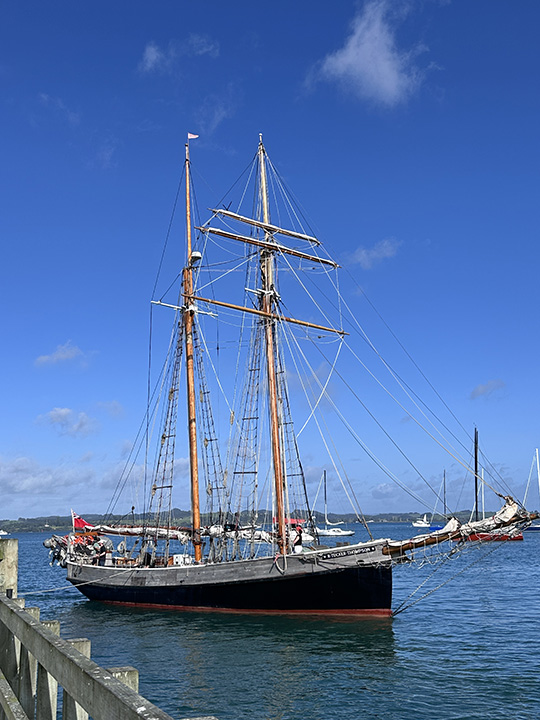
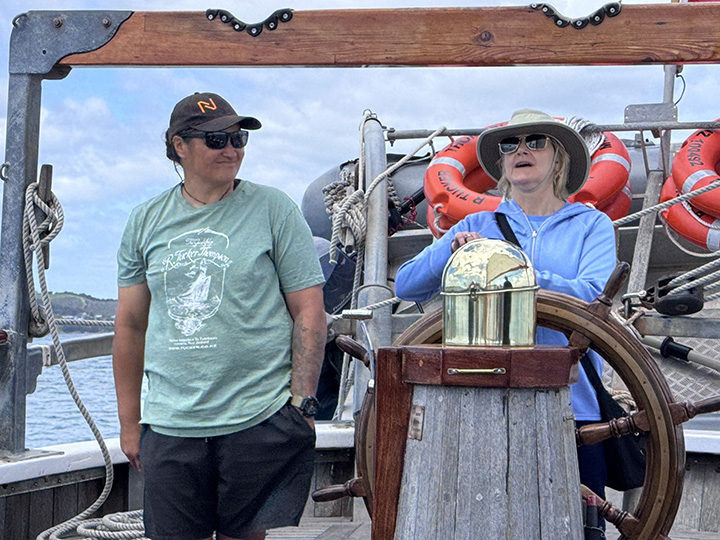
We signed up to go sailing around the Bay in a tall ship, the R. Tucker Thompson.  I have never been on a tall ship and this looked like fun.  They let us help to hoist the sails as we left and we were also offered the chance to take the helm.  Good Lord, I had that boat zigzagging all over the place.  They kept telling me the tiller took a while to respond so don’t over steer but I just kept turning that wheel like I was driving a car.  I think the captain was relieved when I gave back the helm.  I am no Mr. Sulu.  

Two folks had the nerve to climb the rigging.  To do this, you had to climb a a rat line. The rat line was made up of rope serving as “rungs” and the vertical structure. Ropes are called “lines” on a ship. I am not a sailor and they are ropes to me.  It is attached to the tall mast on one end and at the railing on the other leaving it swinging in the wind on water side of the vessel.  The ladder slowly tapers; so the higher you go, the less room for the rungs.  You can see it in the photo.  

Rat lines (rope ladders)

One young man climbed slowly but surely nearly to the crow’s nest.  To do so that he had to climb over one sail and maneuver onto the next higher.  The higher he went the smaller the rope ladder became and the further apart were the rope “rungs.”  Those rungs were pretty unstable.  It was making me nervous just watching his feet teeter.  The second person, an older woman, went up a bit but her feet were shaking a lot.  She said that was nerves and the instability of the rope ladder.  Hooray for her though.  My reaction was: Hell, no.  I’m too old for that shit.  There was also the option to climb out onto the bowsprit, which is the long pole extending off the prow that serves as an anchor for some of the sails.  That too involved rope serving as a walking path of sorts. If you look at the photo of the ship, you can see the bowsprit and the ropes hanging off it.

The day was fine and we sailed to a small bay where we did a wet landing (when you have to wade to shore from the zodiac) which we were not expecting.  After we dried off and got our shoes back on, we made a short hike up to the lookout.  What a view.  

Our ship in the bay

Otaki River

It was a lovely day and we took a walk along the Otaki River, which is very near to us. It is our fishing river.

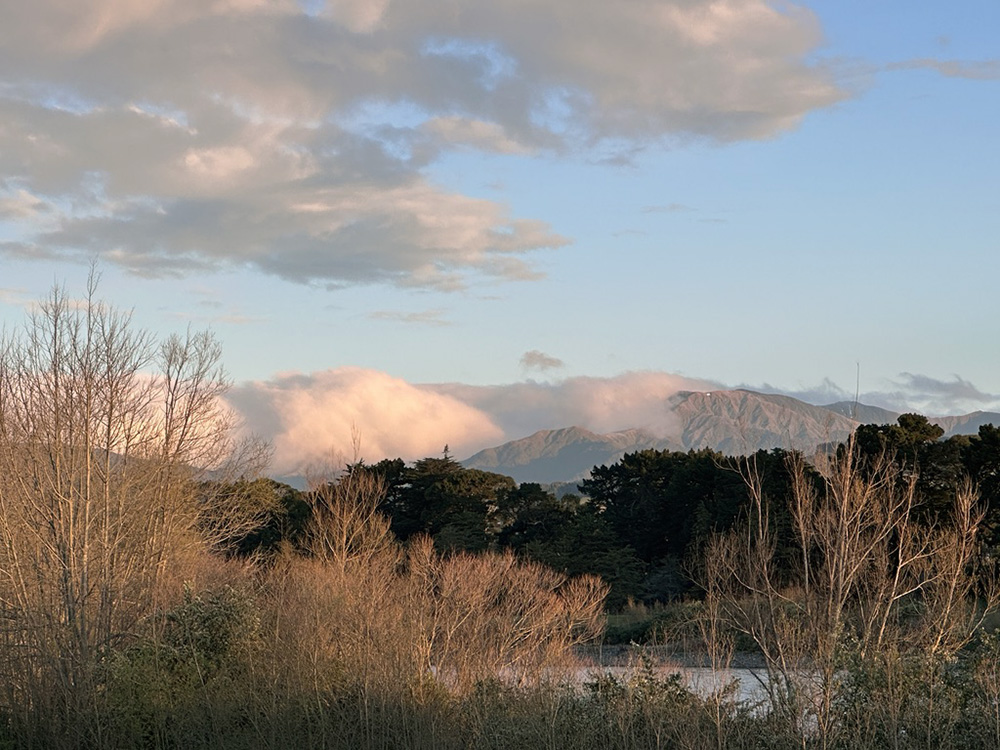
We are also on the coastal side of a mountain range, the Tararuas. They are snow capped in the winter and are often shrouded in clouds. Today, they were wearing a low cloud blanket.

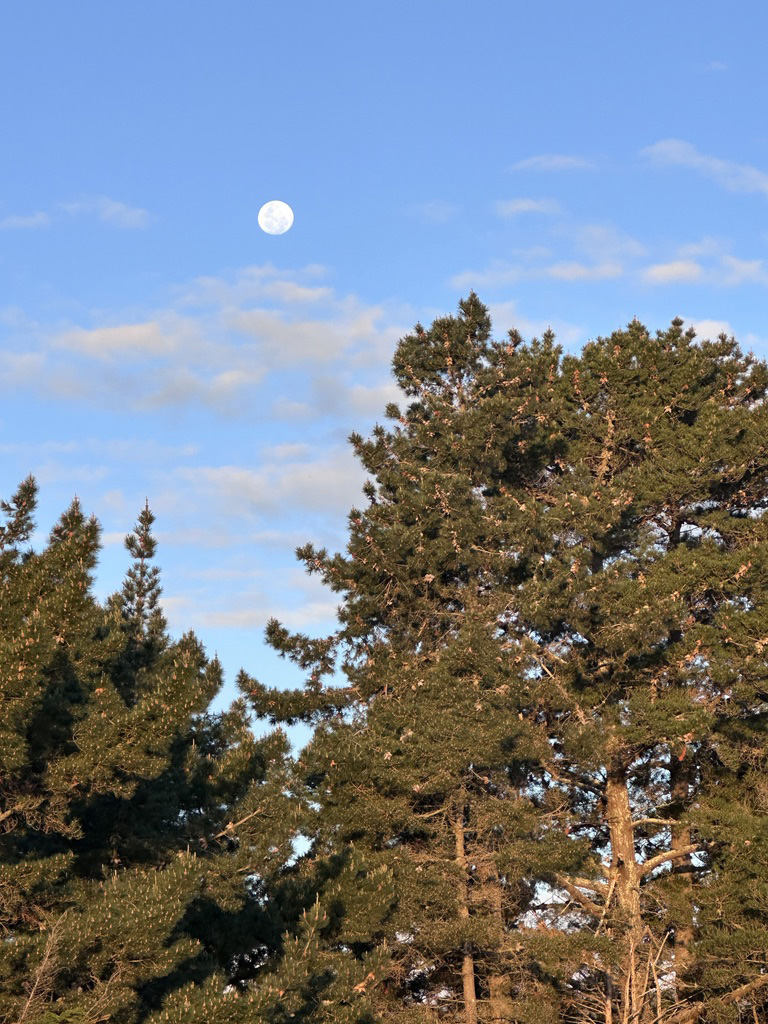
The moon was following us too.

The Pink Stump

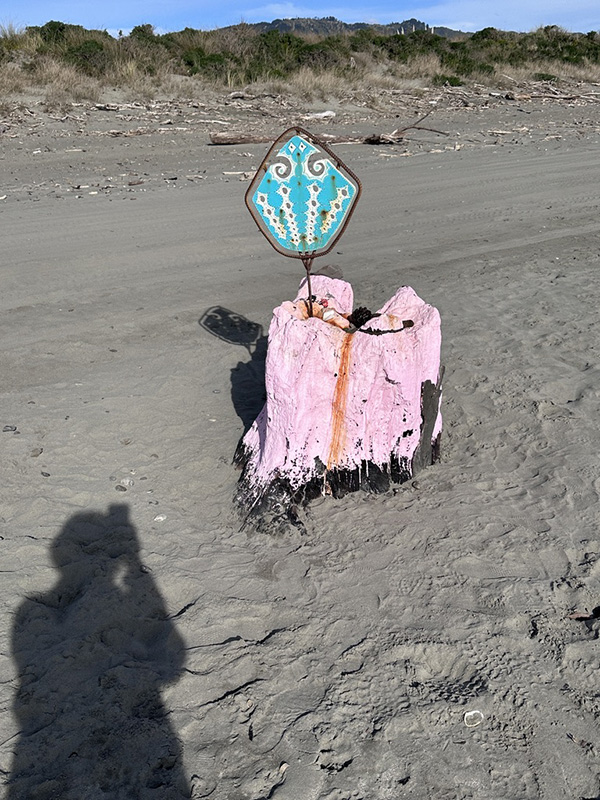
I may have written about the pink stump before but here it is again. This is a landmark on our beach. It even shows up on Google maps. About three months ago it got a fresh coat of paint and a stained glass marker. It is remarkable that this thing has not moved despite strong storms. I have asked people the history and no one really knows except that it has been here forever.

The All Blacks

The All Blacks, New Zealand’s famous rugby team, is known as one of the best rugby teams in the world. Alas, they have fallen on hard times and are not quite the best any more. They get beat. Often. Right now it is the South African Springboks who are the top of the world and the current world champions. We went to see the famous All Blacks play South Africa in a critical game in the world championship pursuit.

Just to start off, here is their haka:

All Blacks haka

After the haka, the game went downhill for the All Blacks. Apparently, the Wellington stadium is not good luck for the team and they suffered the worst defeat in their history at the hands of the mighty Springboks, a 43-10 rout. Admittedly, I still do not know the rules of rugby. But when you have a guy sitting behind you that talks like a color commentator, well, I could follow along. I keep vowing to pay more attention to rugby because I do find it fun to watch. But that would require me to watch television and it just is not happening. Maybe someday….

Christmas in July.  

Christmas comes in the summer here so there is never a good reason to enjoy the Christmas winter traditions like warm fires, hot chocolate and snow.  Greytown has a Christmas in July festival every year and we finally got our act together to take part in the celebration.  It was a madhouse.  The street was jammed with families, kids running, adults moving haphazardly.  It was a rush-hour-on-the-subway crush of humanity.  We were unable to find any information on the schedule or even a map. So, we wandered around aimlessly taking in the craft booths and the crowd energy.  Here we are with the mascots:

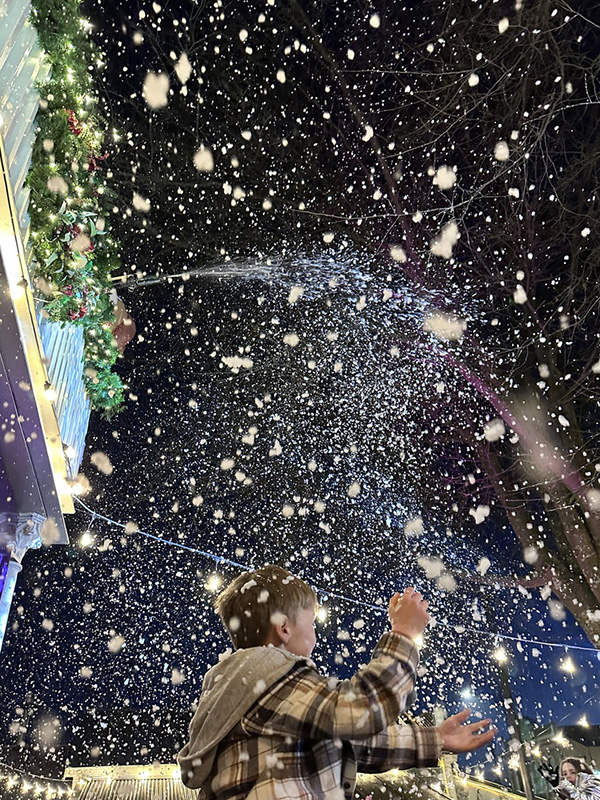
We did manage to get into the area where they make it “snow.”  Well, okay, it is soap bubbles but it is the thought that counts.  Unfortunately, we did not act promptly enough to get food and by that time we were looking for dinner, all of the restaurants were full and the food trucks had nothing but crumbs.  We drove over to Martinsburg for a nice dinner in a calm restaurant and vowed, boy, we will never do that again.  

WOW – World of Wearable Art

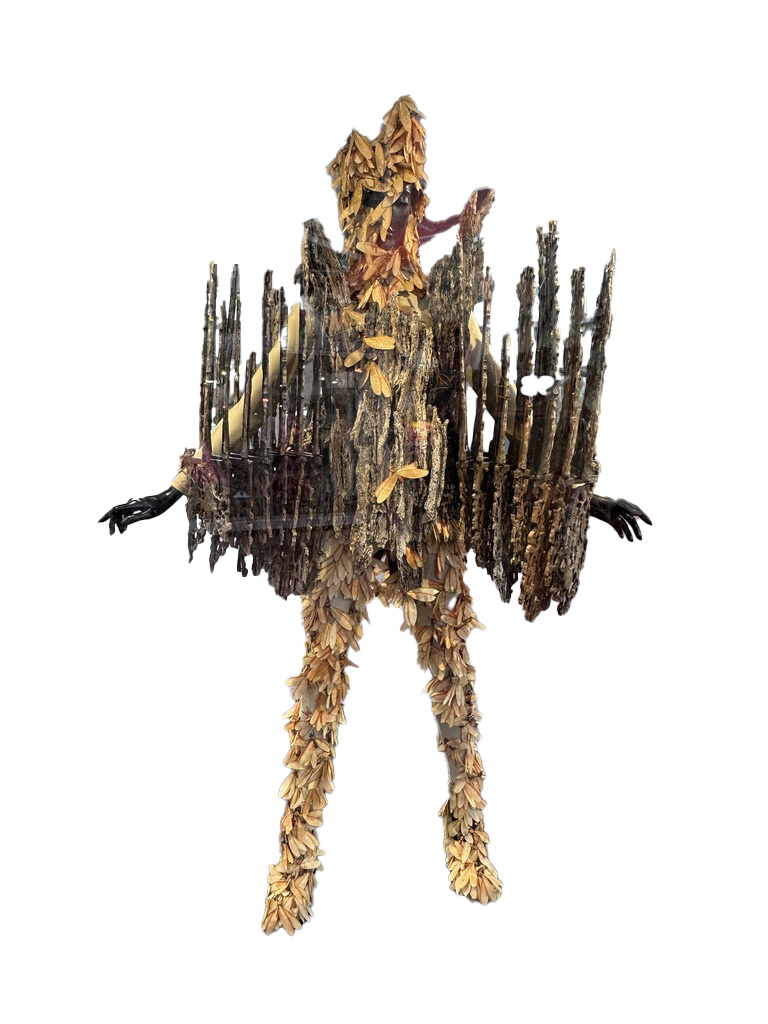
We went to the World of Wearable Art Show or WOW as it is known, a design competition.  This was our third year.  The idea is to have artists create wearable art-extremely complex costumes in answer to a specific theme.  There is also an open competition where they can let their imaginations go wild.  The designers come from all over the world. The pieces are often made of everyday materials that you would never think of as something to create from.  For example, this year, there was a piece made completely from straws.  It was spectacular.  Unfortunately, we are not allowed to photograph the show but every year The Atlantic Magazine does a photo spread.  What we are allowed to do is take pictures of wearable art from past seasons.  Here are two examples.  

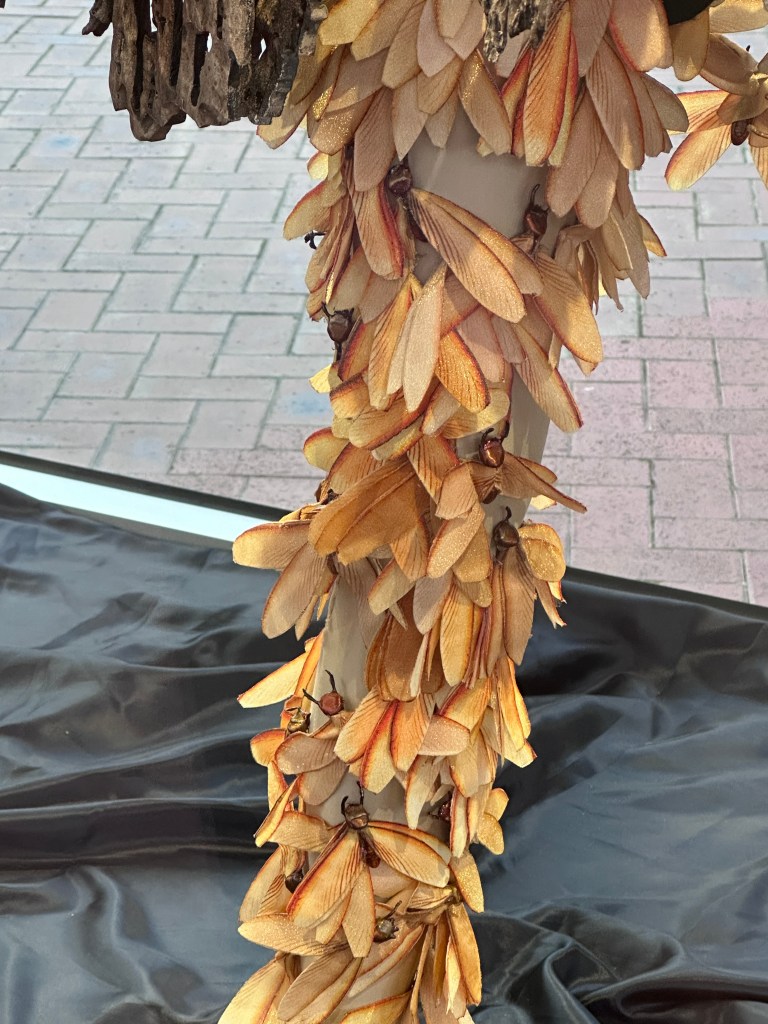
The first highlights one of the problems with the show.  The audience cannot really get a sense of the incredible detail of the work.  This particular piece was in response to an environmental theme.  When we saw it in the show last year, we could not tell that the legs were covered with moths.  But to look at the detail now, wow (no pun intended).  

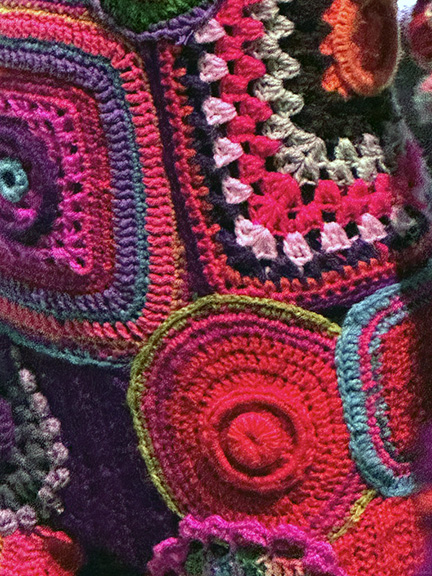
This second one was one of my favorites.  This piece is made entirely of crocheted granny squares.  Loved it!

This show is one of the few really interesting things to do in Wellington and we look forward to it every year.

Wind

New Zealand is in an area of the Earth known as the Roaring 40’s, a reference to the latitude of the islands.  In this area of the planet, the winds roar.  Sorry Chicago, but you have nothing on Wellington, which is considered the windiest city in the world.  Located on the Cook Strait, a narrow body of water between the North and South Islands, the city gets pummeled by winds that are forced through that tunnel.  Our house is located on the West Coast just north of Wellington.  With Kapiti Island just across from us, we also have an added narrowing that gives the winds more lift.  So if the winds come in, we get hammered.  Usually, I don’t mind.  I like listening to the ocean crashing.  When it gets going, it really does sound like a freight train.  

But this late winter early spring season has been particularly brutal, with days and days of strong or gale force winds.  High ocean waves roll in, and rain pelts the windows.  Out on the beach, the birds fly sideways, the wind impeding their progress.  Trees are whipping and leaves are torn from the branches.

As I write this, the winds are tearing around the house.  The gusts sound similar to a blizzard–the impatient roar as it tries to make its way around objects.  Often it will blow all night, the house creaking.  

The strangest phenomenon is how our mind is trained to interpret the sound.  In the U.S., where I come from, when we hear wind like this, we are hearing a blizzard.  Our natural instinct is to assume the air is going to be cold.  Here it can be a warm wind from the tropics, or it can be an Antarctic wind from the south.  And the direction can change in a moment, meaning it can be warm for a while and then freezing within minutes.  Good luck figuring out what coat to put on or if you need one at all.  Going out in it is not fun. 

And then one day it stops and all is quiet.  These are days when there is not a sound.  The birds sing and the ocean sound is a calming whoosh.

Lambs are here!

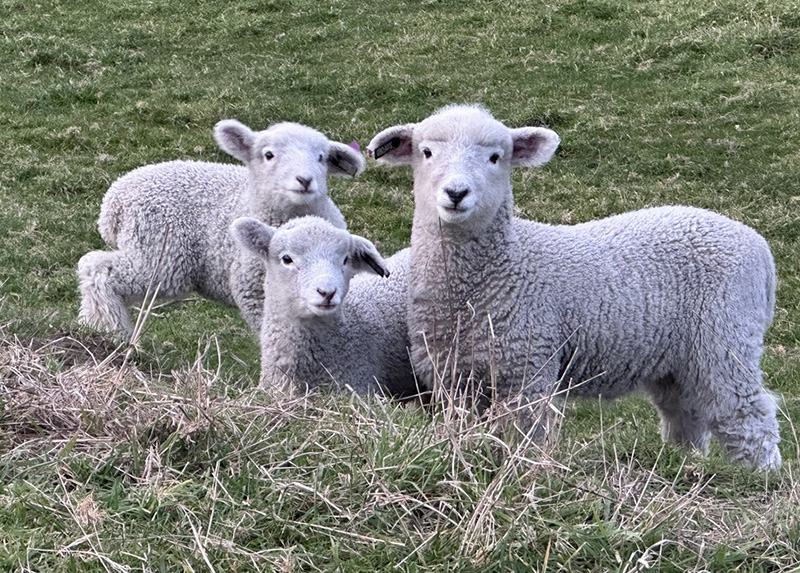
It is late winter and the young lambs are being born.  I will never tire of seeing these adorable babies.  And I am not the only one who feels that way.  The other day I sat at the window and watched a toddler who had brought her young lamb to visit the beach.  Now I have seen dogs. And I have seen horses. But never a lamb. She did not have it on a leash, and it was being completely uncooperative because it was too busy eating grass.  So she tried to pick it up and carry it toward the beach.  The lamb was as big as her.  She pulled it up putting her hands in its armpits( Do lambs have arm pits? Leg pits?).  The lamb’s body stretched to the ground.  She stumbled along, as the lamb’s legs kept getting tangled in her own.  She finally gave up and left it to graze while she ran toward the ocean.  Mom came back and picked it up.  They disappeared over the dune, and I never did find out if the lamb went into the water. 

Heat

During the winter the heating situation in NZ is well, …challenging.

I am shivering, absolutely shivering.  My home weather station tells me that it is 4C outside, a balmy 39F, and inside it is 17C (62F) and in the kitchen, it is 15C or 59F.  Why is my house so cold?  Did the electricity go off?  No, it is something much worse, something unbelievable in this day and age but here we are.  It seems that many or even most houses in New Zealand–like the one we live in–have no central heating system.  Huh?  

Yes, no heating system.  It might be a relic of the old days when energy was expensive and people were hardy.  Maybe it is something British.  Gosh knows when I watch British television shows everyone always looks cold.  I am not really sure.  But the standard here is to heat the house by room, mainly the room that everyone occupies, the living area, and the rest of the rooms are either unheated or are heated as needed.  How do Kiwi’s stand this?  They are taught it from a young age and the answer is very practical—put on a sweater and close the curtains.  You’ll get used to sitting inside without heat if you are dressed as if you are outside.  

For us, this is insane.  It is cold!  Who wants to sit around in outdoor winter clothing? When we first moved here, we lived in a house that had radiators on the walls.  They seemed pretty modern.  But we soon learned another truth about NZ houses.  The windows are kind of useless.  In the house with the radiators, it should have been warm, but the windows were the original from say the 1940’s—wooden frames, single pane, and leaky as hell.  Wellington is windy and the breeze coming through the closed windows actually rattled the blinds.  It was cold. Simple as that.  I had to sit next to the radiator to keep warm.  

When we first moved into our current house,  the only source of heat was a 25 year-old gas stove, a fake fireplace, that sat in the living room.  It was downright scary.  To turn it on you had to wait for the gas to flow through the line and then let the electric starter click.  It clicked and clicked and clicked until boom! The now flowing gas ignited and the flame would burst out.  It was terrifying.  The fan rattled so loud we could barely hear the television.  

We complained to the management about the danger of the stove.  The gas fitters would come by, do their checks and certify that it was perfectly safe.  I had a sense that they did not want to say it needed to be replaced because that would cost the landlord an arm and a leg.  So they tried to clean it up and make it run better just to reassure me which it most certainly did not do.  It was obvious that the stove simply needed to be taken out and shot.  

Of course, setting aside its safety, one gas burner stove had no capacity to heat the entire house which meant the rest of the house was unheated– no heat in bedrooms, no heat in bathrooms.  Our only option was to go out and buy space heaters for each room.  It does work but it is expensive.  Electric is not cheap here.  So we tried to use the gas stove and just supplement with heaters.  In the end, we were cold all of the time.  

The manager defended the situation saying New Zealand only requires that one room be warm.  Let’s contemplate that for a moment.  If you rent a home, all the landlord needs to do is make sure one room is heated.  What the hell is that?  I finally contacted the owner directly and said, hey, we are cold.  The guy lives in Texas so he at least understands central heating and cooling.  He ordered the manager to arrange for heat pumps.

Now, I hate heat pumps.  That name is a misnomer.  If it is moderately cold, say in the 40’s, then it works okay.  It isn’t forced air natural gas heating for sure.  (God, how I miss that!).  But when we get down to cold, the 30’s say, the pumps struggle and I find myself sitting under a cool breeze.  I hate that!  Even worse, they installed two heat pumps that are fashioned like room air conditioners.  There is no vent system to spread the warmed air around the house.  With one pump for the first floor, and one for the second, the house stays moderately warm.  I no longer need to wear three layers of clothes.  But because of the lack of venting, the unit on the second floor, located in a stairwell, does not heat any of the rooms.  Add to that the fact that the windows in this house are old, singled-paned and leaky, I often find the bedrooms have fallen to the high 50’s, low 60’s.  Brrrr.  I know my brother would not mind this, but I am sorry.  We like a warm house.  So, we are back to using room heaters.   

We are not alone.  While this is perfectly normal for Kiwis, I have heard people like us, who have moved here from other countries, talk about the lack of heat with bafflement and, if not anger, a bit of fuming.  The question is always the same, what is up with the heat?  There is never a good answer.

So for all of you facing winter, think of how we spend winter here and thank your lucky stars for the heat in your home.  In fact, turn it up!
Summer Visit to the U.S.

While it was winter here in New Zealand, summer was full on hot in the U.S. and frankly I was looking forward to real summer heat. That just does not exist here. In New Zealand, if the temperature makes it up to the low 80s, they are complaining.

It had been two years since we were in the United States.  (I know that sounds like a long time but when you are a senior citizen, the years just blows by.)  We decided it was time for a visit back home.  My sister was planning an all-hands-on-deck family gathering and we were on our way.  We were staying in Annapolis as a sort of central point for Matt to go to some business meetings and see his family and for me to get some things done and to see my family.

So, after two years, how did it feel?  The same but also very different.  My first impression was, wow, people sure are angry and filled with attitude.  Geeze.  It felt like everyone was in a snit.  I certainly understand why everyone is angry.  But it pervaded the atmosphere.  In New Zealand, few are angry (I’d say the indigenous folks are often not happy).  But there is nothing here that really riles people up.  Now I know some of you will say, wow that is great.  Yes, but it can also be pretty numbing.  

My second impression came when I drove on a highway for the first time in two years.  The aggressiveness really put me on alert.  I know we drive with speed in the D.C. area.  But it felt like another magnitude.  Going 70 made me the slowest person on the road.  New Zealand is very different.  People here think they are crazy, aggressive drivers.  It is kind of quaint, and we have a good chuckle about it when it comes up.  The reality is that they drive like maniacs on back roads where there is little room for error and they drive slow and steady on open highways.  One reason is that the fines and penalties for speeding or doing anything suspect are harsh.  Matt and I both learned our lesson after being pulled over for speeding.  Basically, you pay a stiff fine and you get points based how far you are above the speed limit.  That is normal.  But if you get caught speeding three times in a five-year period, they take your license away.  That will cause most people to chill.    

Once we got our bearings, we did exactly what we came to do: buy stuff we can’t get in New Zealand and usually can’t be shipped here.  By that I mean beer and wine.  There are certain beers and wines we wish we had but are simply not available in New Zealand.  We set aside a day of our trip to visit our favorite stores to stock up.  I brought home a case of beer and a half case of wine.  Yes, alcohol was at the forefront of our minds.  

Then there were the many, many stops at CVS for sundries.  Many items we might buy off the shelf in the U.S. are restricted or not available in NZ.  If we want these things we have to get them shipped usually by Amazon and that is not cheap.  So we stuffed our suitcases.  For example, in NZ you need a prescription to get Sudafed.  There are no cough suppressants here.  They don’t have Benadryl.  For me, I have certain skin allergies and I require fragrance free products.  Those are pretty rare in New Zealand.  So I cleared the CVS shelves of lotions and potions that I could use.  When I asked my doctor here if lidocaine patches were available in NZ (I can’t remember why), she was stunned that such a thing even existed. So into the suitcase it went.  I can’t even remember everything we lugged back but we were at the CVS just about every day because we would remember another thing we wished we had at home.  

And then there was savoring foods that we cannot get in NZ.  The grocery stores in the U.S. are marvels of abundance and variety and that just does not exist here.  Everyone needs to appreciate this. The most important objective in my mind was cheese, one of my food groups.  We bought a huge hunk of idiazabal cheese from Spain.  Oh, the rapture.  I savored American watermelon.  They have watermelon here, but it just does not come up to the standards with which I assess watermelon.  And peaches.  God bless South Carolina and Georgia peaches!  
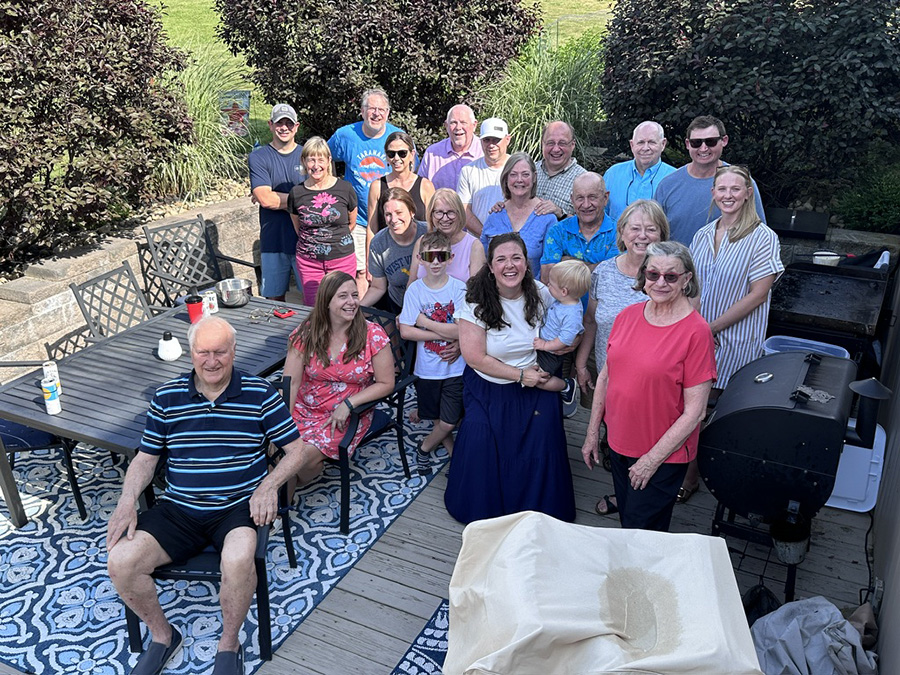
We also visited family and friends on our trip and we loved seeing everyone.  My sister’s family barbecue was a great time.  She managed to get 95% of us in the same place, a minor miracle.  Here we are:

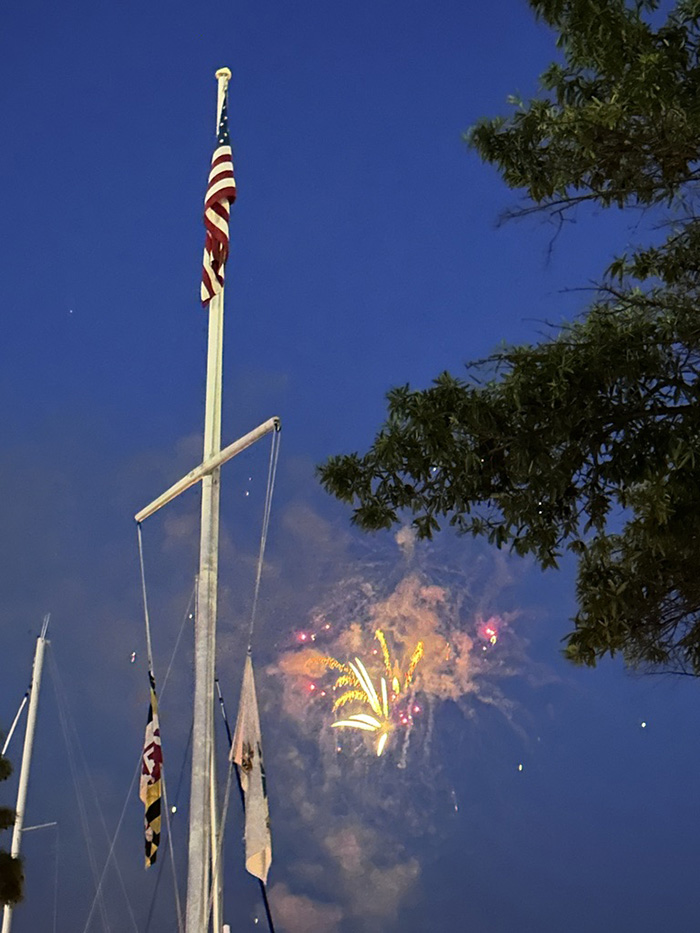
On the 4th of July we had a fun time with Matt’s family.  And we even managed to see the fireworks in Annapolis.  

So it was a good trip all around.  But exhausting.  The trip takes 32 hours door to door so it is not for anyone impatient with travel.  

How we spent our summer – Part 4 Fishing

To spend time outdoors, some people like to hike.  We go fishing.  We like to catch fish, of course.  We like eating them even more.  But for me, the more important part of fishing is being in the outdoors on a river, lake, or the ocean just enjoying the sunshine and the breeze.  We also use fishing as an excuse to travel.  

First stop Christchurch.  I had wanted to go salmon fishing.  They farm salmon here and there are places you can drop a hook into a lake or river and the salmon are there ready to bite.  I wanted to actually try to catch a wild salmon.   We learned that some of the best wild salmon fishing is near Christchurch the largest city on the South Island. As of now, Christchurch is the second largest city in New Zealand, taking the mantle from Wellington.  Known as the garden city (beautiful rose gardens), they have perfect weather for all things flowering.  In 2011, Christchurch was hit with a massive earthquake and it decimated the city.  Buildings collapsed or were rendered unusable, earth shifted, and lives were lost.  We had visited the city in 2005 but we remembered little about it.

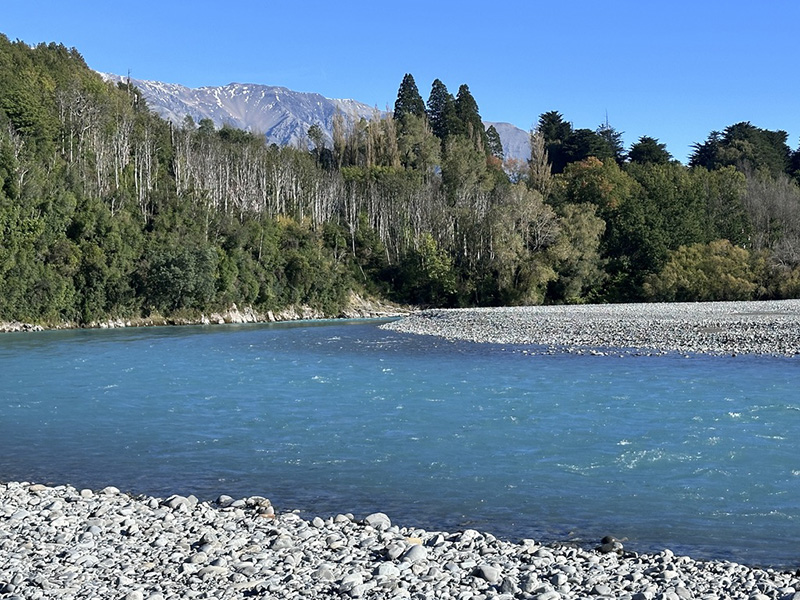
Unfortunately, we did not do much sightseeing because we had fish to catch.  We had a five a.m. pick up time for a drive an hour south to the Rakaia River, which purportedly has the best salmon runs in New Zealand.  The river is a braided river, which means the river moves according to flooding. The river is very shallow and rocky, so we had to be taken upriver in a jet boat.  

We were de-boarded onto a spit in the middle of the river before dawn.  

The boat driver said see you in six hours and sped away.  The guide was very upbeat even though it was still dark.  We started casting into the dark water and we continued to cast for six hours with absolutely nothing to show for it but sore wrists.  I was not happy to say the least.  This was an expensive trip.  

Great setting, bad fishing

What really ticked me off was that after we returned I did more extensive research and I learned that the salmon fishery on that river has all but collapsed.  There are few fish to be had and the guide had to have known that.  I felt like it was false advertising.  Oh well, I learned something.  Do more research before we make the effort.  

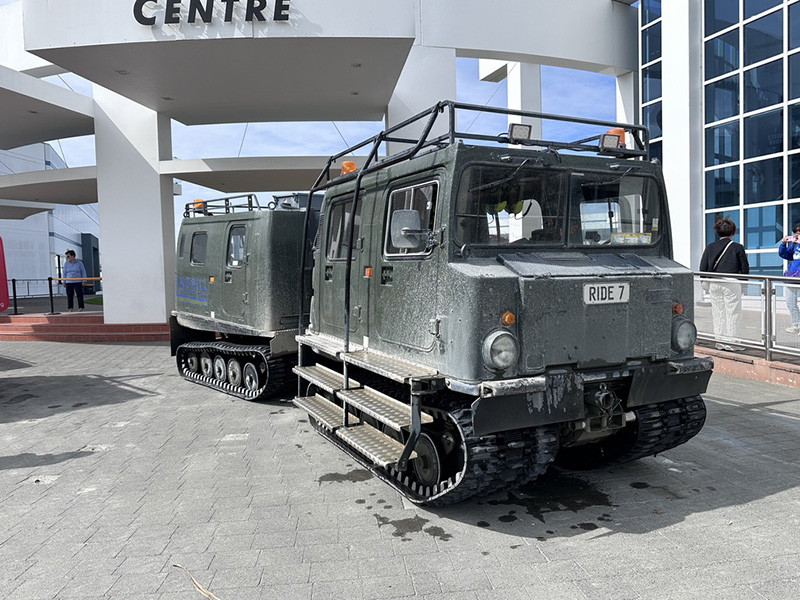
We still had a nice dinner in Christchurch and we visited the International Antarctic Center.  This is an interactive museum/penguin research facility where you can learn all about living in the Antarctic.  We took a very bumpy ride in a Haggland, the all-terrain vehicle that can travel in snow, ice, general bad weather and difficult terrain including the ability to cross a crevasse.  (A crevasse is a crack in the ice surface, usually a glacier.  If you fall in, you are gone.).  

Not exactly a limo. It was a very bumpy ride/

We stood in a room to experience the equivalent of a winter storm with the cold and wind.  (It honestly did not seem all that bad.). But alas, we were not able to get into the penguin encounter.  Still, it was fun, and it was Antarctica.  You can’t go wrong there.  

Next stop Lake Taupo.  At the end of the summer we drove to Taupo, about four hours north, and home to excellent trout fishing.  In fact, this is the trout fishing capital of New Zealand.  You have two options—go fly fishing on a river or go trolling on the lake.  Seeing as fly fishing requires work and trolling requires sitting on a boat enjoying the day waiting for a to fish bite we chose sitting on our butts.  

Lake Taupo is a huge inland lake, 238 square miles and over 600 feet deep, formed in the caldera of a still active and ancient supervolcano.  It is part of a large volcanic geothermal hot spot that crosses the North Island.  Nearby are two active volcanoes and to the north geothermal springs bubble.  So the weekend was set for fishing and a visit to the geothermal hot springs spa.

Our fishing trip was a huge success.  Contrary to all fishing advice, we went out in the afternoon and pulled in four nice size trout.  We threw one back for insufficient size.  Another one got away. 

 We could have pulled in more, but I was getting concerned that we would have nowhere to store them at home.  We took two of the trout to a local butcher for smoking and we brought two whole fish home with us.  Oh, the joy of being able to eat trout.  (See my entry about the absurd trout rules here.)

The next day we headed to the Wairakei Terraces thermal pools for a soak and a massage.  

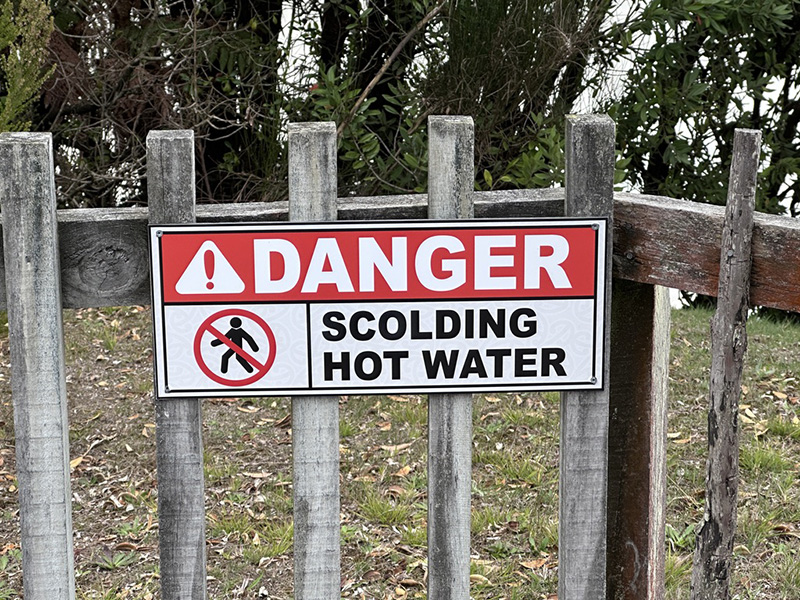
The North Island has several geothermal areas where bathing in water from hot springs is an option.  The difference here was that these pools are filled directly from the steaming springs bubbling out of the ground just above our heads.  There were four pools of varying temperatures, with the hottest pool measuring in at a scalding 105ºF.  I step in it and said, “no way.”  The people in it were so red, it looked like they had been scalded.  We opted to spend our time in the second most hot pool.  It was very relaxing and not too crowded.  

This was the hot hot pool. The water comes straight from the bubbling hot spring to a water fall at the bottom of the photo. The guards were begging people not to sit in front of it but they really were not listening. Cooler pools in the background.
someone needs to go to spelling school.

All in all, a very successful trip. We will most definitely return to Taupo when we run out of trout.

How we spent our summer – Part 3 Castlepoint Races.  

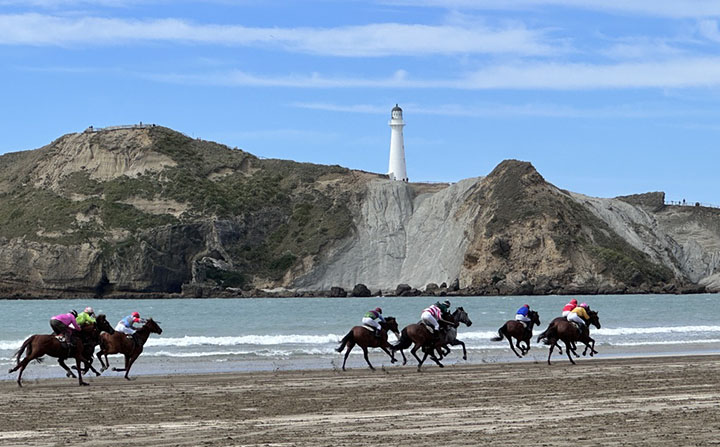
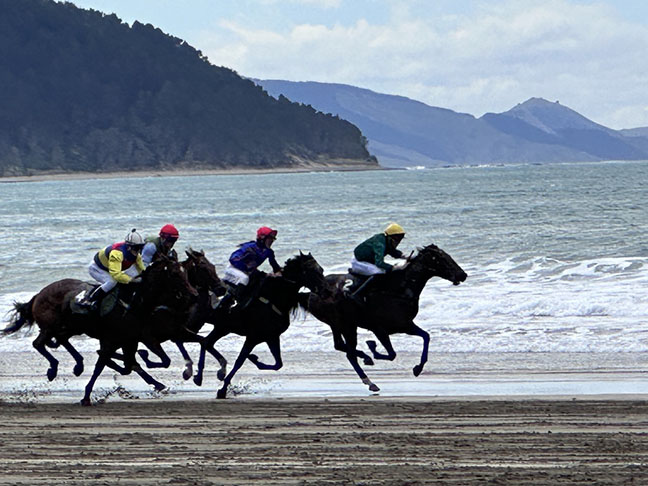
Okay, we like horse racing.  Plus, how can you not love the idea of horses racing on the beach?  Every year there is a day of horse racing on the beach next to the Castlepoint lighthouse located on the eastern shore of the lower North Island.  This is an event that just celebrated its 151st year.  It is a big deal and people come from all over to watch and just to enjoy a lovely day at the beach.  Thousands of people line the beach with chairs and blankets and picnic baskets, and parking lots overflow with campers and trailers.  It is a family event with kid races and entertainment between races.  

A gentleman explained to me how the betting worked.  There is no real information on horses.  In order to bet on a horse, I had to pick a letter to bet on.  That letter was later matched to a specific horse. So the horse I was betting on was totally random.  Damn, if I still won.  I had one horse place, and I won $22 on a $2 bet.  Good times.  Matt won one race too.  

How We Spent our Summer – Part 2. Wellington Cup.


my winning horse

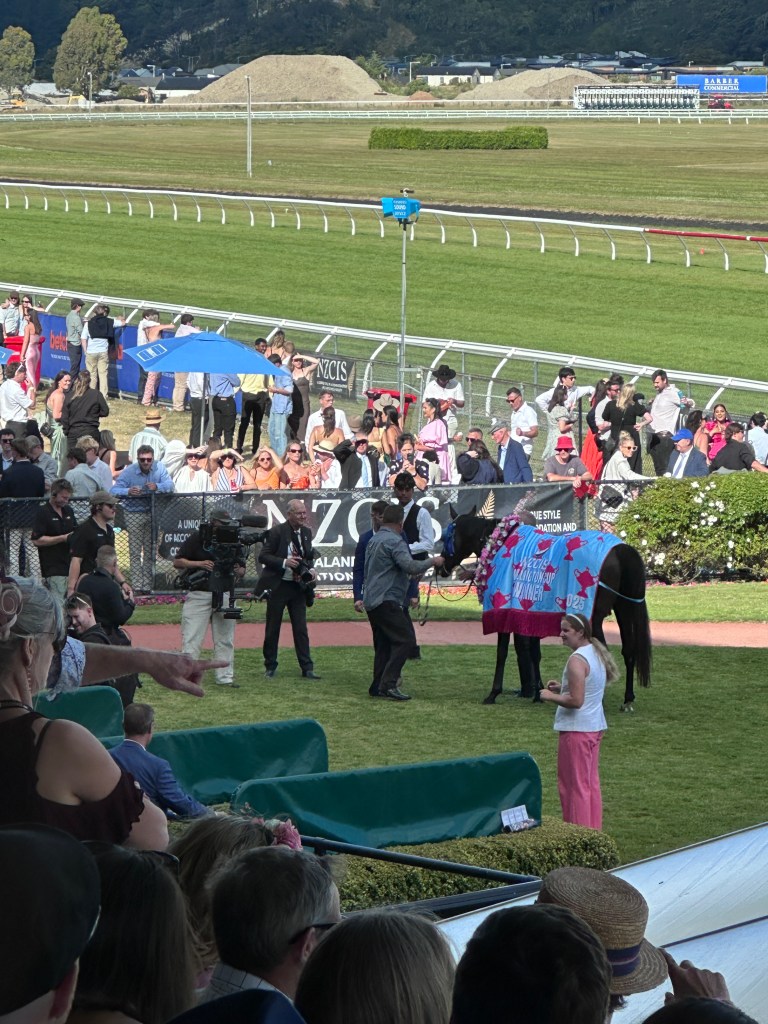
 The U.S has the Kentucky Derby, the Preakness and the Belmont.  New Zealand has the Wellington Cup.  Nowhere near the size or prestige of the U.S. races, it was still fun to go out and place a few bets, drink some champers, and watch the horses.  I picked a few winners over the course of the day, but not the winner of the Cup itself. 

How We Spent our Summer – Part 1. Snow Leopards.  

While in the U.S. summer is on the way, we are heading toward winter now.  Good time Charlie’s that we are, we did a lot of different things over the summer.  I already reported on the Trip to the sub-Antarctic Islands.  Here are a few other highlights presented in several parts.

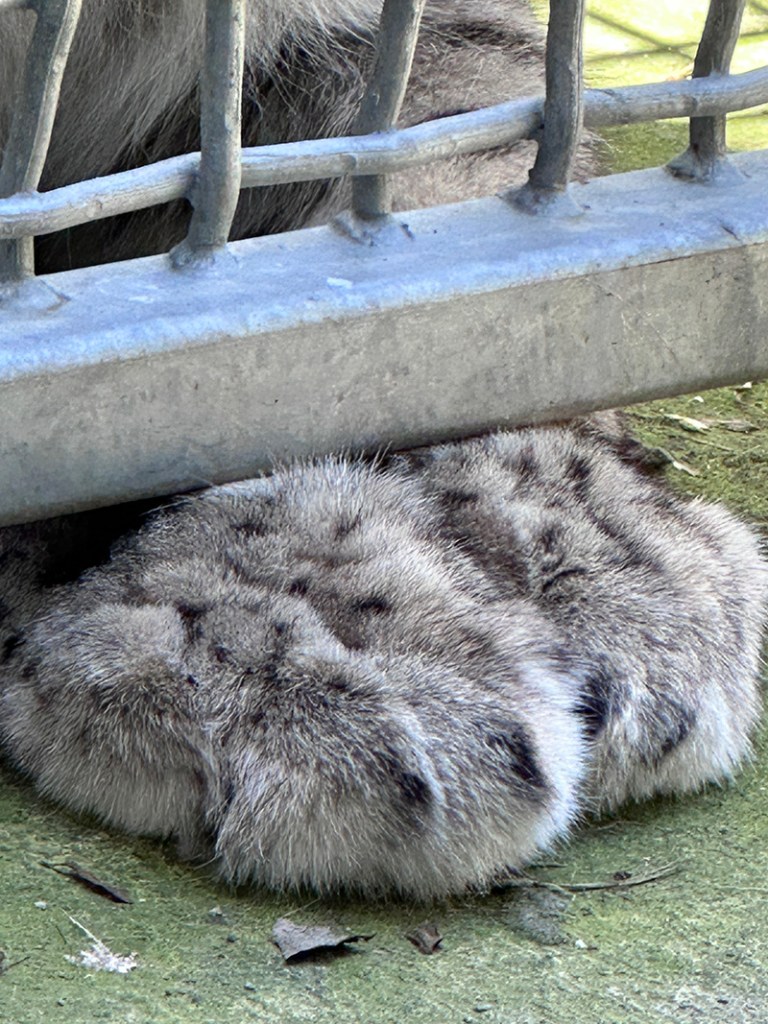
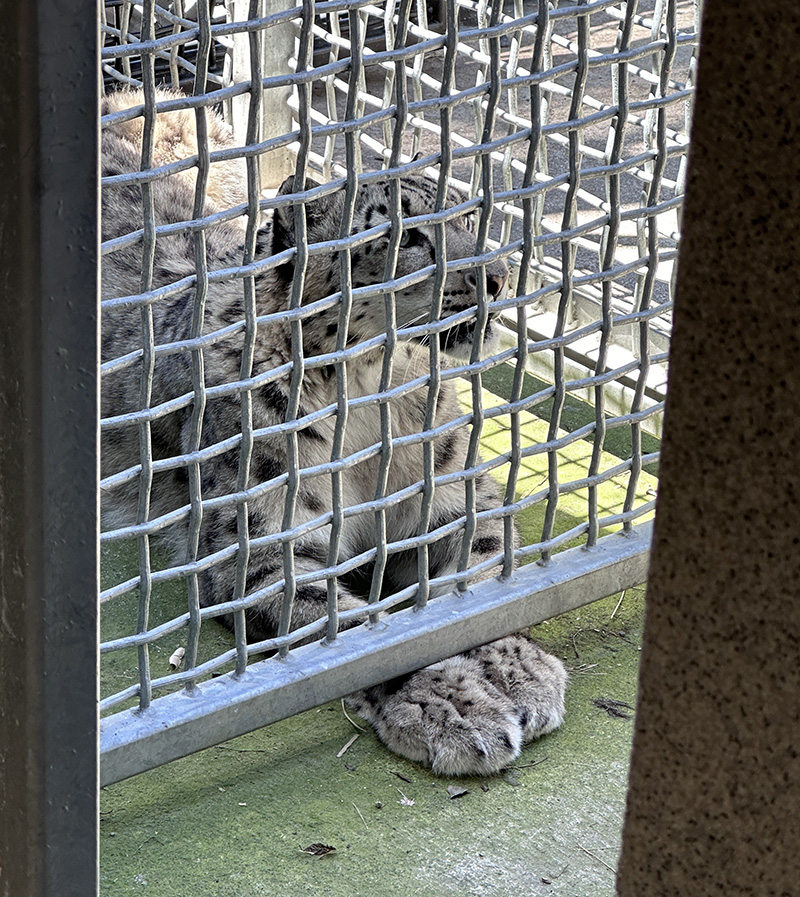
We visited the snow leopards at the Wellington Zoo.  I don’t normally go in for zoos, but the Wellington Zoo built a sanctuary for two snow leopards.  They were offering an encounter—which entailed getting up close and personal as one can get with a wild cat—with a metal fence between us—and letting us set out their food.  It was hard to resist not visiting.  

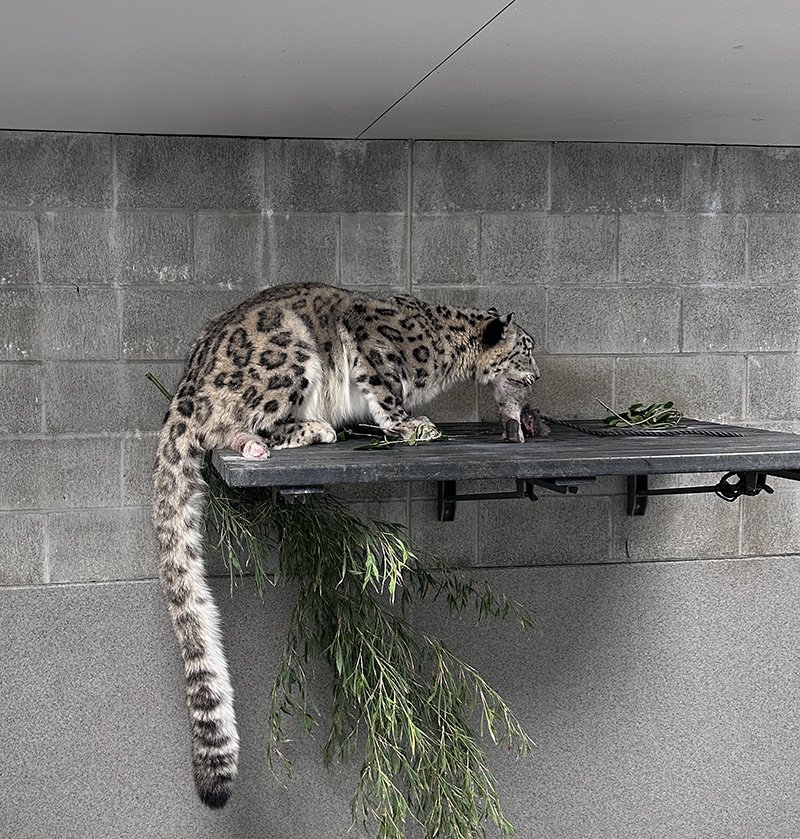
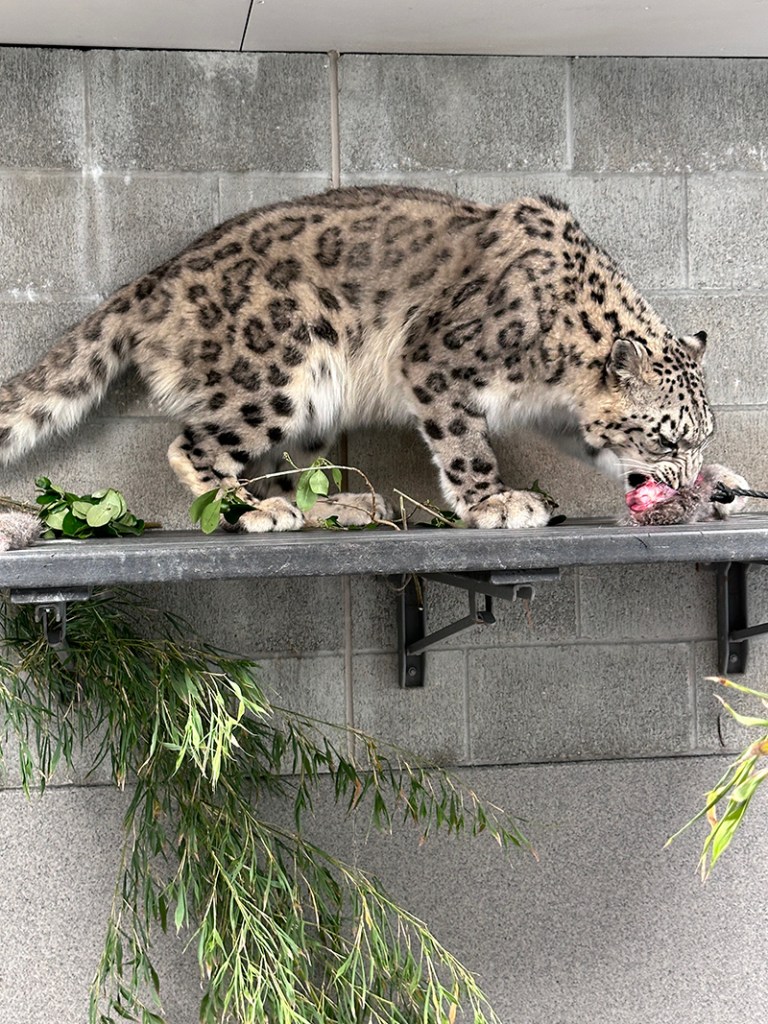
So gorgeous.  Big paws and long luxurious tail.  The visit was arranged for feeding time.  We went into the working area of the enclosure, a fenced in/caged area where the cats come in through a series of gates to get dinner and whatever else they need.  We were asked to take their meal, some lovely legs of lamb or goat or some other creature and put them out in the feeding area.  Once done, we left the caged area and the keeper let the cat in.   

waiting for dinner to be served by us

We watched her chow down on her leg.  It was yummy.  Only one cat was around.  We later saw the other one having a nap in a small cave. 

Knowing how difficult it is to see these creatures in the wild, we felt very lucky to be near them.  

Bicycle Ride to Light House

Matt had wanted to ride from the town of Eastbourne on the far side of Wellington Harbor to a lighthouse on southern coast called Pencarrow Head or the Māori name Te Raeakiaki, which means “the headland where the sea pounds.”  And boy, does the sea pound there.  And the wind blows.  Hard.  

On the way out along a gravel road, the wind was at our back and we flew along.  Going back to Eastbourne was like trying to bike with a fully deployed parachute hanging off my back.  It was a slog.  I was on a flat feeling like I was climbing a mountain.  Matt has an electric bike and he can just pedal along.  Why don’t I get an electric bike?  They are very popular here, but I feel the need to bull through when it is tough going.  I feel like I accomplished something—mostly that my thighs are going to never forgive me.

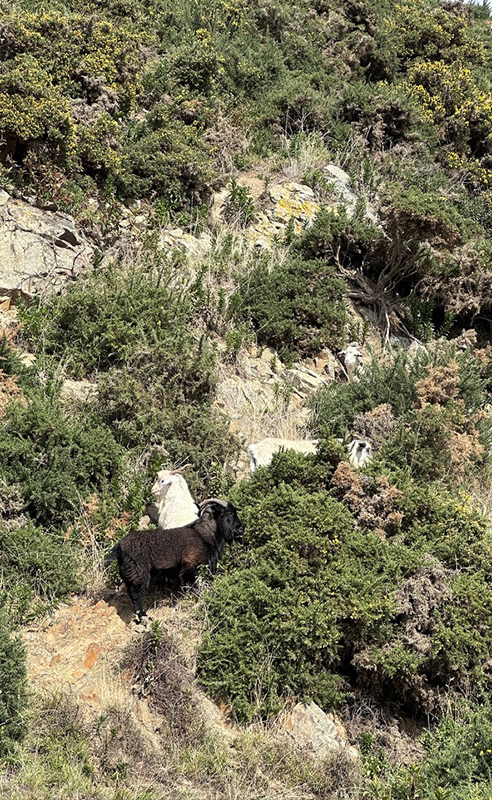
But it was a beautiful ride with a delightful view and even some wild goats.

The end of our ride.
Skittish goats wanted nothing to do with us.

A Maori Update

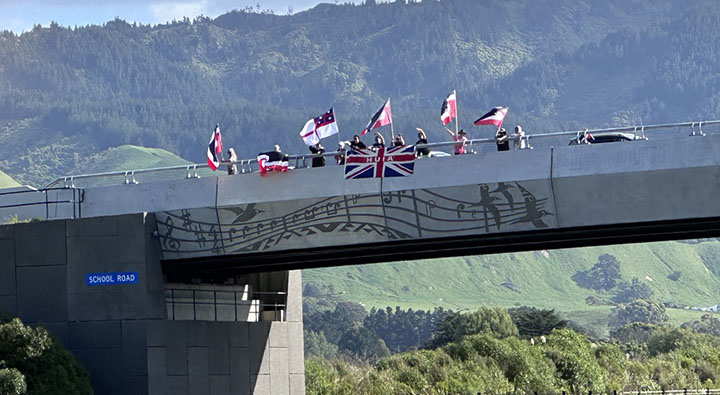
People supporting protesters heading for Wellington in November.

A few months ago there was a major protest by the Maori people over a proposed bill called the Treaty Principles Bill.  You may have seen the video of the woman shouting a protest in the New Zealand parliament.  The people in that video are performing a “haka.”  You have probably seen the New Zealand All Blacks, the national rugby team, perform a haka before a game.  Haka can be a celebration, or a dance meant to intimidate.  I will explain why that was necessary to do in Parliament.  

Here is the deal.  The “All Lives Matter,” anti-woke movement has arrived here in New Zealand.  (You, dear reader, may agree with those sentiments, but I think you all know that I do not.)  These ideas do have an appeal to certain New Zealanders and it has provoked a battle over the interpretation of the 1840 Treaty of Waitangi.  

This is going to be a very abbreviated explanation of the Waitangi Treaty and the contentious history around it. The Treaty is considered the country’s founding document.  It sets forth the structure for governance, land ownership, and the protection of Maori interests in return for an agreement between the British government and the indigenous Maori.  But fun fact, there were two versions of the treaty—one written in English for the British and one written in Maori.  Alas, when you re-translate the Maori version, it does not read the same as the English version.  

The British version said the Maori recognize the full sovereignty of the British over the land.  It is unlikely the Maori understood what it meant to give up sovereignty.  In fact, the Maori version simply says the Brits get the right to govern and even governance was a foreign concept. The Maori understood from their version that they were to have full control or chieftainship over their land and treasures.  The British version says Maori have continued ownership of their land, but the Brits have what is known as preemption rights.  A preemption right means the British control over ownership giving the Crown an overarching right before all others to purchase land.  It also includes the authority to approve the sale or transfer of Maori land.  (The United States via earlier British law also retained the right of preemption in its dealings with Native Americans.)

            The ambiguity in the treaty led to internal wars between the Brits and the Maori, with ownership disputes, settler encroachment, and the loss of Maori land.  Soon the Treaty was ignored by the British altogether until the 1960s and the Maori “Honour the Treaty” protest movement began.  New Zealand came to terms with the problems the Treaty had created for the Maori, particularly land and culture loss, and sought to address the issue by enacting laws and creating the Waitangi Tribunal, which was empowered to look at breaches of the treaty.  

            Fast forward and the Tribunal and its development of principles of treaty interpretation are being called into question by a political party.  This party seeks the enactment of a new law that would govern treaty interpretation and take it out of the hands of the Tribunal.  The problem from the Maori perspective is that the proposal would wipe out any progress the Maori have made to protect and advance their culture and interests.  The supporters of the Treaty Principles bill argue that the Maori are getting special treatment and the bill is intended to make sure all New Zealanders are treated equally, hence “All Lives Matter.”  But that position ignores the Treaty’s clear statement that the Maori are entitled to govern their own land and “treasures.”  Treasures means their culture, language, and the environment. 

The fact is that the Maori have been second class citizens since the British arrived and whatever they have gained has been through long fought battles for a recognition of their right to live according to their culture and beliefs, as the Treaty guaranteed.  That does not mean they have more rights or that they are getting special treatment.  They are getting what was bargained for when they signed off on a Treaty to grant the British sovereignty over the islands.  

When the Treaty Principles bill was introduced, the Maori party in Parliament was not amused and held a “haka” protest, as is seen in the video, in front of the man who introduced and has been pursuing this legislation.  There was a major protest outside of Parliament too, where thousands gathered to support the “Honour the Treaty” movement.  

Even so, the bill was introduced, voted on, and then died.  Recently, it was announced that the same political party is pursuing another bill that would have similar impacts, by denying the treaty rights of the Maori.  Once again, a battle will be fought over this legislation. In the meantime, it is not clear that we can expect another haka in Parliament. It been proposed to punish the Maori MPs who performed the haka with suspension from Parliament that has not yet been resolved. Rest assured, there will be more confrontation and protests in an effort to save Maori rights because the “All Lives Matter” movement, even though a minority, is here.  

Earthquakes

Yes, we have earthquakes here in New Zealand.  According to Learnz.org.nz

Earthquakes happen every day in New Zealand. Approximately 14-15,000 occur in and around the country each year. Most earthquakes are too small to be noticed, but between 150 and 200 are large enough to be felt.  …

The most powerful New Zealand earthquake in recent history occurred in the Wairarapa in 1855. During this magnitude 8.2 earthquake, land moved along at least 140km of the Wairarapa Fault. Where the movement was greatest, the land shifted across more than 18 metres along the fault. Part of the nearby Rimutaka Range rose more than 6 metres. This is the biggest known movement by a single earthquake to have been recorded anywhere in the world.  [A meter is a little over three feet.  So the land shifted about 60 feet and the mountain rose about 20.]

So take that California.  You got nothin’ on New Zealand.  There is an app called GEONET which tracks New Zealand quakes, locations, magnitude and impact, letting app users rate what the quake felt like.  A quick perusal of the earthquake list shows that there is not a week that goes by that there is not some kind of earthquake somewhere in the country and there are some places in New Zealand that have earthquakes regularly, perhaps once a week. I make mental notes of the location because I would not want to live in those places. I would not say they happen often where we live, but they happen enough.

The quakes you can really feel start at about three magnitude.  Whether you feel them depends on the depth.  The shallower the quake, the more likely you are to feel it, the more likely it is to cause damage.

So what is it like?  Here is how it goes: first you sense a bit of a shake and hear a rumble.  It snaps you out of whatever you are doing and makes you a little more alert.  I often suddenly feel anxious.  Your brain starts trying to figure out what just happened.  Was that a quake?  Sometimes that is it and we all go, huh.  That was a quake.  But more often in the next second or two later, the floor feels like a rolling sea and the house vibrates from the motion of the earth beneath it, causing everything in the house to rattle and shake, the whole house seeming ready to crack from the movement.  This lasts only a few seconds.  If it lasts longer than a few seconds and is more severe, we have to get out because that might mean a tsunami and we are in a tsunami evacuation zone. We are instructed that if you are near the coast and feel a strong earthquake where it is hard to stand up or you seel a weak rolling earthquake that lasts a minute or more move to high ground or as far inland as you can, out of tsunami evacuation zones.  The rule is “Long or Strong, Get Gone.”    Are we ready?  Yep. We have go bags prepared. 

We just had a 4.1 here not long ago.  It occurred fairly close to us but because of its depth, there was only light shaking.  Think of a large truck rumbling by.  The house shook but the dishes did not really rattle.  Matt was in Wellington and did not even notice.  As I said to him afterward, it scared the hell out of me.  They always do.  Unlike a weather event, earthquakes come with no warning as to when, how strong, or for how long.  You are living in the moment and what will happen is a complete unknown.  I don’t think I will ever get used to them.  

If the quake is strong enough, heading to magnitude five and above, the dishes clatter on the shelves and the pictures on the walls are jostled.  We have never experienced one that was more than that level of impact.  At the next level, things crash and fall.  We have not been there, thank God.  During an earthquake the ground can move horizontally and vertically.  In a severe earthquake there is something called liquifaction where strong shaking causes soil that is wet, sandy, and silty to act more like a liquid than a solid.  Think about how sand moves when you step on it.  It is water saturated and it does not take much to move it.  Now imagine a building on top of sand that is shaking.  That building has a good chance of being damaged or knocked down.  

Probably the most famous recent quake was a magnitude 6.1 that hit the city of Christchurch in 2011 which resulted in 185 deaths and caused extensive damage to structures which are still being dealt with.  Numerous office buildings, churches and hotels were on the verge of or totally collapsed.  Homes were destroyed and even the sports stadium had to be torn down and rebuilt.  But that is only one in a long list of earthquakes that have impacted communities throughout New Zealand.  This country is located on numerous fault lines so it is not surprising but still it is unnerving.