Trip to Kaikoura

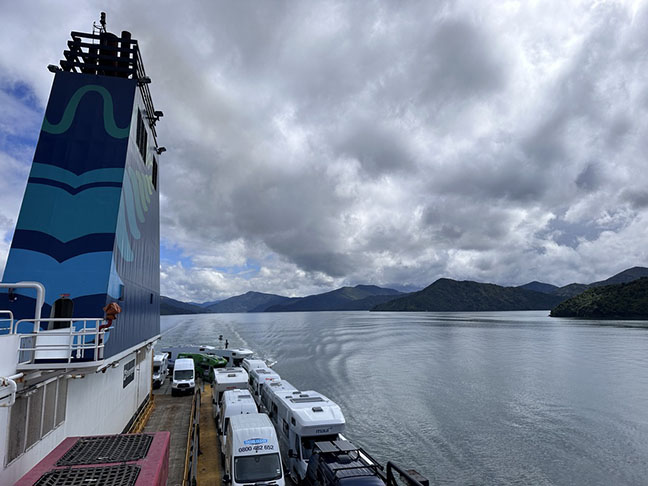
            Kaikoura, located on the east coast of the South Island, is home to whale watching and bird encounters, both favorite past times.  So off we went for a long weekend.  To get to the South Island we have two options: take a plane or take the ferry.  The ferry across Cook Strait is the best and most interesting option if you are headed to the northern part of the South Island.  Drive your car on, have a seat, and watch the ocean go by for a few hours.  Nearing the port of Picton, the ferry makes its way through tree covered islands, where a few houses sit and birds fly. 
 From Picton, the drive south to Kaikoura is another two hours along a picturesque, rugged coastline with crashing waves and bird colonies along the shore.  
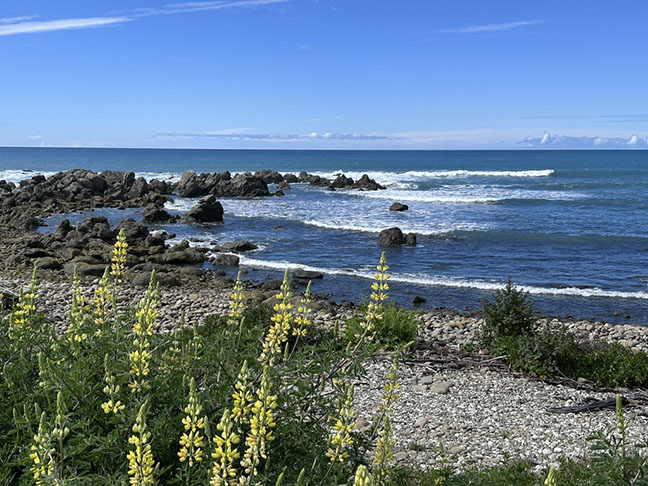
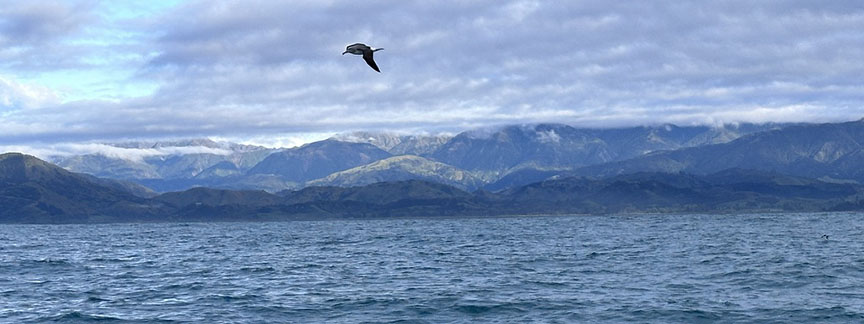
            Kaikoura has an abundance of marine life supported by the cold nutrient rich water that rises up from the nearby deepwater Kaikoura Canyon.  This water supports a large variety of fish, marine mammals, and seabirds.  It makes Kaikoura a whale watchers paradise with a year-round pod of sperm whales and visits from humpback and blue whales in the right season.  We have never seen sperm whales so that seemed like something to check off our unwritten list of things to do.  They also had dolphin and albatross encounter tours.  I am all about albatross, large, beautiful, and fascinating birds.  We signed up for all of the tours and could not wait to get started.  
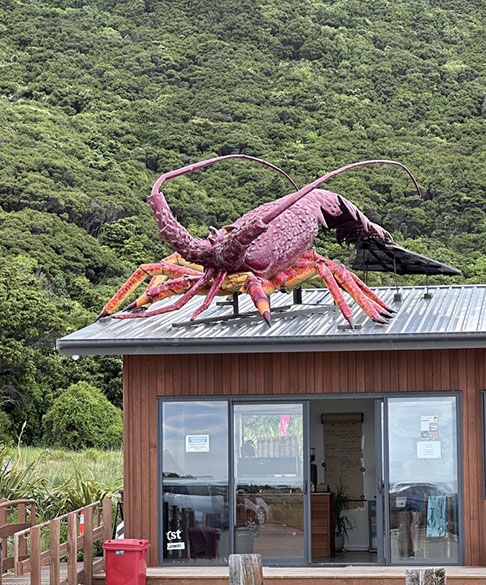
Lobster shack

            But first we had to stop along the highway to eat crayfish.  This is not your tiny Louisiana freshwater crawfish, but a type of lobster without the large claws.  I could not find the reasoning behind it, but here in New Zealand, the lobsters are called crayfish.  To avoid confusion, they are called rock lobster in the international seafood market.  These crayfish are not only misnamed, they are wildly expensive.  So we split a large one.  No surprise that it tasted like a lobster.  Having our fill of the large crustacean, we drove on.  

            In 2016, Kaikoura was the site of a major earthquake, 7.8 on the Richter scale.  It involved movement along multiple fault lines and was felt all the way to the North Island.  It was so dramatic that the town rose three feet and the adjacent seabed rose six feet, the uplift heaving fish and marine life above the water line.  The town, sliding along the fault line, was moved three feet north.  A major tsunami later flooded the coast, killing more marine and freshwater life along the coast.  If you want to read more about the Kaikoura earthquake, go here.
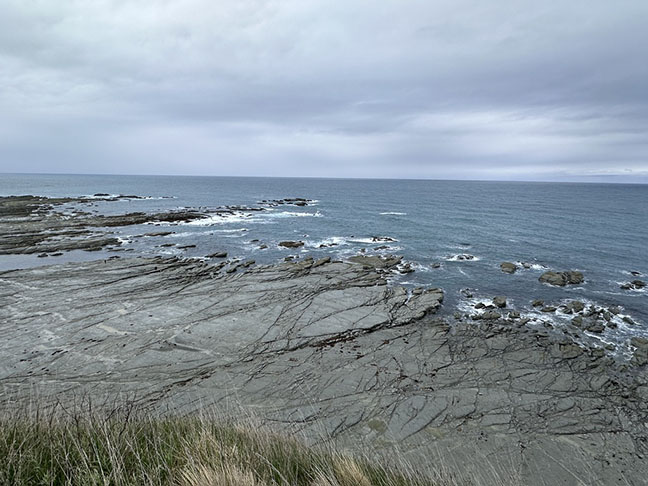
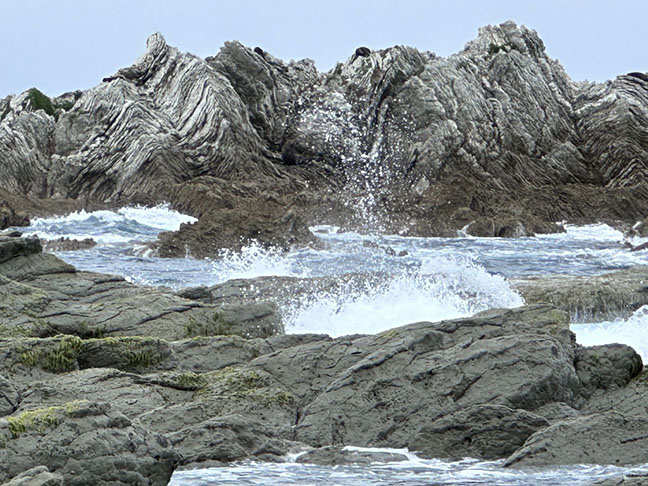
Rock upheaval

            Only eight years later, the town seemed perfectly normal.  The only apparent and visible aftermath was along the coast where seabed was clearly above the water surface and large boulders were thrust out of the earth.  

            While the earthquake would not disturb our trip, the weather had something else in mind.  Once again, just like Fiji, we were thwarted by strong winds and rain.  The winds were strong enough to force the cancellation of the tours we had signed up for—a dolphin encounter and albatross frolicking.  The day was shot.  We did not have any days to spare, and we had whale watching scheduled for the next day.  But we worked the phones and figured out how to do at least one of the tours.  We were in for the albatross if we were willing to go out at 6 a.m.  Yikes!  But hey, it involved a rare opportunity to see an endangered albatross and I love those beauties.  We would have to swim with the dolphins another time.  

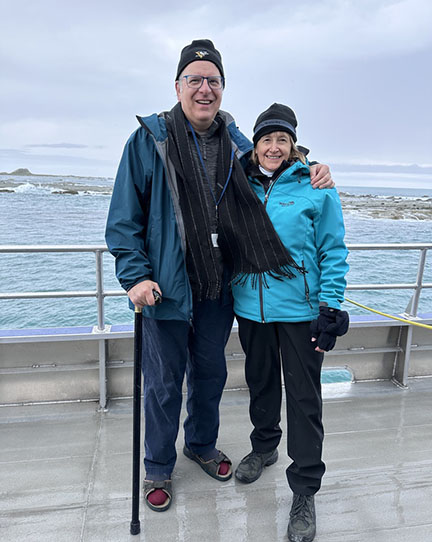
            It was mighty cold at 6 a.m. so we dressed for winter.  It was us and the boat captain.  He was very knowledgeable and took us straight to the birds, which was easy since they follow fishing boats.  
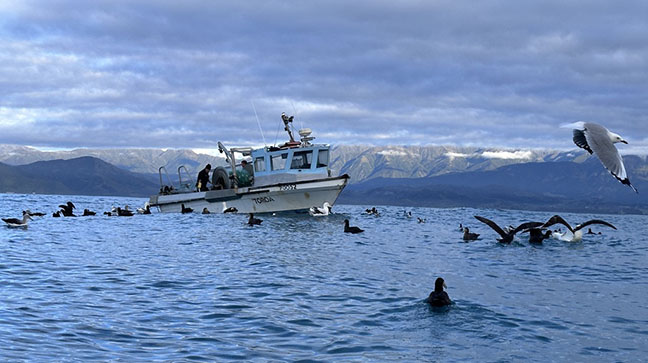
He tied a bag of fish to the back of our boat to lure them over.  Yes, yes, that does not seem right.  We should be watching birds in their natural state and not luring them with food.  But the reality is that they were already following the fishing boat for the chance to grab some fish trash.  Our boat was not teaching them anything different.  It is called survival and adaptation. 
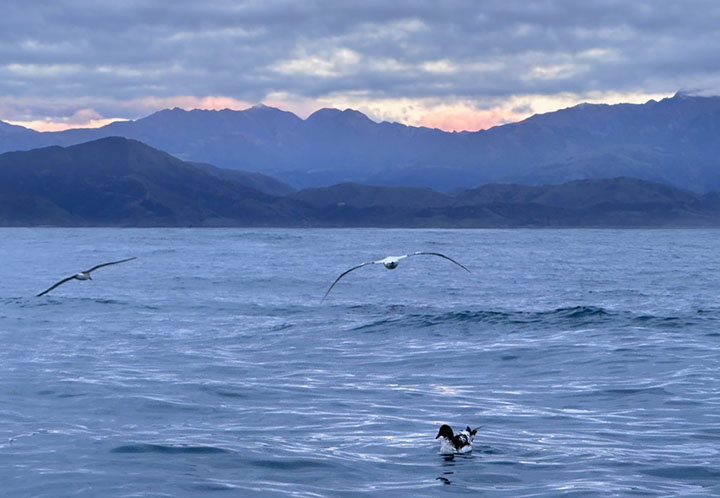
            And here they come.  Wandering albatross are large, gorgeous birds that dominate the sky when they fly.  Their wingspan average about 12 feet.  When they come in for a landing, they make an entrance.  The other birds scatter.  
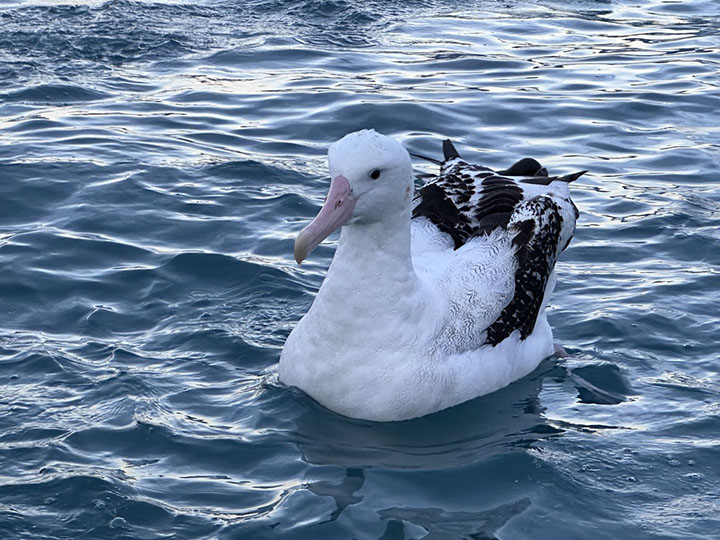
Royal wandering albatross

            Among our visitors were royal albatross and the rare Salvin’s albatross or mollymawk.  These birds are endemic to New Zealand and critically endangered.  Smaller than the great albatross, they have a distinct grey head.  Really quite beautiful.  
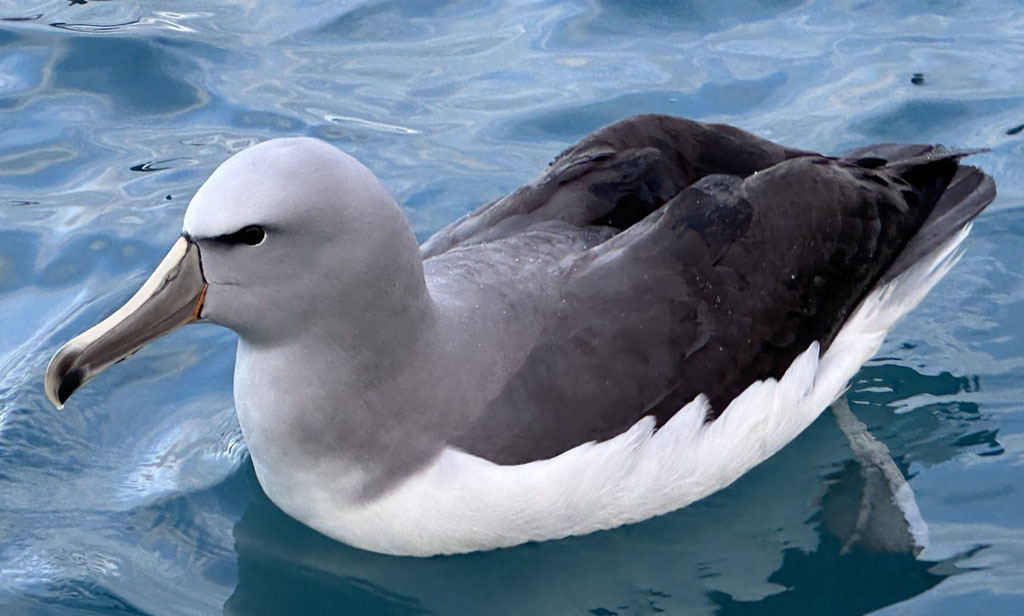
Salvin’s albatross – rare

            We also saw the endangered Hutton’s Shearwater, the only seabird to breed and nest in mountains happened to keep house in the mountains surrounding Kaikoura.  

Then to our delight, the dusky dolphins showed up and gave us a short show:

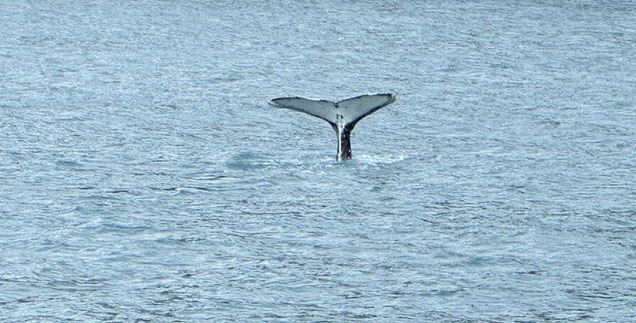
            This was a well spent morning.  Now we had to move on because we had whales to watch.  We have been whale watching many times.  Usually that involves humpback whales.  We were hoping for sperm whales.  No such luck.  The weather was keeping us from going out to further toward the canyon.  We had to settle for one lone humpback who did one roll and that was it.  It was very disappointing.  
            Well, our time was up and we had to depart for the ferry back to the North Island.  We will have to return to see the sperm whales and swim with the dolphins. 
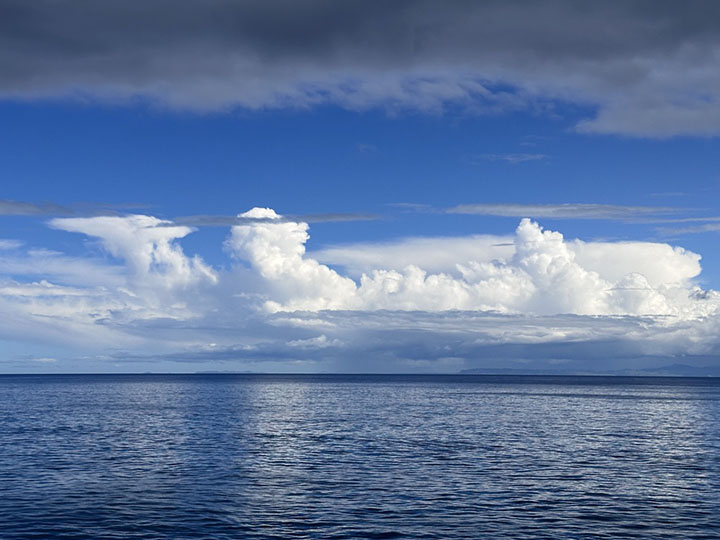
Just some beautiful clouds seen from the ferry.

Excursions Around New Zealand – Taranaki – A Dormant Volcano and Lots and Lots of Cows

We vacationed in New Zealand for three weeks in 2005.  We traveled both islands by car, train and boat.  But we still missed a lot.  We are using the weekends to visit new places.  


 New Zealand is located along the Ring of Fire, a circular area surrounding the Pacific Ocean where the Earth’s tectonic plates are subducting or sliding under another plate causing havoc.  The Ring encompasses the West Coasts of North and South America, the east coast of Asian countries such as Japan and several islands in the Southern Ocean including Indonesia and New Zealand. (Hawaii is not along the ring, nor is Iceland.  They have their own problems.). The lands located on the Ring are home to the vast majority of volcanoes on Earth, both dormant and active.  Most earthquakes that occur in the world are located in this area too.

            New Zealand is emblematic.  As for earthquakes, it is a rare day that an earthquake is not recorded on at least one of the two islands.   New Zealand has many volcanoes, extinct, dormant and active. There are three types of volcanoes in New Zealand: cone, caldera, and volcanic fields.  A volcanic field is what it sounds like—small volcanoes spread out in an area with any one erupting haphazardly. There are currently eight active volcanoes all located on the North Island.  https://www.gns.cri.nz/our-science/natural-hazards-and-risks/volcanoes/new-zealands-volcanoes/.  

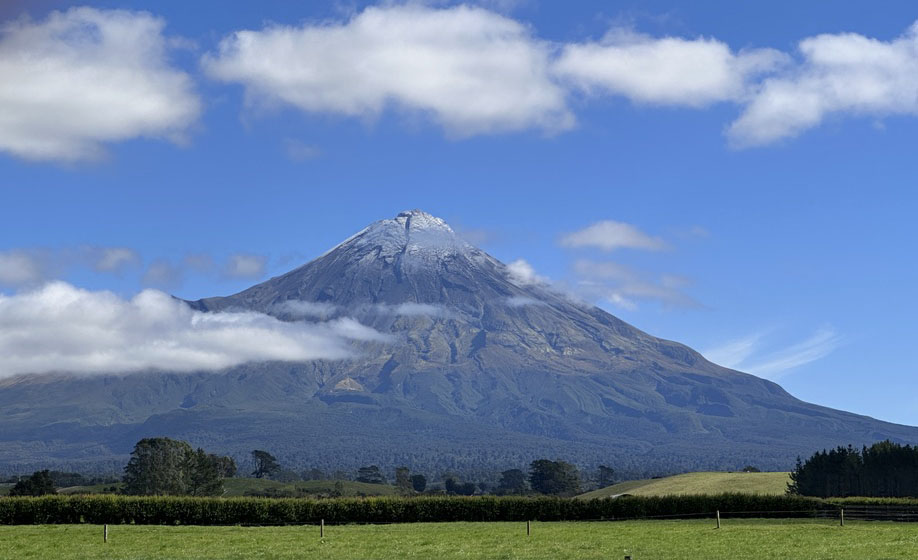
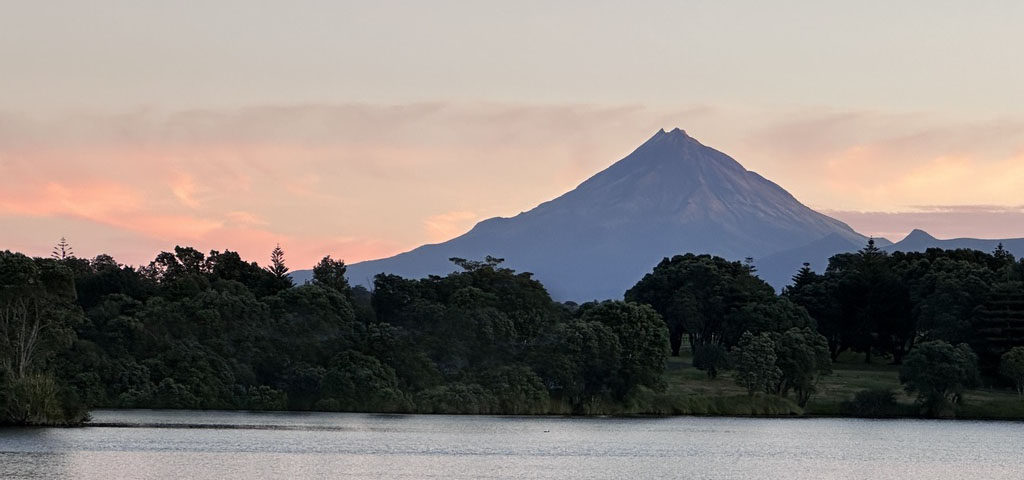
            We decided to visit one of the volcanoes.  Taranaki is currently dormant, having last erupted in 1755.  It is centered in the Taranaki region, part of the western coast of the North Island a region that juts into the Tasman Sea and which is also known as the Surf Coast. (We will get to that.).  Not quite Mount Doom, (that would be Ngauruhoe) but more resemblant of Japan’s Mount Fuji, Taranaki is a beautiful cone, often snow covered, circled by vast plains formed from previous eruptions.  

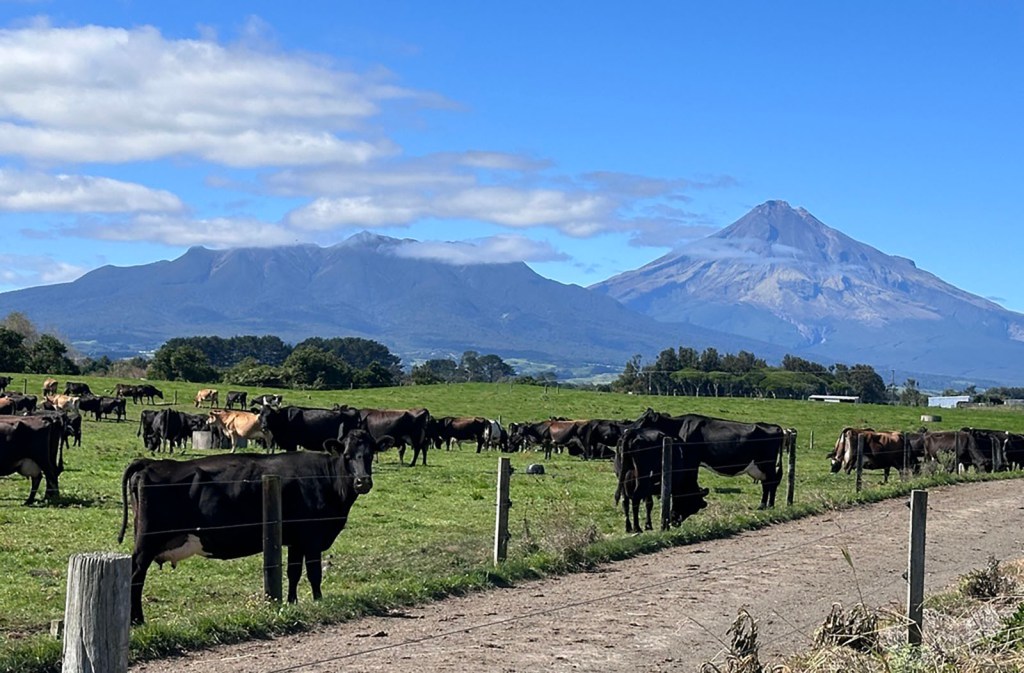
            We stayed in New Plymouth, the city nearest Taranaki, for some sightseeing.  New Zealand is rural and multi-lane turnpikes or highways do not criss-cross the country.  Getting from here to there outside of the city usually means traveling two lane highways.  This two-hour drive took us through small towns and past more cows that I have ever seen in my life.  Dairy cows mostly, milk production is a huge industry here.  There were some sheep farms.  But the Taranaki region seems to be cow central.  

            Our first stop was Egmont National Park, home to Taranaki.  The plan was to simply drive as close to the top as we could get.  It turns out, it was not close enough.  So Matt gamely agreed to hike further up the mountain to get a good vantage point of the summit.  He would go as far as he could.  

            New Zealand is a place where the weather can turn very quickly and the day went from a pleasant, warm, sunny day to a cold, partly cloudy day with a strong, brisk wind that easily penetrated our clothes.  It was cold!  We were clearly not prepared for a walk up a mountain.  The gift shop was prepared for unprepared people like us.  We bought heavier jackets and thank goodness because the higher we climbed, the more forceful the wind became. 

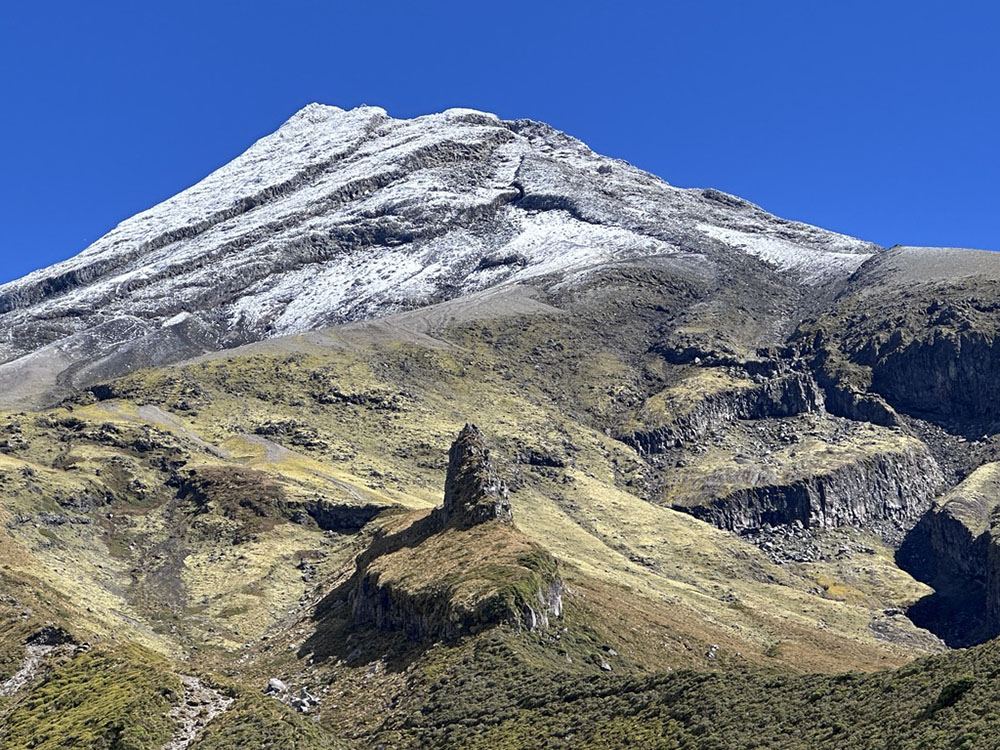
            Matt made it to the overlook.  He did a great job. It was a 4k hike or, in NZ jargon, a “walk” (as opposed to a “tramp” which is akin to a trek for us).   I continued further up the path to a clearing where there was a good view of the summit.  During most of the climb, being under cover of the bush, we were protected from the wind.  As I rounded a large boulder and stepped into the clearing, I was hit with a gust that nearly knocked me off my feet.  In front of me was the summit. While I hung on trying not to be bowled over by the wind, three younger adults were merrily taking photos of each other, seemingly oblivious to the cold and gale force winds.  I snapped a few photos and went back to the shelter of the trail.  


Tired of being cold, we drove back down the mountain and headed back to New Plymouth and our very warm hotel room.  

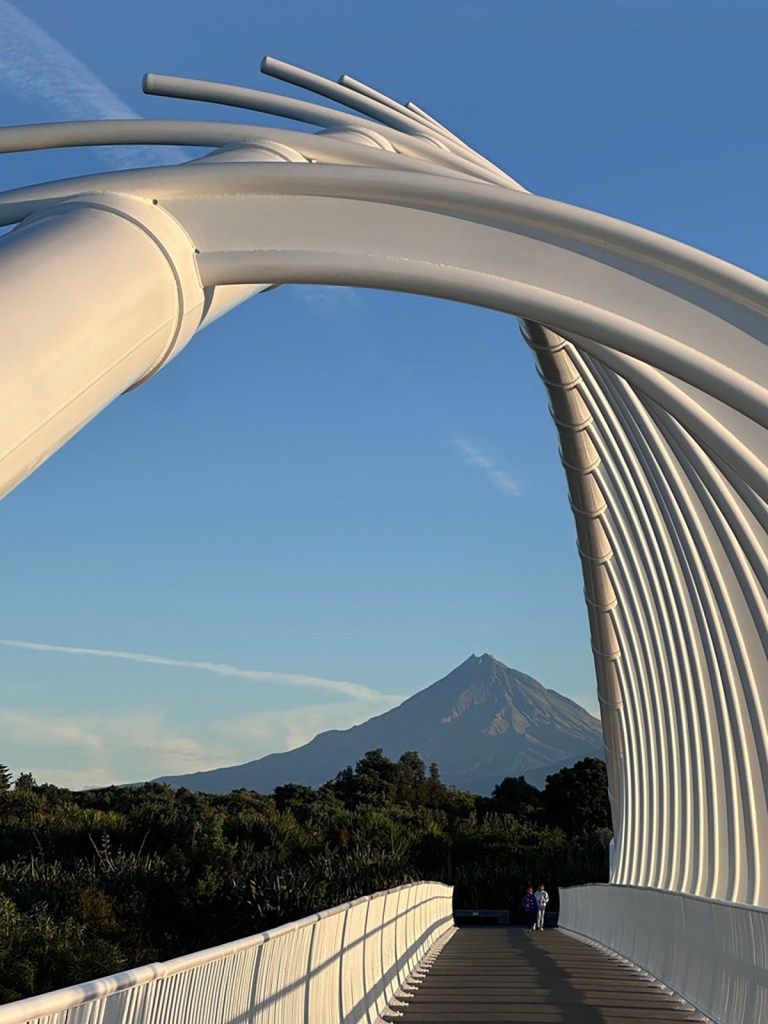
            New Plymouth is a coastal town, with aspirations to be an art center.  The most popular spot is the Coastal Walkway.  At one end is the gorgeous Te Rewa Rewa Bridge.  I took a lot of photos of this bridge.  It was just fun to look at.  

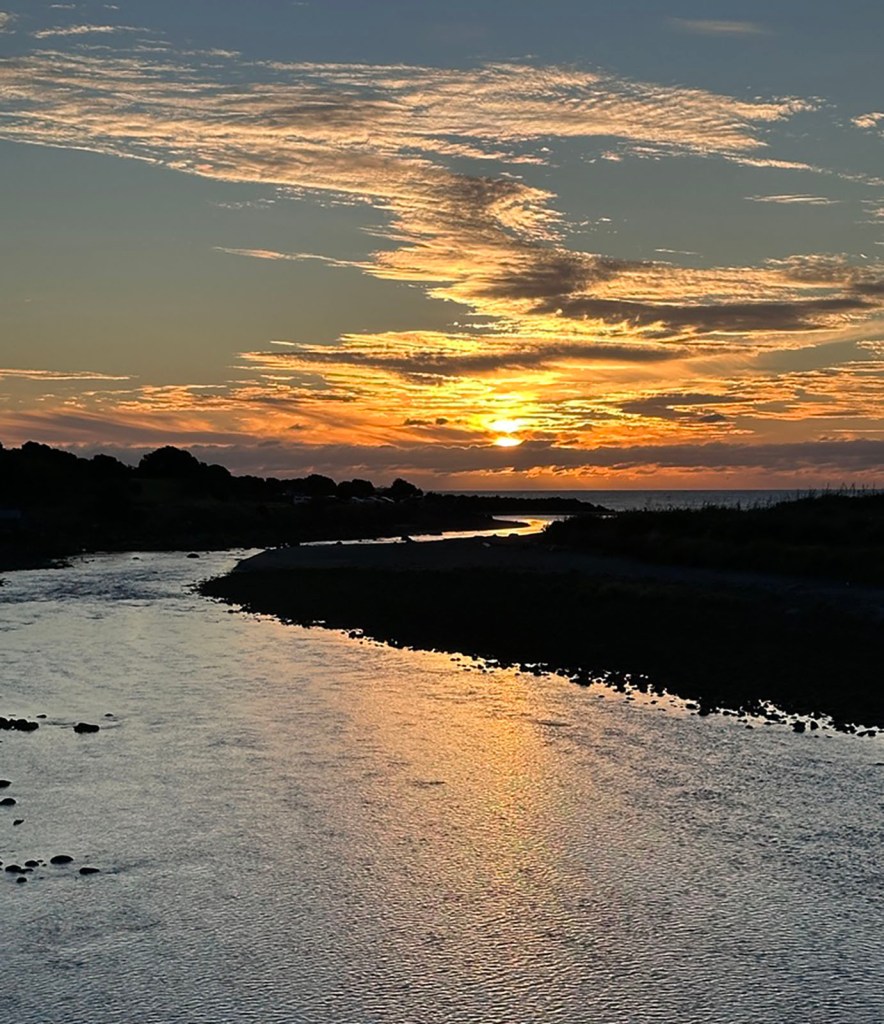
We watched the sunset over Taranaki and from the bridge.  


The next day we visited the Rotokara Scenic Reserve to check out the birds.  New Zealand has no endemic predators.  There are no coyotes or foxes, bobcats or anything that can eat a deer.  When you walk in the woods here, you’ll find only birds and a couple of reptiles. Invasive mammals such as stoats (ferret), possums, rats, and cats have made homes in the wild.  These predators prey mostly on birds.  The problem is that New Zealand birds have not evolved in an environment with predators so many of them do not fly.  Why fly if no one is out to get you?  As a consequence, they are vulnerable to these invasive species who feast on the birds and their eggs.  This kind of pressure has driven many of their birds to near extinction.  

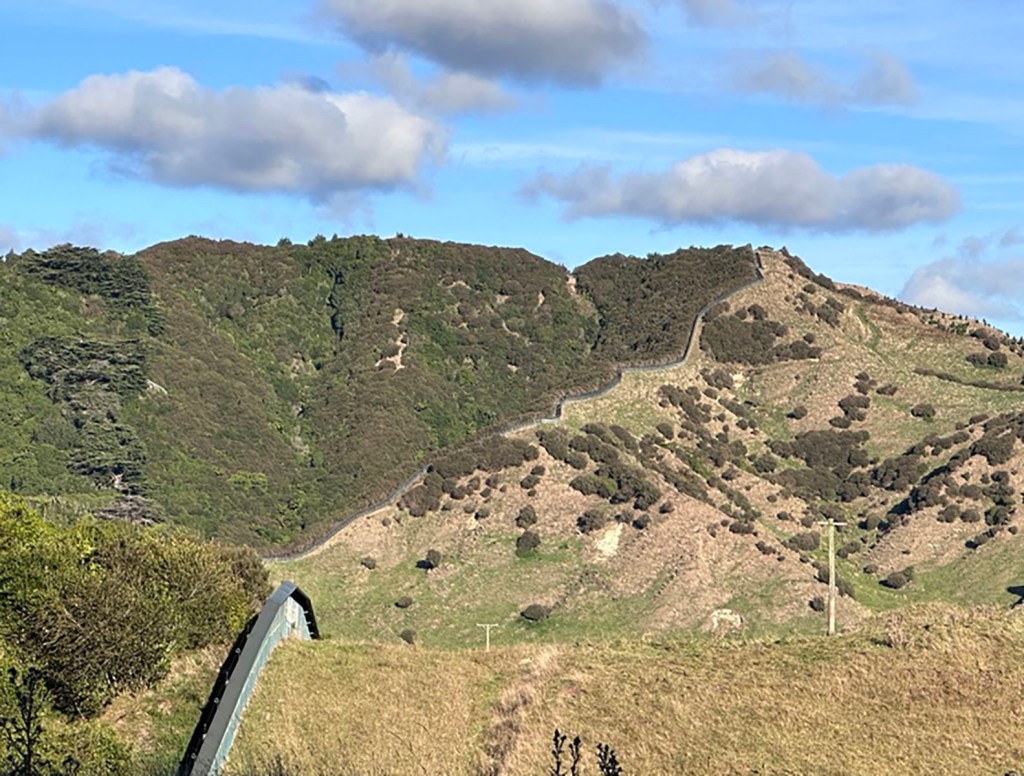
            To combat the invasive species, there are a few parks in New Zealand that are predator free.  What does that mean?  They build very tall fences that are impassable to small animals.  The area inside the fence is then methodically cleared of predators and pests.  Once cleared, the birds thrive.  

            Here is the picture of the fence at Rotokara.  

The fence is like the Great Wall, a monstrous structure traveling over hill and dale.  What you can really see in the photo is a before and after view of the land, pre- and post- agricultural clearing by the settlers.  A large part of this country was cleared of Native bush to make way for agriculture.  Inside the fence you see the native bush, and outside the fence, farm and grazing land.  It is hard to believe the work that clearing this land must have entailed.    

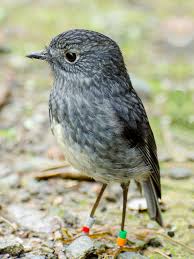
            On the walk around the lake, we managed to see a hihi, or stitch bird.  They can be elusive, so we were happy to check them off the list.  We also saw whiteheads and lots of other species.  The most fun is with the North Island robins.  

 They are small black and white birds birds that look nothing like our red breasted friends. They will come out of the bush to look at you curiously and say hello, and sometimes follow you down the path. As an aside, the birds in New Zealand are generally not colorful. They are mostly black and brown or dull colors like yellow or green. All meant to blend into the bush.  

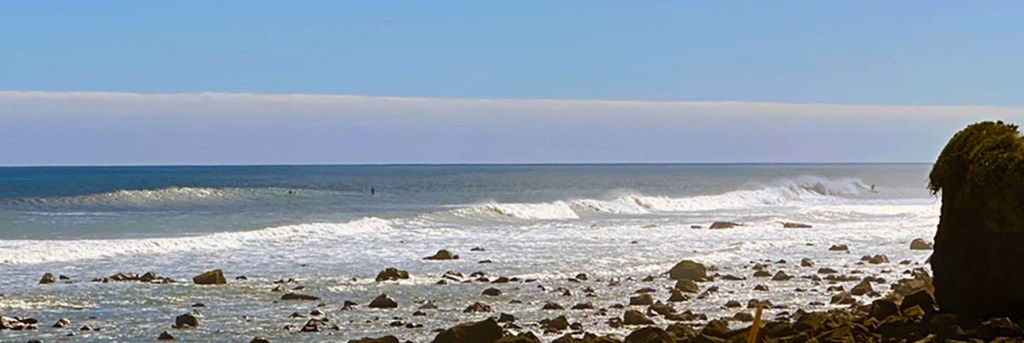
The next day we drove home along the surf coast. with its location, you would imagine there is a lot of surfing here. But the coasts are pretty rough–lots of rocks and hazards, and the seabed is not accommodating to big waves. But here in Taranaki, beautiful waves abound. We met a group of surfers, young boys heading to the beach. We followed them and chatted about America. They soon split off and headed for an area with an open beach. We watched from a distance.

And did I mention cows??? Here they are along the surf coast.