
A few months ago there was a major protest by the Maori people over a proposed bill called the Treaty Principles Bill. You may have seen the video of the woman shouting a protest in the New Zealand parliament. The people in that video are performing a “haka.” You have probably seen the New Zealand All Blacks, the national rugby team, perform a haka before a game. Haka can be a celebration, or a dance meant to intimidate. I will explain why that was necessary to do in Parliament.
Here is the deal. The “All Lives Matter,” anti-woke movement has arrived here in New Zealand. (You, dear reader, may agree with those sentiments, but I think you all know that I do not.) These ideas do have an appeal to certain New Zealanders and it has provoked a battle over the interpretation of the 1840 Treaty of Waitangi.
This is going to be a very abbreviated explanation of the Waitangi Treaty and the contentious history around it. The Treaty is considered the country’s founding document. It sets forth the structure for governance, land ownership, and the protection of Maori interests in return for an agreement between the British government and the indigenous Maori. But fun fact, there were two versions of the treaty—one written in English for the British and one written in Maori. Alas, when you re-translate the Maori version, it does not read the same as the English version.
The British version said the Maori recognize the full sovereignty of the British over the land. It is unlikely the Maori understood what it meant to give up sovereignty. In fact, the Maori version simply says the Brits get the right to govern and even governance was a foreign concept. The Maori understood from their version that they were to have full control or chieftainship over their land and treasures. The British version says Maori have continued ownership of their land, but the Brits have what is known as preemption rights. A preemption right means the British control over ownership giving the Crown an overarching right before all others to purchase land. It also includes the authority to approve the sale or transfer of Maori land. (The United States via earlier British law also retained the right of preemption in its dealings with Native Americans.)
The ambiguity in the treaty led to internal wars between the Brits and the Maori, with ownership disputes, settler encroachment, and the loss of Maori land. Soon the Treaty was ignored by the British altogether until the 1960s and the Maori “Honour the Treaty” protest movement began. New Zealand came to terms with the problems the Treaty had created for the Maori, particularly land and culture loss, and sought to address the issue by enacting laws and creating the Waitangi Tribunal, which was empowered to look at breaches of the treaty.
Fast forward and the Tribunal and its development of principles of treaty interpretation are being called into question by a political party. This party seeks the enactment of a new law that would govern treaty interpretation and take it out of the hands of the Tribunal. The problem from the Maori perspective is that the proposal would wipe out any progress the Maori have made to protect and advance their culture and interests. The supporters of the Treaty Principles bill argue that the Maori are getting special treatment and the bill is intended to make sure all New Zealanders are treated equally, hence “All Lives Matter.” But that position ignores the Treaty’s clear statement that the Maori are entitled to govern their own land and “treasures.” Treasures means their culture, language, and the environment.
The fact is that the Maori have been second class citizens since the British arrived and whatever they have gained has been through long fought battles for a recognition of their right to live according to their culture and beliefs, as the Treaty guaranteed. That does not mean they have more rights or that they are getting special treatment. They are getting what was bargained for when they signed off on a Treaty to grant the British sovereignty over the islands.
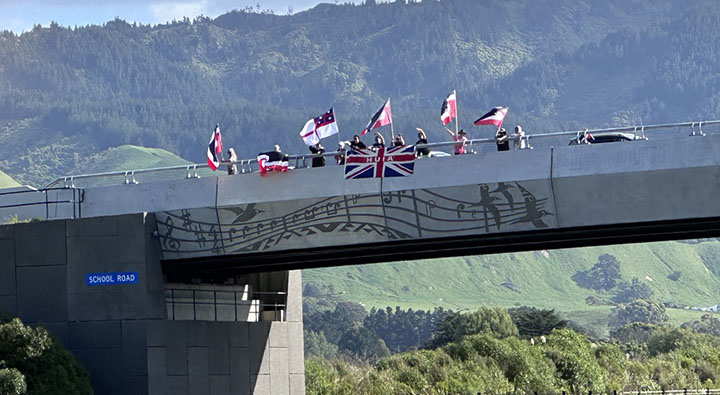
When the Treaty Principles bill was introduced, the Maori party in Parliament was not amused and held a “haka” protest, as is seen in the video, in front of the man who introduced and has been pursuing this legislation. There was a major protest outside of Parliament too, where thousands gathered to support the “Honour the Treaty” movement.
Even so, the bill was introduced, voted on, and then died. Recently, it was announced that the same political party is pursuing another bill that would have similar impacts, by denying the treaty rights of the Maori. Once again, a battle will be fought over this legislation. In the meantime, it is not clear that we can expect another haka in Parliament. It been proposed to punish the Maori MPs who performed the haka with suspension from Parliament that has not yet been resolved. Rest assured, there will be more confrontation and protests in an effort to save Maori rights because the “All Lives Matter” movement, even though a minority, is here.
 A Yank Among the Kiwis