Big name bands, and even many small name bands, do not play New Zealand and if anyone bothers, they go to Auckland and leave. (The exception to this rule is the Foo Fighters who love it here and even play the South Island.)
What we are left with is tribute bands. The Elton v. Billy Tribute Show? The Prince Tribute show? The Bee Gees Night Fever Tribute Band? Yes, yes, and yes. Matt wanted to see the ABBA approved tribute band, Bjorn Again. For you non-ABBA fans, ABBA stands for the first names of the band members, Benny, Bjorn, Agnetha and Anni-Frid. Hence, the play on the name Bjorn. Matt is a huge ABBA fan. When we went to Stockholm, he insisted we visit the ABBA Museum. Yes, there is indeed a museum dedicated to ABBA and I have to admit, it was a blast.
I am not a big ABBA fan. I like some of their songs, but I did not particularly care for them when they were popular, mostly because they were impossible to escape. How many times did they play “Fernando” on the radio? It felt like every five minutes. Same with “Dancing Queen.” Every song rotation it had to include an ABBA song. I just wanted them to go away.
But fast forward and here is my husband the ABBA fan. So I agreed we could go and see Bjorn Again. For me as an average human being, it was an okay experience. But there was just something weird about watching these people pretend to be ABBA. The weirdness came from the idea that this was not a cover band. This was full out reenactment and some people in the audience were weirdly enthralled. In the photo above are two young girls partially obscuring the picture. They were dressed in ABBA style and singing along with abandon. I have no problem with singing with abandon but they were acting as if Taylor Swift was standing in front of them.
I reasoned to myself that re-enactors play people all the time. If Hal Holbrooke can play Mark Twain in a one man show for decades (which I saw), and if I can enjoy actors who interpret Washington, Jefferson and Lincoln, well, then why not a band?
I have to admit I am still not convinced. But living in New Zealand with limited options for entertainment, I guess I better get used to tribute bands.
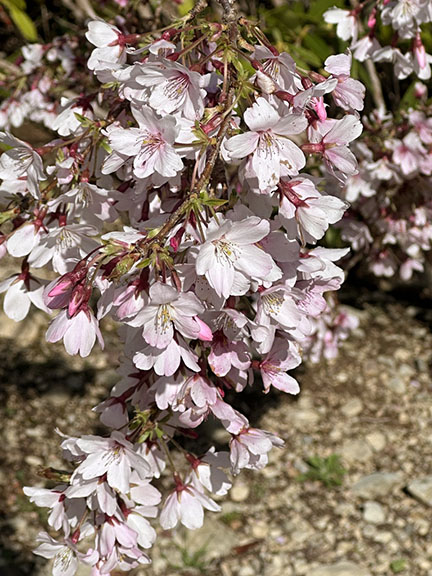
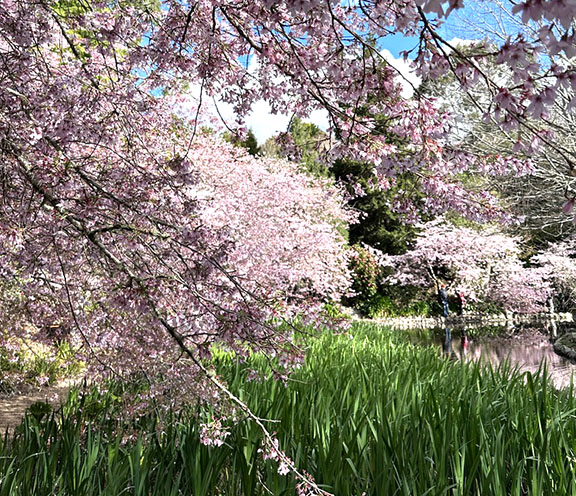
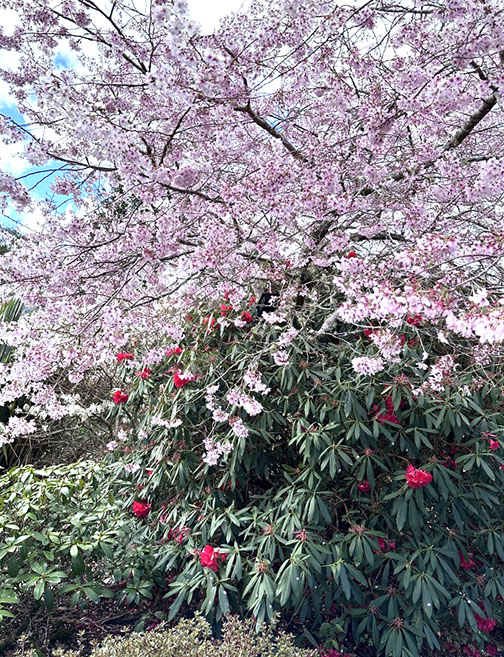
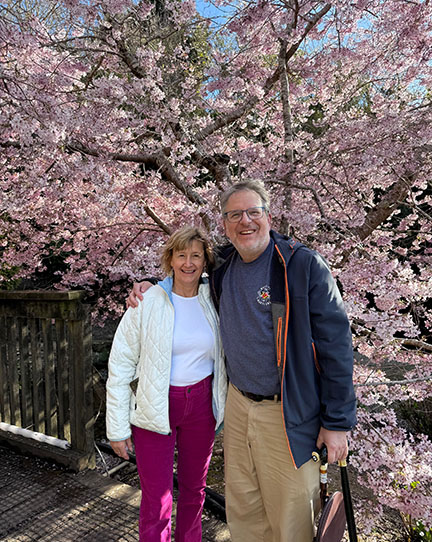
Everyone loves cherry blossoms and New Zealanders are no different. They have been in bloom everywhere. A couple here in Wellington travelled to Japan and fell in love with cherry blossoms. They decided to create their own blossoms paradise. We went off to their farm, which they had landscaped and into lovely garden. It was just like we were in D.C. again–too many people talking, too many kids running amok, and too many people climbing trees and stomping on roots when they shouldn’t, all while others were trying to enjoy trees that call for quiet meditation. It just proves that people are obnoxious no matter where in the world you are. Well, we didn’t let that spoil our forest bathing. Here are some pics:
They had a small pond with reeds.
Blossoms with Rhododendrons. So pretty.
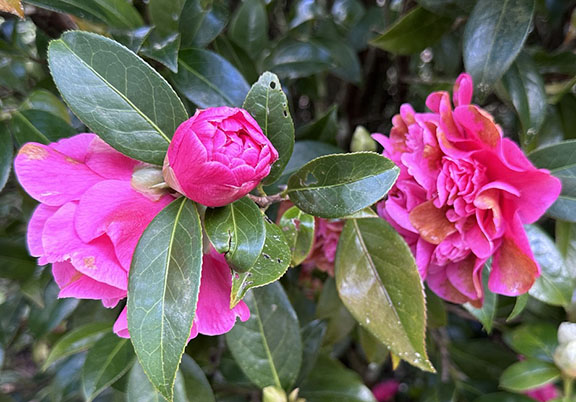
It is camelia time here too. You can see camellias growing in gardens all over the Wellington Kapiti Coast area.
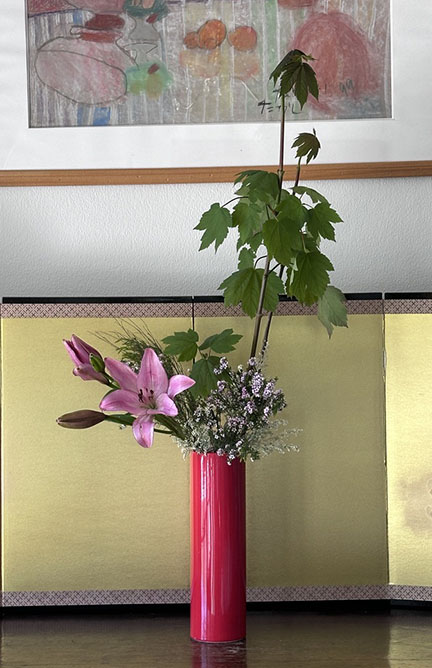
I have always wanted to learn ikebana, the art of Japanese flower arranging. There are many types of Ikebana. In Wellington, the Ikebana Society is of the Sogetsu style, which is considered a bit more bold and inventive. I signed up to learn with a Japanese teacher and we are having a lot of fun. She keeps asking me if I have ever had lessons because it seems like I know what I am doing. What I tell her is that I was born to arrange flowers. I started an Instagram page to share my progress. https://www.instagram.com/mk.schmidt/
Although it is generally temperate, winter here can be pretty cold and gloomy. There is no snow in our region but we are blessed with lots of clouds, rain and icy, brisk (often gale force) winds from the south, and by south I mean Antarctica. The gloomy, cold weather pushes most people to head for warmer climes come July and August.
We are not far from some tropical islands in the South Pacific, although, truth be told, New Zealand is not really close to anywhere. Our preference is French Polynesia with their over the water bungalows and good snorkeling. What is not to like? But those islands are quite a ways away, so we looked around and decided we would give Fiji a try. It is close by and we have never been.
I did a little research and concluded we should try one of the secondary islands just for a different experience. I found a resort that had partnered with Jean Michael Cousteau, (Jacque Cousteau’s son), to create a sustainable eco-resort. Located on the island of Savusavu, the second largest island in the Fijian chain, it is operated in cooperation with the local tribe, many of whom work at the resort. There were numerous activities offered for free and most importantly, it was located near some of the best coral reefs in the South Pacific including the Namena Marine Reserve. We were all in for this. A half day away, and a place we had never been, we packed up the flippers and snorkel masks and boarded a plane.
Unfortunately, the weather for the week was much like we had left behind–windy, rainy, cloudy. The only difference was that Fiji was warm. But with the strong winds, there was little opportunity to head out beyond the reef surrounding the island. Visiting the marine reserve or any of the other coral reef spots is entirely weather dependent and it was simply too rough to be out on a boat let alone snorkeling. The one day we did try to snorkel from a boat the water was so rough, I nearly lost my fins. We decided it was better all the way around to stay near the shore and snorkel the resort’s growing coral garden. It had some remarkably varied fish and we did not have to worry about being pulled away by strong currents.
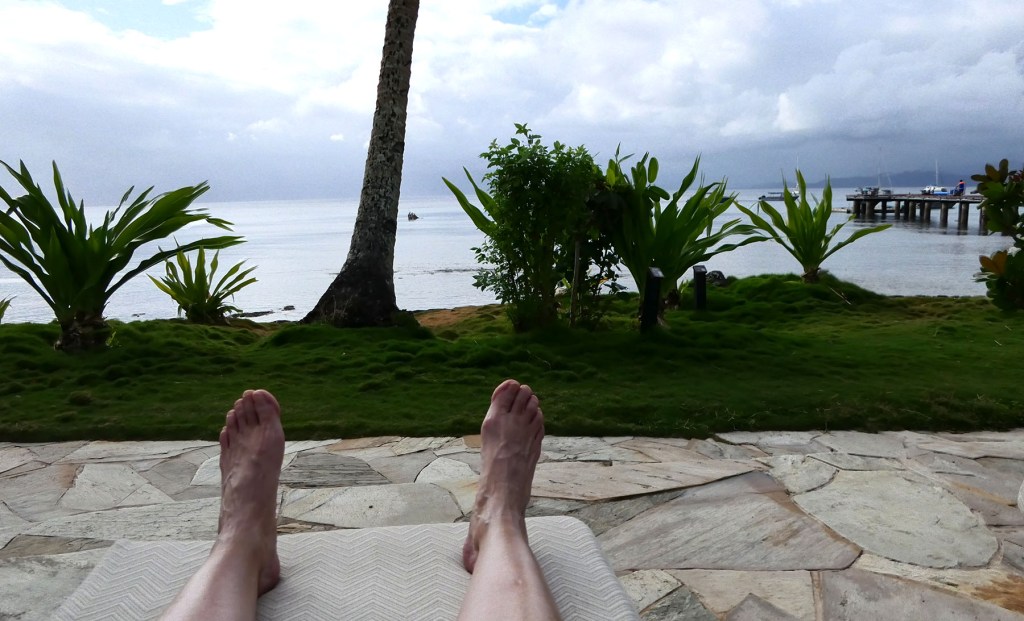
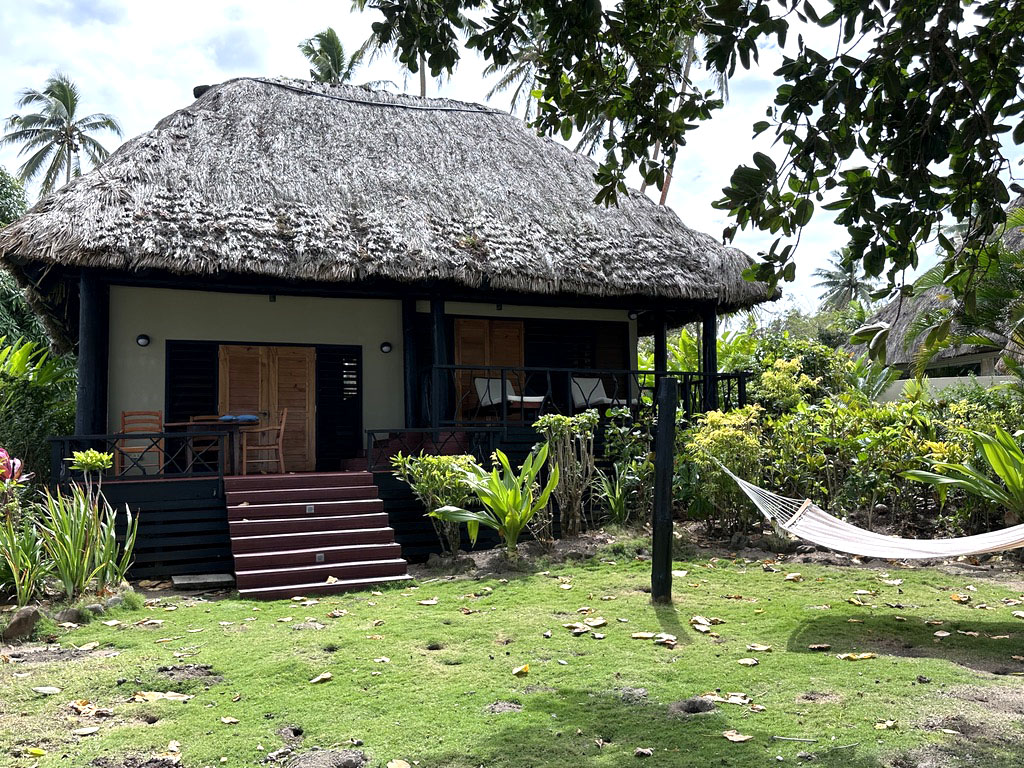
The resort guest rooms were bures or bungalows. When we arrived, we learned they had upgraded us to a bure on Breezy Point. This name had real meaning. While we had a good view, the strong winds kept us off the front porch.
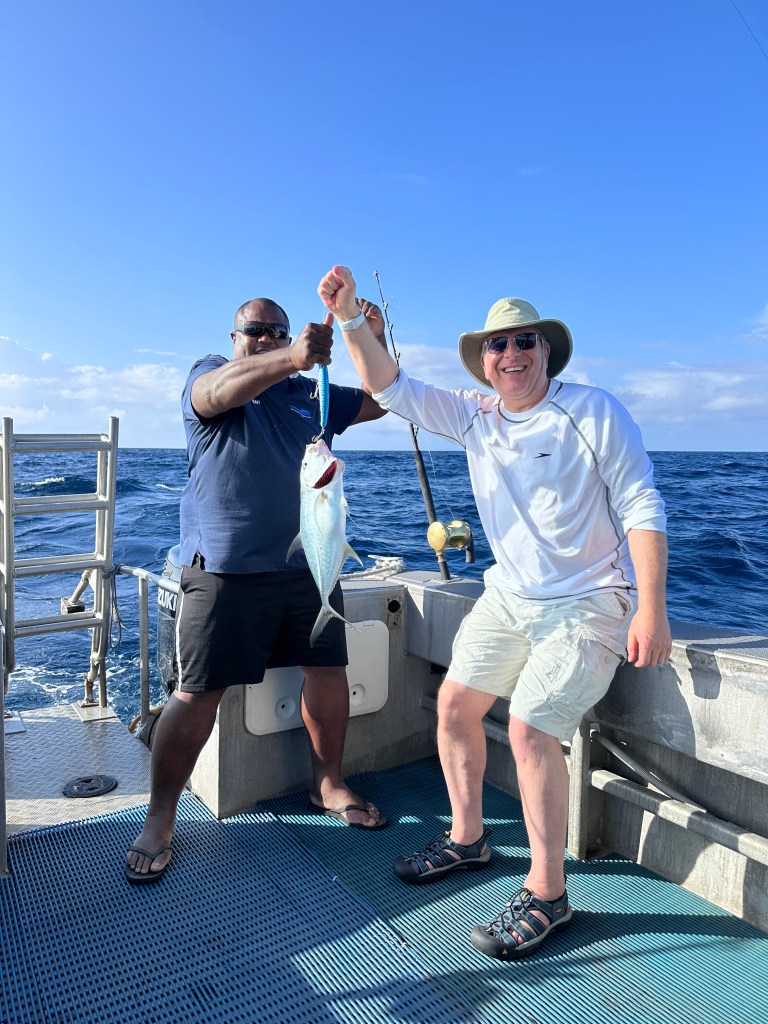
We did luck out with a fishing trip. The morning was forecast to be clear until noon when the rain showers would move in. We sped out, dropped our lines, and hoped for a catch. I got lucky and caught a yellow fin tuna, about eight pounds. Matt caught a trevally and we lost a mahi mahi as we were bringing it onto the boat. So we had a good day.
Matt with trevallyMarsha and yellow tail tuna
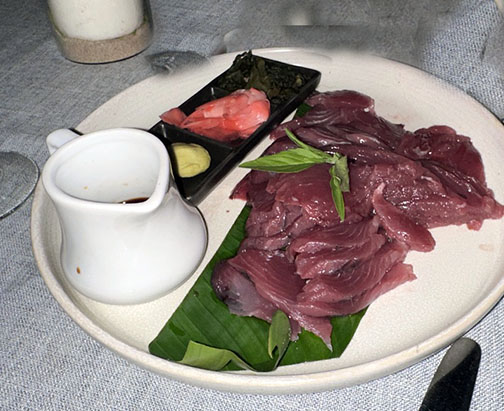
We left the trevally with the boat captain and took the tuna to the chef who agreed to prepare it for us. That is as fresh as fish can get. We got two dinners out of it, appetizers and dinner—sashimi and grilled tuna one night and ceviche and curry the next night. It was delicious. (There was no option to freeze the fish and ship it home. They had never heard of such a thing.)
Fresh tuna sashimi. Yep, that is raw tuna. And we ate it all.
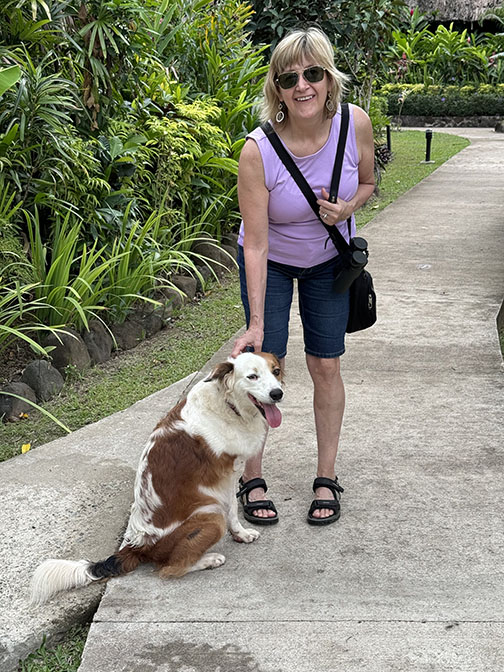
With the rain, we were left to find things to do. To bide our time, we did a lot of reading and bird watching. I made friends with a three legged dog. I named him Lucky. He was missing his right front leg but he hopped along pretty well. He followed me around the resort and stayed on our porch while we were there.
The resort did what it could to keep us engaged because there was not much to do on the island separate from the resort. The local town seemed pretty down and out, certainly not a tourist town. There were few shops or restaurants or businesses offering vacation activities. The only option seemed to be to take what the resort offered.
One excursion took us for a visit to the local tribal village. Here is how ignorant I am about Fiji. I had no idea they still had tribes. Well, they do. This village was governed by a hereditary chief. We were told that the national and local governments have to get his permission if they want to do any kind of development or construction in the Tribe’s territory. I know a few tribes in the U.S> who wish for the same thing.
Here is the chief leading a welcome song, a cappella singing by the villagers was hard not to love.
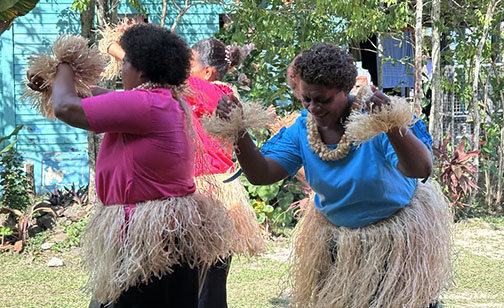
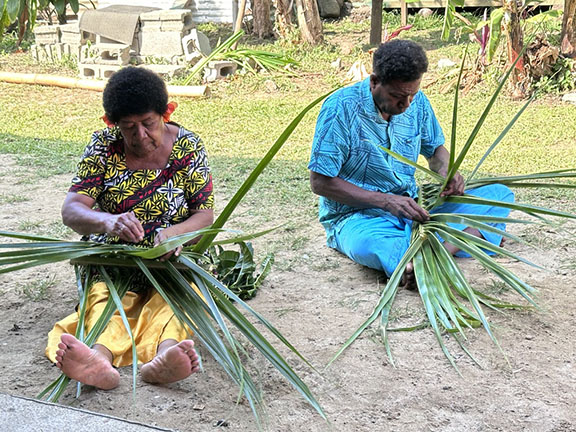
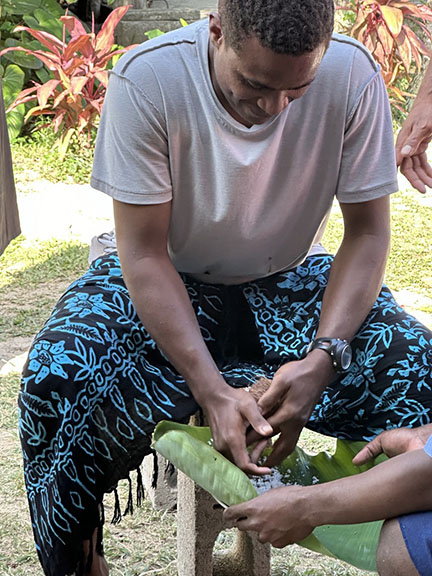
On our visit to the village, we learned about traditional Fijian crafts, dance and songs.
These ladies were having a great time.
He is making a male basket, she is making one used by the ladies. I was not clear why they had to be different.
Here they are showing us how to get the coconut meat out of the coconut using a sharpened bamboo pole. The coconut bowl is scrapped in a circular motion. I tried this at the resort and it was harder than it looked.
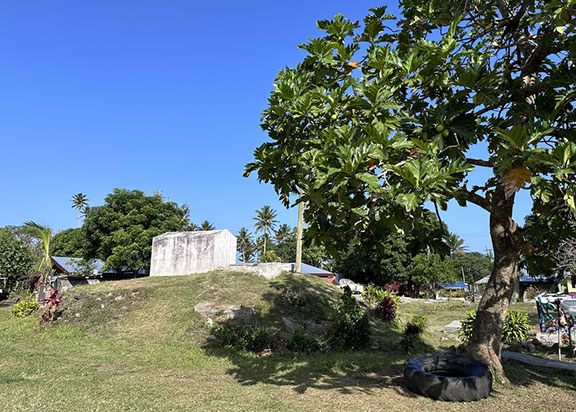
They took us for a walk around the village. Here is the cemetery and the hereditary chiefs’ burial crypt.
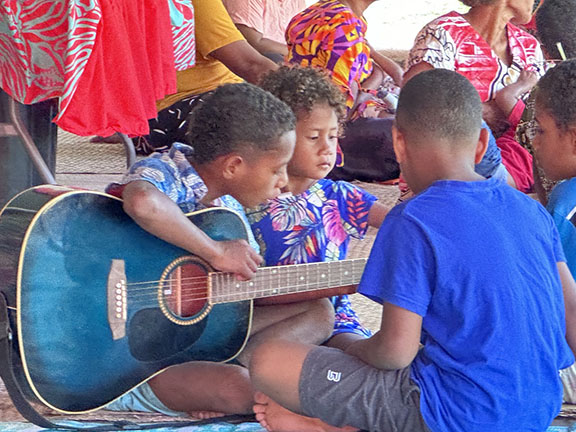
The guitar is bigger than him! I am thinking he is a future chief.
Back at the resort, the tourist entertainment factor was very high. I usually frown on this kind of stuff as exploitative, but when you have no other choice, you kind of go along with it. They seemed to be having fun showing us their culture.
Every night at dinner, they had a ceremony with one person playing a giant wooden drum (a hollowed-out tree trunk) while another person dressed as a traditional Fijian and lighted the tiki torches in a dramatic flame twirling dance.
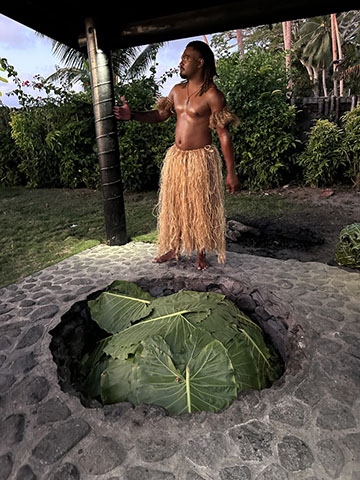
On another night the resort prepared a Fijian Barbecue in an underground oven called “lovo.”
the lovo
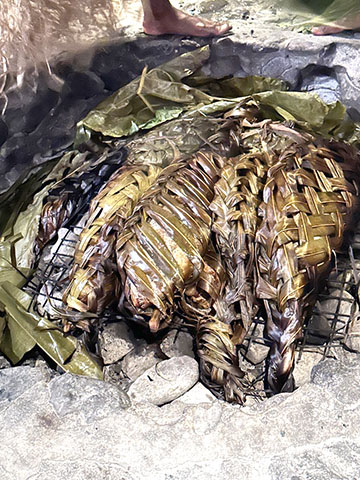
Similar to the Hawaiian imu used to make a feast for a barbecue, the food was cooked in a pit covered with hot coals and palm fronds and left to cook for hours. The result was tasty meat and root vegetables.
meat and chickens wrapped in palm leaves emerge from the oven
Then there was the kava ceremony. Usually, a tribal chief prepares kava for visitors to his village. Kava is an herbal plant used to make a drink that is claimed to be a calming and relaxing. It is very popular in the South Pacific and with herbalists worldwide. In the U.S., the advice is to drink it with caution because consuming too much can cause liver damage. In some states, it is a controlled substance.
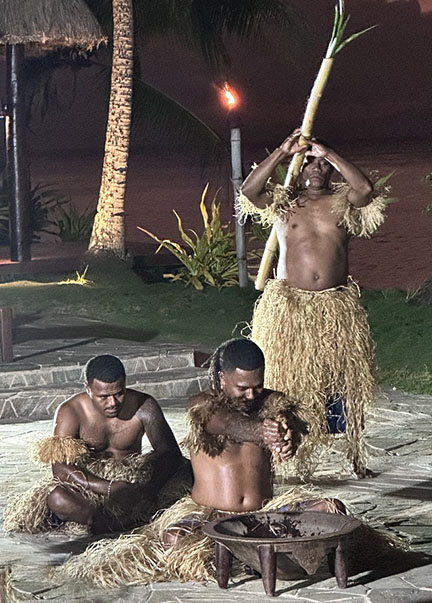
The drink is prepared in an elaborate ritual that includes the offering of kava root to the chief and the chief using a round bowl known as a tanoa to prepare the drink. The local chief had given permission to the resort to depict the ritual. The kava root is soaked in water and then, after steeping, it is squeezed dry into the tanoa and cups are filled.
squeezing the kava root over the tanoa
The ceremony requires the visitor to clap once to announce an interest in sharing the drink. After drinking the kava, the visitor claps three times to say thank you (at least that is how I understood it). While we did not get to participate in the formal ceremony, we still had options to try it. Every night, the local musicians, who entertained while we dined, also prepared kava that you could try. The drink tasted like ground soil and root. It numbed my tongue. I felt a small sense of calm but nothing terribly dramatic. But the musicians, who had been drinking it all night, looked pretty stoned. I brought some home to try.
On our last night, they had a hermit crab race to raise money fora local charity. We were all in, betting good money on the crabs we had selected to win the race. We were the only adults participating. It made me wonder if parents avoid activities that they think are for their kids. It was weird. Well, we had fun even though my crab lost.
That was about it. The weather prevented us from venturing to some of the best coral reefs in the area so we made do.
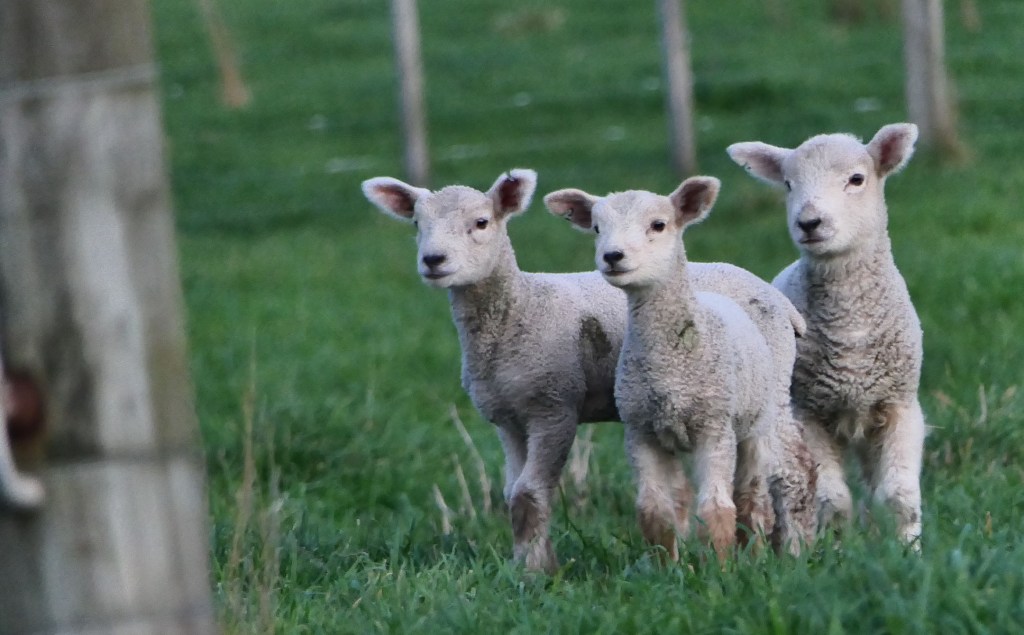
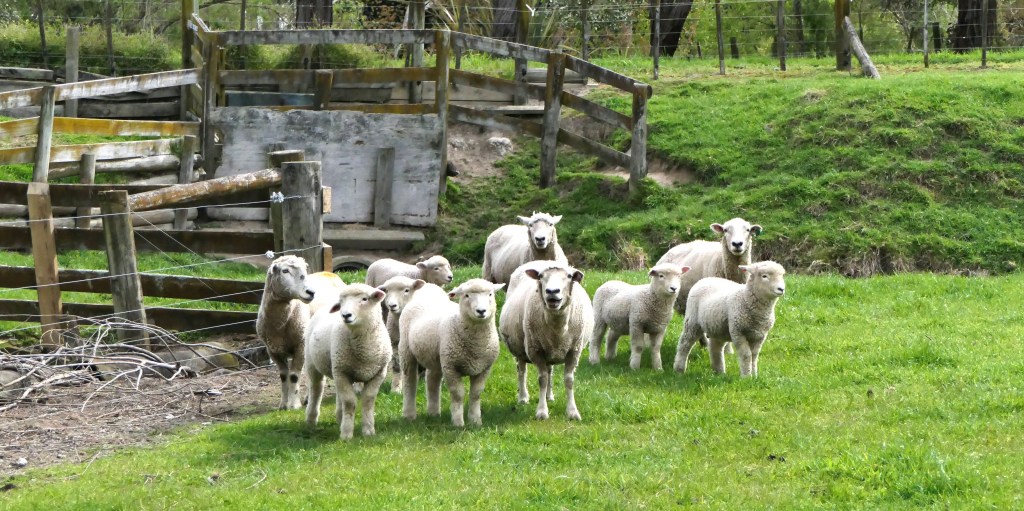
I have been trying to collect lamb pictures in the hopes that I can create some interesting cards to sell to tourists. It is lambing season so there are tiny lambs bounding around the pastures. They are just adorable. See?
Babies taking a rest from bounding and playing.
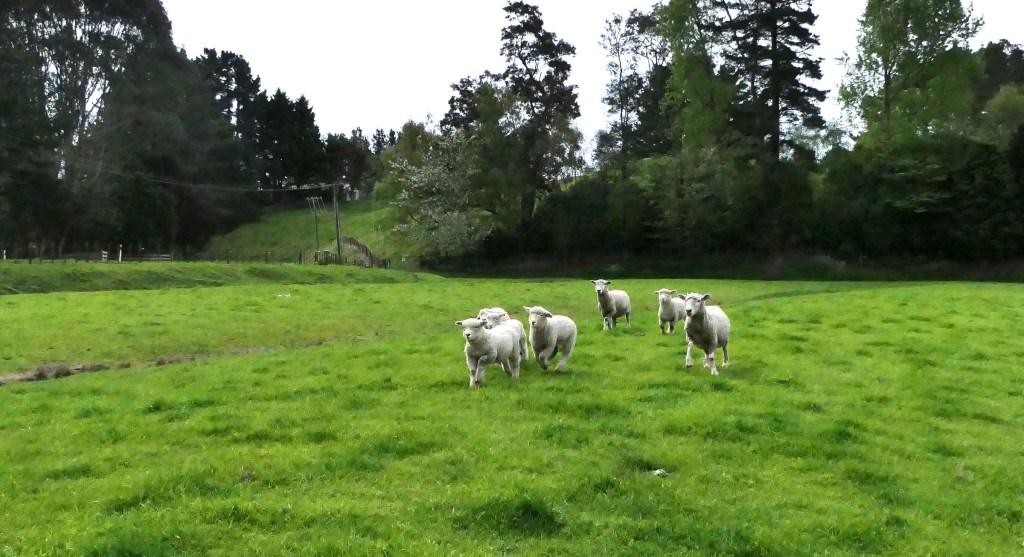
In a stroke of luck, as I was taking pictures from the side of the road, the family at a farm nearby saw me and suggested I go into their sheep pasture to take some photos up close and personal. Their daughter Olive led me into the pasture. She had a feed bucket and when she shook it, they came running.
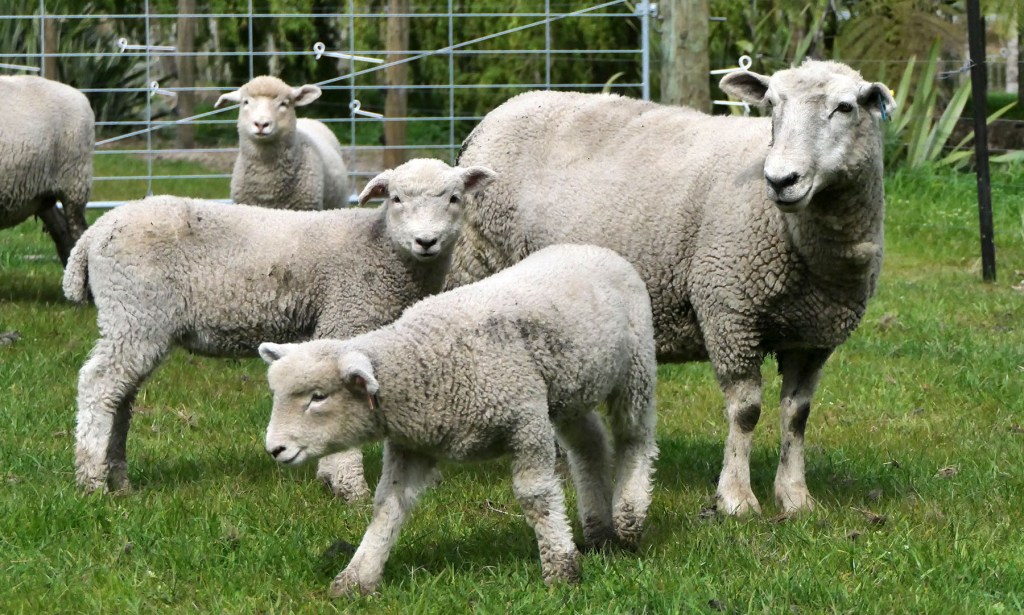
We had some poses and I petted some heads.
They were on the alert the entire time for more feed from the bucket.
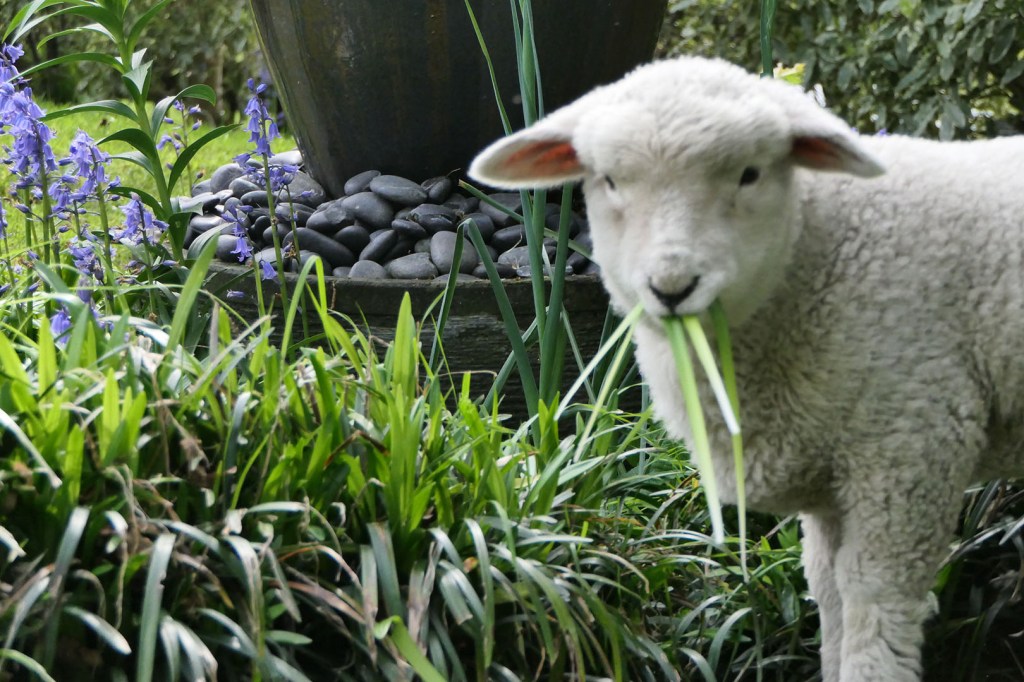
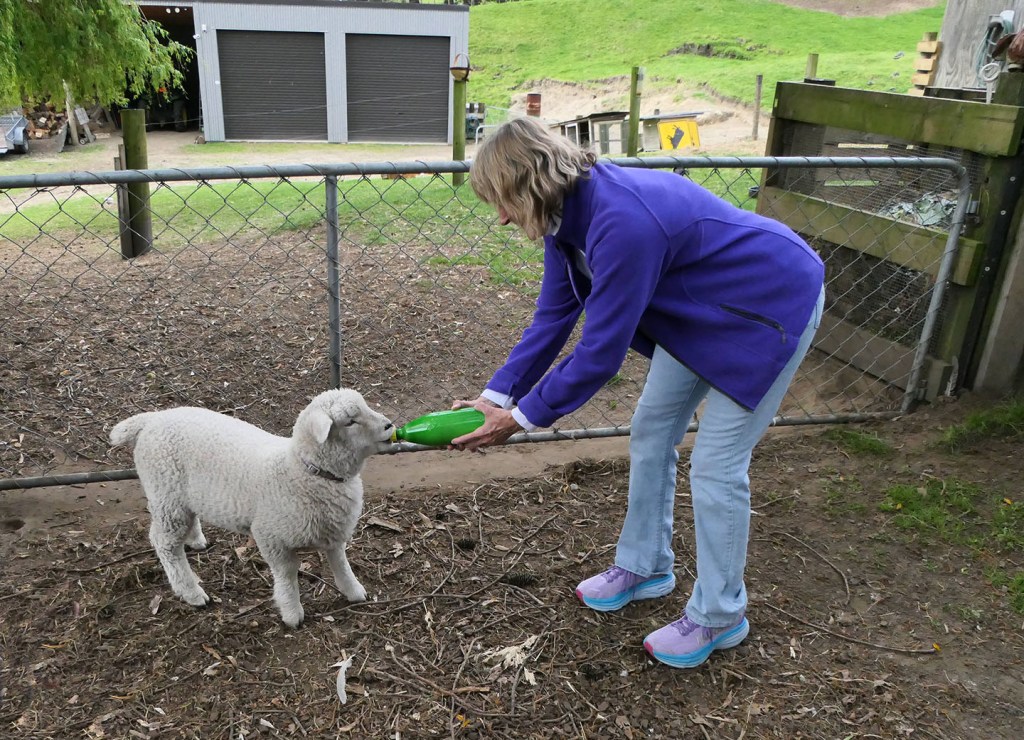
While I was there, they offered to let me feed a bottle to a little lamb the daughter was raising. This lamb liked to snack on flowers.
just adorable
He also liked the bottle. The daughter gave me some pointers on how to hold it.
How lucky am I? I live in sheep country and I love seeing sheep grazing in the green fields. It is so calming and it makes me smile. I never tire of it.
Look, I am a foodie. I think about food–preparing it and savoring it–all the time. I can’t help myself. I think of it as part of my creative repertoire and part of my curiosity. I love to try food from anywhere. Food has my attention. So, bear with me as I go on about food.
Sausage. Early on I posted a complaint about the terrible sausage they have in this country, which is ironic since it is one of their main food staples. They love their sausages. My issue is that they all have the consistency of hot dogs and lack vibrant seasoning.
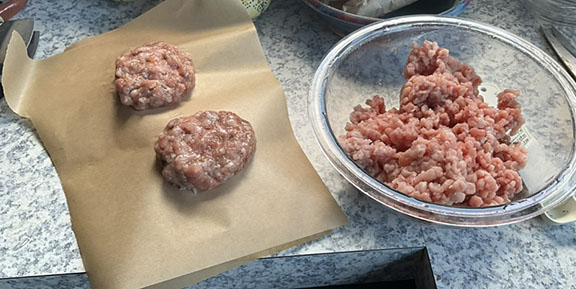
Many of you suggested I just make my own sausage. Well, I heeded your advice, bought a meat grinder, and have been trying to work out Italian and breakfast sausage. I have the flavor down for sure. But I had a difficult time locating pork shoulder. I found legs (basically ham), loins, roasts, none with the right amount of fat. I think I finally located the right cut, and I will report back. The process is ongoing.
Biscuits and Pie Crust. I think I have discovered the two foods that they are missing here that truly makes me sad for them—buttermilk biscuits and flaky pie crusts. They have “biscuits” which are cookies. And they have scones, which are dense biscuits. But they do not have good old fashionedbuttermilk biscuits. They don’t even know what they are! We take them for granted in the U.S., but we sure do feel their absence here. My oven is entirely untrustworthy but I have been baking them from scratch because when I realize the absence of biscuits, I just want them even more. I think that the next time we are invited to a potluck, which they call “bring a plate,” I am going to bring biscuits and open some eyes.
As for pie crusts, mamma mia! How much time do we spend in the U.S. arguing about pie crust. Here there does not seem to be an argument. They eat a lot of pies. Pies are served for breakfast, lunch, and dinner. But their flaky crusts are made from puff pastry or a short bread which is kind of like pie crust but not. So far as I can tell, and I have not visited every bakery in the country, a flaky pie crust with layers of butter and flour that we savor as we fill them with cherries or pecans or apples, does not exist here. So sad.
Cereal. Good Lord, they need help on this one. There was actually an article in the paper about an American kid doing tik toks on NZ cereal and how awful it is. Kid, you are so right. Why are they awful? Well, let’s start with the comparison to cardboard. Just chewing and chewing a flavorless mess of nuts, oats and a lot of unidentifiable crumbs. The real crime is that they have “Cheerios” here. From what I understand, Cheerios licensed their manufacture to a company here in NZ. I think General Mills may have omitted a key ingredient. Otherwise, how can you get Cheerios wrong? How is that possible? I don’t know. But somehow they have managed to produce little tasteless Os. We finally stopped trying to like the cereal here and started to import all of our cereal.
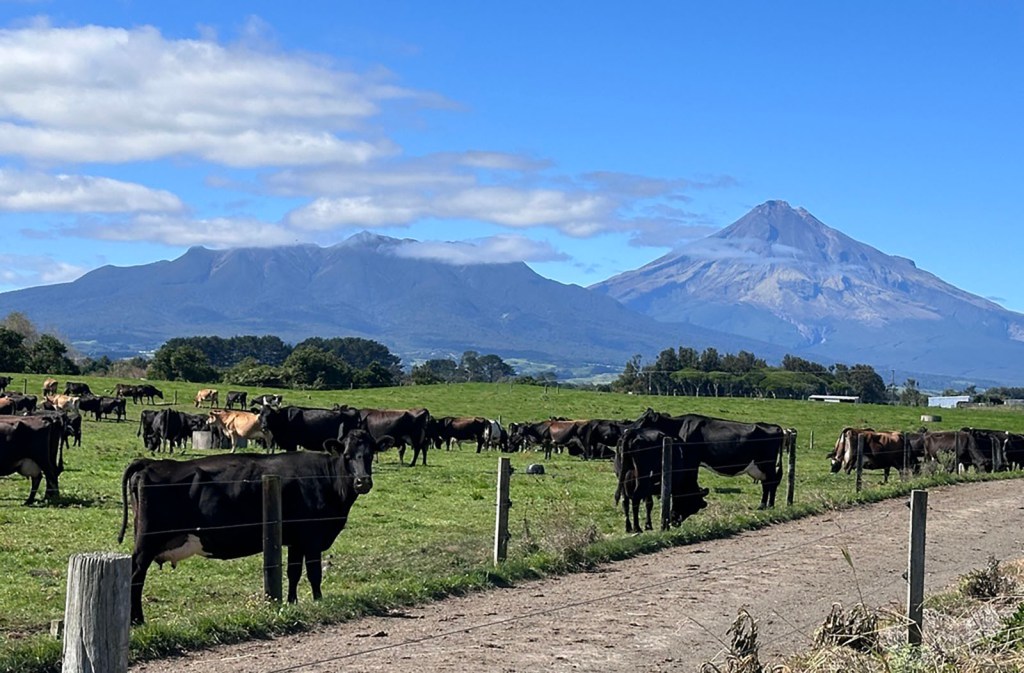
Okay. Okay. We get it. You don’t like Kiwi food. But there has to be something they do well, isn’t there? Yes, there are a few things. Most of their dairy products are superb. New Zealand has a huge dairy industry, and they do it right. We live right next to the cows, so I can attest to their diet and treatment. Here are our neighbors. Look at her checking me out. She never stopped watching me.
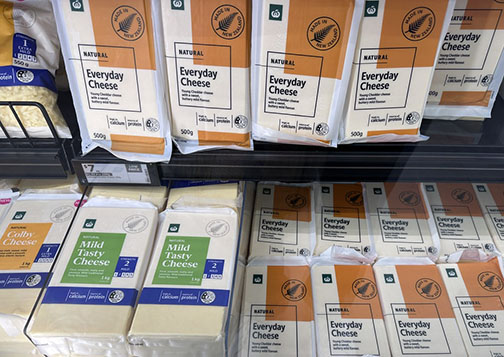
The milk is delicious, as is ice cream, yogurt, and butter. The cheese is good. My only complaint is that the selection is a bit limited. You are talking a million different versions of cheddar, havarti, and gouda. These are flavored with smoke or chilies or cumin, (an NZ favorite spice), or other spices. Then there is an entire cheese section made up of cheese called “tasty,” which I think is along the lines of American cheese/Velveeta. (I am afraid to try it.) Then there is “everyday cheese.” Oh, my. Call me suspicious. You might find a few other cheeses like mozzarella, blue and feta. But if you are looking for anything even a little out of the ordinary, that will take a trip to a specialty shop, which may or may not have what you want. To this day I have been unable to locate Monterey jack cheese for nachos. I am stuck with cheddar and havarti. Still, the dairy foods here are superb.
In the U.S., Meyer lemons are a thing—prized and available only in winter months. Here, everyone has a Meyer lemon tree in their backyard, including us. That is very convenient and fun. I love having a lemon tree. This means we have Meyer lemons very nearly year-round.
Of course, they know how to produce lamb and venison. These are big exports to the U.S. markets. If you like those meats, this is the place for it. Like the dairy cows, I know how the lamb is raised. I see sheep every day munching away in pastures.
My biggest shout out would be to their potato chips. I am a big fan of chips and they have them mastered with a perfect crunch and flavor. Really just so good.
For years I joked that I was going to move to New Zealand and help the Maori. Well, I moved to New Zealand and I have been helping the Maori. I am not qualified to be an attorney in New Zealand and I certainly don’t want to be. I am fine not working thank you. But somehow, I was sucked into helping with a case for a tribe located in a nearby town.
New Zealand’s founding document is the agreement known as the Treaty of Waitangi. Signed in 1846, the British Crown and the Native inhabitants, the Maori agreed that the Crown was there for good but the Maori would be left alone. To summarize, and this is a very unnuanced statement, this treaty gave the Crown the right to exercise sovereign rule over New Zealand with the proviso that the Maori would continue to have self-government over their own tribes. The problem is that the Maori, without really understanding it, gave away their land title and they gave the Crown the right to govern the country. I say “without understanding” because, as was true of all indigenous communities, the Maori concept of ownership and authority over land and the British understanding of those concepts were two very different things. As happened in any country that purported to engage in sincere treaty agreements, the ensuing settlement of Europeans onto indigenous land resulted in non-native dominance and the native population decimation.
New Zealand has sought to make some amends for the terrible history here and part if it is the Waitangi Tribunal—an entity where Maori tribes or iwi can make claims for lost land, breaches of the Treaty, and other harms caused by settlement and exploitation. The Tribunal then makes a report as to whether the claim is valid. The Tribunal can also be asked to look at remedies which can be recommended to the Crown. In some circumstances, the Tribunal can issue orders but that seems to be a last resort. Their goal is settlement of claims once they have been aired and examined.
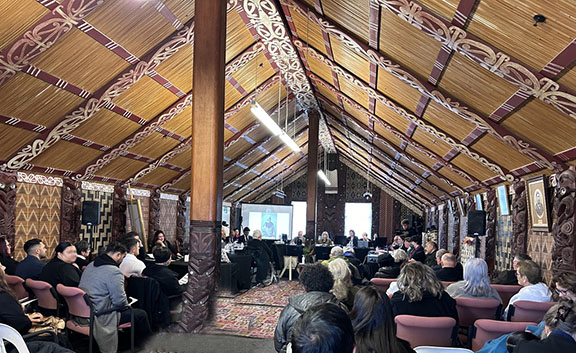
So how did I get involved? I was reading the local paper–they actually still have local newspapers here–and I saw a notice that a Tribunal hearing was going to take place nearby. I decided it might be fun to go and see what goes on. That is one of my traits. I really like to see what goes on. One early morning I set out for the marae, which is the tribe’s meeting house and communal center, to attend the hearing. I stopped to ask if it would be okay for me, not a tribal member and not a Maori, to attend the hearing inside the marae. Everyone said it was fine. I took off my shoes and entered. The marae was crowded with members of the iwi sitting on benches shoulder to shoulder. People were greeting each other with kisses on the cheek between women and the nose greeting or hongi with men. The space was decorated with carvings of Maori gods and painted in a scroll design known askōwhaiwhai.
I squeezed onto a bench in the back and watched the show. There were legal representatives of the New Zealand Government or Crown, three judges, and some experts. The claimants read their written testimony into the record and then answered questions presented by the Crown and the panel. It was not exciting, but hearings rarely are unless you are completely absorbed in the issue.
But there was one aspect of the hearing that was delightful. After testimony, and at breaks, the tribal members sang songs. It is often said that a day is court at least allows a person to be heard. By singing, they were making their voices heard. Everyone stood and clapped and sang full throated as if they were a church choir. I don’t know what the songs were about since they were singing in Maori. It struck me that they were singing of being together with a hopeful plea to the Gods to render a decision in their favor. Imagine this happening in a U.S. court of any kind–a family or group of claimants breaking out into song at the end of testimony. Order in the Court! would be the cry. Setting aside where this was happening, gosh, we as a culture have lost so much having moved away from informal sing alongs.
The hearing was stopped for tea at around 11a.m. and then again for lunch at around 12:30. At the break, I introduced myself to the attorney representing the claiming tribe explaining that I had worked in Indian law in the United States, particularly a land claim. The attorney nodded politely until I mentioned the land claim. Then she sprang to attention, her eyes focused on me. She asked for my number and said she would contact me. I did not think anything of it and assumed that maybe we would have lunch some time.
About a week later I received a call from the attorney. She asked if I could come to her office for a meeting. She wanted to discuss the claims with me. I agreed to come by. I learned that she was desperate for help because some attorneys she had working for her had gone off to other jobs leaving her short staffed. She figured that with my experience I would not need much in the way of education.
The assignment was to read three expert reports, amounting to hundreds of pages of text, absorb it and wring out of it a coherent factual narrative to support the claim for land and damages. Oh, and I had a week to do it. One week to learn everything I could about the history of a claim, and regurgitate it into a witness statement. By the time I learned the deadline, it was too late to say, I pass. In any case, I am pretty sure she was not going to take no for an answer. I took the reports and drove home.
I have not really worked hard in about two years and I had to absolutely crash into the texts, reading as fast as I could and making judgments about what was or was not important. I had a set of guidelines as to which facts were necessary, so I had some clue as to what I was looking for. But what made it harder was the use of Maori words in the text. I do not speak Maori, not even a little. But here were expert reports filled with Maori concepts that are embedded in the Maori language. So I did what any normal person would do. I located a Maori dictionary on the internet and started translating the document. In this project, I was not only learning the history of the area I live in—the Maori tribes who occupied the area, the uses of the land and river the actions of the British to take it all away—I was also learning Maori.
Even more challenging, once I had read the reports, I had to write a factual statement to be delivered by a Maori witness that had to include the concepts and the language. I made a cheat sheet of recurring words and forced my brain to incorporate the concepts into the narrative.
I have not busted my butt like that for a while and honestly, I did not like it. I had forgotten what it is like to have to sit at a desk and get something done on a deadline. I am anti-deadline at this point in my life. I am all about fluidity and serendipity. Whatever comes along. And if something comes along and I can’t take advantage of it because I have to sit at a desk and be responsible, oh, that just makes me irritated.
On the other hand, I was helping a Maori tribe get some vindication for the wrongful actions of the Brits oh so long ago. No surprise that they took Maori land by settlement and the assumption that the land title ultimately belonged to the conqueror. Maori fishing rights were significantly impacted by damages to the river and streams from which they gathered their food. It is the same old story no matter the country.
So I pushed on and pumped out a draft statement in four days. I explained that the area was conquered by a mighty chief who brought his people from the north to settle along the river. I explained that eel was a very important part of the Maori diet but that river dredging had damaged the fishery. I explained that flax, which grows everywhere here, was an important trading good. The Europeans wanted it for linen. Gathering flax was done communally and it was important to the tribe’s cohesion. But it soon became an industry with the Europeans, and the Tribe lost that connection to the plant and to each other.
I learned a lot and I found it very interesting. I think it met the goal of establishing the Tribe’s connection to the land and river. About a month later, I attended the hearing at which the witness read the statement into the record. I was happy I could get it done for them and I hope they win something.
Am I finished with the Maori claim work? I have no idea.
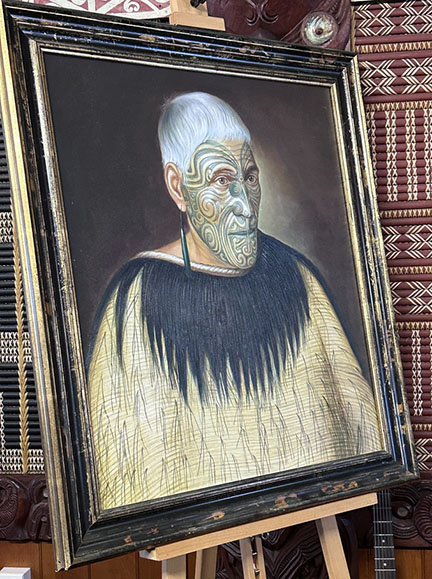
The Tribe’s long ago spiritual leader. Now that is a tattoo.
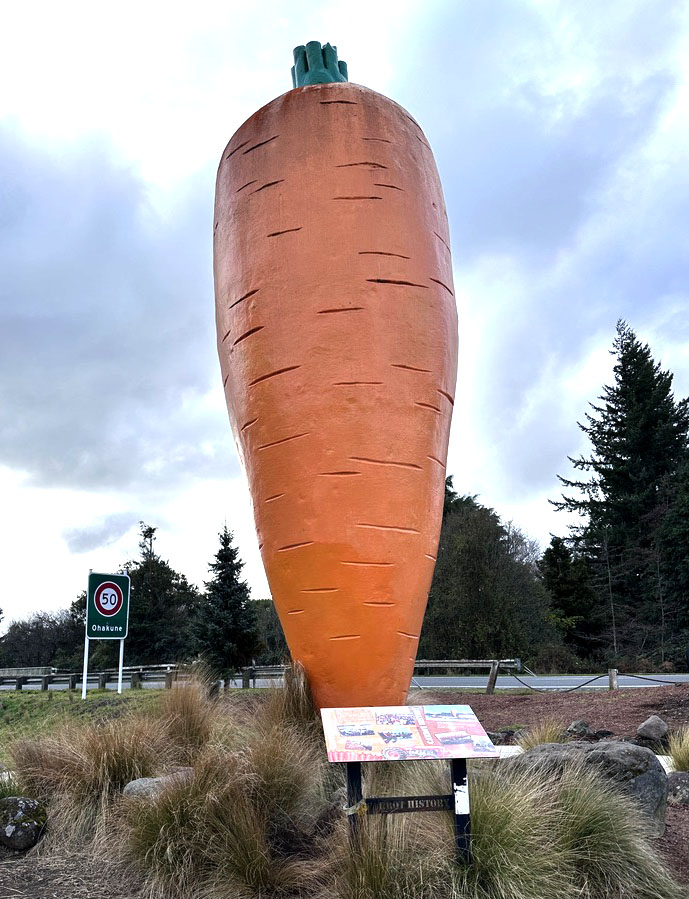
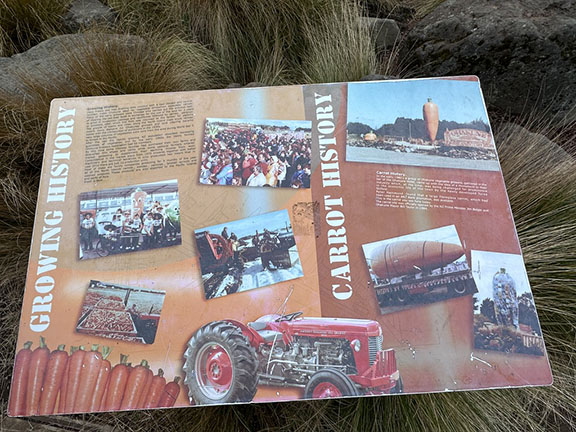
Then came the Giant Carrot. Drum roll please, here it is:
Driving around the volcanoes, we headed into Ohakune, a small town that serves as an access point to the park and the Ruapehu ski fields. We stopped at a local café for coffee and noticed the café had a lot of carrot-related stuff–carrot trinkets, carrot cake, carrot smoothies. I had noticed a sign coming into town about a carrot carnival, so I asked if this was carrot country. The waiter said, yes it is. Go see the giant carrot. It is just down the street. We hurried back into the car. If there was a giant carrot, I had gaze upon it.
The story goes: in 1984, a giant carrot was built for a bank commercial. The locals decided their efforts as the beta carotene source for the country should be recognized, so they asked the bank if they could have the carrot. After it had served its purpose, the bank donated it to Ohakune. The town welcomed the largest vegetable in New Zealand with a parade and a park, making it a centerpiece of their town. It is now one of the biggest tourists draws in the area. There is even a Carrot Carnival in June to celebrate the town’s heritage. We might have to attend that one.
After that excitement, it was time to focus on getting home. What a trip!
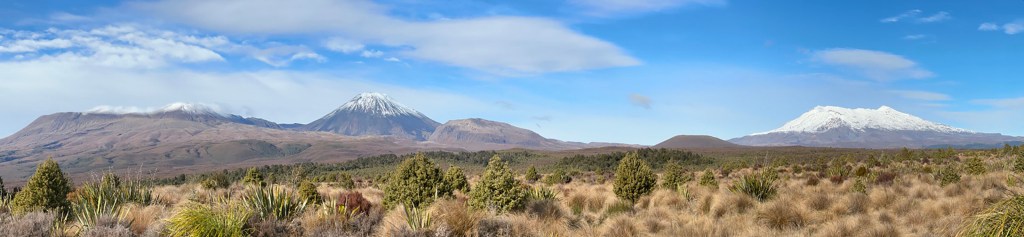
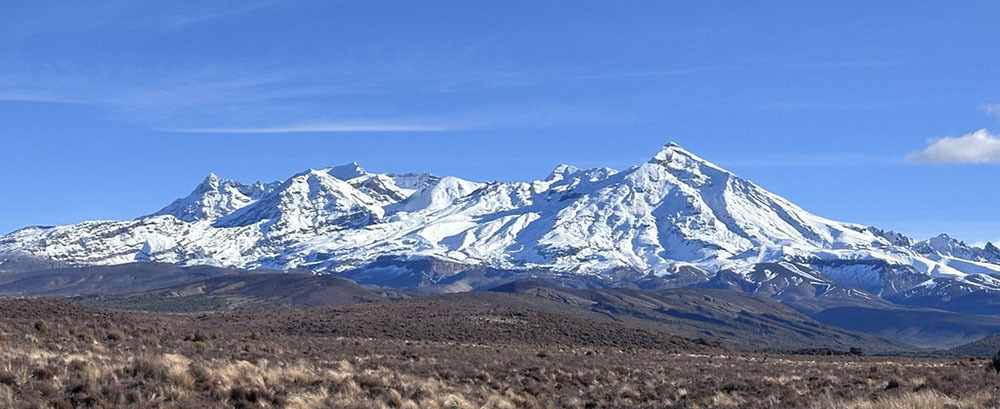
Three volcanoes – left to right Tongariro, Ngauruhoe, Ruapehu
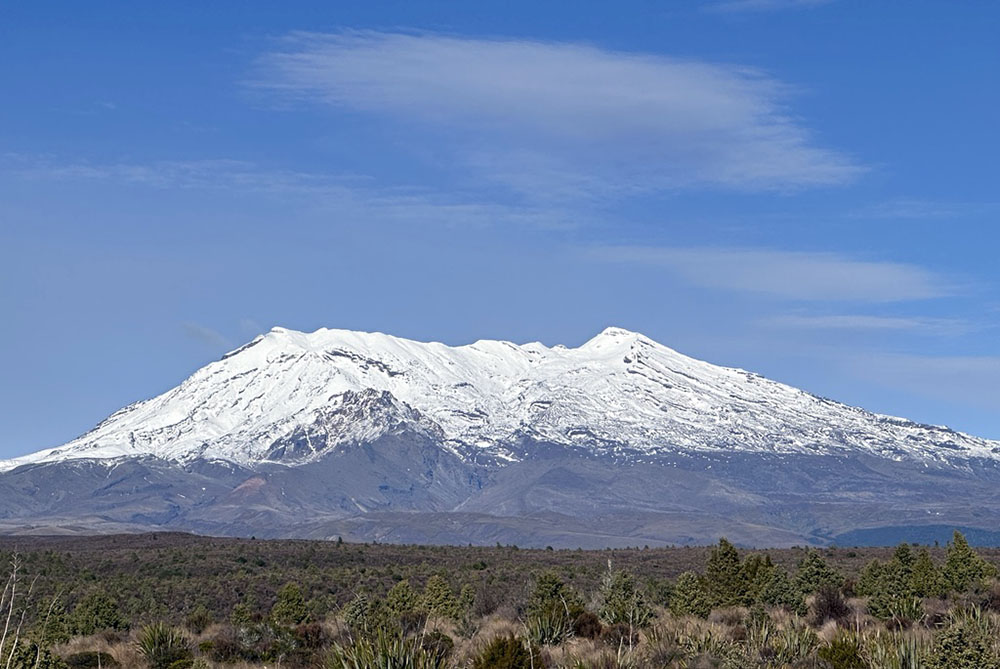
Now it was time to head back home. With Rotorua behind us, we veered off to drive through Tongariro National Park, the oldest National Park in New Zealand. It is home to three volcanoes Tongariro, Ngauruhoe (pronounced Nah-ru-ho-ā) and Ruapehu (Roo-a-pay-hoo). Ruapehu is an active volcano, last erupting in 2012. It is also the location of a popular ski resort.
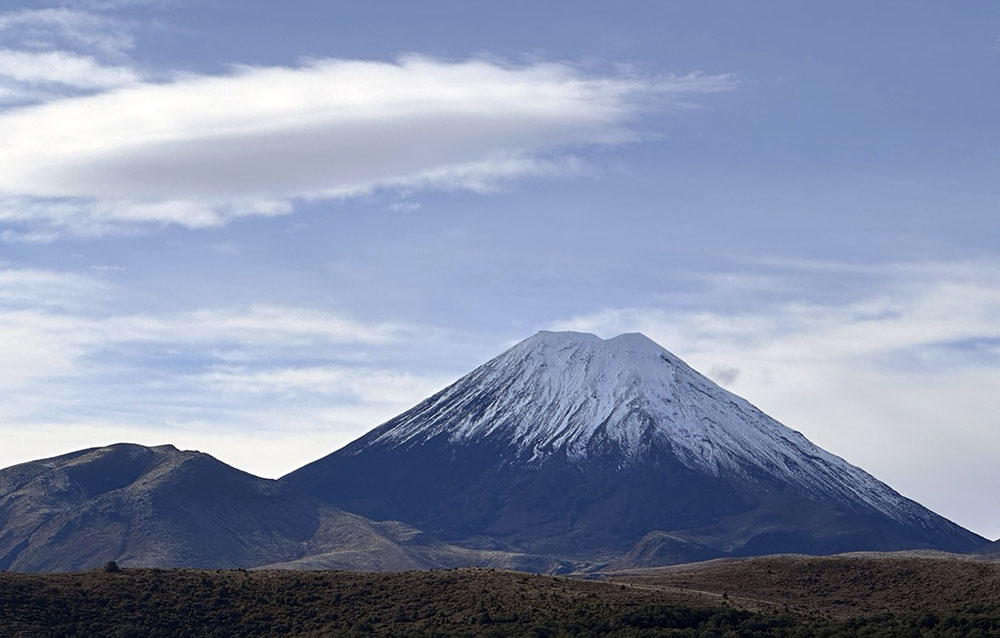
On the way to Rotorua, we passed on the southeast side. On the way home we decided to do a circumnavigation and see them from all sides. What a joy! I could take pictures of volcanoes all day. At this time of the year, they have the bright white snow-cap that sets off the always amazing New Zealand blue sky. For me, they are the supermodels of landscape photography because they are not just mountains. They are stories of the earth’s formation and the underlying forces that made them. I yelled Stop! every two minutes to get yet another shot until we finally had them out of our view.
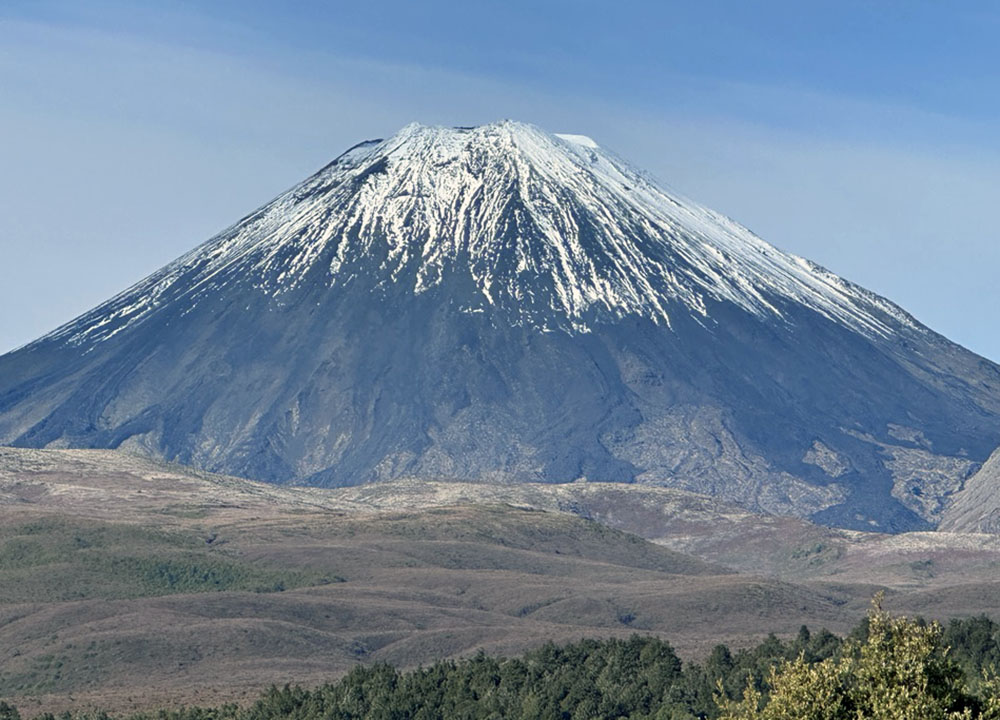
If this looks familiar that’s because this is Mount Doom LOTRRuapehu Ruapehu other side
Ngauruhoe with forming lenticular cloud. You can see why these may be mistaken for UFOs
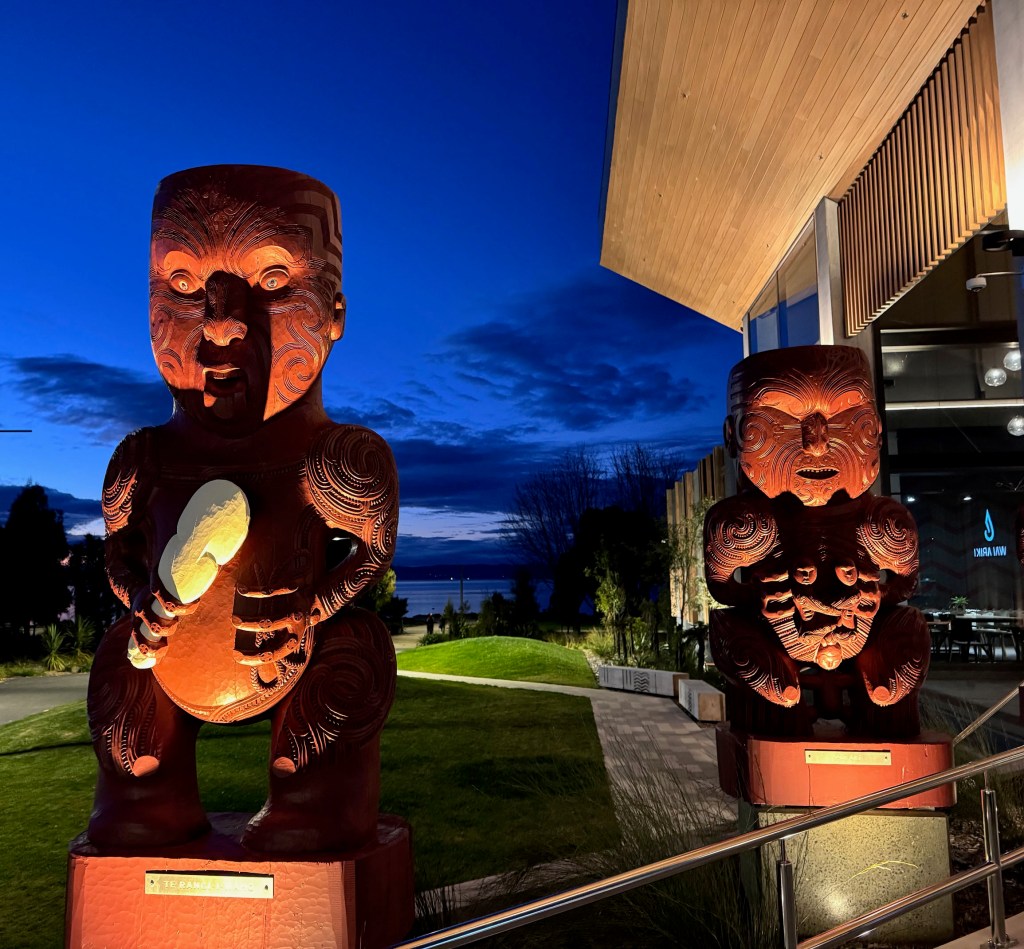
Next on the agenda was spa day at Wai Ariki, a new spa built by the local iwi (tribe). We booked the works. First the “restorative journey”—a series of pools, showers, saunas, ice baths, herbal baths, and mud. At the fire and ice room, we went back and forth from the hot saunas to cold dips, including an ice room where ice chips were offered as rub. Even better, buckets filled with ice water were hanging from the ceiling. With one yank of a rope, frigid water poured over your head. There was a lot of screaming involved in that one. But it really is invigorating to go from hot to cold.
The water menu continued to the natural geothermal pools. The pools were located in an open pavilion and, being winter, the air was crisp. There were different pools with different temperatures and different mineral contents. One pool had jets and waterfalls and others had calm still waters. An herbal pool was suffused with traditional Maori healing herbs. A separate room offered the joys of mud. Matt skipped the mud bath. I went for it and rubbed it all over. It felt good but it was really messy and hard to wash off.
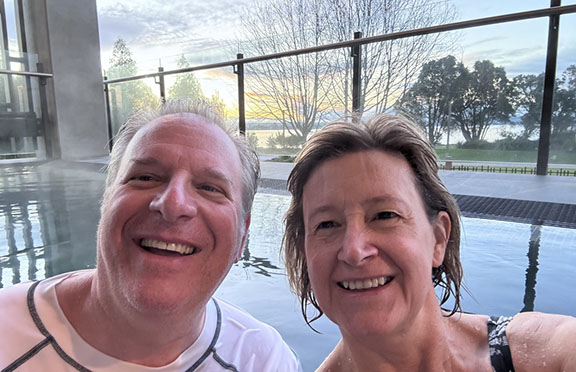
All of this took about 90 minutes. Then another 90 minutes for massages and voila, relaxation, soft muscles, and calm mind. We ended the day in another set of pools while we watched the sunset.
Beet red from the to water.
What a great day. And it was only getting started. We had a forest to visit.
Redwoods Tree Walk
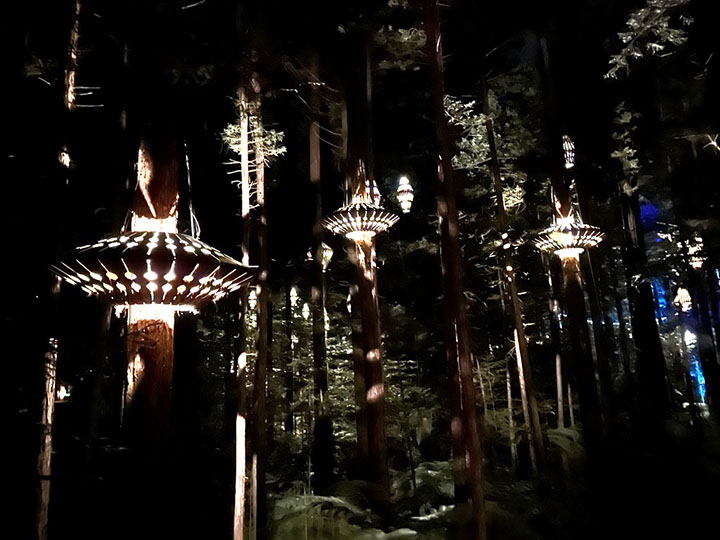
After dinner at Atticus Finch (yes, the name of a restaurant serving an eclectic mix of pretty good food) we drove to the Redwood Forest for the night light show and canopy walk. The forest was lit up with lanterns and lights strung through the branches giving the trees a subtle colorful glow.
Why are there redwoods in New Zealand? Well, there are all sorts of flora and fauna that are here because, in the days before understanding invasive species and protecting a native environment, someone thought it would be a good idea to plant various exotic trees to see which would survive and flourish. This redwood stand was part of that effort. Originally planted around 1900 as a source for timber, the trees are now protected and are not harvested. Instead, they have been recruited into giving tourists as amazing tree walk, a series of suspension bridges passing through the forest canopy.
I have to admit, walking on the bridges was difficult for me. I don’t like being on exposed heights. Even worse, the bridges were very narrow, and I was bounced up and down by the steps of people walking in front and behind. I hung on to the “railing,” and went as fast as I could from platform to platform. I made it but I was glad to be out of the swinging bridges and on solid ground.
Whew, that was the grand tour of Rotorua. We will certainly go back for more spa time and maybe a revisit to the thermal area.
It is winter here and it seemed like a good time for a visit to the spa. I remembered our visit to Rotorua many years ago and thought, well, why not? A seven-hour drive from home, it took us through the center of the North Island which is one of the most active volcanic areas in New Zealand. There would be a lot to see along the way.
Rotorua is the Yellowstone of New Zealand. Here they have geothermal pools, geysers and bubbling mud. The air smells of sulfur. There are many parks and reserves along the way where you can see the colored pools of hot sometimes boiling water. Driving through the hills outside of town, you can see steam rising in the valleys giving the landscape an ethereal quality. Even along the side of the road, steam rises from the drainage ditches.
In town there is a large geothermal park operated by the local tribe with hot bubbling mud, hot springs, and geysers. But having seen it before, we chose to skip that attraction. Rather than looking at the geothermal waters we were going to get in them because there is nothing like relaxing in a natural thermal pools. Our destination was Wai Ariki, a new spa built by the local tribe. As it turned out by coincidence, I booked massages for the same weekend as Matariki. The plan was to fit in Matariki and the spa in two days.
Matariki is the Māori New Year which coincides with reappearance of The Pleides or the Seven Sisters star cluster in the early morning sky. This happens on a cold day in June or July. Matariki is a day for mourning those who passed away in the past year. At dawn, the Māori gather and say the names of those who are deceased. After that ceremony, the rest of the day is spent with family enjoying kai (food). According to the Te Papa Museum,
Māori belief determines that when an individual dies, their spirit leaves their body and undertakes a journey along Te Ara Wairua, the pathway of the spirits. This journey ends at the northernmost point of the North Island at a place called Te Rerenga Wairua (the departing place of the spirits). The dead travel along the rocky ledge towards the ocean where an ancient pōhutukawa tree stands. They then descend the aka (root) of this tree and disappear into the underworld. Below Te Aka, the long dry root of the pōhutakawa which does not quite reach the sea, is Maurianuku, the entrance to the underworld. Pōhutakawa is the whetū (star) that connects Matariki to the deceased and it is the reason why people would cry out the names of the dead and weep when Matariki was seen rising in the early morning.
There are more details to the legends surrounding Matariki.
The constellation known as “Te Waka o Rangi” is connected to the setting of Matariki. Known by a variety of names based on regional kōrero (narrative), Te Waka o Rangi is a canoe with Matariki at the front and Tautoru, or Orion’s Belt, at the back. The waka (canoe) is captained by a star named Taramainuku, who casts his net each evening upon the Earth and hauls up the souls of those who have died that day. He carries them along behind his waka for 11 months and then takes them to the underworld when the constellation sets next to the sun in May. The constellation rises again in a month and Taramainuku releases the souls of the dead into the sky to become stars.
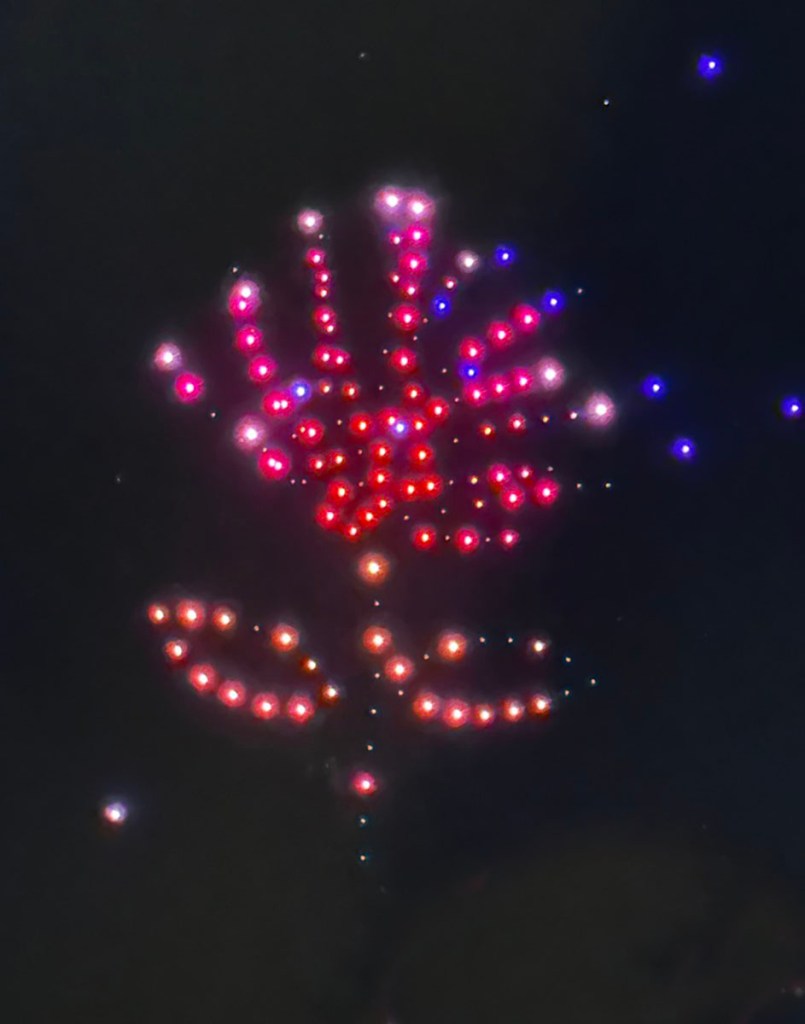
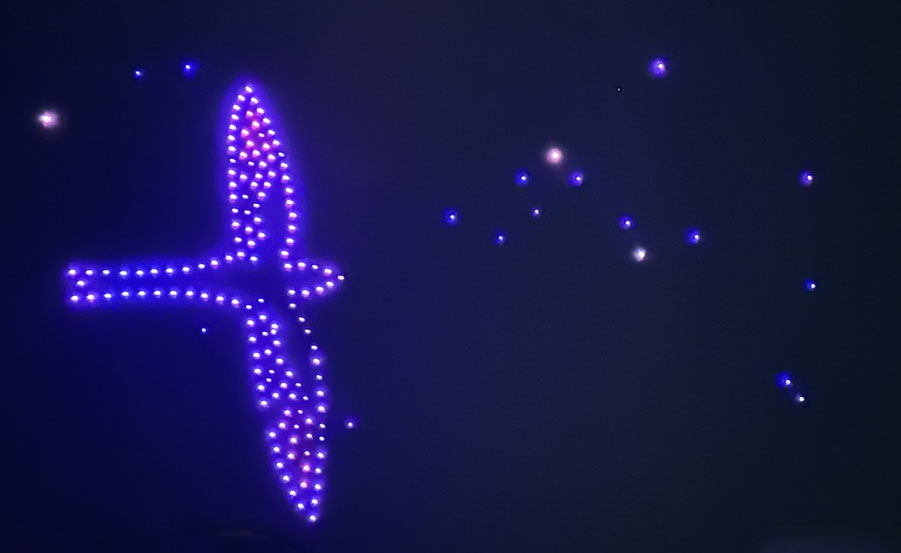
In 2022, New Zealand declared Matariki a national holiday. They are still trying to figure out how to have a celebration for the masses. As I was looking at Matariki events in Rotorua, I saw that there was going to be a drone light show over Lake Rotorua. A drone light show was new to us and it was fantastic!
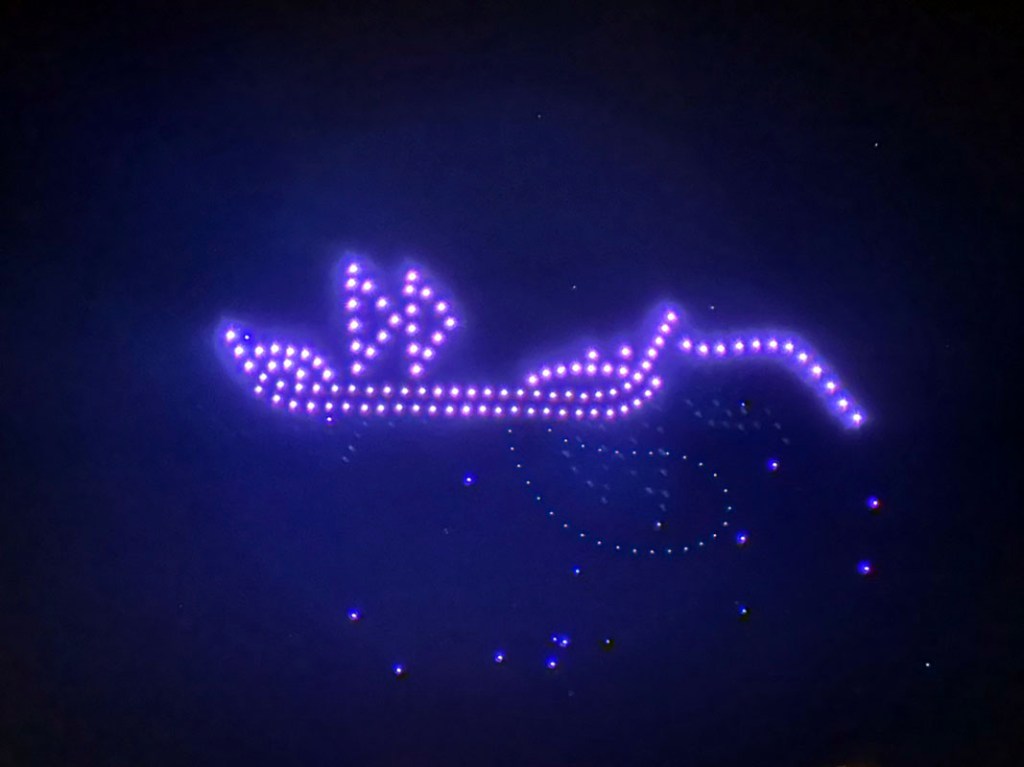
One hundred and sixty drones quietly lifted off from the pier and buzzed into position to tell the story of Matariki by forming different figures and objects. My favorite was the formation of Taramainuku’s boat and the release of the souls from the net. Here it is as depicted by the drones:
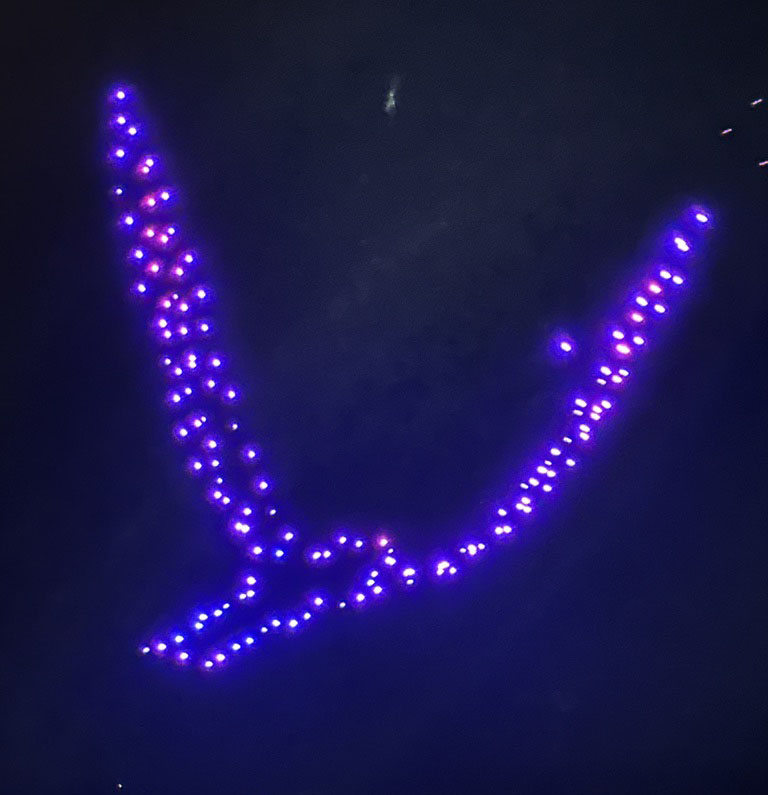
Here is a video someone posted on tik tok. There were a lot of different characters like a large bird and flowers. Check out the video below:
.
Drones form a flower. The voice is speaking Maori. He is explaining the legends.
After we oohed and aahed over the drones, we sought out dinner. When we traveled to New Zealand 20 years ago, Rotorua was a sleepy, quaint tourist spot but since then it has developed beyond recognition. We were pointed in the direction of a restaurant row where we found Italian food, Mexican food, Irish bars, Thai food, and steak houses. It all seemed aimed at American tourists. That is reasonable given that Americans are likely the predominant visitors. On the one hand, it is nice to find familiar food. On the other hand, it is hard to pull it off. We tried Italian and it was not bad. Not great, but pretty good. (Finding great Italian in NZ is a challenge.) All in all, a pretty good Matariki.
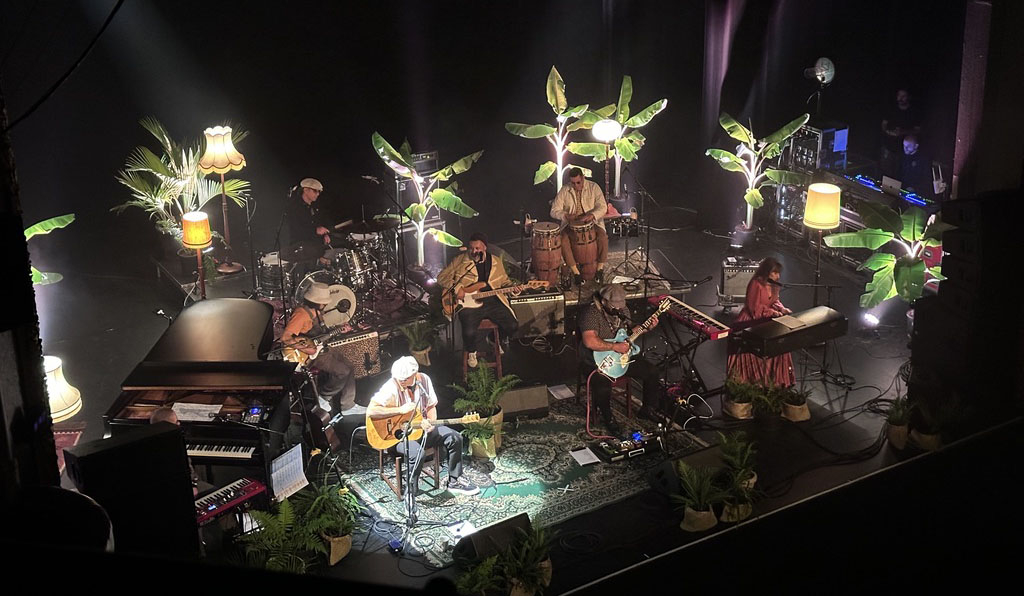
Bill Withers. You know his music. “Lean on Me” must occupy a brain cell if you are a certain age. Same with “Ain’t No Sunshine.” He died recently and a group of Kiwi musicians developed a tribute show which we saw in Wellington. One, Dallas Tamaira, the singer for Fat Freddy’s Drop, was there. He kind of sounds like Bill Withers. It was a fun trip down memory lane.
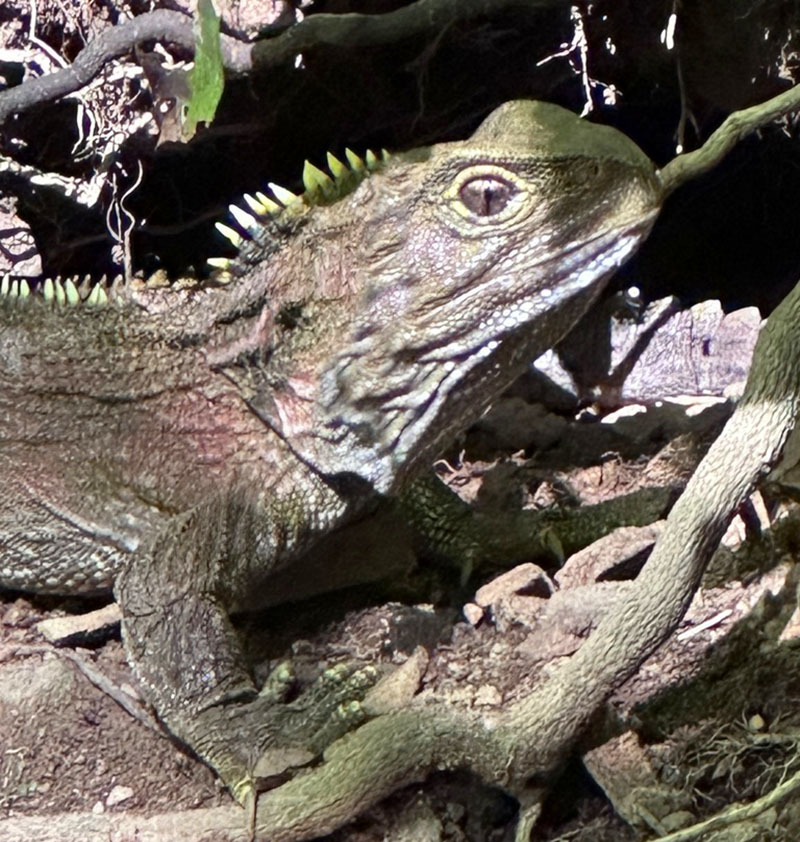
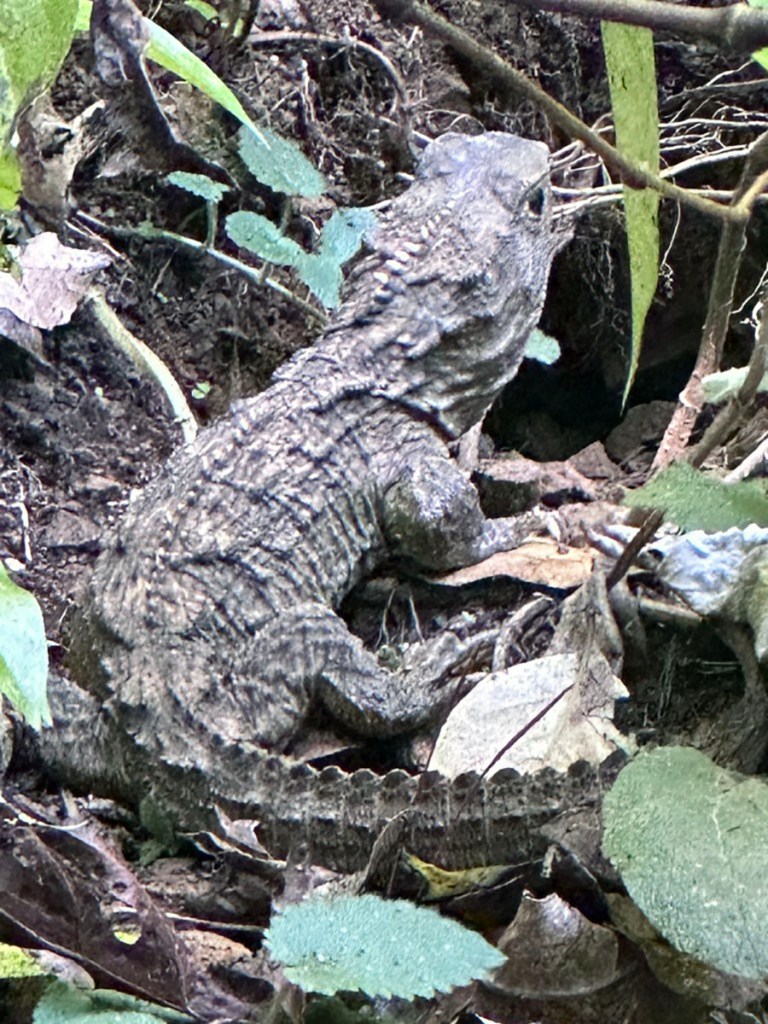
Zealandia is another fenced predator free nature reserve located in Wellington. It is fun to visit. This time we went to see the tuatara, an endangered lizard endemic to New Zealand. It is a little dinosaur that comes out when the sun is shining and, on this day, although it was winter, the air was warm and the sun bright. Here he is in all his glory:
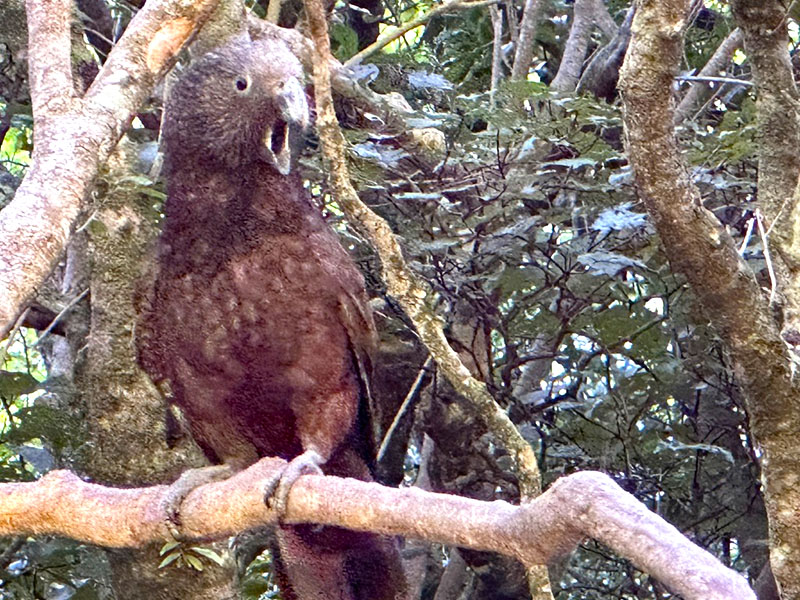
And just for fun, here is a kaka, a very large, parrot-like bird with the wit and brains of a crow. They squawk and are known for stealing food right off your table if they have the opportunity. The guide at Kapiti Island told us that they will size up visitors to figure out who they might sweet talk into giving them a treat. They had Matt in their sights. As we know, and as the kaka know, he is a softie.
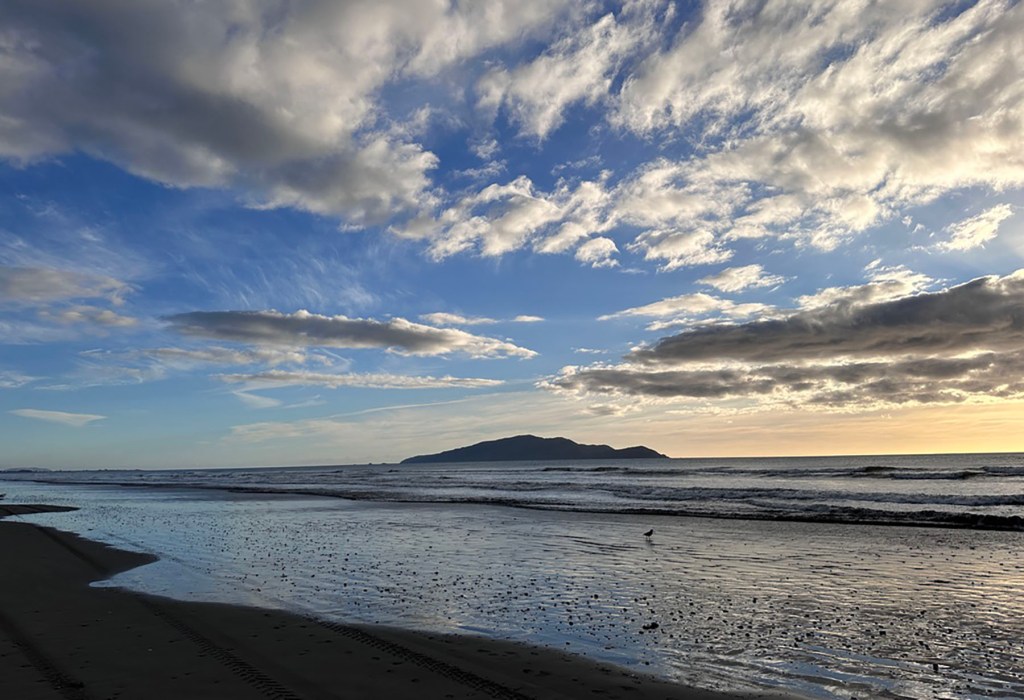
We live on the Kapiti Coast. Its namesake, Kapiti Island, is an island to the west that looms over the towns along coast. We see it every day, in the distance. This is what we see.
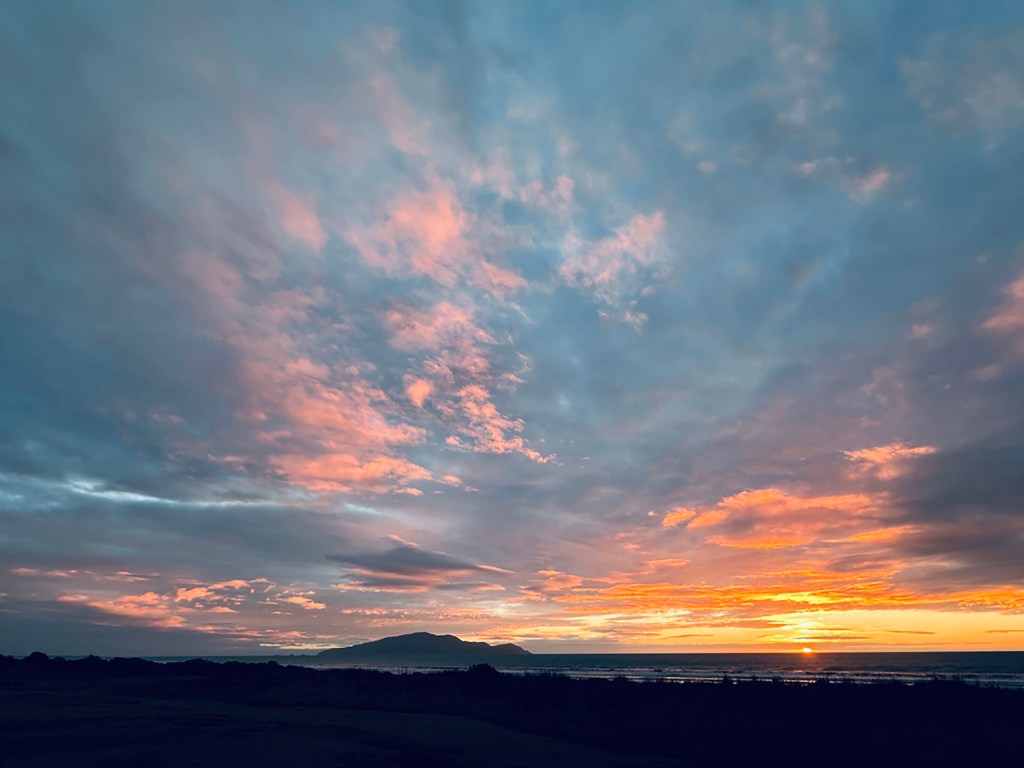
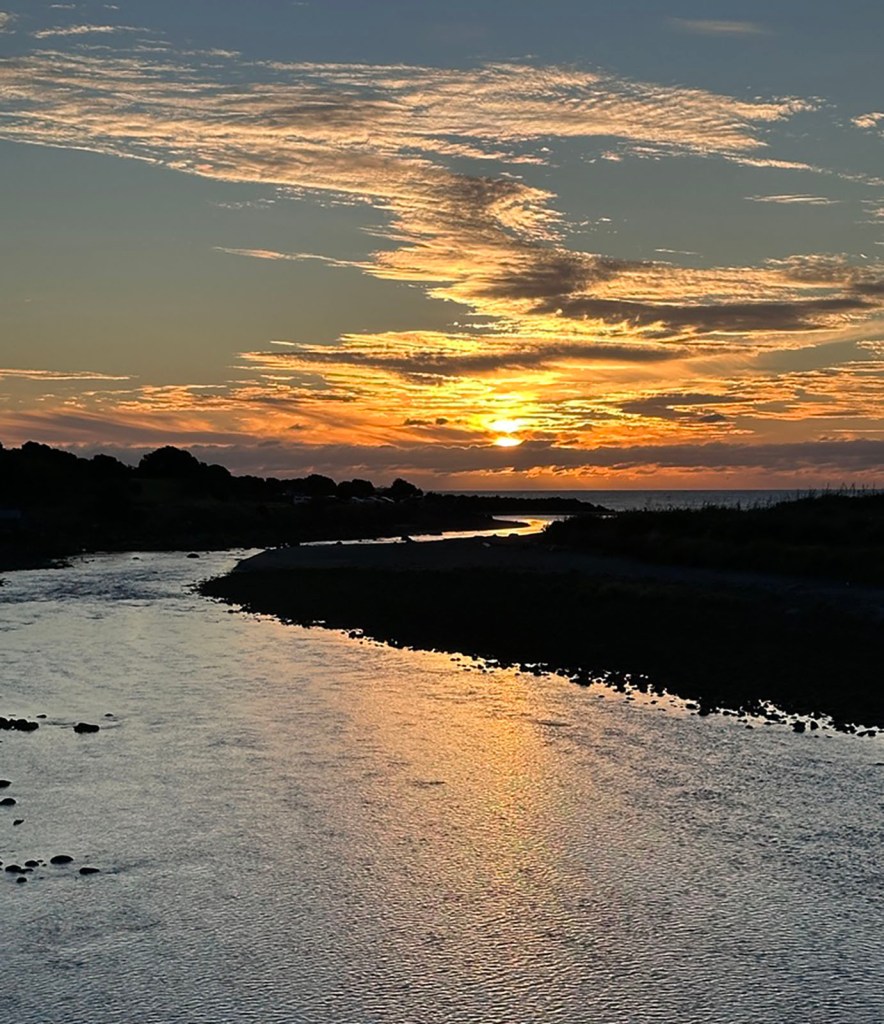
Te Horo Beach where we live is known for its spectacular sunsets and I have taken hundreds of pictures of the island as it plays a supporting role in the sunset pictures like this:
Looking at it all the time, I decided we had to go and visit. The bulk of the island is a nature preserve. The north end is privately owned by a Maori family. Several generations ago, the matriarch of the family refused to sell her land to the Crown and good for her. The family runs a rustic lodge/resort with cabins that are available for an overnight stay. We thought it would be fun to visit there, take a tour of the island, see some birds, maybe even kiwi. We rented a cottage, the only place to stay there that came with a private bathroom and a wood stove. It cost a lot, but we figured if we were making the effort to go, why not go in style?
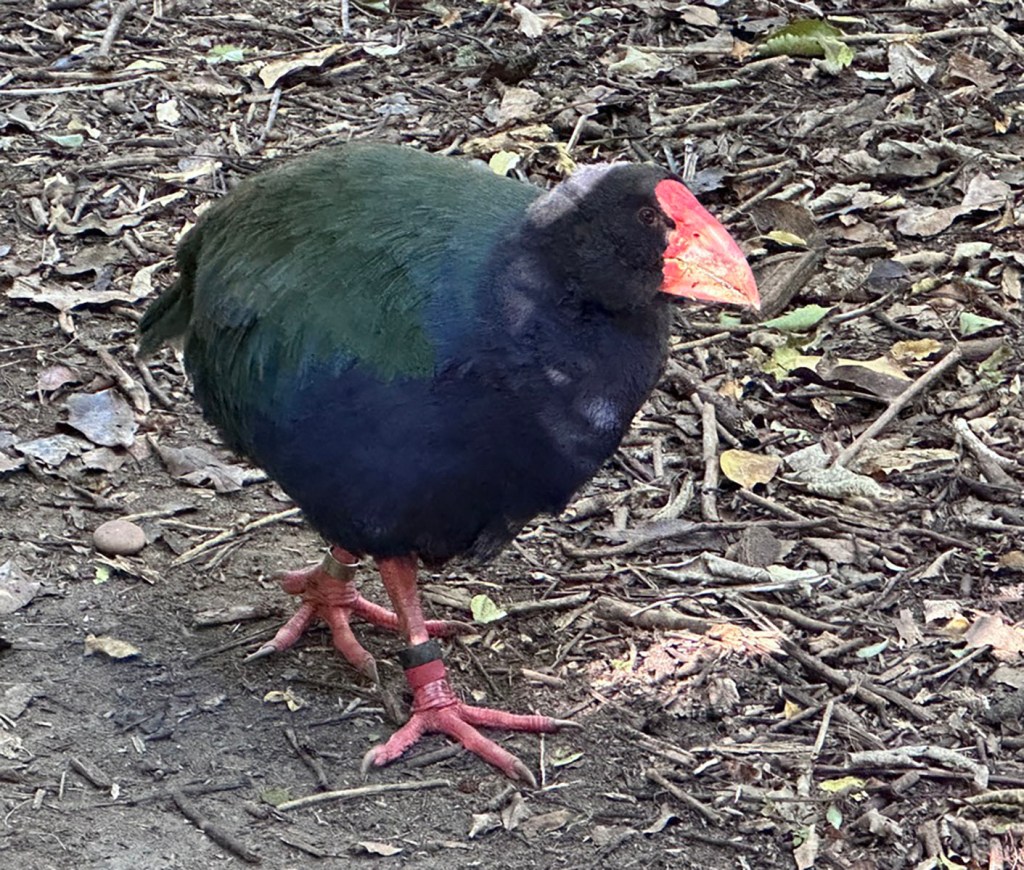
We had picked a date in late fall, so there was a chance that it would be cool. It was worse. New Zealand was in the middle of a cold spell. So we packed warm clothes and headed off. We started the day with a boat ride to the south end of the island to tour the nature preserve. The sun was shining and when that happens in New Zealand, it is warm no matter the season. We walked a short trail and we saw a lot of birds, some new to us. There were two takehe, flightless (no surprise) and endangered birds living in the wild. Adorable:
After a few hours, it was time to take a boat ride over to the lodge. It was late and the sun was setting behind the island. We sat on the beach waiting and waiting, freezing from the wind and lack of sunshine. The boat finally showed up and we were on our way. Once ashore, we walked to the lodge, really nothing more than a large house, for orientation.
We were asked to remove our shoes before entering. This is a thing in New Zealand. Everyone takes off their shoes before they enter a house. Except us because we have not learned this rule. It just never occurs to us. The problem with this rule is that if it is cold, as it was on this day, you end up with ice blocks for feet. They did not even have slippers to offer. Even worse, Matt does not and cannot walk barefoot. Ever. So he asked to leave his shoes on. Given the stink eye he received, you would think he was standing there in mud-caked boots and not fairly clean sandals. But they relented and let him in.
After orientation we were shown to our cabin. It was not heated but it did have a wood burning stove. Since it was going to be a cold night, most likely below freezing, we asked if we could use the stove. The answer was no. No? No. They would provide us with and extra blankets and hot water bottles. As I wrote previously, Kiwi houses, particularly older houses, have no insulation and only a stove for heat in a main living area. Hot water bottles appear to be the Kiwi answer for keeping warm. Stores stock mounds of hot water bottles in the winter.
The host also mentioned that we should avoid taking a shower if the sun was down because the water was heated by the sun. We would have hot water for the evening, but none in the morning.
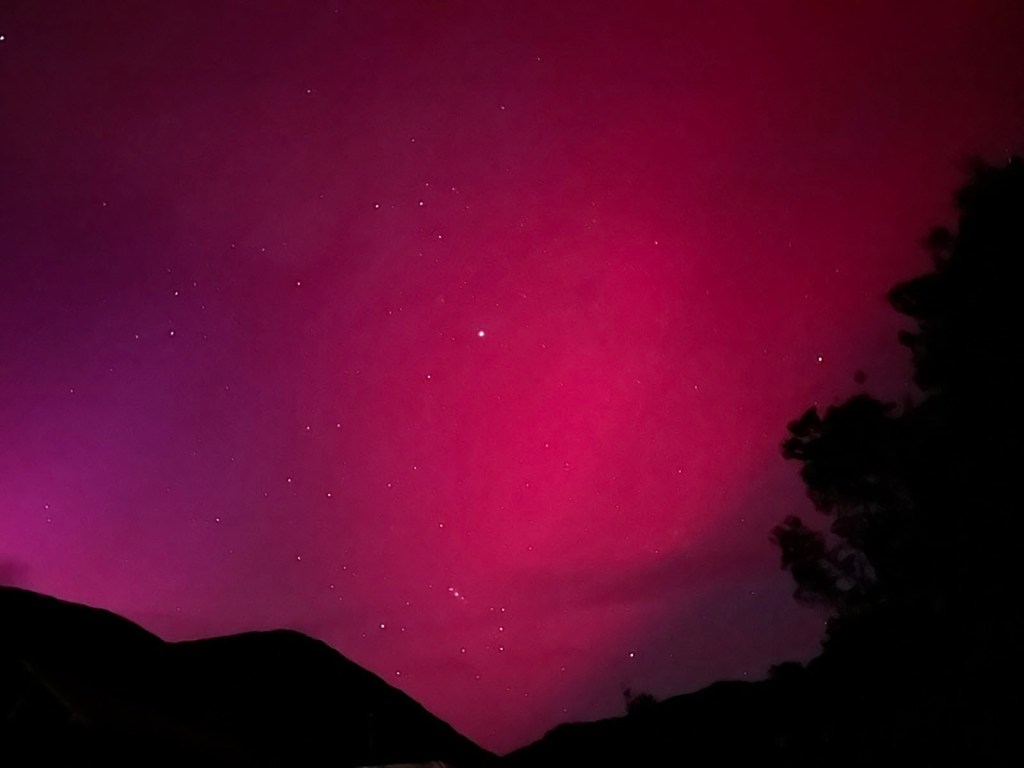
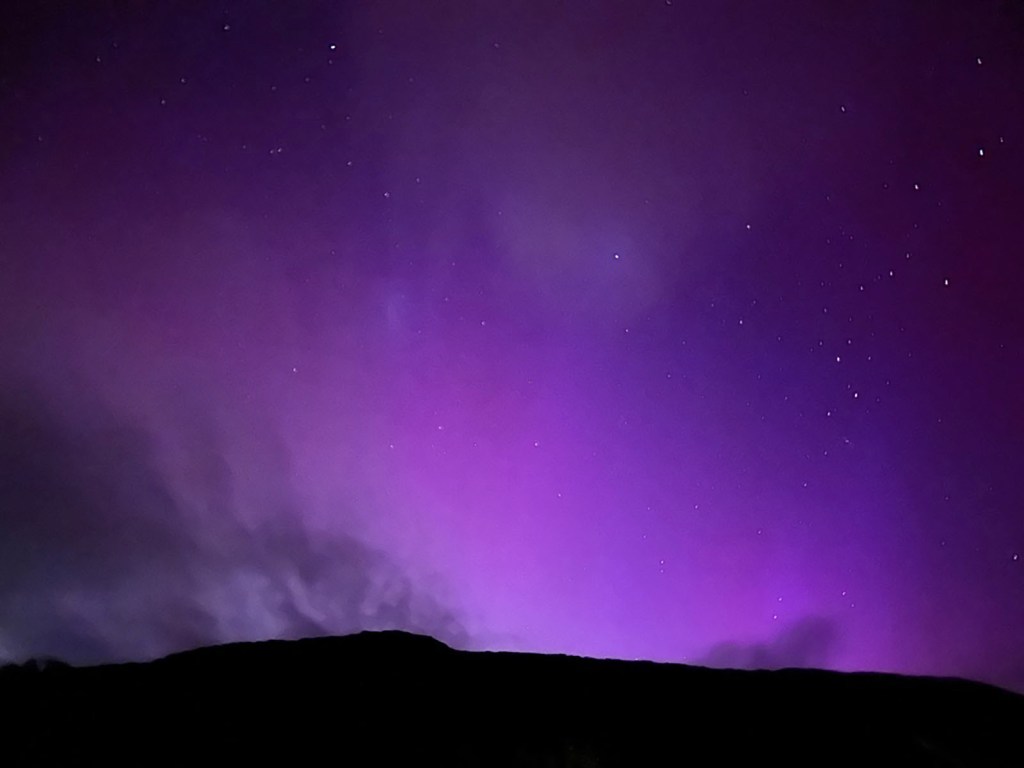
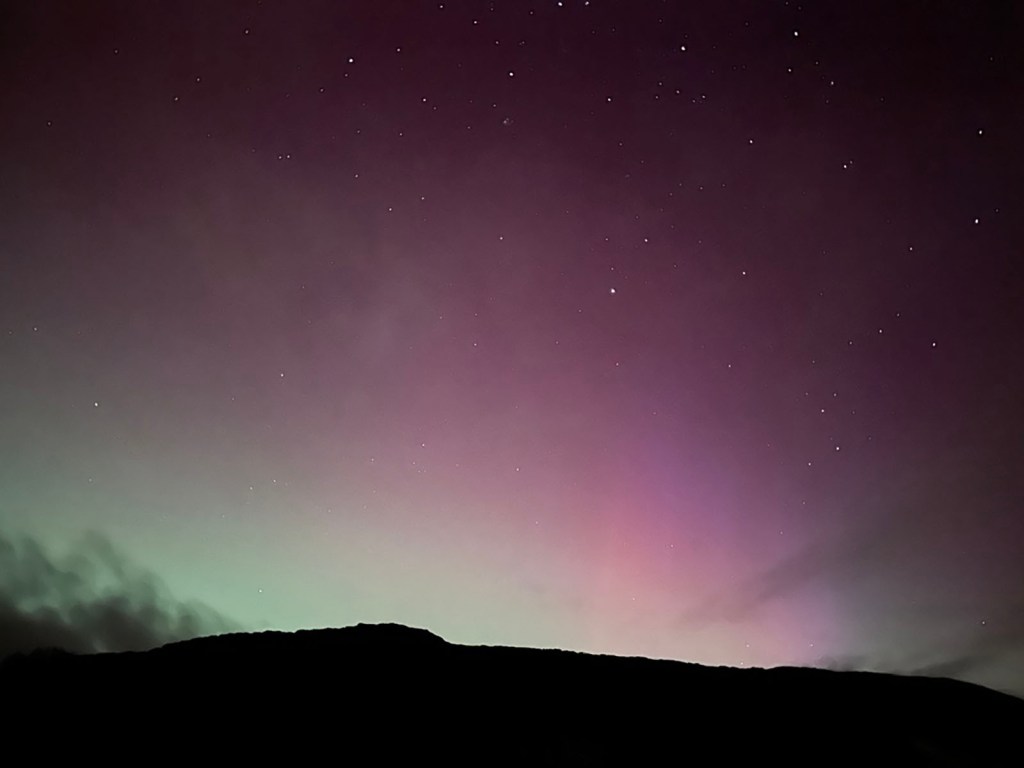
We wandered over for dinner at the lodge where a fire was roaring in the stove. Bastards. The plan was for us to have dinner and then afterward go out to look for kiwis. It was also the night when the sun sent auroras all over the world. Even New Zealand lucked out. We quickly ate dinner, small talk with the other guests included trying to explain the American election system, and then we all went outside for aurora viewing. Even though our view was obstructed by the mountain, and we could only see part of the sky, it was fantastic. The color kept changing.
After playing around with that for an hour, it was getting late and we had to look for kiwi. We marched off into the darkness, quietly stepping so the kiwi would not be alarmed. It did not matter. We did not see a feather. The last stop on our kiwi walk was our cold and miserable cabin.
We took her up on her suggestion and decided a hot shower would help. But when we tried to shower, nothing came out of the tap, not in the bath, not in the kitchen. There was no hot water any and everyone had gone to bed. So here we were in our little cabin, the special one we paid extra for, with no heat and no hot water to take the chill off. I was, how shall I say? Angry? But there was absolutely nothing we could do about it. Fully dressed, including a hat, buried under three blankets, and tightly hugging my hot water bottle, I tried to fall asleep. That was pointless. It was cold. Matt fared no better. We woke up at dawn, and still no hot water. Not even a drip. I marched over to the lodge to locate the manager. When I told her we had no hot water she responded, “Oh. I forgot to turn it on.” So, I asked, are you telling me that the public showers had hot water? “Yes. Were you cold?” I wanted to scream at her, “of course I was cold you moron.” But I didn’t. I simply said we would be taking the first boat out. We need to get back to our warm house where we have hot water and a gas burning stove. I think it is fair to say that we will never visit Kapiti Island again.
We vacationed in New Zealand for three weeks in 2005. We traveled both islands by car, train and boat. But we still missed a lot. We are using the weekends to visit new places.
New Zealand is located along the Ring of Fire, a circular area surrounding the Pacific Ocean where the Earth’s tectonic plates are subducting or sliding under another plate causing havoc. The Ring encompasses the West Coasts of North and South America, the east coast of Asian countries such as Japan and several islands in the Southern Ocean including Indonesia and New Zealand. (Hawaii is not along the ring, nor is Iceland. They have their own problems.). The lands located on the Ring are home to the vast majority of volcanoes on Earth, both dormant and active. Most earthquakes that occur in the world are located in this area too.
New Zealand is emblematic. As for earthquakes, it is a rare day that an earthquake is not recorded on at least one of the two islands. New Zealand has many volcanoes, extinct, dormant and active. There are three types of volcanoes in New Zealand: cone, caldera, and volcanic fields. A volcanic field is what it sounds like—small volcanoes spread out in an area with any one erupting haphazardly. There are currently eight active volcanoes all located on the North Island. https://www.gns.cri.nz/our-science/natural-hazards-and-risks/volcanoes/new-zealands-volcanoes/.
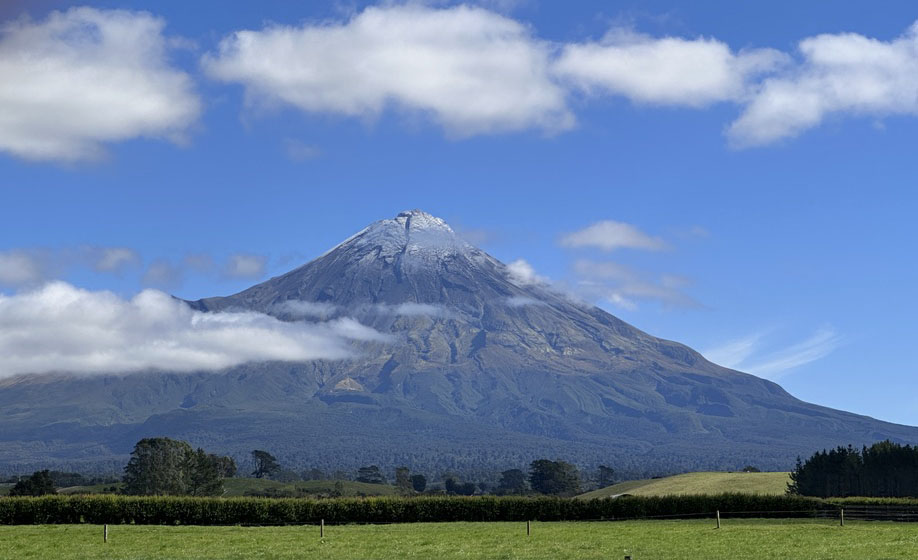
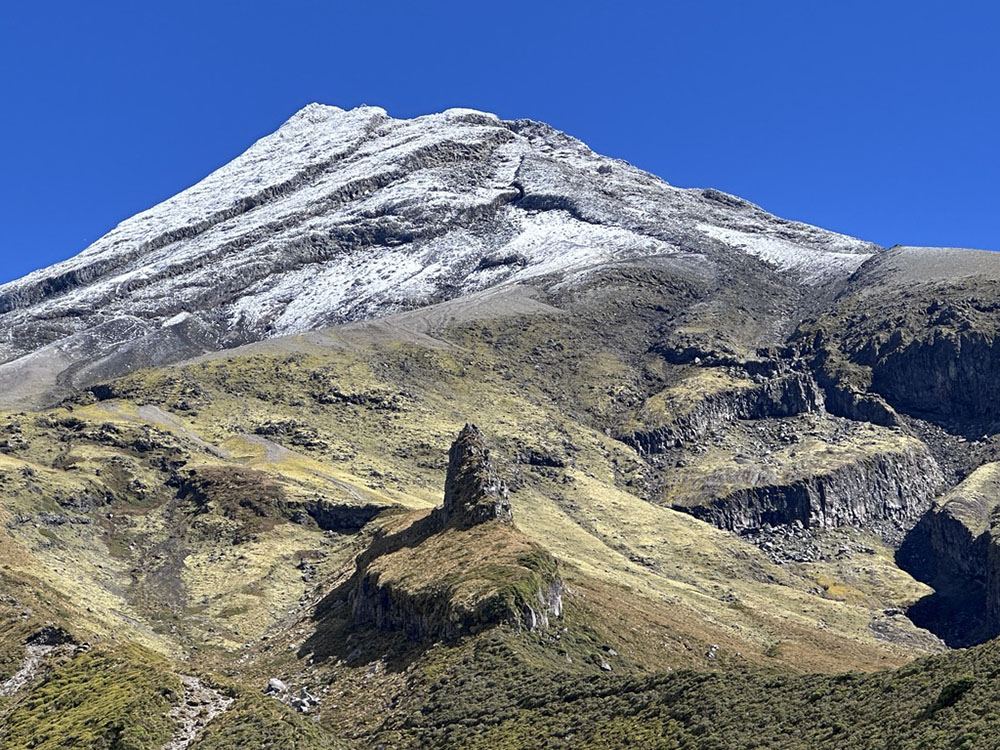
We decided to visit one of the volcanoes. Taranaki is currently dormant, having last erupted in 1755. It is centered in the Taranaki region, part of the western coast of the North Island a region that juts into the Tasman Sea and which is also known as the Surf Coast. (We will get to that.). Not quite Mount Doom, (that would be Ngauruhoe) but more resemblant of Japan’s Mount Fuji, Taranaki is a beautiful cone, often snow covered, circled by vast plains formed from previous eruptions.
We stayed in New Plymouth, the city nearest Taranaki, for some sightseeing. New Zealand is rural and multi-lane turnpikes or highways do not criss-cross the country. Getting from here to there outside of the city usually means traveling two lane highways. This two-hour drive took us through small towns and past more cows that I have ever seen in my life. Dairy cows mostly, milk production is a huge industry here. There were some sheep farms. But the Taranaki region seems to be cow central.
Our first stop was Egmont National Park, home to Taranaki. The plan was to simply drive as close to the top as we could get. It turns out, it was not close enough. So Matt gamely agreed to hike further up the mountain to get a good vantage point of the summit. He would go as far as he could.
New Zealand is a place where the weather can turn very quickly and the day went from a pleasant, warm, sunny day to a cold, partly cloudy day with a strong, brisk wind that easily penetrated our clothes. It was cold! We were clearly not prepared for a walk up a mountain. The gift shop was prepared for unprepared people like us. We bought heavier jackets and thank goodness because the higher we climbed, the more forceful the wind became.
Matt made it to the overlook. He did a great job. It was a 4k hike or, in NZ jargon, a “walk” (as opposed to a “tramp” which is akin to a trek for us). I continued further up the path to a clearing where there was a good view of the summit. During most of the climb, being under cover of the bush, we were protected from the wind. As I rounded a large boulder and stepped into the clearing, I was hit with a gust that nearly knocked me off my feet. In front of me was the summit. While I hung on trying not to be bowled over by the wind, three younger adults were merrily taking photos of each other, seemingly oblivious to the cold and gale force winds. I snapped a few photos and went back to the shelter of the trail.
Tired of being cold, we drove back down the mountain and headed back to New Plymouth and our very warm hotel room.
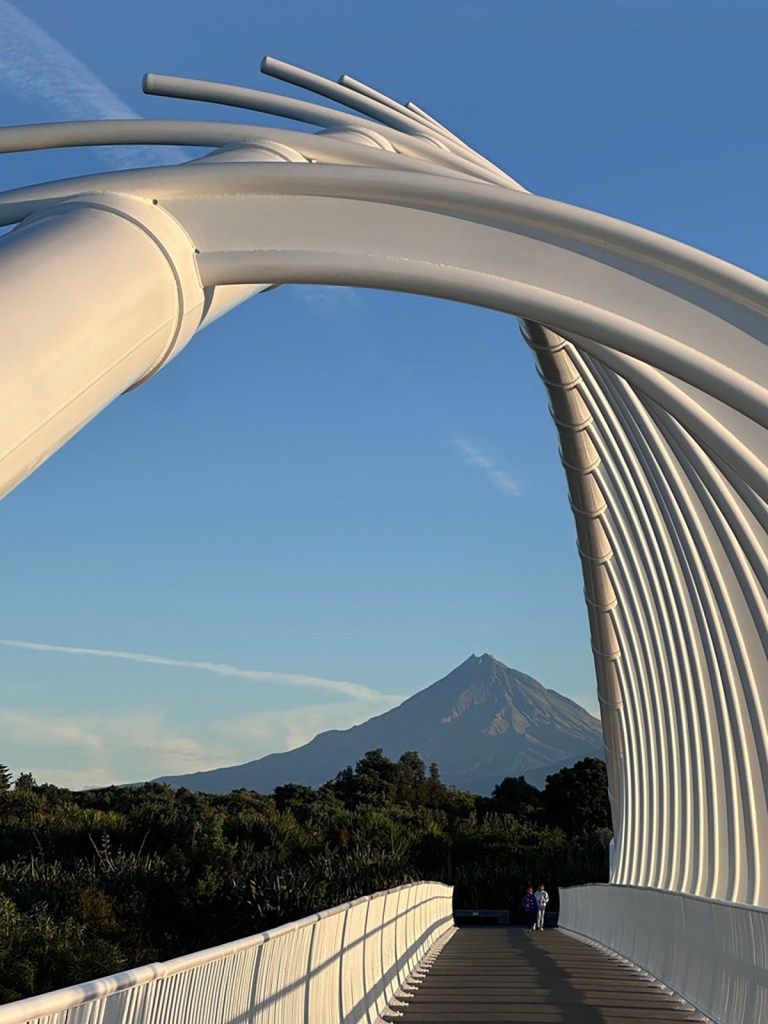
New Plymouth is a coastal town, with aspirations to be an art center. The most popular spot is the Coastal Walkway. At one end is the gorgeous Te Rewa Rewa Bridge. I took a lot of photos of this bridge. It was just fun to look at.
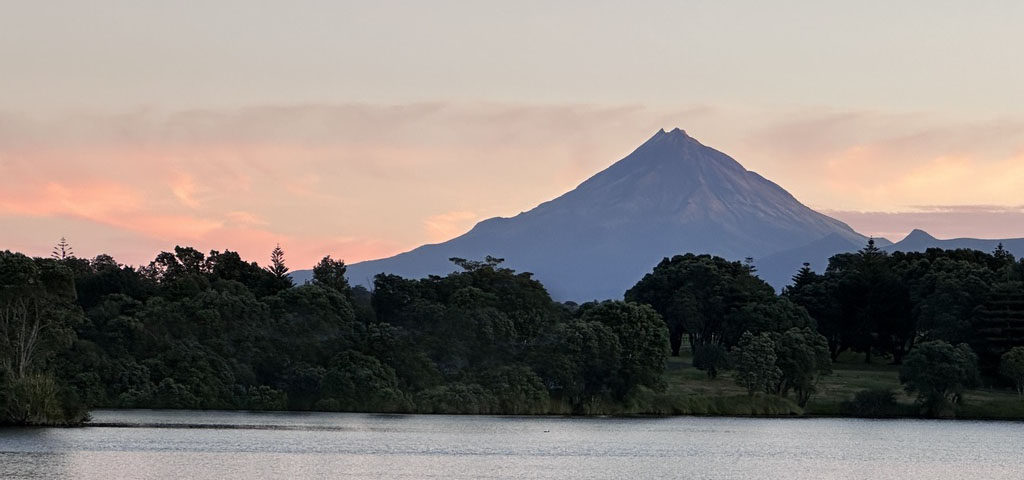
We watched the sunset over Taranaki and from the bridge.
The next day we visited the Rotokara Scenic Reserve to check out the birds. New Zealand has no endemic predators. There are no coyotes or foxes, bobcats or anything that can eat a deer. When you walk in the woods here, you’ll find only birds and a couple of reptiles. Invasive mammals such as stoats (ferret), possums, rats, and cats have made homes in the wild. These predators prey mostly on birds. The problem is that New Zealand birds have not evolved in an environment with predators so many of them do not fly. Why fly if no one is out to get you? As a consequence, they are vulnerable to these invasive species who feast on the birds and their eggs. This kind of pressure has driven many of their birds to near extinction.
To combat the invasive species, there are a few parks in New Zealand that are predator free. What does that mean? They build very tall fences that are impassable to small animals. The area inside the fence is then methodically cleared of predators and pests. Once cleared, the birds thrive.
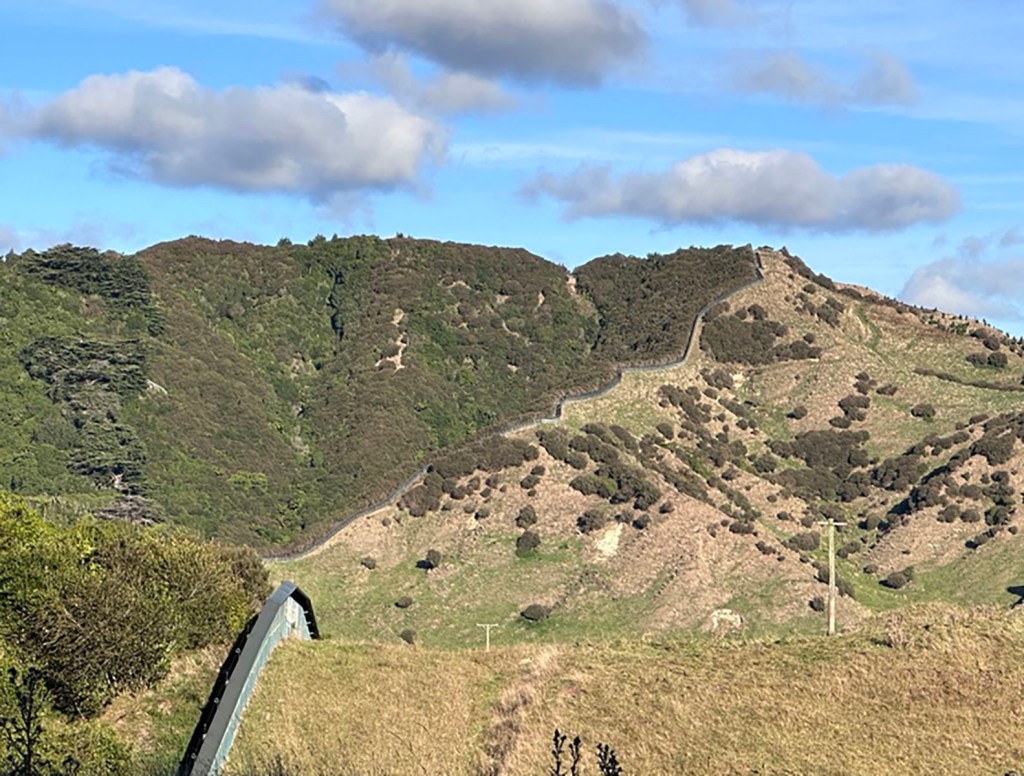
Here is the picture of the fence at Rotokara.
The fence is like the Great Wall, a monstrous structure traveling over hill and dale. What you can really see in the photo is a before and after view of the land, pre- and post- agricultural clearing by the settlers. A large part of this country was cleared of Native bush to make way for agriculture. Inside the fence you see the native bush, and outside the fence, farm and grazing land. It is hard to believe the work that clearing this land must have entailed.
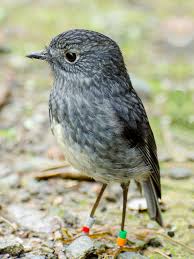
On the walk around the lake, we managed to see a hihi, or stitch bird. They can be elusive, so we were happy to check them off the list. We also saw whiteheads and lots of other species. The most fun is with the North Island robins.
They are small black and white birds birds that look nothing like our red breasted friends. They will come out of the bush to look at you curiously and say hello, and sometimes follow you down the path. As an aside, the birds in New Zealand are generally not colorful. They are mostly black and brown or dull colors like yellow or green. All meant to blend into the bush.
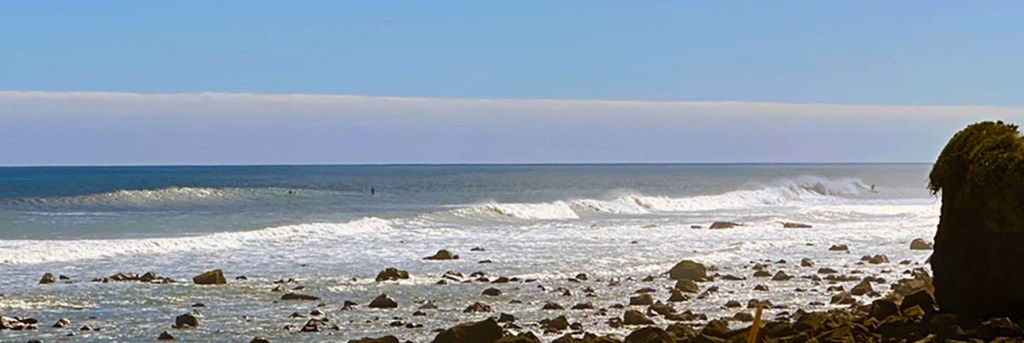
The next day we drove home along the surf coast. with its location, you would imagine there is a lot of surfing here. But the coasts are pretty rough–lots of rocks and hazards, and the seabed is not accommodating to big waves. But here in Taranaki, beautiful waves abound. We met a group of surfers, young boys heading to the beach. We followed them and chatted about America. They soon split off and headed for an area with an open beach. We watched from a distance.
And did I mention cows??? Here they are along the surf coast.
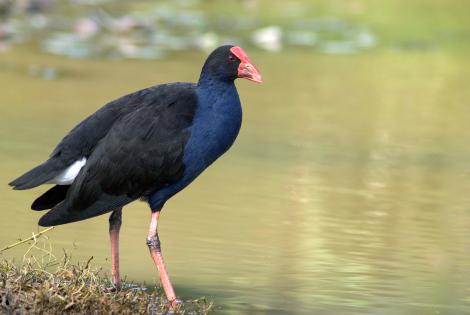
This is a pukeko, a rather dumb chicken size bird that hangs out in the pastures and along the roadsides. We have decided to find them charming. I call them dumb because they often wander into the road when cars are coming. Matt and I slow down or stop to let them pass. That does not appear to be the New Zealand way. Drivers get annoyed when we slow down or stop. In fact, drivers do not stop at all if a pukeko is in the road. People just seem to run them over without a care. That means there are a lot of dead pukeko along and on the roads. So I wrote to the local council to ask about this. A few things to remember—farmers consider these birds pests and they are hunted to keep their populations in check. (I am not sure if they are edible). Even so, deliberately running over any animal, pest or not, strikes me as heartless and I wanted to express my concern and, frankly, disgust.
Here is the entire email exchange:
–––––––––––––––––––––––––––––––––––
December 15, 2023
As a transplant here to the Kapiti Coast, and an American, let me say I am appalled at the number of pukeko that have been run over by cars on the local roads. I live in Te Horo Beach and there are numerous dead birds on Te Horo Beach Road, Pukehamo Road, and the surrounding roads including Old SH 1. In the spring there were numerous pukeko in the fields, and now there are few.
Is this some kind of tradition, to run over birds on purpose? Because it sure does look like this is entirely purposeful. Can someone please explain this to me? I thought these birds were protected. Is there anything the Council can do?
Marsha Schmidt Te Horo Beach
––––––––––––––––––––––––––––––––––––––
December 18, 2023
Kia ora Marsha
In response to your enquiry of the Pukeko.
It is not a New Zealand tradition to run over any animal on our roads.
The Pukeko are not indigenous to New Zealand, therefore it is not a protected species.
Council is not responsible for the death of the Pukeko on public roads. I would suggest maybe contacting Game and Fishing for further information.
While I understand that many think they are pests, I have witnessed drivers running over the birds without even a tap on the brakes. So it sure does seem to me that this is thought to be normal—to run over the birds without a thought.
I am not sure I understand why the council cannot remind people these are living creatures who do not deserve to be flattened for no reason. Yes, they cross the road haphazardly but even so, stepping on the brakes is not too much to ask.
Marsha Schmidt
—————————
That was the end of that dialogue. The birds continue to be flattened.
KFC has invaded New Zealand and they are crazy about the Colonel’s chicken. There are stores everywhere.
Matt knew someone who swore that one particular KFC outlet had better chicken than other stores and he drove out of his way to get it. Matt kind of laughed but this guy really believed it. How do you explain the methods used to guarantee the uniformity of fast food?
When I was buying my car, the salesman, knowing I was from the U.S., asked whether I liked KFC because he loved it. I confessed that I had not eaten Kentucky Fried Chicken in decades. This puzzled him. I told him I was not really a fast-food person. This was also puzzling to him. Apparently, we have the reputation of living off food from places like McDonalds and Pizza Hut and now, KFC. And why wouldn’t we since we export all of that junk to the rest of the world?
One thing that really messed with him was portion sizes. He could not believe how big the portions were. I regaled him with stories about the 7-Eleven Big Gulp and the even larger drinks they offered. He had never heard such tales and puzzled over that too. “You mean they sip on that drink all day?” Yes, I said, many people do just that. “Doesn’t it get warm?” Yes, I responded it becomes just a big cup of warm sugar water. He grimaced.
That was so depressing that I have decided it is best to just avoid the topic all together. There is no explaining American fast food.
(As an aside, I can remember vividly when, on days she did not have time to make dinner, my mother stopped for Kentucky Fried Chicken, as it was then called. We loved it then, and maybe if I tried it now, I’d love it just as much. I am not sure. But not the sides. No. That gravy was never, ever good. Even the Colonel agreed with that point. See this article.)
In the summer, some New Zealanders prefer to go barefoot. Not just at the beach. But everywhere–concerts, sporting events, shops, city streets. You will not find a sign that says, “NO Shoes. NO Shirt. NO Service.” Instead, it might read: “NO Shoes. NO Shirt. NO problem.”
We were warned by our relocation mentor that we would see this because it is a tradition. She was kind of embarrassed and wanted us to not be surprised by it. Indeed, it is hard to actually watch some guy lumbering through the grocery store without shoesand dirty feet for all to see. All I can think is: buddy, can’t you at least try sandals or flip flops (they call them “jandels”). Something? Anything?
I know you can see people in bare feet when visiting tropical isles (actually you are more likely to see them in flip flops or rubber sandals). But, to be clear, this is not the tropics. The attitude seems to be that summer is short and this is the way to enjoy it—no shoes. When I was a kid, I rarely wore shoes. If I was wearing shoes, I was wearing flip flops (we called them thongs). So I can sympathize and don’t think I am that delicate about it. But there is something that bothers me about a grown person wandering around the streets and in stores in bare feet.
We have neighbors who walk in bare feet to the beach. Okay, they are going to the beach. That makes sense. But I can’t understand how those feet can withstand the asphalt rendered blazing hot on a clear summer day. Nor can I understand the ability to walk on the rocky beach that is Te Horo. This is not a few rocks here and there. There is often a carpet of stones covering the sand. This is what it looks like:
I mean, ouch! It is hard enough to walk on the stones with sandals let alone in bare feet. The soles of their feet must be leather. They are certainly hardier than mine. It hurts me to think about it.
Every country has its own norms when it comes to house design. But there are some real doozies here.
Screens. When the sun is out, it can get very warm inside the house. In the U.S. we would turn on the AC. But unlike the U.S., central air or any kind of A/C system, “air con” as they call it here, is not a standard feature of most homes. Some houses have it, at least the recently built, but older houses rely on opening the windows. That seems reasonable right? Well, here is the problem: the houses have no screens on the doors or windows. We are baffled by this. We have asked why, and the responses have ranged from a stare, an uncomfortable um, a chuckle, or a stab at an answer like—”we never open the windows because it is always cold here,” “we don’t have bugs” or my favorite, “windows come with screens?” It is as if the idea of screened windows is something no one ever considered. One person asked me if it was normal for Americans to have screens. Yes, I assured him, yes. In America, you don’t have windows without screens.
The lack of screens put us into a pickle. We have indoor cats and without screens they are going to waltz right outside. New Zealand cat owners let their cats roam free, and those same cats, being the apex predator here gladly decimate the bird population. Since the cats go in and out, Kiwis can leave the doors and windows open without screens. This was not going to work for us.
The second issue is flying invaders. When the heat became intolerable, we opened a few windows. This did not go well. To the person who said they don’t have bugs here, I guess that is true, unless by bugs you mean flies, moths, bees, and gnats, of which they have plenty. They sell a lot of toxic insect spray here for killing flying insects. I just want to run around the store yelling, “No need to spray chemicals! They do make screens! Screens are not a luxury! They are perfectly normal!” But that is contrary to the culture—they don’t use screens here.
So what about the cats? We tried locking the cats out of rooms with open windows, but all I did was worry that clever JoJo could get out. I did some research and found a few companies who install screen systems that can be added onto the existing windows and doors. They don’t look great, but they will do in a pinch. So, in the end, we decided if we were going to be in this house for around two years, it was worth it to spring for screens because without them, there is no air.
Now that we have screens, we can open the windows and doors. Air conditioning is not really necessary because it never gets that hot. Letting in that ocean breeze has been magical. Except for one small problem. This is a really green place and the pollen count is usually high. I miss the air filtering that comes with central air. I think I am really allergic to New Zealand. Ah-choo!
Heat.Heat is a weird thing here. Many, many houses have nothing but a gas or log burning stove in the living room to heat the entire house. Our house here in Te Horo Beach, a large two story, has only has a gas stove and believe me when I say, it does not warm the entire house. Not even close. And it can get cold here.
The attitude seems to be you’ll get used to the lack of heat. One person told us that he bought an electric heater which seemed great. But he was shocked when he went outside because it was way colder outside than it was inside, and he was not ready for it. He was raised to think that indoor temps should be close to the outside temps. You simply dress warmly, and you get used to it.
Yeah, we are not going to do that. We have been living in a house with A/C and central heating for all of our adult lives. I like to have a toasty comfy house. We solved the problem pretty easily. We bought electric heaters, which are lovely.
Dryers.Ask any Kiwi whether they use a clothes dryer and they will assert with great pride that they only hang their clothes outside to dry. Yes, in wet and windy New Zealand, the preferred clothes drying method is a clothesline. I think to some extent this is part of the frugal nature of NZ citizens. Hey, sunshine and wind are free. Fair enough. But with the weather, hanging clothes outside can be a hassle. Matt tried this when he first came here. He could never find a time when the weather held long enough to get the clothes dry. One person told us that she dries her clothes outside because the wind will dry clothes in no time. Add the intense sun and stuff dries in a flash. But she admitted, she has to constantly watch the weather because it will change with no warning. This leaves her running back and forth trying to manage the clothes.
We were not going to do that. We bought a clothes dryer. Most people think that is a luxury.
Water. Water is a matter of great contention here. Because New Zealand has always been green and fairly rainy, water has historically been taken for granted. So much so that in Wellington, water is free. Imagine not having to pay for water and sewer. It seems great. Until the rain stops and the water supply dries up. Without steady rain, Wellington’s water supply becomes so insufficient that it has to resort to water rationing.
In trying to determine where the water goes, and why there is not enough, the local government found that about 25% of the water was lost from leaks in the system or in homes where inattention to running water, like leaving a garden hose on or letting the hose drip, adds up to an enormous amount of waste. Without water bills, people have no incentive to address it. The local Wellington government has floated the idea of charging for water but so far, there is no political will and certainly no support from the citizenry.
Here on the Kapiti Coast, the local government had a similar problem and decided to institute water bills. Nothing draconian. Just a straight fee. People lost their collective minds, voted out the politicians who imposed the bills, and some still resent it. But it worked. They no longer have to ration water here. But this logic still does not fly with everyone. Our fishing guide gave us a five-minute rant about refusing to buy water in a bottle and how water is a human right and should be free for all. I guess he hasn’t heard of droughts or climate change.
For us, we are on a well with a large containment tank, filtering, and UV light treatment. We seem to be okay. But I understand that during dry spells people can run out of water here requiring a purchase of a tank of water to keep going. Which just goes to show that even free water is not always free.
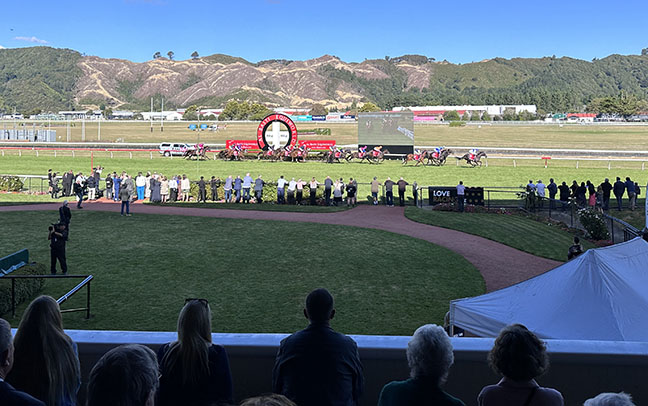
I admit it, I love a horse race. Yes, I agree that there are significant issues with the treatment of horses and I certainly get upset when I learn of horses dying or being mortally injured. There needs to be far more policing of racing, that much is certain.
But still, seeing a horse race just brings tears to my eyes. (I cry about horses a lot. Don’t ask me why.). And New Zealand is horse crazy, at least where we live. There are horses everywhere. I have to believe that they care for them.
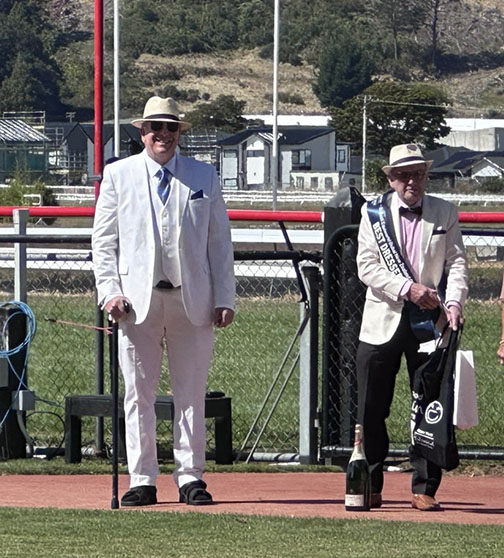
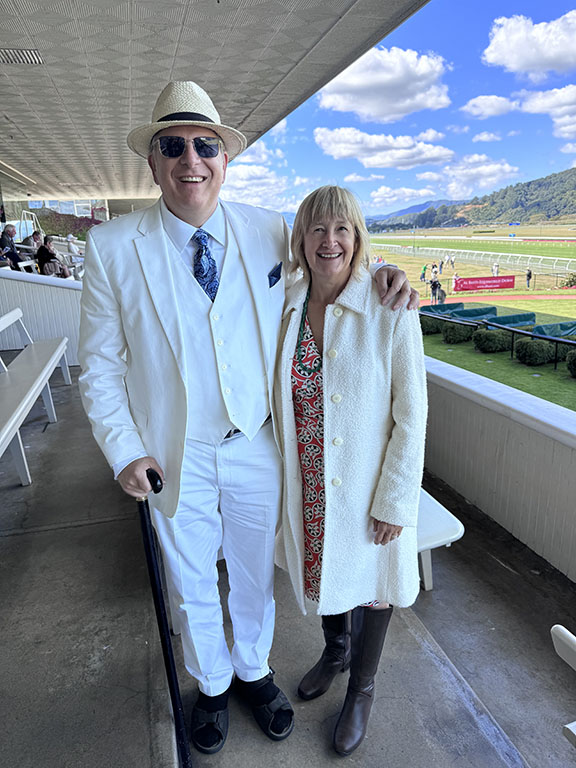
So when I randomly saw an advert for the New Zealand Oaks, I said, why not? The information said that proper horse racing day dress was required. So we went all in. A nice dress and jewelry for me. (No hat for me as the British ladies wear at Ascot. Not that I am against them. I love hats. I just don’t have any here.) Matt wore his white three piece suit with his straw hat. Matching blue shirt, tie and cuff links and of course his cane to make it all dapper.
As we were trying to figure out where our seats were a woman came running up to Matt and asked him if he wanted to be in the best dressed contest. His response? I have been waiting for this all of my life. She rushed him to a waiting area as other contestants gathered. Then they were marched onto the lawn for the judges consideration. Incredibly, Matt lost to an older gentleman in an ill fitting suit and a bow tie. Look at this:
The guy on the right is best dressed? Seriously?
Well, Matt thinks the bow tie clinched it for the guy. All I can figure is that this gentleman had an in with the judges. For the rest of the day people were coming up to Matt telling him he was robbed and he was their pick as best dressed. So at least he won the people’s choice..
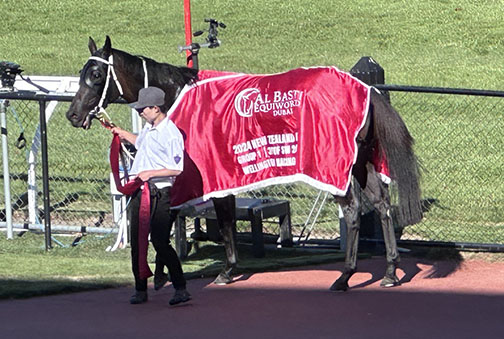
As for the races, I picked two winners, one won by a nose and went to photo review. I actually went home with money in my pocket. It was a beautiful day and we enjoyed it thoroughly.
Best dressed (per the people) and betting winnerHello beautiful.